locations
Fossil Hunting Near Me: How to Find Local Sites
By Edward Chen · Updated 31 July 2026
The best starting point for finding local fossil sites is a combination of geological map data and the Paleobiology Database (paleobiodb.org), a free academic database that records fossil occurrences by formation and location. Search by region or formation, and it will tell you what has been found and where the sediments that produced it are exposed. This gives you the geological case for a site before you check whether access is practical.
Beyond databases, local fossil clubs almost always have more current and specific information about accessible sites in your area than any published source.
Geological maps as the foundation
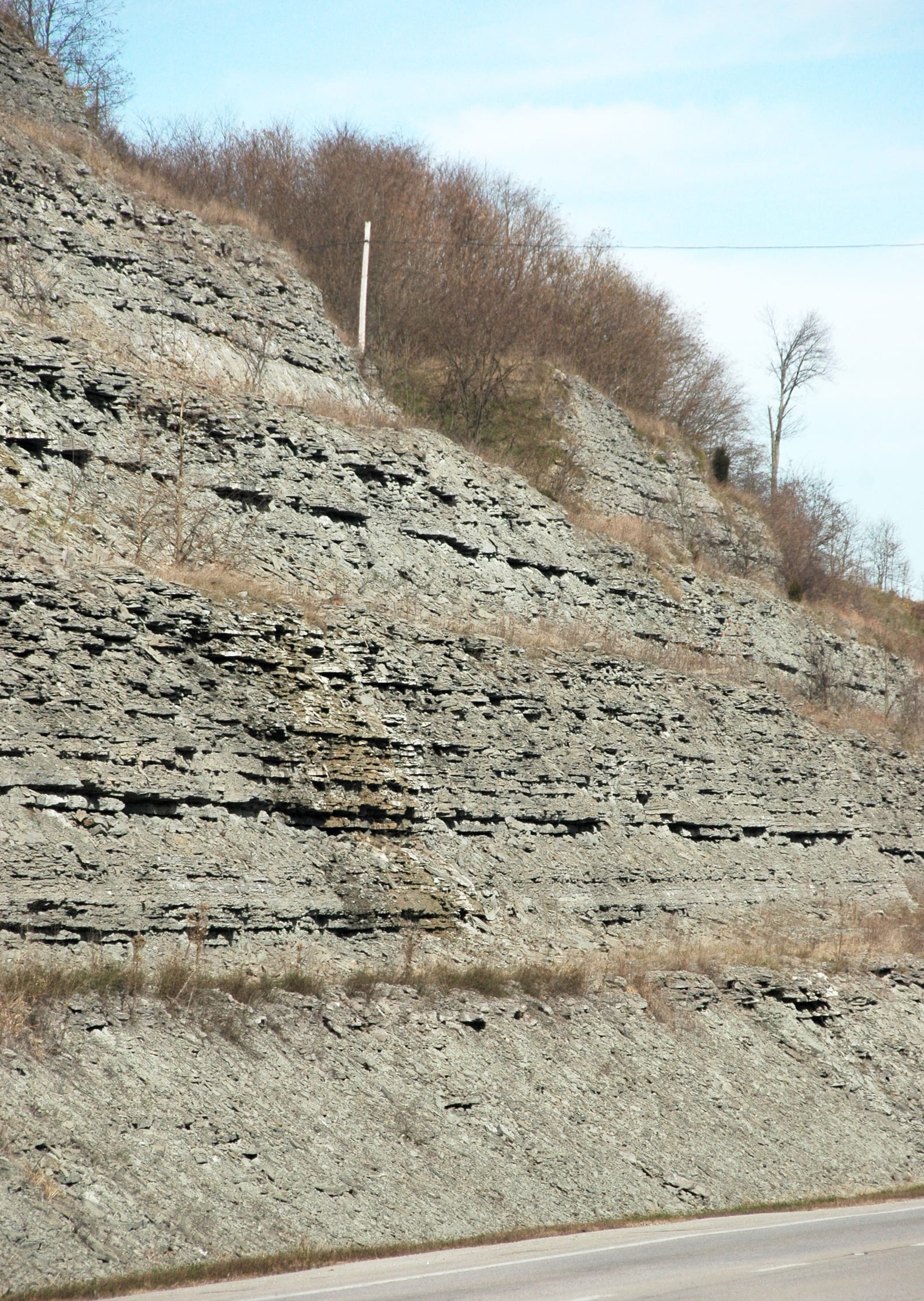
Before any site visit, the underlying geology tells you what's possible. If you're on Quaternary glacial till, the fossils you'll find are reworked material from older deposits, not in situ. If you're on Cretaceous chalk, marine invertebrates and shark teeth are the realistic target. If you're on Carboniferous limestone, corals and brachiopods.
In the US, the USGS National Geologic Map Database (ngmdb.usgs.gov) covers most of the country and is searchable by location. State geological surveys often have more detailed local maps. In the UK, the British Geological Survey's GeoIndex (bgs.ac.uk/geological-map/) covers the entire country at 1:50,000 scale and is free to use online. Knowing the formation underlying a specific farm or beach takes five minutes.
The Paleobiology Database and iDigBio
The Paleobiology Database (paleobiodb.org) is an open-access scientific resource that aggregates museum specimen data and published literature to map where fossils have been collected globally. Entering a region and selecting a geological period will show you what formations are productive and where. This won't tell you which specific field is accessible, but it will narrow your search from an entire county to a few square miles.
iDigBio (idigbio.org) aggregates digitized museum collections from US institutions. Searching by county often reveals what types of material local museums hold, which in turn points to the formations worth investigating in your area.
Local fossil clubs
A local fossil club typically has field trip reports going back years, personal knowledge of which exposures are currently productive, and contacts with landowners who grant access. The American Federation of Mineralogical Societies (amfed.org) maintains a directory of affiliated fossil and mineral clubs organized by US state. In the UK, the Geological Society maintains a list of affiliated geological societies, and The Fossil Forum has a UK club directory.
First contact with a club before a solo visit is usually worth it, not only for site recommendations but because experienced members will tell you what's changed recently. A site that was producing material two years ago may be covered in sand or closed to access now.
Confirming current access
Geological data is stable. Land access is not. Before visiting any site, confirm the current status:
- Check whether the site is within a National Park, SSSI, or National Nature Reserve, rules may have changed
- Look for recent trip reports on The Fossil Forum for UK sites, or on club newsletters
- For BLM land in the US, the relevant field office website will note any temporary or permanent closures
- Contact the managing authority directly if the status is unclear
Sites close for quarrying activity, cliff instability, habitat management, or simply because a landowner changes their mind. Confirming access before a long drive avoids wasted trips.
Using satellite imagery to spot exposures
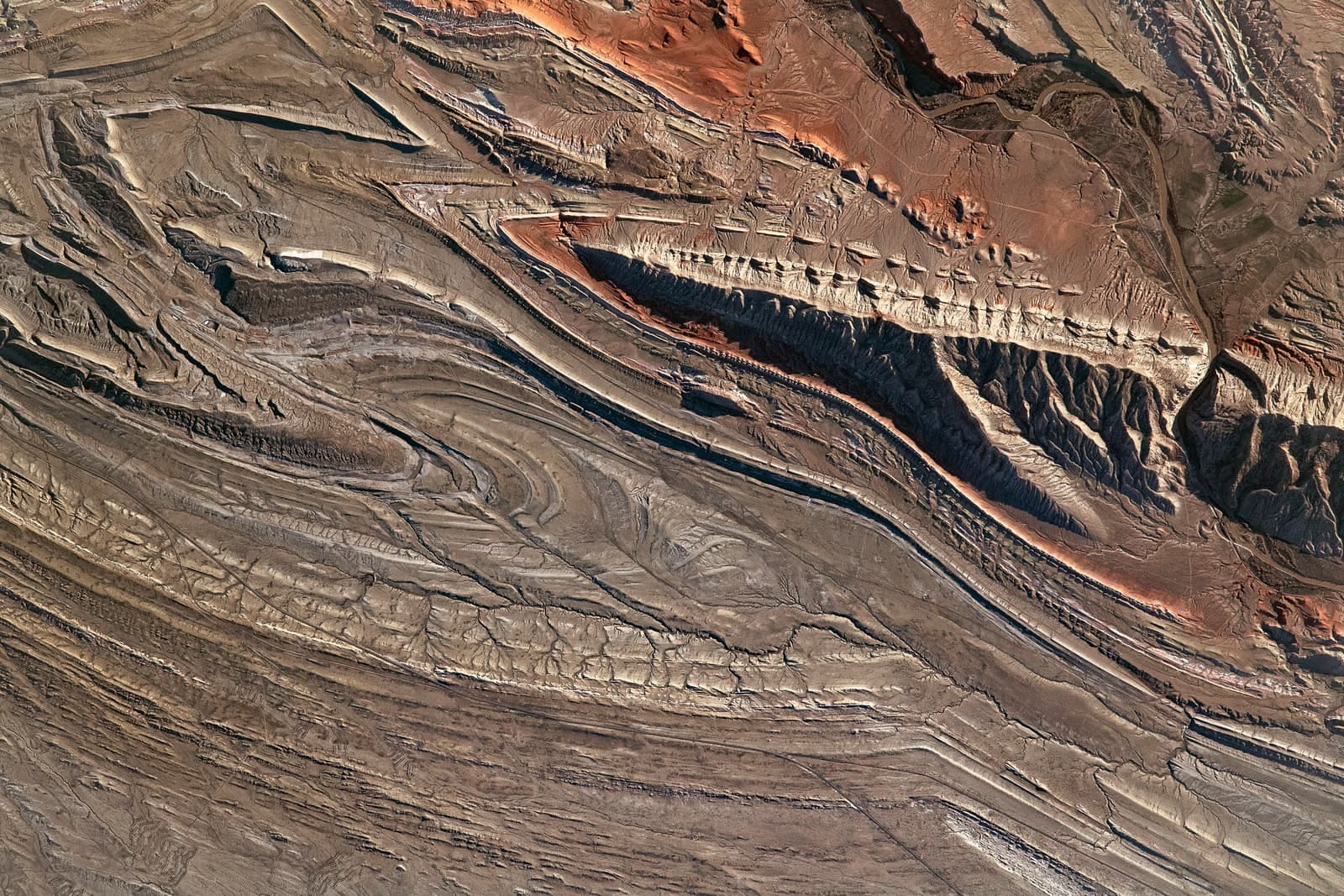
Google Earth and Google Maps satellite view are useful for identifying rock exposures before visiting. Bare rock is visible from the air in a way that vegetated ground is not. River meanders expose bedrock on the outer curves of bends. Quarry pits appear as light-coloured irregular patches. Coastal cliff bases show as linear edges at the cliff-sea interface. In arid regions like Utah and Wyoming, formation colours (red sandstone, grey shale, buff limestone) are visible from satellite and can be matched to geological maps to confirm whether an exposure is the right age.
For UK coastal sites, the Environment Agency's LIDAR data (available via data.gov.uk) shows ground elevation at 25cm resolution, making cliff erosion zones and foreshore rock exposures visible in detail that standard satellite imagery doesn't capture.
GFH site guides by region
GoFossilHunting.com has detailed guides for the most productive public fossil sites in the UK, US, and Europe. The guides index lists all regional guides, covering Dorset, Yorkshire, Isle of Wight, Wales, Florida, Ohio, California, Bavaria, and Wales. Each guide includes access notes, directions, and what you're likely to find.
For US visitors, the state pages list every documented site by state, which provides a faster filter than the regional guides if you're looking for something close to home. Once the research above has given you a shortlist, Best Places to Fossil Hunt in the United States ranks 15 specific, accessible US sites with access rules, fees, and seasons. It is the natural next step from "what's near me" to "where should I actually go."
Frequently asked questions
- How do I find fossil hunting sites near me?
- Start with the GoFossilHunting.com site guides, which list verified sites by US state and country with access details, geology notes, and what to expect. For a broader search, the Paleobiology Database (paleobiodb.org) maps fossil occurrences globally by formation. In the US, the USGS National Geologic Map Database (ngmdb.usgs.gov) shows the geological formations in your area; in the UK, the British Geological Survey's GeoIndex (bgs.ac.uk) covers the entire country at 1:50,000 scale and is free to use online.
- How do I find a local fossil hunting club?
- In the US, the American Federation of Mineralogical Societies (amfed.org) maintains a directory of affiliated fossil and mineral clubs organised by state. In the UK, the Geological Society maintains a list of affiliated societies and The Fossil Forum has a UK club directory. Local clubs have current trip reports, personal knowledge of accessible exposures, and contacts with landowners that online databases cannot match — and members can advise on which sites are currently productive.
- Are there free fossil hunting sites near me?
- Yes, in most regions. In the US, most Bureau of Land Management (BLM) land allows surface collection of common invertebrate and plant fossils without a permit. Dedicated free public sites include Caesar Creek State Park in Ohio (Ordovician trilobites and brachiopods) and Trammel Fossil Park in Sylvania, Ohio (Devonian trilobites). In the UK, public foreshore at most coastal sites is freely accessible for surface collecting. The state pages on GoFossilHunting.com list sites by state, filtered by access type.