
Introduction
Richmond sits in the flat, red country of northwest Queensland, roughly 500 kilometres west of Townsville, and beneath the cracked clay soil lies the floor of an ancient sea. The Eromanga Sea covered most of inland Australia during the Cretaceous period, approximately 100 to 105 million years ago, and when it retreated it left behind one of the richest marine fossil deposits on earth. Kronosaurus Korner is the museum that grew from those deposits, built around the 1989 discovery of a spectacular marine reptile on a nearby grazing property. Today it is Queensland’s premier Cretaceous marine fossil museum and the anchor attraction on Australia’s Dinosaur Trail.
The centrepiece of the collection is a mounted specimen of Kronosaurus queenslandicus, an 11-metre pliosaur with a skull exceeding two metres in length, making it one of the largest marine predators in the fossil record. Alongside the main exhibits, the museum runs the Shearing Straggler, a supervised hands-on fossil dig experience that gives visitors a genuine chance to uncover and handle Cretaceous specimens. This guide covers the location, exhibits, the dig experience, geological context, and the rules governing fossil activities in Queensland.
Location and Directions
Address
Kronosaurus Korner is located at 91–93 Goldring Street, Richmond QLD 4822.
Getting There
Richmond lies on the Flinders Highway (A2), the main sealed road connecting Townsville on the coast with Mount Isa in the outback. From Townsville, drive west on the Flinders Highway for approximately 500 kilometres; Richmond township is signposted throughout the journey. From Mount Isa, drive east on the Flinders Highway for approximately 360 kilometres. The museum is in the centre of town, clearly signposted from the highway. Street parking is available directly outside the museum on Goldring Street at no charge, with ample space for caravans, buses, and towing vehicles. The road from Townsville is sealed and suitable for all vehicles throughout the year, though summer storms between November and March can occasionally cause short-term flooding of low-level crossings on minor roads in the region.
What Fossils You’ll Find
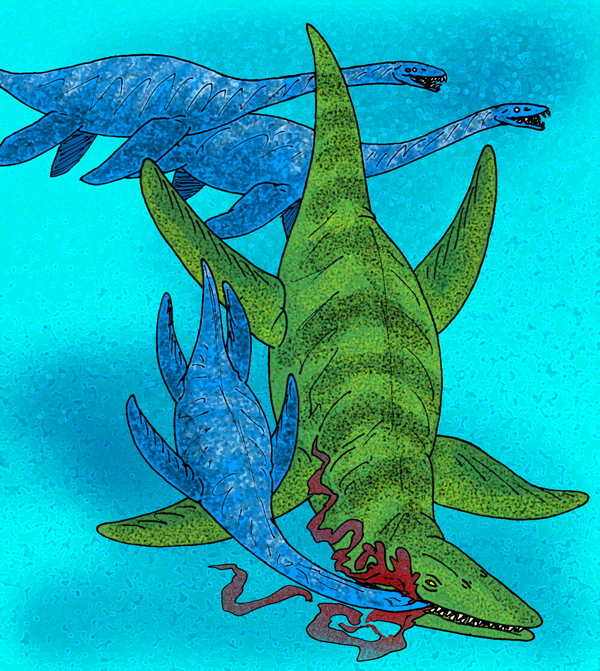
Kronosaurus queenslandicus is the museum’s headline specimen. This enormous pliosaur belongs to the family Pliosauridae and was a top predator of the Eromanga Sea, capable of taking large prey with its interlocking conical teeth. The mounted specimen at Kronosaurus Korner is approximately 11 metres long and was recovered from a property near Richmond in 1989 after graziers noticed bones eroding from the surface. The skull alone measures over two metres, and the robustness of the limb girdles gives a clear sense of the power this animal generated in the water.
The museum also displays a skeleton of Muttaburrasaurus langdoni, a large ornithopod dinosaur that lived in Queensland during the Cretaceous. The Richmond specimen is approximately 75 per cent complete, making it one of the most complete dinosaur skeletons found in Australia. Muttaburrasaurus was a herbivore estimated at around seven metres in length, and its unusual nasal structure suggests it may have used sound for communication or display.
Plesiosaurs from the Eromanga Sea are represented by multiple specimens from the families Elasmosauridae and Polycotylidae. Elasmosaurids had extremely long necks with up to 70 vertebrae and relatively small heads, feeding on fish and cephalopods in the upper water column. Polycotylids had shorter necks and larger heads suited to catching faster prey.
Ichthyosaurs, streamlined dolphin-shaped marine reptiles, are also present in the regional deposits. Although less common than plesiosaurs in Queensland, ichthyosaur remains from the Eromanga Sea beds have been recovered from several localities in the Richmond region.
Marine invertebrates from the Toolebuc Formation include abundant ammonites, bivalves, gastropods, and brachiopods. These animals lived in large numbers in the shallow Eromanga Sea and their remains form dense layers in the formation. Ammonite specimens with well-preserved septal suture detail are among the most visually engaging on display.
The Shearing Straggler is a supervised fossil dig experience set up within the museum complex. Visitors work through prepared sediment to find and recover Cretaceous specimens under the guidance of museum staff. The dig is designed to be accessible for families and children but is engaging for adult visitors as well. Any specimens found during the dig remain the property of the museum. Check with Kronosaurus Korner directly for current session times and pricing, as these may vary by season.
A fossil preparation laboratory is visible from a viewing window within the museum. When active, the lab allows visitors to watch trained technicians cleaning and stabilising real specimens, providing direct insight into the process between field recovery and display.
Geologic History
The Ancient Environment
The fossils at Kronosaurus Korner come primarily from the Toolebuc Formation, a unit of fine-grained organic-rich limestone and calcareous shale deposited on the floor of the Eromanga Sea approximately 100 to 105 million years ago, during the Albian and Cenomanian stages of the Late Cretaceous. The Eromanga Sea was a shallow epicontinental sea that covered more than one million square kilometres of eastern Australia at its maximum extent, stretching from the present Gulf of Carpentaria region southward into South Australia.
Water depth across most of the basin was relatively shallow, perhaps 50 to 200 metres, and the sea supported a productive marine ecosystem built on a base of plankton and invertebrates. Large schools of fish, cephalopods, and marine invertebrates provided food for the apex predators: the pliosaurs and plesiosaurs whose remains are found today near Richmond. Occasional influxes of terrestrial material, including plant debris and the carcasses of dinosaurs that lived along the shorelines, supplemented the marine assemblage.
The Toolebuc Formation is particularly noted for its abundance of the small turtle Notoemys and for the preservation of soft-bodied organisms in some localities. Burial in the fine-grained, low-oxygen sediments of the sea floor allowed organic material to be preserved in better-than-average condition for a marine setting.
How Kronosaurus Korner Became a Fossil Site
The Richmond district has been producing marine fossils since European settlement of the region, as graziers regularly encountered large bones eroding from creek banks and paddock surfaces. The discovery that changed everything came in 1989 when the Kronosaurus queenslandicus specimen was found on a property near town. The skull and much of the post-cranial skeleton were recovered in an excavation that required considerable logistical effort 500 kilometres from the nearest city. The museum was established to house and interpret this specimen, and its opening drew attention from researchers and visitors that transformed Richmond into a destination on what would become known as Australia’s Dinosaur Trail. Since the museum opened, systematic survey work across the region has located numerous additional fossil sites, and specimens continue to arrive for preparation and study.
Visiting Rules and Regulations
Is Fossil Collecting Allowed?
Fossil collecting on public or private land in Queensland is governed by the Queensland Heritage Act 1992 and the Nature Conservation Act 1992. Fossils found in the ground are the property of the Crown. Removing fossils from land without an appropriate permit is an offence. This applies to the Eromanga Sea fossil deposits in the Richmond district: the surrounding pastoral properties are private land, and collecting on them without written permission from the landowner and the relevant state permit is not allowed.
Within Kronosaurus Korner, the Shearing Straggler dig experience is a supervised activity in which participants handle Cretaceous specimens in a controlled setting. Any specimens found during the dig remain the property of the museum. The experience is about the process of discovery and the handling of real fossils, not about taking specimens home.
If you are interested in independently searching for fossils in the region, contact the museum directly before your visit. Staff can advise on whether any guided property tours or field trips are available and what permits or permissions you would need to arrange.
Recommended Equipment
For the Shearing Straggler dig experience, the museum provides all necessary tools. Wear clothes you do not mind getting dusty. Closed-toe shoes are recommended. If you plan to spend time outdoors in Richmond, bring a wide-brim hat, sunscreen with a high SPF rating, and adequate water. The northwest Queensland sun is intense year-round, and even a short walk between the car park and the museum entrance warrants sun protection.
If you are driving to Richmond from the coast, ensure your vehicle is mechanically sound before departing Townsville. Fuel and mechanical services are available in Richmond and at several towns along the Flinders Highway, but distances between services are substantial. Carry extra water in your vehicle as standard outback practice.
Safety
Richmond experiences extreme heat between November and March, with maximum temperatures routinely above 40 degrees Celsius. Plan your visit for the cooler months between April and September if possible. During summer, limit outdoor activity to early morning and late afternoon. Dehydration can occur quickly in the dry inland heat; drink water regularly throughout your visit and monitor children carefully.
Flash flooding is possible in the Richmond district during and after heavy summer rain. The Flinders Highway can be closed or made hazardous by flooding. Check road conditions by calling 13 19 40 or via the Queensland Traffic website before and during your journey in the wet season.
Sources
- https://www.kronosauruskorner.com.au
- https://www.australiasdinosaurtrail.com.au
- https://museum.qld.gov.au/about/departments/geosciences/cretaceous-inland-sea
- https://en.wikipedia.org/wiki/Kronosaurus
- https://en.wikipedia.org/wiki/Eromanga_Sea
- https://en.wikipedia.org/wiki/Toolebuc_Formation
- https://en.wikipedia.org/wiki/Muttaburrasaurus