gear
Best Fossil Hunting Gear Under $100
By Edward Chen · Updated 31 July 2026
A functional fossil hunting kit costs between $50 and $90 if bought new. The essentials are a hand lens, a small crack hammer and chisels, safety glasses, and materials for wrapping and carrying finds. Everything else is optional or site-specific. The expensive kit, air scribes, binocular microscopes, GPS units, is for professional preparation and survey work, not for a day at the beach or a public quarry.
Here's what to buy, in order of priority.
The non-negotiables
Hand lens (10×), $15–$25. A 10× loupe is the single most important tool for a fossil collector. It lets you see surface detail, suture lines on ammonites, and the structure of small specimens that are otherwise impossible to identify in the field. Belomo and Carson make reliable pocket loupes at this price point. Avoid cheap gift-shop lenses, the optics are soft and frustrating.
Safety glasses, $8–$15. Required for any hammering work. Rock chips travel at speed in random directions. Safety glasses certified to ANSI Z87.1 (US) or EN166 (EU/UK) are the standard. Any hardware store carries these. Cycling glasses also work.
Crack hammer or geological hammer, $20–$40. A crack hammer (short-handled, square head, typically 22oz) is used for splitting slabs of shale and limestone. An Estwing or Stanley crack hammer at this price range is suitable for most foreshore and quarry use. A geological hammer (pointed pick on one side, flat face on the other) is useful for specific types of matrix removal but not essential for a first kit.
Cold chisels, 2–3 sizes, $12–$20 for a set. Used with the hammer for more controlled splitting and matrix removal. A set with 12mm, 19mm, and 25mm widths covers most situations.
Mesh or net bag, $8–$15. A drawstring mesh bag (the kind used for laundry or produce) drains water, doesn't trap mud, and is easy to wash. Purpose-made fossil collecting bags exist but are not necessary.
Tissue paper or newspaper, $3–$5. For wrapping individual finds to prevent abrasion in your bag. Available anywhere. Tissue paper is preferable because newspaper ink can transfer.

Useful additions
Knee pads, $12–$25. Foreshore searching involves significant time kneeling on wet rock. Standard foam kneeling pads from a garden centre or neoprene work pads both do the job.
Soft brush (old toothbrush), $1–$3. Useful for clearing loose dirt and matrix from finds in the field without scratching. Wear one out before you use it on fossils.
Waterproof notepad and pencil, $5–$8. Recording site information at the time of collection is more reliable than trying to remember it later. A small waterproof notebook fits any pocket.
Tide table app (free). The BBC Weather tidal forecast and Admiralty EasyTide are both free and specific to named UK locations. In the US, NOAA's tide predictions (tidesandcurrents.noaa.gov) are free. Check tide times for your specific site and date before every coastal visit.
What not to buy first
Pre-packaged fossil hunting kits from gift shops. These typically contain low-quality tools and materials of uncertain origin. The hammer is usually too light. The brushes are poor quality. The goggles don't meet safety standards. The same money spent on individual tools from a hardware store buys substantially better equipment.
An air scribe. Pneumatic engraving tools are used for professional fossil preparation in a controlled workshop environment. They are not field tools and require a compressor. They start at $150 and are completely unnecessary until you're doing detailed preparation work on significant specimens.
A specialist fossil collecting backpack. A standard day pack with foam padding for fragile specimens is functionally identical and costs a quarter of the price.
A realistic budget breakdown
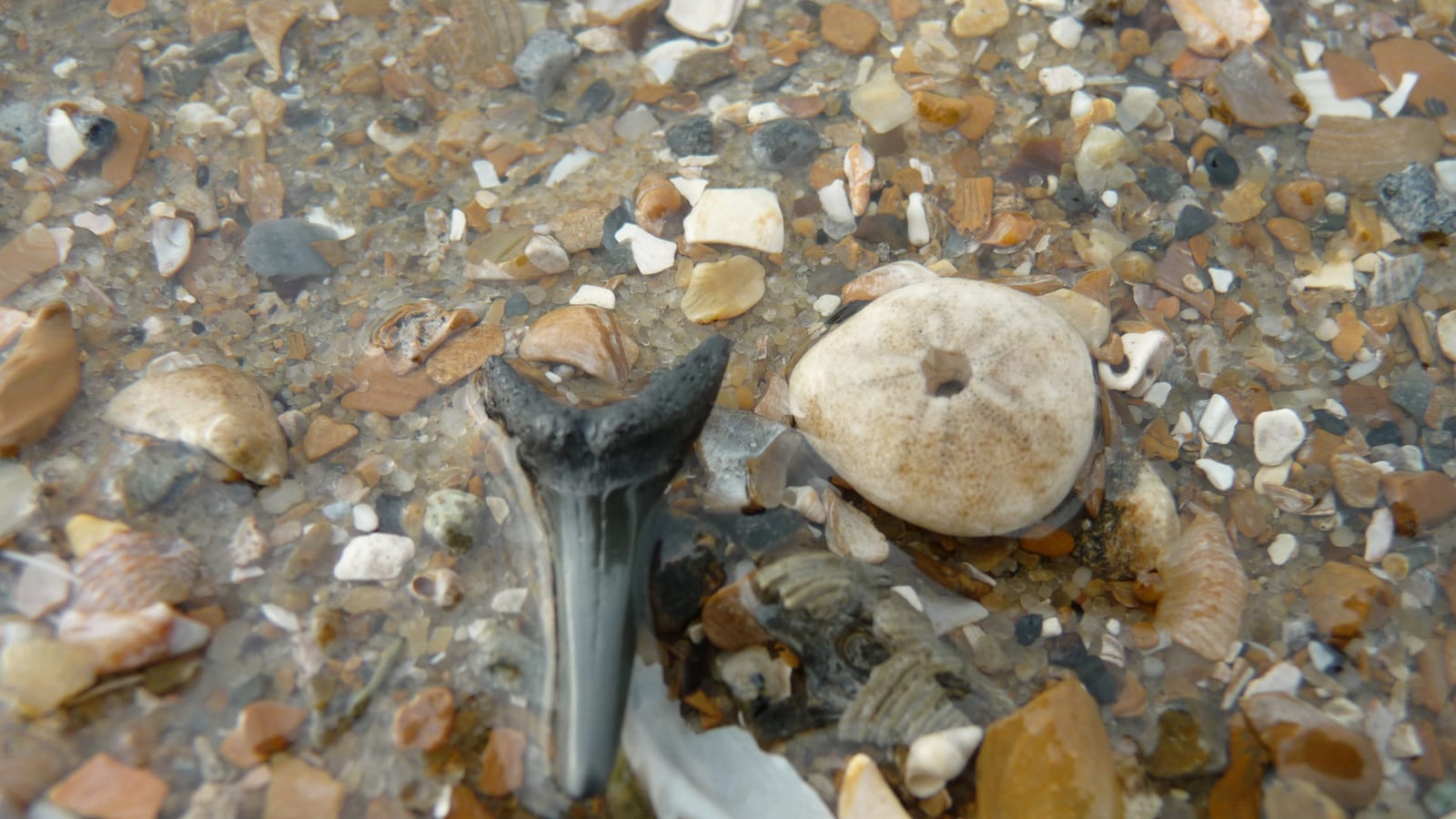
For a beach foreshore visit where surface collecting is the method, Charmouth, Venice Beach, Caesar Creek, the minimum viable kit is a hand lens ($20), tissue paper ($3), and a bag ($5). Total: under $30, and you're genuinely equipped for a productive first trip.
For active splitting work at a shale site, add a crack hammer ($30), cold chisels ($15), and safety glasses ($10). Total: around $80.
The full kit listed above, everything in "non-negotiables" and "useful additions", comes to $85–$95 bought new at hardware store prices. Everything below that line is workshop equipment, specialist tools, or luxury items. The quality ceiling you hit at $100 is genuinely high: an Estwing hammer lasts decades, Belomo loupes are used by professional geologists, and ANSI-certified safety glasses are the same standard used on construction sites.
Where to go next
For site-specific kit recommendations, including what not to bring to cliff sites and what matters most at tidal foreshore sites, the beginners guide on GFH covers the essentials in detail. The fossil parks guide notes what tools pay-to-dig sites provide versus what you need to bring yourself.
Frequently asked questions
- How much does it cost to start fossil hunting?
- A minimum viable kit for beach surface collecting — a 10× hand lens ($15–$25), tissue paper ($3), and a mesh bag ($5) — costs under $30. A full kit including a crack hammer, cold chisels, safety glasses, and knee pads for active rock-splitting work comes to approximately $85–$95 bought new at hardware store prices.
- What is the best starter kit for fossil hunting?
- The essentials are a 10× hand lens (Belomo or Carson models are reliable at $15–$25), a mesh or net bag ($8–$15), tissue paper for wrapping finds ($3–$5), safety glasses ($8–$15), and appropriate waterproof footwear. A crack hammer and cold chisels are only needed at sites where splitting rock is the method; for surface collecting at beaches, the hand lens and bag alone are sufficient for a productive first trip.
- Are fossil hunting kits from gift shops worth buying?
- No. Pre-packaged fossil hunting kits from tourist shops typically contain a hammer too light for rock work, chisels that bend or shatter, and a magnifier with poor optics — all at inflated prices. Individual tools from a hardware store (a crack hammer, cold chisels, ANSI-certified safety glasses) are better quality in every respect at lower combined cost.