locations
15 Best Places to Fossil Hunt in the US (2026)
By Edward Chen · Updated 13 July 2026
The best places to fossil hunt in the United States fall into three types. Free public collecting parks, where a state or federal agency has set aside a specific exposure for amateur collectors. Commercial pay-to-dig quarries that let you keep what you split out of the rock. And tidal beaches where Miocene marine sediments shed shark teeth onto the foreshore. This guide ranks 15 named sites rather than whole states, so you can pick one and plan a trip around it. Each entry lists the fossils you can expect, the access rules, the fee, and the best season to go.
The 15 best places to fossil hunt in the United States
- Venice and Caspersen Beach, Florida for Miocene shark teeth on free public sand.
- Caesar Creek State Park, Ohio for Ordovician trilobites on a managed spillway.
- Calvert Cliffs State Park, Maryland for Miocene shark teeth on a free Chesapeake beach.
- Penn Dixie Fossil Park, New York for a complete Devonian trilobite in one afternoon.
- Mineral Wells Fossil Park, Texas for free Pennsylvanian crinoids and brachiopods.
- U-Dig Fossils, Utah for the most reliable Cambrian trilobite quarry in the West.
- American Fossil, Kemmerer, Wyoming for Eocene fish you keep from a 50-million-year-old lake.
- The Mammoth Site, Hot Springs, South Dakota for a Pleistocene mammoth dig program.
- Peace River, Florida for megalodon teeth and Ice Age vertebrate material.
- Mazon Creek, Illinois for Pennsylvanian concretions and the Tully Monster.
- Florissant Fossil Beds, Colorado for Eocene insects and plants at the adjacent quarry.
- Cleveland-Lloyd Dinosaur Quarry, Utah for the densest Jurassic bone bed on record (viewing).
- Dinosaur Valley State Park, Texas for Early Cretaceous sauropod and theropod trackways (viewing).
- Dinosaur State Park, Connecticut for Jurassic trackways and a take-home cast (viewing).
- Monument Rocks, Kansas for Cretaceous chalk from the Western Interior Seaway (viewing).
Federal collecting law in one paragraph
Federal collecting law sits underneath everything. The Paleontological Resources Preservation Act of 2009 (16 U.S.C. §§ 470aaa to 470aaa-11) prohibits removal of vertebrate fossils from federal land without a research permit, while permitting "casual collecting" of reasonable quantities of common invertebrate and plant fossils on Bureau of Land Management and US Forest Service land. The National Park Service is stricter: no fossil collecting at all is allowed inside NPS units. State land rules vary case by case, which is why the sites in this guide sit on land managed by state parks, municipalities, or commercial operators with clear, published collecting rules.
At-a-glance comparison
| # | Place | State | Period | Access | Fee | Best season |
|---|---|---|---|---|---|---|
| 1 | Venice / Caspersen Beach | Florida | Miocene | Free | $0 | Year-round |
| 2 | Caesar Creek State Park | Ohio | Ordovician | Free with permit | $0 | Spring to fall |
| 3 | Calvert Cliffs State Park | Maryland | Miocene | Free beach | Park day-use | Year-round, post-storm |
| 4 | Penn Dixie Fossil Park | New York | Devonian | Fee-based | ~$15 to $20 adult | April to October |
| 5 | Mineral Wells Fossil Park | Texas | Pennsylvanian | Free | $0 | Spring to fall |
| 6 | U-Dig Fossils | Utah | Cambrian | Pay-to-dig | Operator fee | March to October |
| 7 | American Fossil (Kemmerer) | Wyoming | Eocene | Pay-to-dig | $89 to $169 adult | May to October |
| 8 | The Mammoth Site | South Dakota | Pleistocene | Dig program | Operator fee | Year-round |
| 9 | Peace River | Florida | Miocene to Pleistocene | Free, permit for vertebrates | $0 | Winter dry season |
| 10 | Mazon Creek | Illinois | Pennsylvanian | Free under local rules | $0 | Spring to fall |
| 11 | Florissant Fossil Quarry | Colorado | Eocene | Pay-to-dig (private) | Operator fee | Late spring to fall |
| 12 | Cleveland-Lloyd Dinosaur Quarry | Utah | Jurassic | Viewing only | BLM fee | Seasonal |
| 13 | Dinosaur Valley State Park | Texas | Cretaceous | Viewing only | $8 adult | Year-round |
| 14 | Dinosaur State Park | Connecticut | Jurassic | Viewing plus casting | Park fee | Year-round |
| 15 | Monument Rocks | Kansas | Cretaceous | Viewing only | Free | Year-round |
1. Venice and Caspersen Beach, Florida: Miocene shark teeth on free public sand
Florida is the easiest state in the country to find a fossil on a first trip. Almost the entire surface geology is Miocene-through-Quaternary marine sediment, and offshore phosphate beds shed shark teeth onto the Gulf coast continuously. Venice Beach and the nearby Caspersen Beach are the canonical sites. Bring a mesh scoop, work the swash zone an hour either side of low tide, and you will come home with teeth.
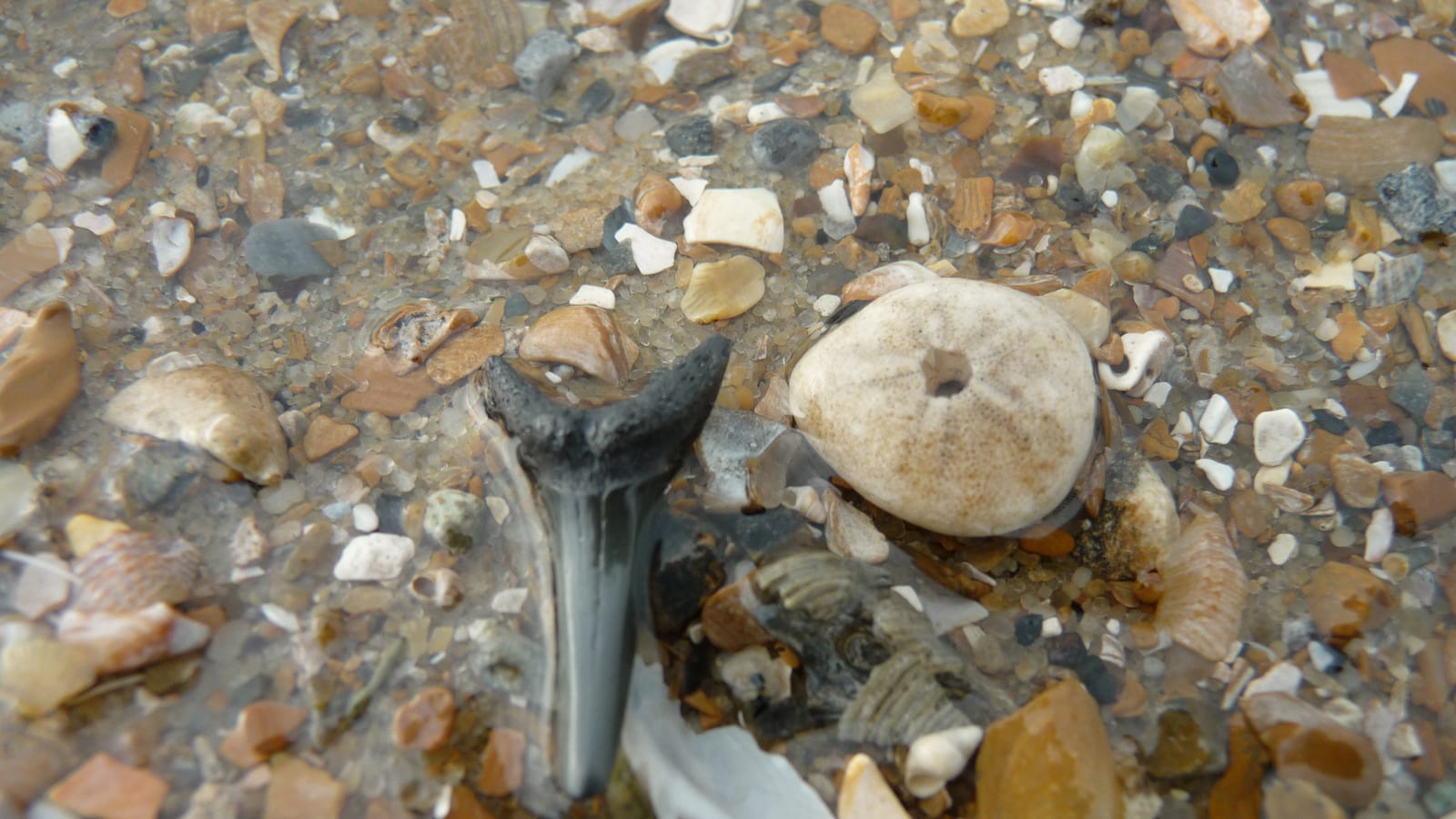
The legal layer matters. Under the Florida Fossil Permit program run by the Florida Museum of Natural History at the University of Florida, shark teeth, ray teeth, invertebrates, and plant fossils may be collected on state land by anyone with or without a permit. Vertebrate fossils, meaning mammal bone, turtle, and fish other than sharks and rays, require a $5-per-year permit and must be reported to the museum. See the Venice Beach guide and the Florida regional guide for tide timing and the nearby beaches.
2. Caesar Creek State Park, Ohio: Ordovician invertebrates on a managed spillway
The Cincinnatian Series of Ordovician limestone and shale across southwest Ohio is the global reference section for Late Ordovician stratigraphy. The most accessible site is Caesar Creek State Park near Waynesville, where the US Army Corps of Engineers manages the spillway below the dam as a designated fossil-collecting area. The Ohio Department of Natural Resources confirms that collecting at the spillway is allowed. Visitors pick up a free permit from the Army Corps Visitor Center before walking down to the rock.
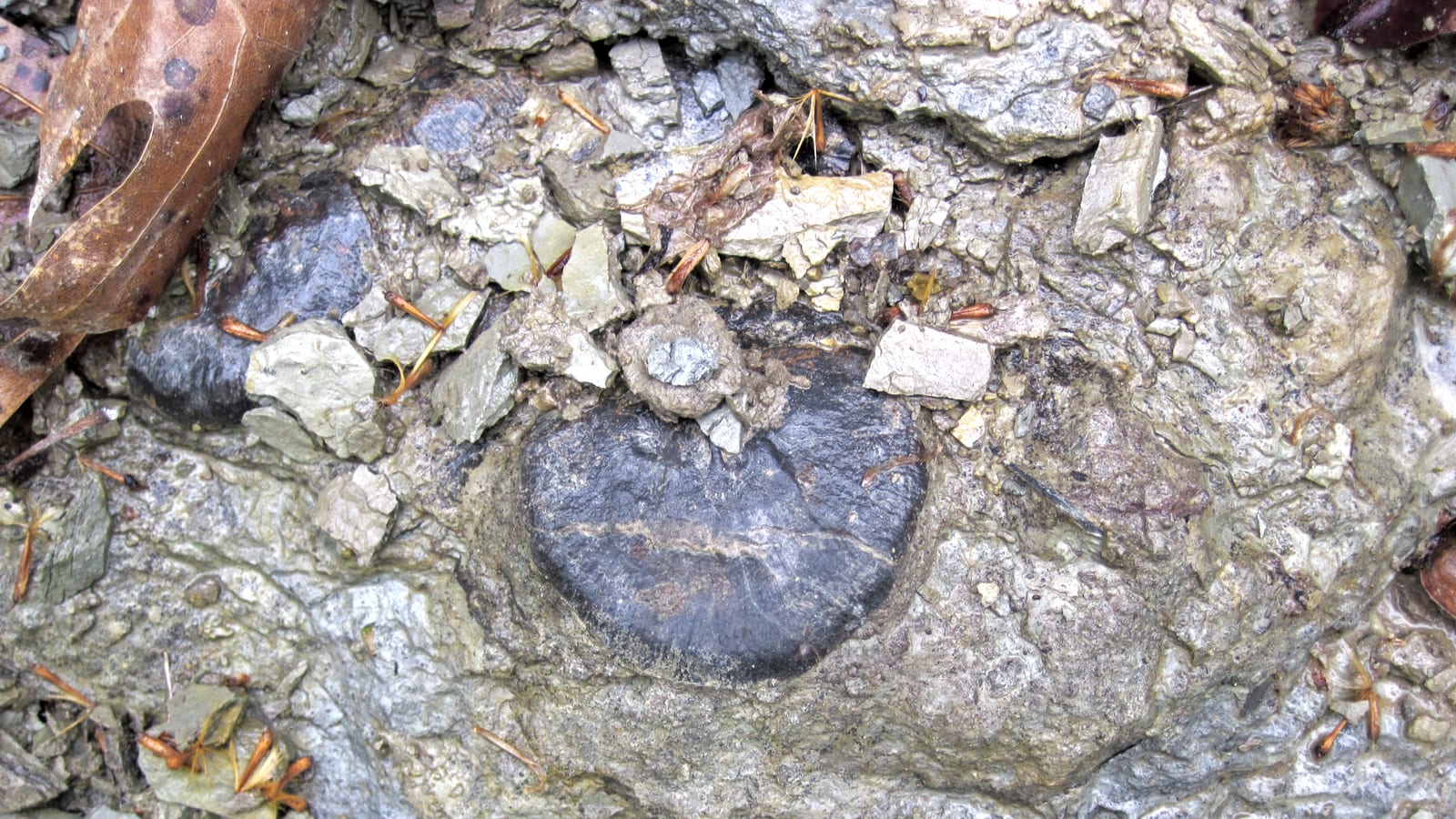
Trilobites (Flexicalymene, Isotelus), brachiopods, bryozoans, crinoids, and small horn corals all occur in the spillway exposure. See the Caesar Creek site page and the Ohio regional guide for the full set of state sites.
3. Calvert Cliffs State Park, Maryland: Miocene shark teeth on the Chesapeake
Calvert Cliffs State Park on the western shore of the Chesapeake is the East Coast's best free shark-tooth site. The Maryland Geological Survey identifies more than 600 fossil species from the Miocene Chesapeake Group, 10 to 20 million years old, exposed in the cliffs. The Maryland DNR notes that shark teeth are found on the beach scree below the cliffs and may be collected, including occasional megalodon material. Climbing or digging into the cliff face is prohibited, because landslides have killed visitors and the DNR enforces the rule.
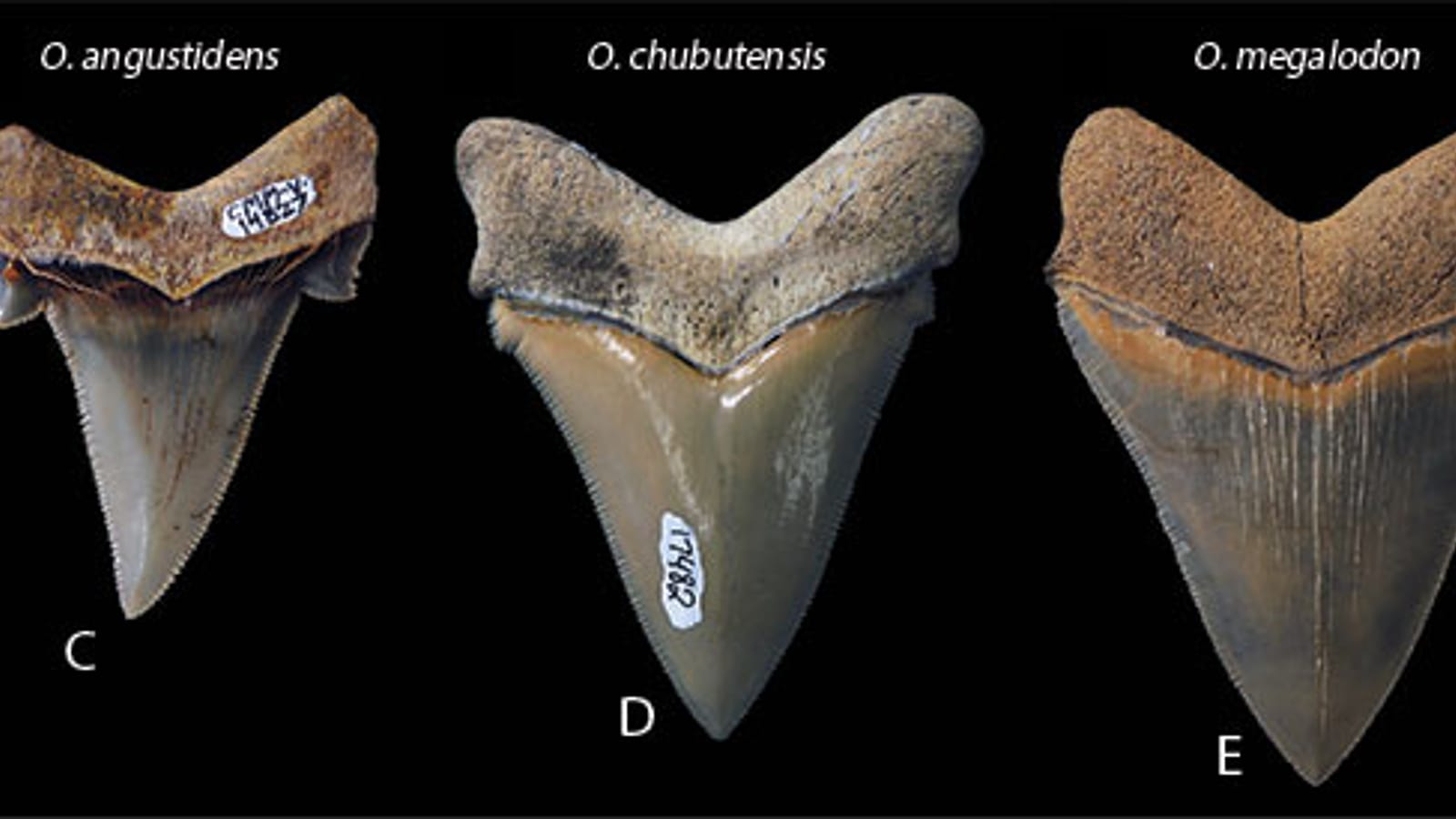
The beach is a 1.8-mile walk from the parking lot at the end of the red trail. Post-storm conditions, especially after a winter northeaster, refresh the scree and produce the best collecting. See Calvert Cliffs on GFH for directions and tide guidance.
4. Penn Dixie Fossil Park, New York: a complete Devonian trilobite in an afternoon
Penn Dixie Fossil Park and Nature Reserve in Blasdell, just south of Buffalo, is the easiest place in the country to dig a complete trilobite in a single afternoon. The site exposes the Middle Devonian Hamilton Group, the global reference section for that interval, and produces Eldredgeops rana (long known as Phacops rana), Greenops, brachiopods, crinoid columnals, and pyritised cephalopods. Admission includes a 20-minute guided geology tour and the use of basic collecting tools. The park is open roughly April through October.
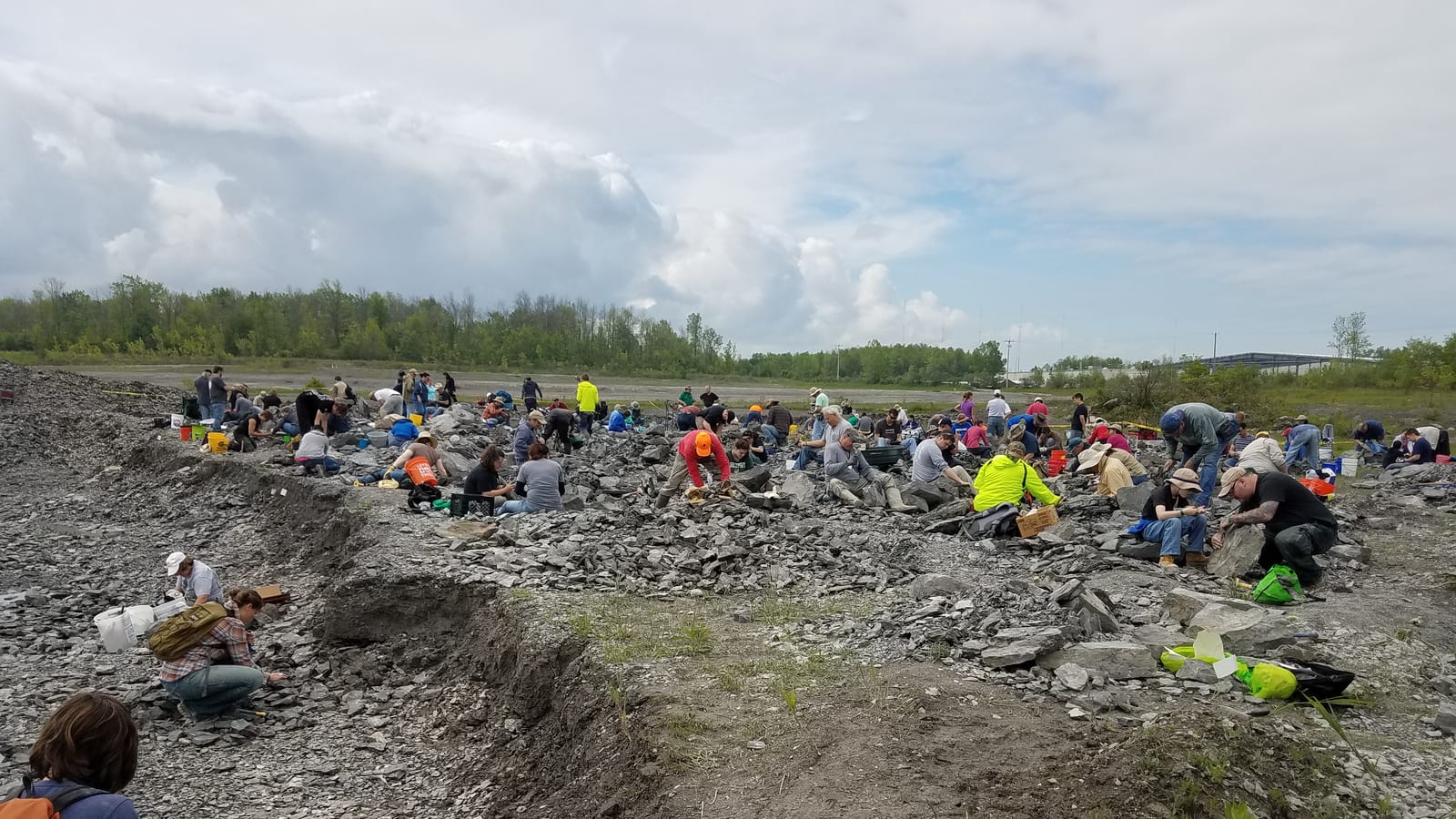
See the Penn Dixie site page and the New York state listing for the Devonian outcrops along the Mohawk Valley.
5. Mineral Wells Fossil Park, Texas: free Pennsylvanian invertebrates
The City of Mineral Wells operates Mineral Wells Fossil Park as a free public Pennsylvanian collecting site. The city's official page calls out personal-use collection of the 300-million-year-old invertebrates, with no permit and no fee. Crinoid stem ossicles, brachiopods, trilobites, echinoid spines, and small horn corals come out of the exposed shale and limestone every visit. The park is open every day from 8 AM to 8:45 PM.
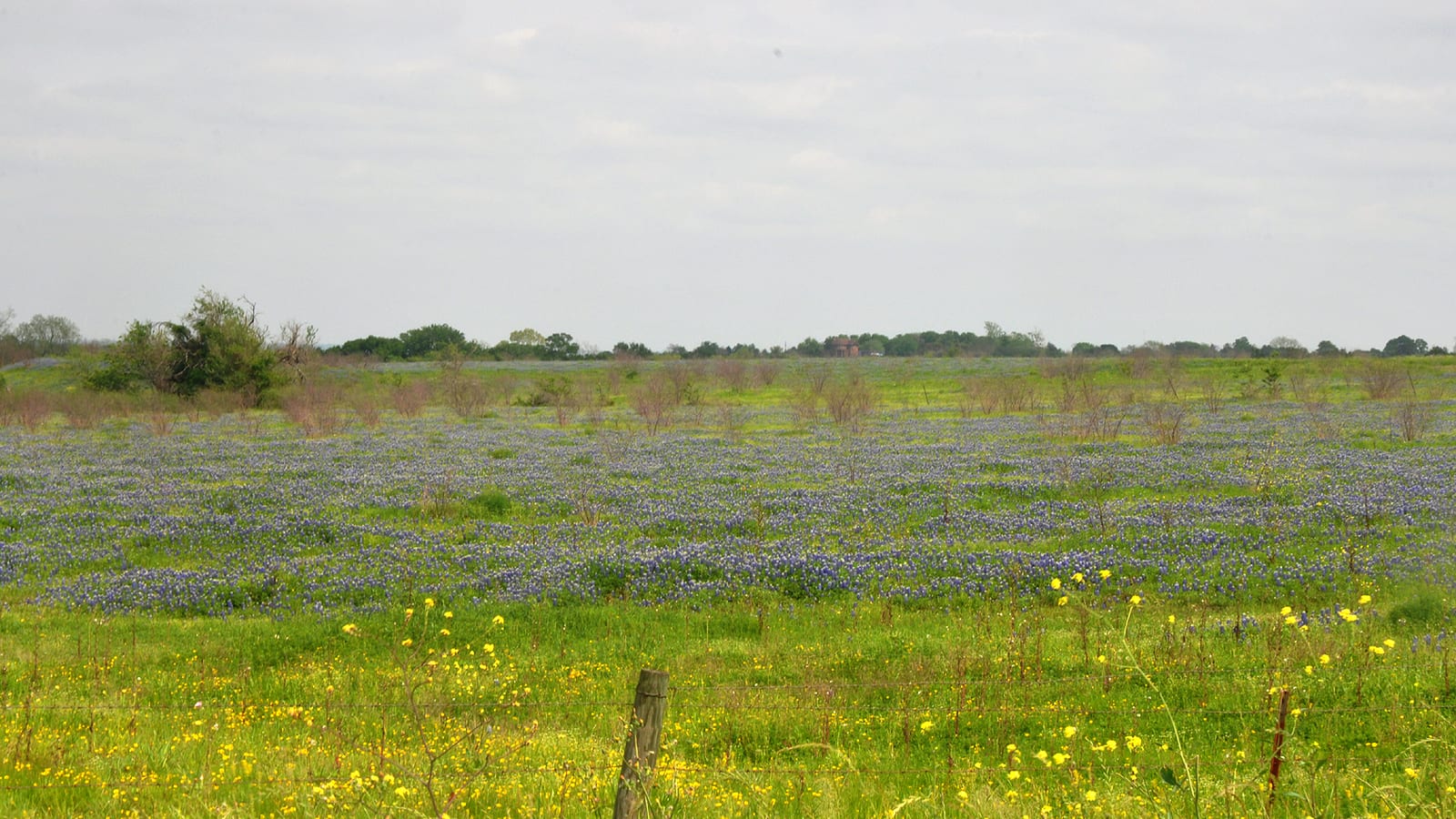
See the Mineral Wells site page for directions and what each layer produces.
6. U-Dig Fossils, Utah: the most reliable trilobite quarry in the West
U-Dig Fossils in Millard County is the most reliable trilobite quarry in the western US. The Middle Cambrian Wheeler Shale, approximately 507 million years old, produces Elrathia kingii and Asaphiscus wheeleri in commercial volume. The 2026 season runs March 30 through October 24, gate open 9 AM to 6 PM, closed Sundays. Operator fees apply, and you keep what you split.
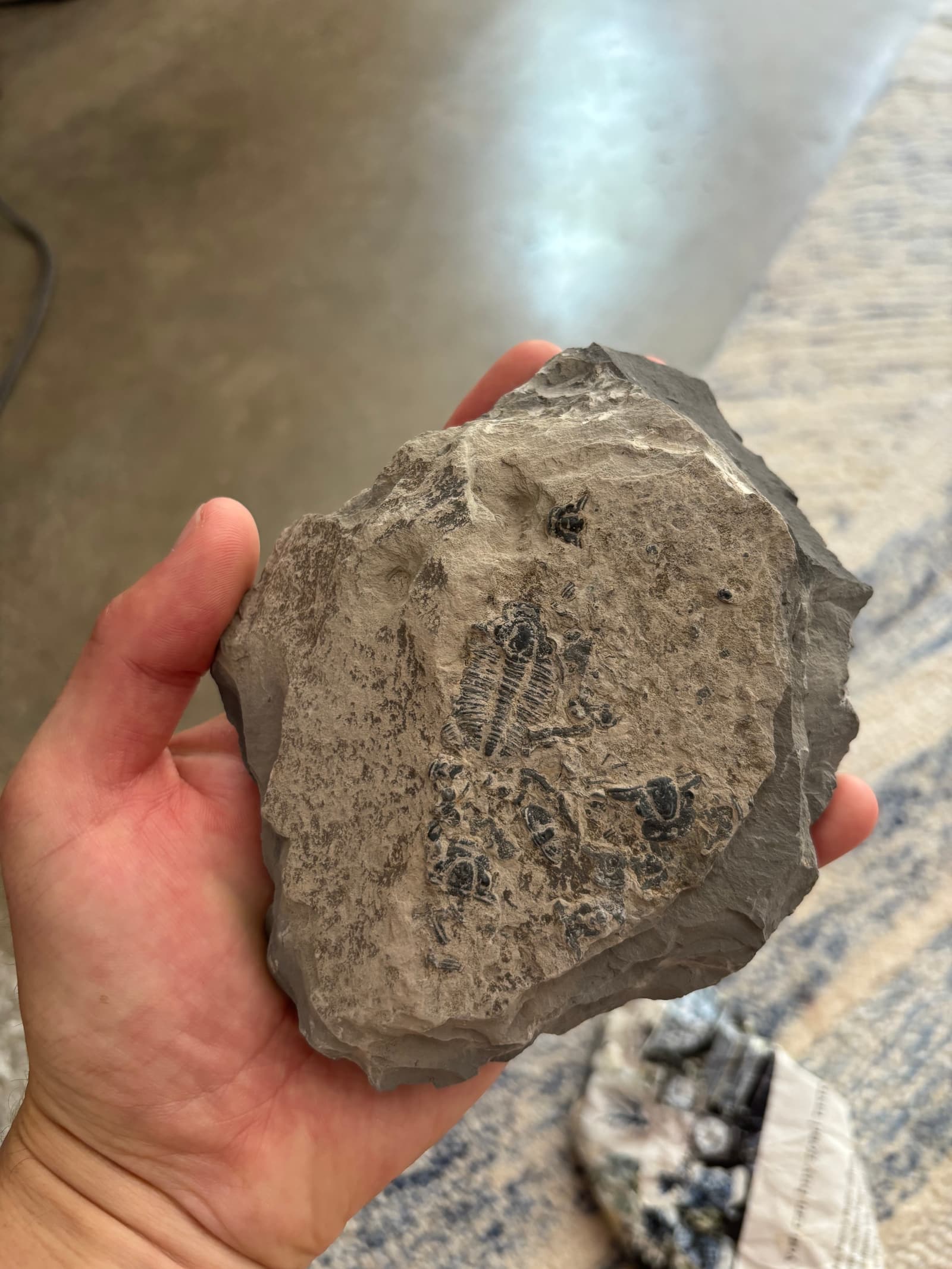 Photo: Edward Chen / GoFossilHunting
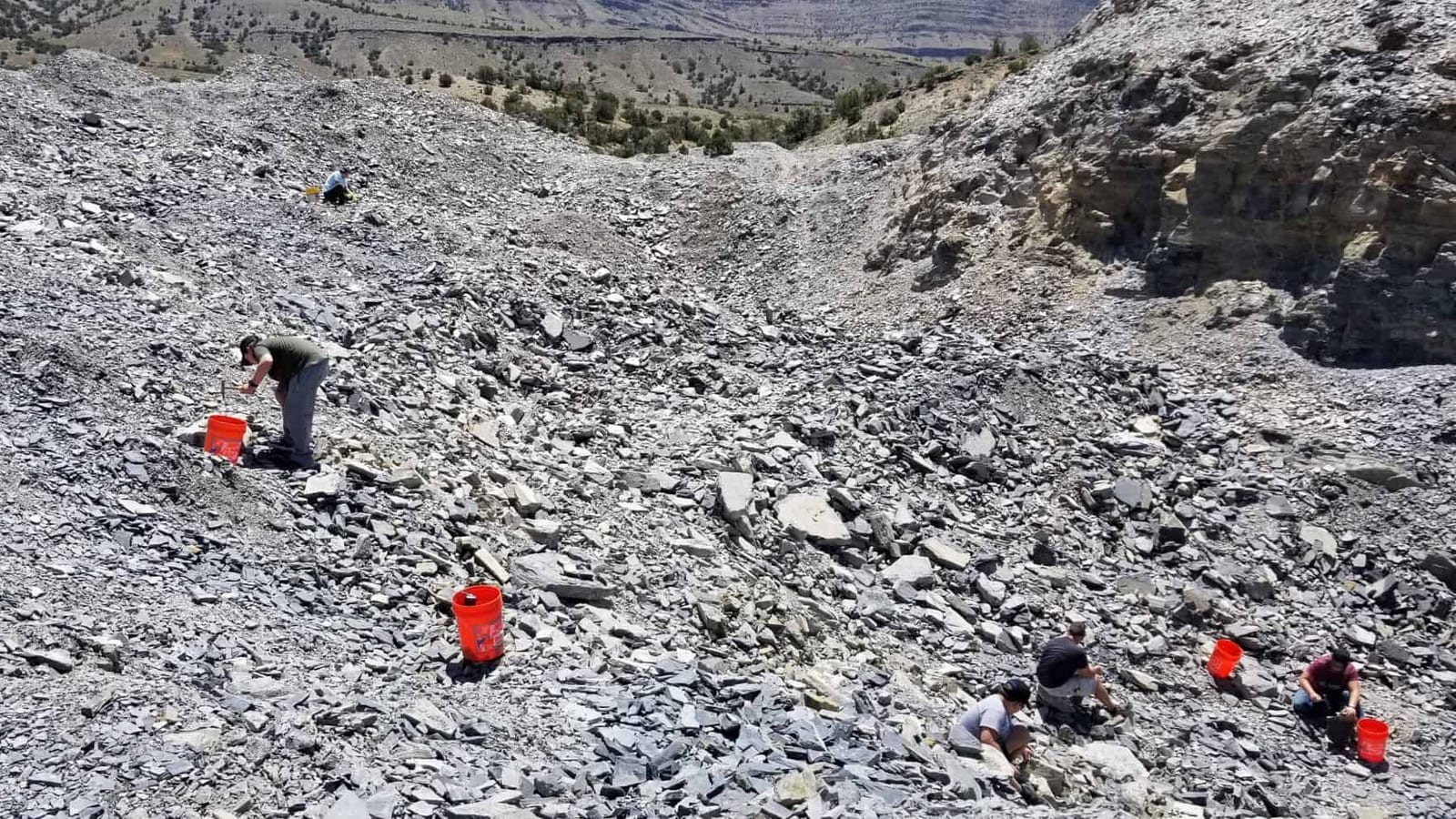
See the U-Dig site page for directions, tools to bring, and which slabs split cleanest.
7. American Fossil, Kemmerer, Wyoming: Eocene fish you keep
Two commercial operations near Kemmerer work the Eocene Green River Formation and let collectors keep complete fish from a 50-million-year-old freshwater lake. American Fossil's 2026 pricing runs from $89 for a 2-hour adult dig to $169 for a full 8-hour dig, with children's rates at roughly half. Knightia is the most common species. Diplomystus, Mioplosus, gar, and stingray come out less often. The adjacent Fossil Butte National Monument is the no-collecting counterpart, where complete specimens are viewable in situ under glass.
See the American Fossil site page for booking details and the split-and-flip technique the operators teach.
8. The Mammoth Site, Hot Springs, South Dakota: a Pleistocene dig program
The Mammoth Site near Hot Springs is an active Pleistocene sinkhole excavation that has produced more than 60 Columbian mammoths in situ. It runs a public Junior and Advanced Paleontology dig program that lets visitors work alongside the excavation under supervision. This is the realistic route to a hands-on dinosaur-era-scale dig in the northern plains, where almost all productive Hell Creek dinosaur ground is private ranch land or BLM.
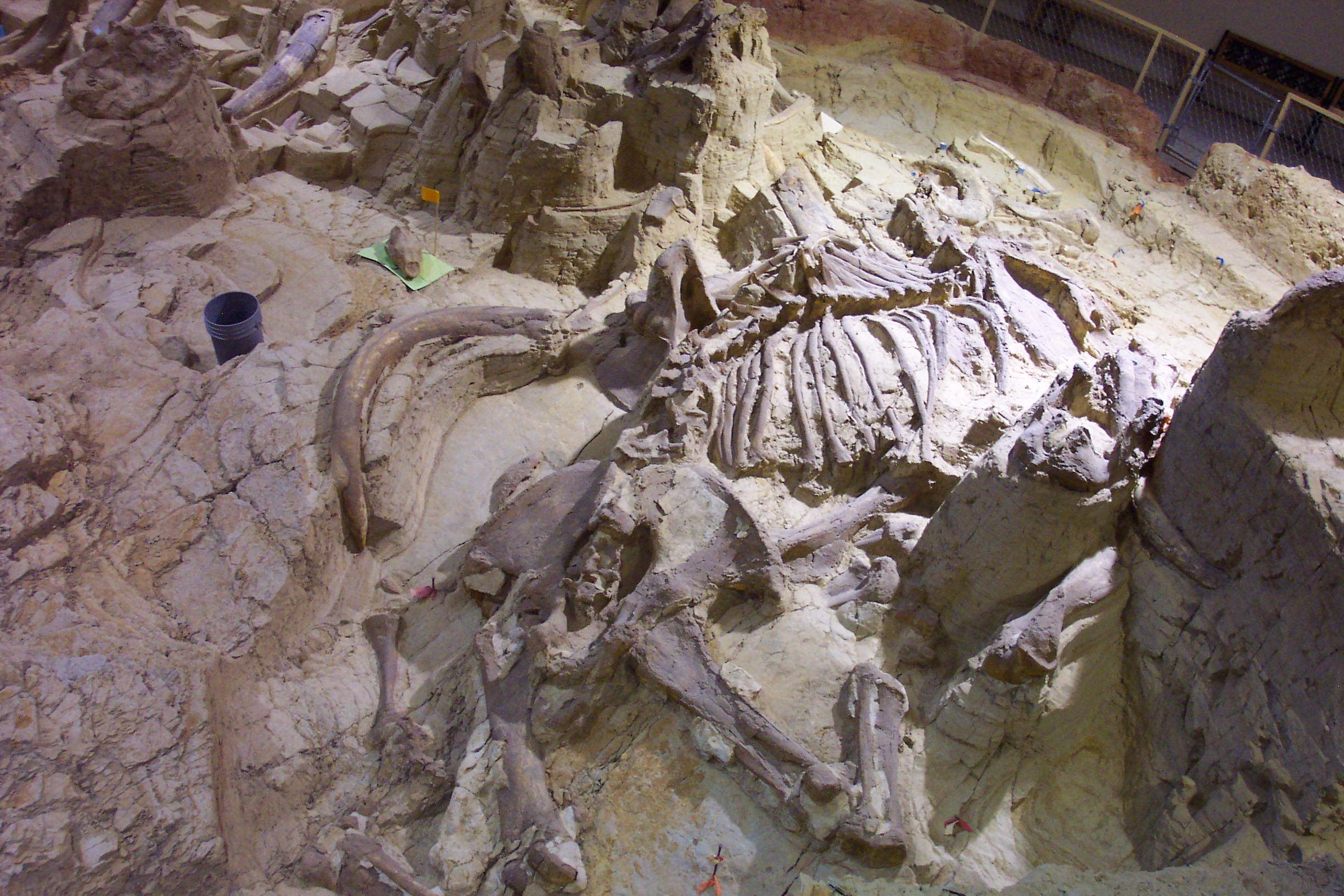
See the Mammoth Site page for program dates and age limits.
9. Peace River, Florida: megalodon teeth and Ice Age vertebrates
The Peace River in central Florida is the state's most productive vertebrate site. It runs on Florida-owned submerged land, so collecting megalodon teeth and shark material is unrestricted. Collecting a mammoth tooth, a ground-sloth claw, or other vertebrate bone requires the same $5-per-year state permit from the Florida Museum, and those finds must be reported. Sifting gravel bars produces black fossil shark teeth, ray plates, and Pleistocene mammal bone.
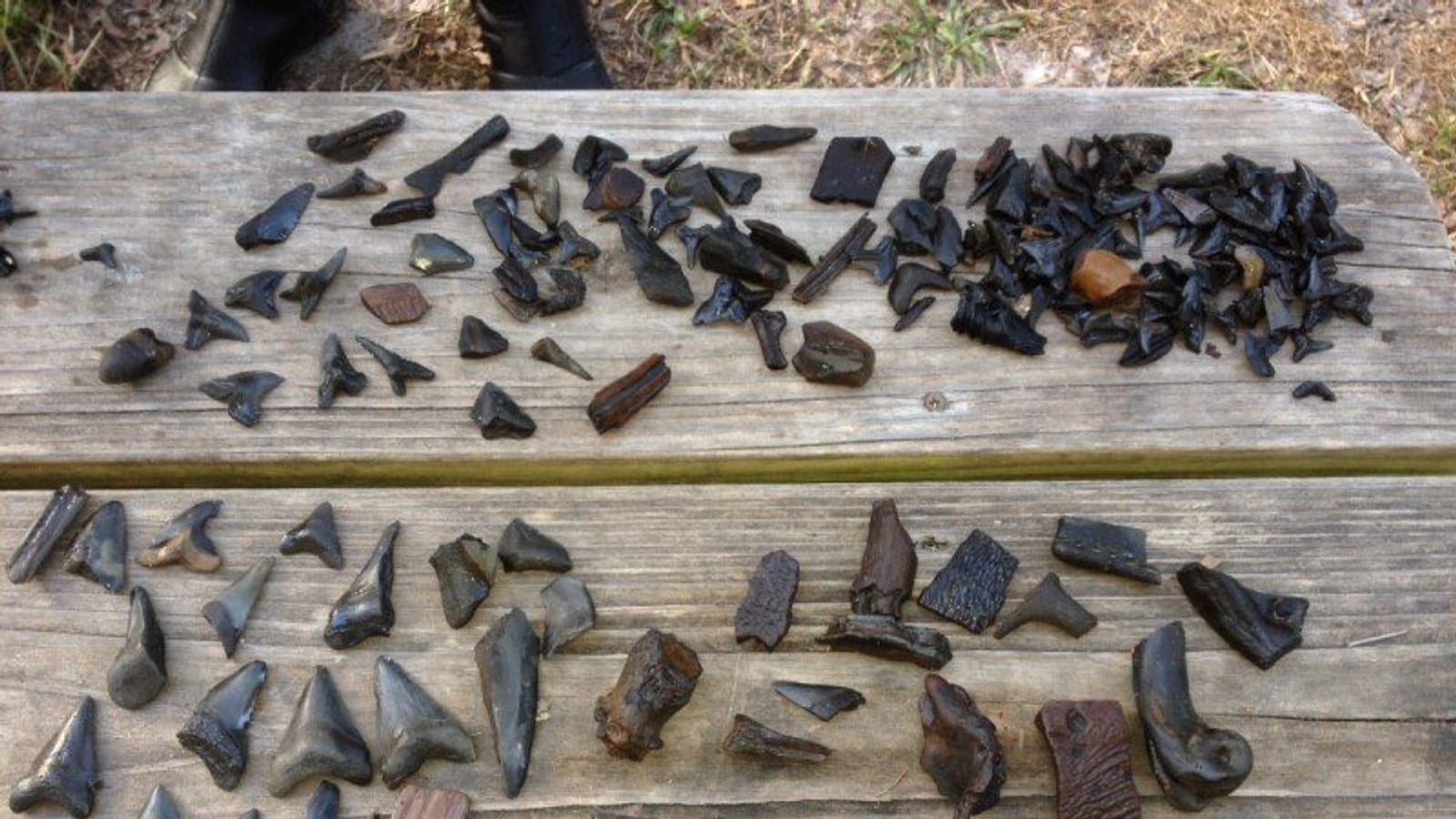
Go in the winter dry season, roughly November to April, when water levels drop and the gravel bars are exposed. See the Peace River site page for access points and the permit process.
10. Mazon Creek, Illinois: Pennsylvanian concretions and the Tully Monster
The Mazon Creek beds east of Morris are the most famous Pennsylvanian site in North America. Split-open siderite concretions preserve soft-bodied organisms in detail, including the Tully Monster (Tullimonstrum gregarium), the Illinois state fossil, alongside ferns, jellyfish, and the shrimp-like Essexella. Collecting is allowed under local rules on the reclaimed Pit 11 ground now managed for public access.
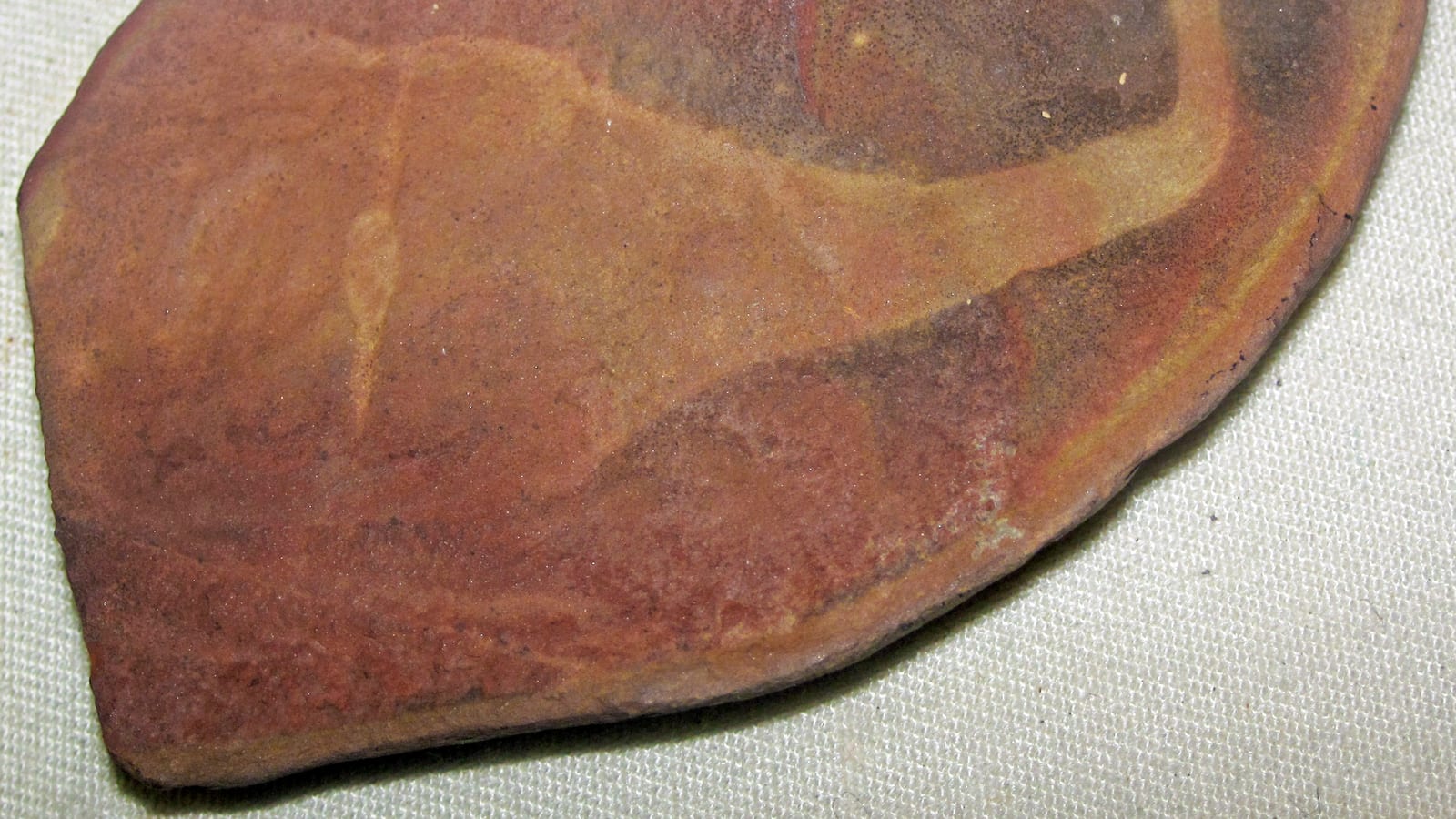
Collect wet concretions, then use freeze-thaw cycles at home to pop them open along the fossil plane. Check the current Pit 11 and Illinois DNR guidance before you go. See the Mazon Creek site page for the collecting-area map.
11. Florissant Fossil Beds, Colorado: Eocene insects and plants
Florissant Fossil Beds National Monument preserves a 34-million-year-old Eocene lake bed with delicate insect, spider, and plant fossils. Collecting is prohibited inside the monument, because this is NPS land and PRPA applies. The adjacent, privately run Florissant Fossil Quarry sells half-day shale-splitting access where visitors keep what they find. The monument's visitor center and trail system are open year-round. The private quarry runs late spring through early fall.
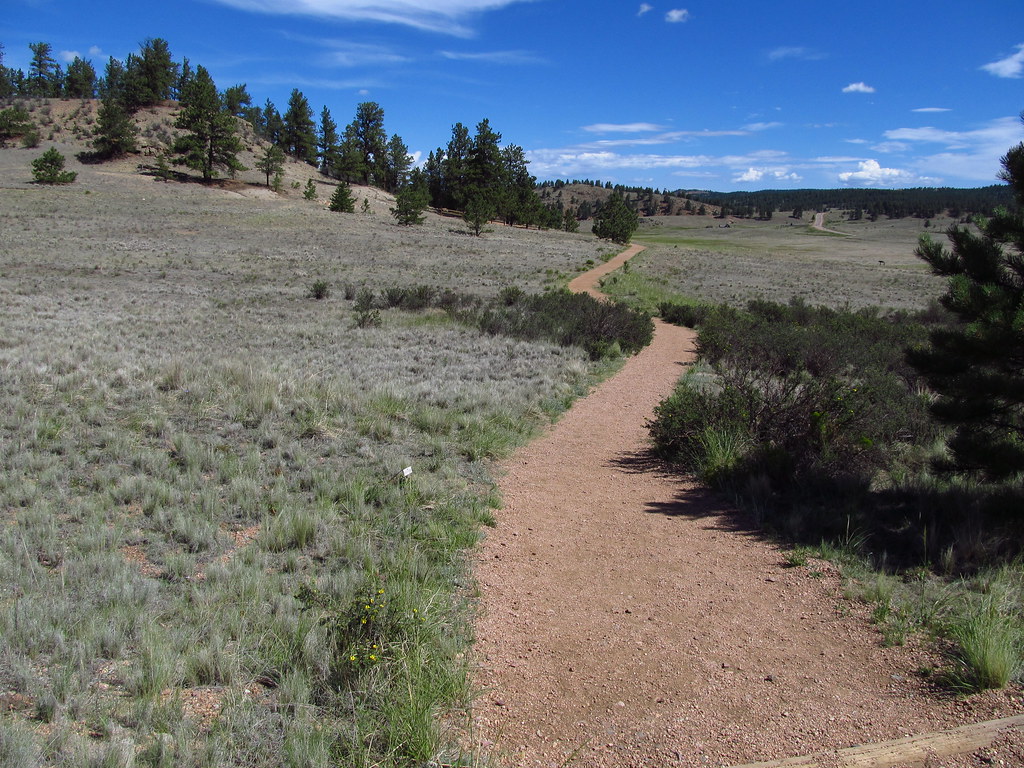
See the Florissant site page for the split between the monument and the pay-to-dig quarry.
12. Cleveland-Lloyd Dinosaur Quarry, Utah: the densest Jurassic bone bed (viewing)
Cleveland-Lloyd Dinosaur Quarry inside Jurassic National Monument holds more than 12,000 Jurassic bones from at least 74 individual dinosaurs in one bone bed. Over 75% come from Allosaurus fragilis, the highest known concentration of a single carnivore species anywhere. The BLM manages the site, and the visitor center holds an Allosaurus skeleton mount and interactive bone-bed maps.
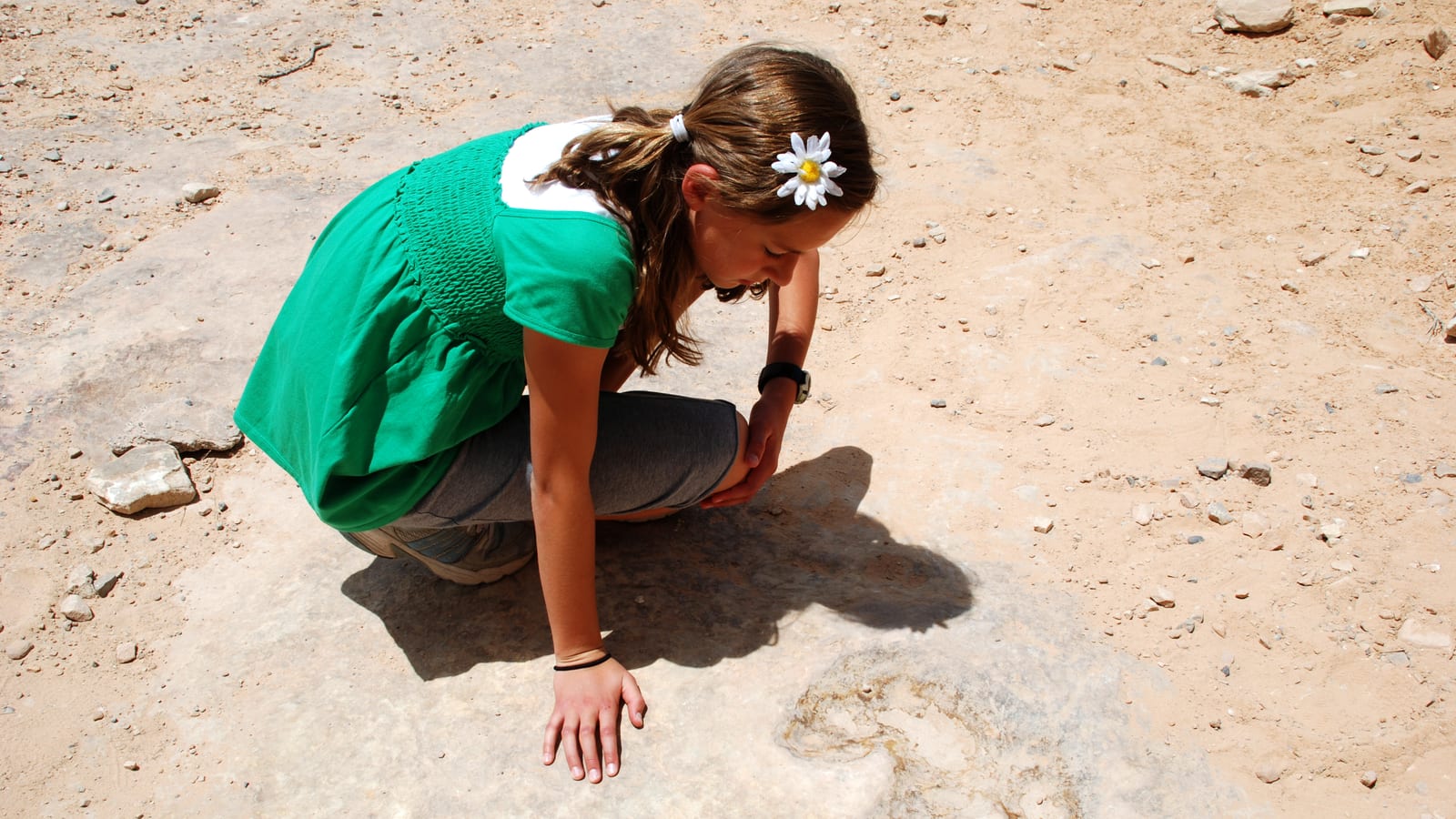
This is a viewing site, not a collecting one. The BLM has at times listed the dig site as temporarily closed during building work, so verify before visiting. See the Cleveland-Lloyd site page for current access.
13. Dinosaur Valley State Park, Texas: Cretaceous trackways (viewing)
Dinosaur Valley State Park near Glen Rose preserves Early Cretaceous sauropod and theropod trackways pressed into the Paluxy River limestone roughly 113 million years ago. Texas Parks and Wildlife charges an $8 daily entrance fee for adults aged 13 and over. Children 12 and under are free, though you should verify current fees before visiting. Collecting is prohibited inside the park. This is a trackway-viewing site, best in low, clear river conditions when the prints are exposed.
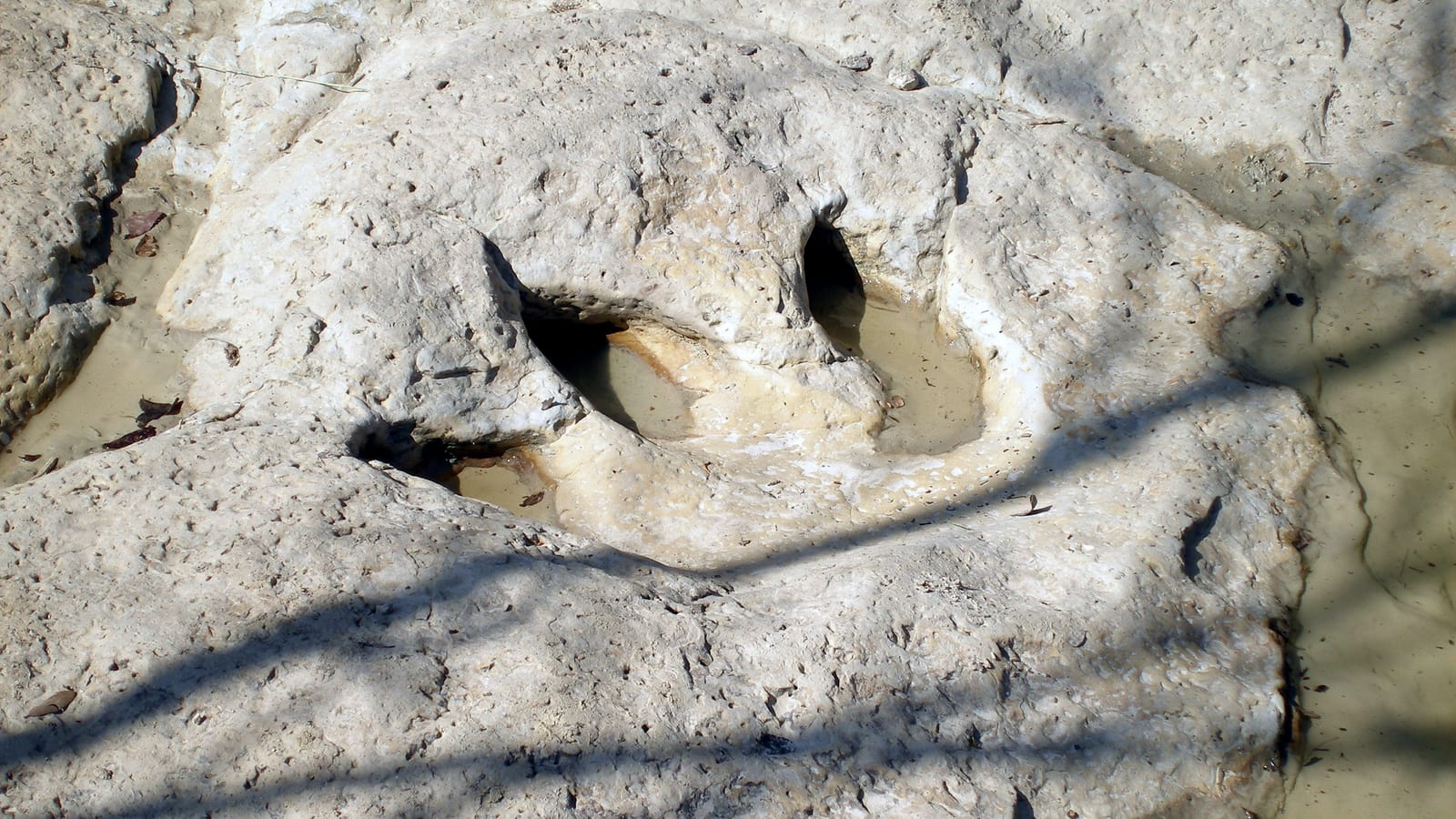
See the Dinosaur Valley site page for which track sites are visible at which water levels.
14. Dinosaur State Park, Connecticut: Jurassic trackways and a take-home cast
Dinosaur State Park in Rocky Hill protects one of the largest exposed Early Jurassic trackway surfaces in the country under a geodesic dome, pressed into rift-valley mudflats of the Hartford Basin roughly 200 million years ago. A summer casting area lets visitors mix plaster and take home a cast of a real Eubrontes track. This is a viewing-and-casting site rather than a collecting one, and the indoor exhibit is open year-round.
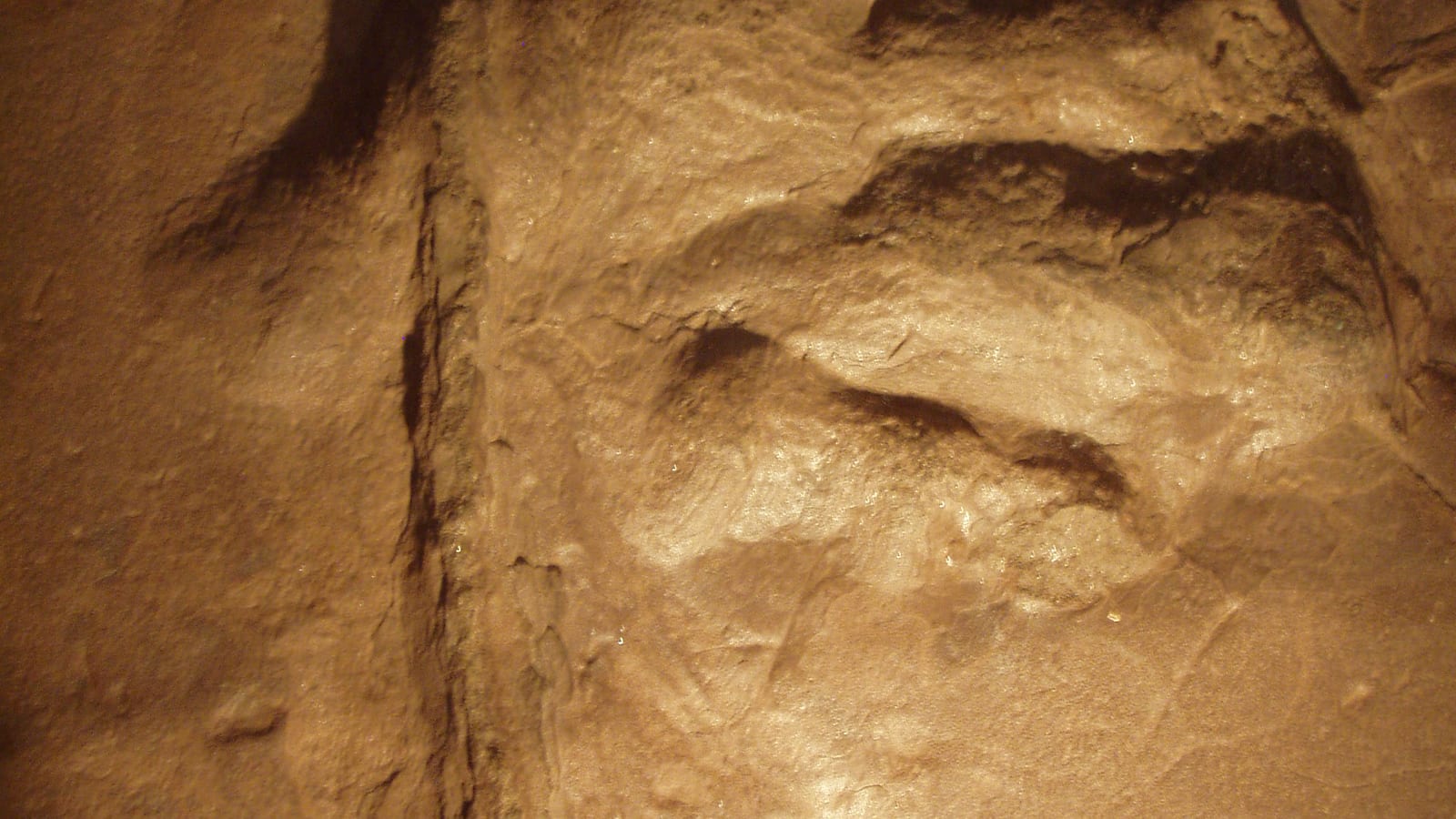
See the Dinosaur State Park page for casting-season dates and what to bring.
15. Monument Rocks, Kansas: Cretaceous chalk from the Western Interior Seaway (viewing)
The Niobrara Chalk of western Kansas records the Cretaceous Western Interior Seaway, the shallow sea that split North America roughly 85 million years ago and preserved mosasaurs, plesiosaurs, and fish. Monument Rocks, the Chalk Pyramids, in Gove County is the most accessible exposure, a free-to-visit National Natural Landmark on private land with public access. Treat it as a viewing destination for the formation that produced North America's marquee Cretaceous marine vertebrates.
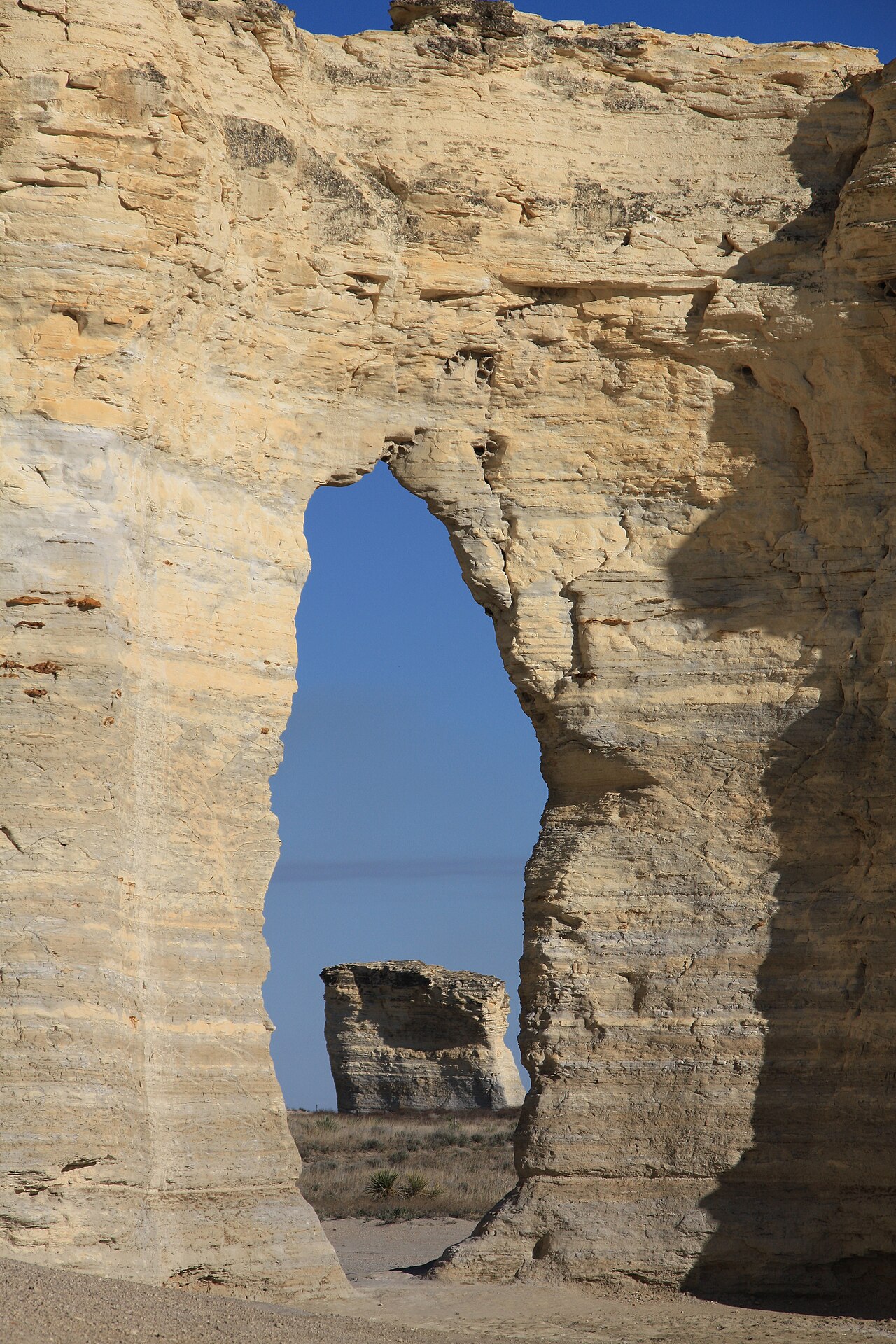
Stay on the marked access, take only photographs, and respect the surrounding private ranch land. See the Monument Rocks site page for directions from I-70.
Browse fossil sites by state
Every state above has a dedicated index of the sites we have documented there, each with directions, access rules, fossil types, and the underlying geology. Jump straight to your target: Florida, Ohio, Maryland, New York, Texas, Wyoming, Utah, South Dakota, Illinois, Colorado, Connecticut, and Kansas. The full US directory, covering every documented state, is on the United States fossil sites map.
Browse by fossil type
If you already know what you want to find, start from the fossil rather than the place. GoFossilHunting indexes every US site by the material it produces: shark teeth, trilobites, dinosaurs and trackways, plant fossils, crinoids, brachiopods, corals, echinoids, fish, bivalves, and gastropods. Each links straight to the sites that yield it.
Where to start: picks by region
If you are new to the hobby, the closest accessible site to most of the US population is almost certainly an East Coast Miocene shark-tooth beach, an Ohio Ordovician spillway, or a Mineral Wells-style Pennsylvanian park. Open the GFH map of US fossil sites and filter for your state. There is almost certainly a documented free or low-cost site within a few hours' drive. To work out what the geology under your own town can produce, see how to find fossil sites near you, which covers the databases and geological maps that turn a postcode into a shortlist. For first-trip habits that apply regardless of which site you visit, see fossil hunting tips for beginners. If dinosaurs are specifically what you are after, whether you can find dinosaur fossils in your state gives the honest, formation-by-formation answer.
Cross-border options: Canada
Several of the world's marquee fossil destinations sit one or two days' drive from the northern US border. From New York, Vermont, and New Hampshire, the closest Canadian sites are Rock Glen Conservation Area near Arkona, Ontario (Middle Devonian Widder Formation, the only Canadian souvenir-collecting site in the marquee set) and Miguasha National Park in Quebec (UNESCO Devonian fish-to-tetrapod transition, viewing only). From Maine, the Joggins Fossil Cliffs in Nova Scotia (UNESCO Carboniferous coal-age forests, free beach access) and the Stonehammer UNESCO Global Geopark around Saint John, New Brunswick are both reachable inside a day. From Montana, Idaho, and Washington, the Burgess Shale guided hikes in Yoho National Park, BC and the Dinosaur Provincial Park badlands of Alberta round out the western options. The full Canadian directory is at /countries/canada.
Frequently asked questions
- What is the best place to fossil hunt in the United States for a beginner?
- Venice Beach and the adjacent Caspersen Beach on Florida's Gulf coast are the easiest first fossil trip in the country. Small fossil shark teeth wash up in the surf year-round, no tools or permits are needed for shark teeth and invertebrates, and you can collect straight off the sand. Caesar Creek State Park in Ohio and Mineral Wells Fossil Park in Texas are the two best free inland options, both with picnic facilities and simple, published collecting rules.
- Which US state has the most fossil sites?
- Ohio, Florida, and Wyoming rank highest for accessible, productive, well-documented sites. Ohio's Ordovician limestone produces trilobites and brachiopods at multiple free public parks including Caesar Creek State Park, where the US Army Corps of Engineers permits fossil hunting on the spillway with a free permit from the Visitor Center. Florida's Miocene shark-tooth beaches at Venice, Caspersen, and Englewood require no permit for invertebrate fossils and shark teeth. Wyoming's Eocene Green River Formation hosts two commercial fish quarries near Kemmerer where collectors keep the complete Knightia and Diplomystus they recover.
- Where can I find dinosaur fossils in the US?
- Dinosaur material is heavily restricted on public land. Vertebrate fossils on federal land require a research permit under the Paleontological Resources Preservation Act. Realistic options for the public are commercial digs on private land in Wyoming, Montana, and South Dakota, plus viewing-only access at Dinosaur National Monument (Utah-Colorado), Dinosaur Valley State Park (Texas), and Cleveland-Lloyd Dinosaur Quarry (Utah), where the Bureau of Land Management curates a quarry wall holding more than 12,000 Jurassic bones, mostly Allosaurus fragilis.
- Is fossil collecting legal on US federal land?
- Partially. The Paleontological Resources Preservation Act of 2009 (16 U.S.C. §§ 470aaa to 470aaa-11) prohibits collecting vertebrate fossils, and significant invertebrate or plant fossils, from federal land without a research permit. Casual surface collection of common invertebrate and plant fossils for personal, non-commercial use is permitted on Bureau of Land Management and US Forest Service land. National Park Service land is more restrictive: no fossil collecting is allowed at all in National Parks or Monuments. Always check the specific land status, because a single mountain range can include BLM, USFS, state, and private parcels with different rules.
- What is the cheapest US fossil dig site?
- Mineral Wells Fossil Park in Texas is free. The City of Mineral Wells operates the site as a public Pennsylvanian collecting locality with no permit and no admission fee. Caesar Creek State Park in Ohio is free aside from the no-cost collecting permit from the Army Corps of Engineers Visitor Center. Calvert Cliffs State Park in Maryland has a modest day-use fee and beach collecting of shark teeth is permitted at no extra charge. For paid commercial digs, U-Dig Fossils in Utah and American Fossil's Green River quarry in Wyoming are the two best-known options.
- Where can families find fossils together?
- Venice Beach and Caspersen Beach on Florida's Gulf coast are the easiest family fossil trips in the country, with small shark teeth in the surf year-round and no tools or permits required. Caesar Creek State Park (Ohio) and Mineral Wells Fossil Park (Texas) are purpose-built family sites with picnic facilities. Penn Dixie Fossil Park near Buffalo, New York includes a guided tour with every admission and provides basic tools. The shoreline below Calvert Cliffs in Maryland is a 1.8-mile walk from the parking lot but produces megalodon fragments and Miocene shark teeth on the beach scree.