beginners
How Deep Do You Have to Dig for Fossils?
By Edward Chen · Updated 31 July 2026
Most recreational fossil hunting requires no digging whatsoever. At beach and foreshore sites, Charmouth, Whitby, Venice Beach, Caesar Creek, collectors pick specimens from loose material already exposed on the surface by natural erosion. The fossils are lying on or just below the beach surface. You find them by looking, not by digging.
The idea that fossil hunting involves excavation is partly a misconception based on images of professional paleontological digs, which operate at a completely different scale and under formal permits. For the vast majority of public fossil sites, the rule is: if you're digging, you're probably doing something you're not supposed to be doing.
Why surface collecting works
Fossils are exposed by erosion, not by collectors. Coastal cliffs erode continuously: rain, frost, and wave action break rock away and deposit it on the beach below. River banks erode after floods. Quarry faces are worked by machinery. At all of these sites, the collector's job is to inspect the recently exposed material, which is on the surface, not underground.
A productive beach visit involves systematic searching of the foreshore: looking at rock surfaces, turning loose slabs, examining material at the cliff base. The depth of excavation involved is roughly the thickness of a stone slab, perhaps 10–15cm if you're turning a large piece of shale. That's searching, not digging.
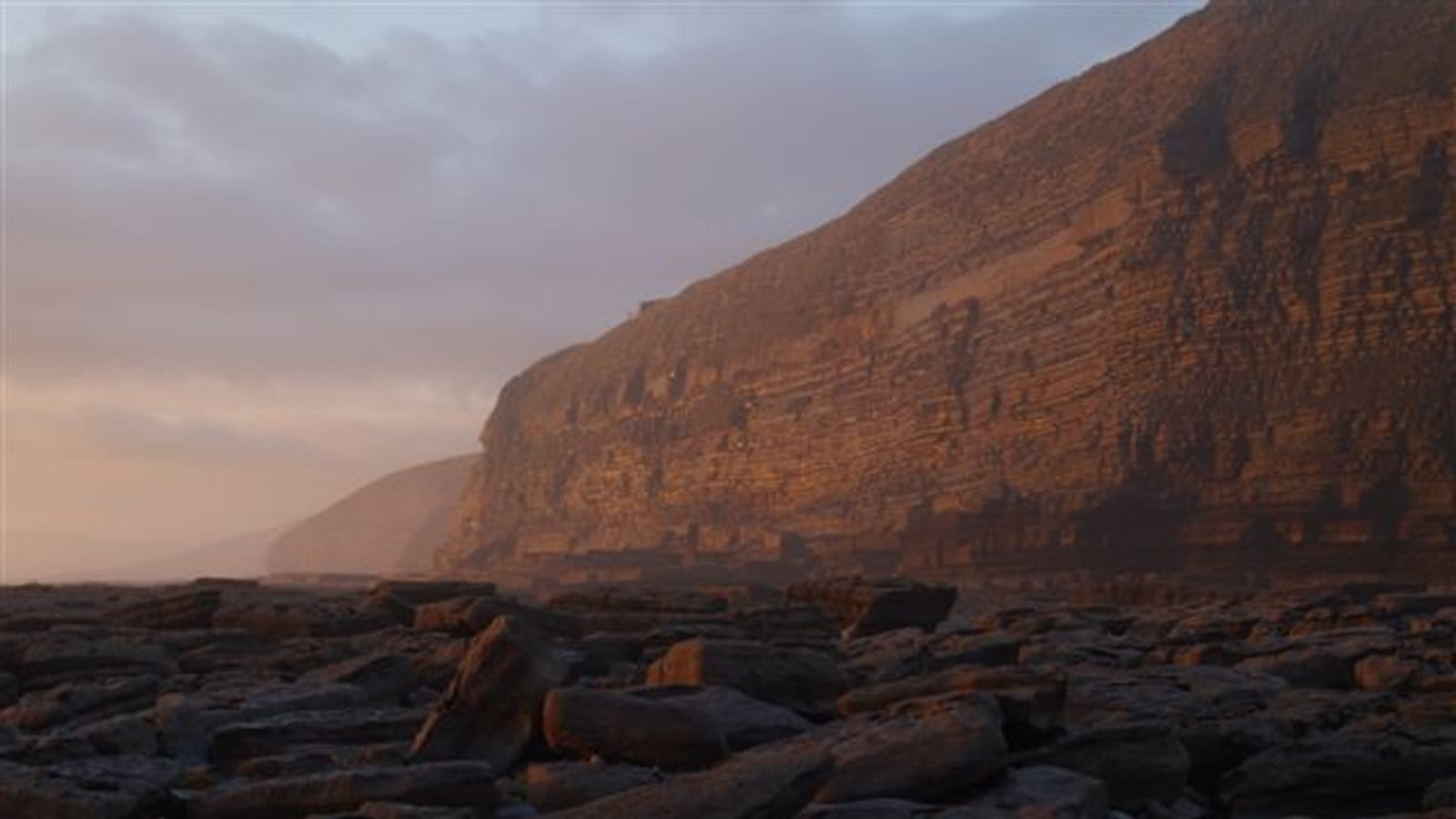
What "searching" actually involves on a foreshore
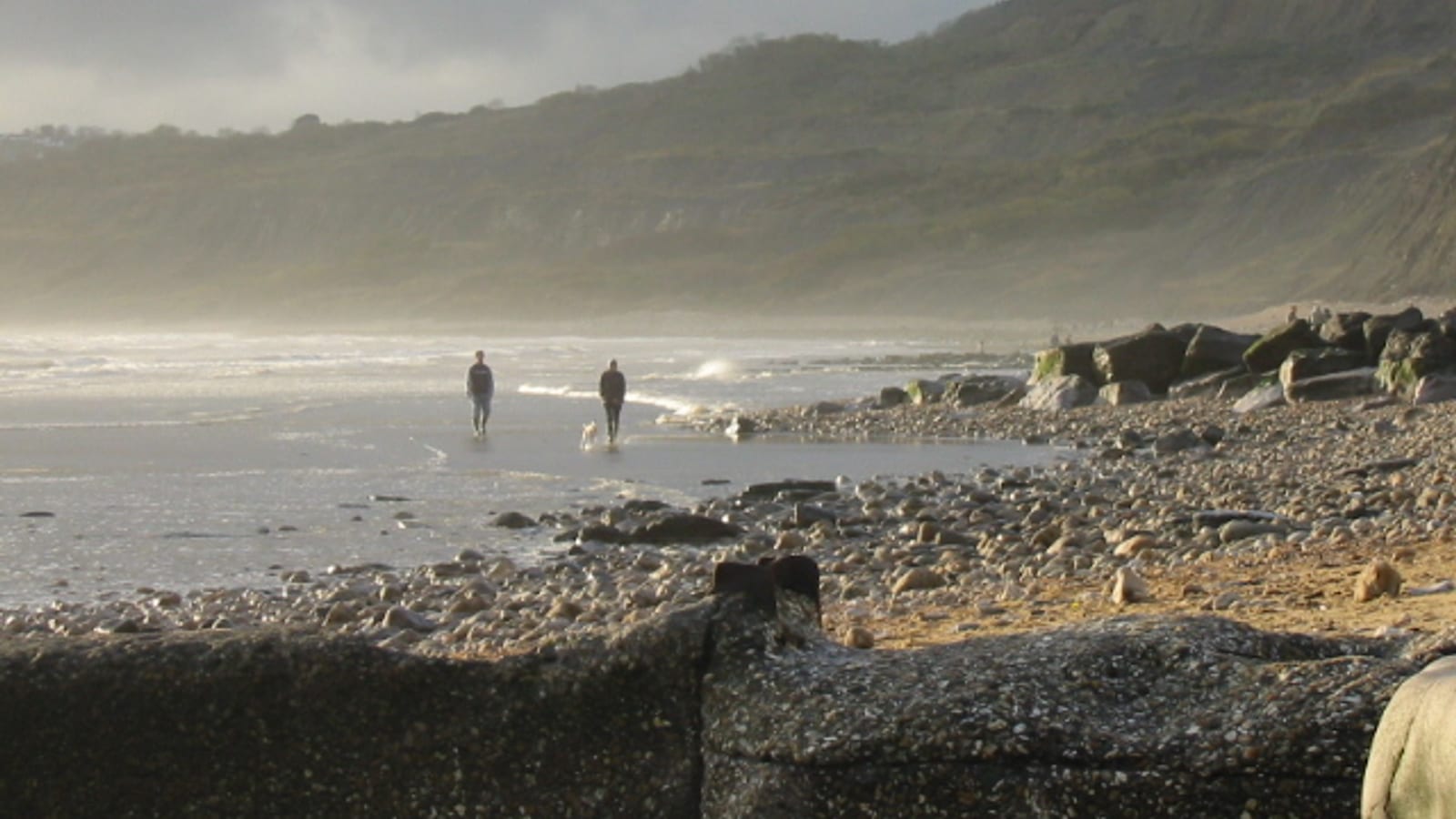
Walking a productive foreshore systematically is a specific skill. Experienced collectors move slowly, looking at the surfaces of loose material rather than picking things up immediately. They turn over flat slabs, because the underside of a limestone slab was the upper surface at the time of deposition, and is often where the fossils are. They look for organized structure in what are otherwise random piles of rock: a coiled edge, a rib pattern, a smooth cylindrical section. On a beach like Charmouth, the productive material is in loose grey and brown mudstone fragments and nodules scattered across wet sand. The search area is wide but the depth of engagement is zero.
When depth does matter: pay-to-dig sites
Pay-to-dig quarry operations work differently. The operator removes overburden, sometimes several metres of non-fossiliferous rock, using machinery to expose a fossil-bearing layer. Visitors then work that exposed surface. The depth to the fossil layer varies by site: at U-Dig Fossils near Delta, Utah, the Cambrian Wheeler Formation trilobite layer is reached after removing roughly 0.5–1m of overburden by the operator's machinery. Visitors work the exposed layer, splitting shale sections that are typically 2–5cm thick.
At German Jurassic limestone quarries in the Altmühltal region, the quarry operators work faces that are several metres tall. Visitors purchase a section of face and use chisels and small picks to split the limestone plates looking for fish, ammonites, and other Solnhofen fauna. The working depth is the thickness of individual limestone plates, centimetres, but the quarry face itself is several metres of stacked beds.
Professional excavations
A professional paleontological excavation to reach a buried skeleton at a known site works at a different scale. The Morrison Formation dinosaur quarries in Wyoming and Montana typically require removing several metres of overlying sandstone and mudstone, sometimes by jackhammer and machinery, to reach a productive bone layer. Once the overburden is cleared, preparators work the bone layer itself at millimetre precision with air scribes and brushes.
This kind of work is done under permits from the Bureau of Land Management or relevant land management authority. It is not accessible to recreational collectors on most public land, and is irrelevant to what you'll experience on a standard day trip to a public fossil site.
The legal reason not to dig on public land
In the US, any excavation beyond surface collecting on federal land requires a permit, regardless of depth. "Excavation" in BLM regulations includes digging, trenching, and any use of tools to expose buried material. On UK SSSIs, excavating or hammering cliff faces is specifically prohibited under the Wildlife and Countryside Act 1981. At most managed fossil sites in both countries, the rules specify surface collecting only.
The productive material you're looking for has already been brought to the surface by natural processes. Working the surface is both legal at accessible sites and highly productive. There is no practical reason to dig.
Where to go next
For specific site descriptions that make clear what type of collecting is available, surface only, or active quarry operations, see the pay-to-dig fossil parks guide for sites with active quarry operations, and the beginners guide on GFH for an overview of different site types and what to expect at each.
Frequently asked questions
- Do you have to dig to find fossils?
- No — at most public fossil sites, productive collecting is purely surface searching. Coastal cliff erosion continuously exposes fresh fossil material on the beach foreshore; collectors search already-exposed surfaces and turn loose slabs. The depth involved is the thickness of a stone slab, not any kind of excavation. Digging into the ground at a public site typically violates the site rules and is not more productive than surface searching in any case.
- How deep are fossils buried?
- The fossils you find at public beach and foreshore sites are in loose surface material already exposed by natural erosion — effectively at ground level. At pay-to-dig quarry sites, the operator removes 0.5–1 metre or more of overburden by machinery to expose the fossil-bearing layer, which visitors then work at the surface. Professional palaeontological excavations at known dinosaur sites in Wyoming and Montana sometimes remove several metres of overlying rock to reach productive bone layers, working under formal permits from the Bureau of Land Management.
- Is it legal to dig for fossils?
- In most jurisdictions, surface collecting is permitted; excavation is not. In the US, any digging on federal land beyond surface collecting requires a Permit for Paleontological Resources. On UK SSSIs — which includes most accessible coastal fossil beaches — excavating cliff faces is prohibited under the Wildlife and Countryside Act 1981. Pay-to-dig operations are the exception: they operate under commercial permits from landowners, and the operator's permit covers what visitors do on site.