beginners
How to Join a Local Fossil Hunting Club
By Edward Chen · Updated 31 July 2026
Joining a local fossil or mineral club is the fastest way to access sites that aren't publicly documented, improve your identification skills, and connect with collectors who know the productive formations in your area. Most clubs welcome complete beginners. The experienced members generally enjoy introducing people to the hobby. The challenge is finding the right club, not every club's interests and activities match every collector's goals.
Here's how to find one and what to look for before you commit.
Finding clubs in the US
The American Federation of Mineralogical Societies (amfed.org) maintains a directory of affiliated fossil, mineral, and gem clubs organized by state. This is the most comprehensive and up-to-date index of US clubs. Most clubs affiliated with AFMS are active, meet regularly, and run field trips.
State geological societies maintain separate directories for more academically oriented clubs with paleontology programs, though these often skew toward professionals and serious amateurs rather than recreational collectors.
The Fossil Forum (thefossilforum.com) has a club directory section in its forum, organized by region. Posts in regional subforums often mention local club activity, searching "[your state] fossil club" in the forum search returns recent discussions.
Important: verify that a club is currently active before attending a meeting. Directories sometimes list clubs that have dissolved or become inactive. A quick email to the listed contact address will confirm whether meetings are still happening.
Finding clubs in the UK
The Geological Society of London (geolsoc.org.uk) maintains a directory of affiliated local geological societies across the UK. These range from large regional societies with lecture programs and field trips to small county groups that meet informally. Most welcome non-professionals.
The Yorkshire Geological Society, the Geologists' Association, and individual museum societies (the Whitby Naturalists' Club, for example) operate field programs specifically oriented around fossil collecting. The Geologists' Association's field meetings are open to non-members and are a good way to visit restricted sites with expert guidance before committing to membership.
The UK Fossils Network forum (if active) and The Fossil Forum's UK subforum are both sources of current local club activity.
What membership actually provides
The main benefit of club membership over solo collecting is access to locations. Clubs negotiate access agreements with private landowners and manage relationships with site managers that individual collectors cannot replicate. A club's field trip program may include sites that have no public documentation precisely because the access is a club-maintained arrangement. This is the primary reason experienced collectors maintain club membership even after years in the hobby.
Beyond access, clubs provide:
Identification events. Most clubs run regular identification nights where members bring finds and experienced collectors name them. This is more reliable than online identification for ambiguous material, and faster.
Talks and lectures. Club programs typically include talks by geologists, paleontologists, and experienced collectors on specific formations, regions, and techniques. These range from introductory to research-level.
Equipment sharing. Some clubs maintain shared tools, rock saws, reference collections, preparation equipment, available to members.
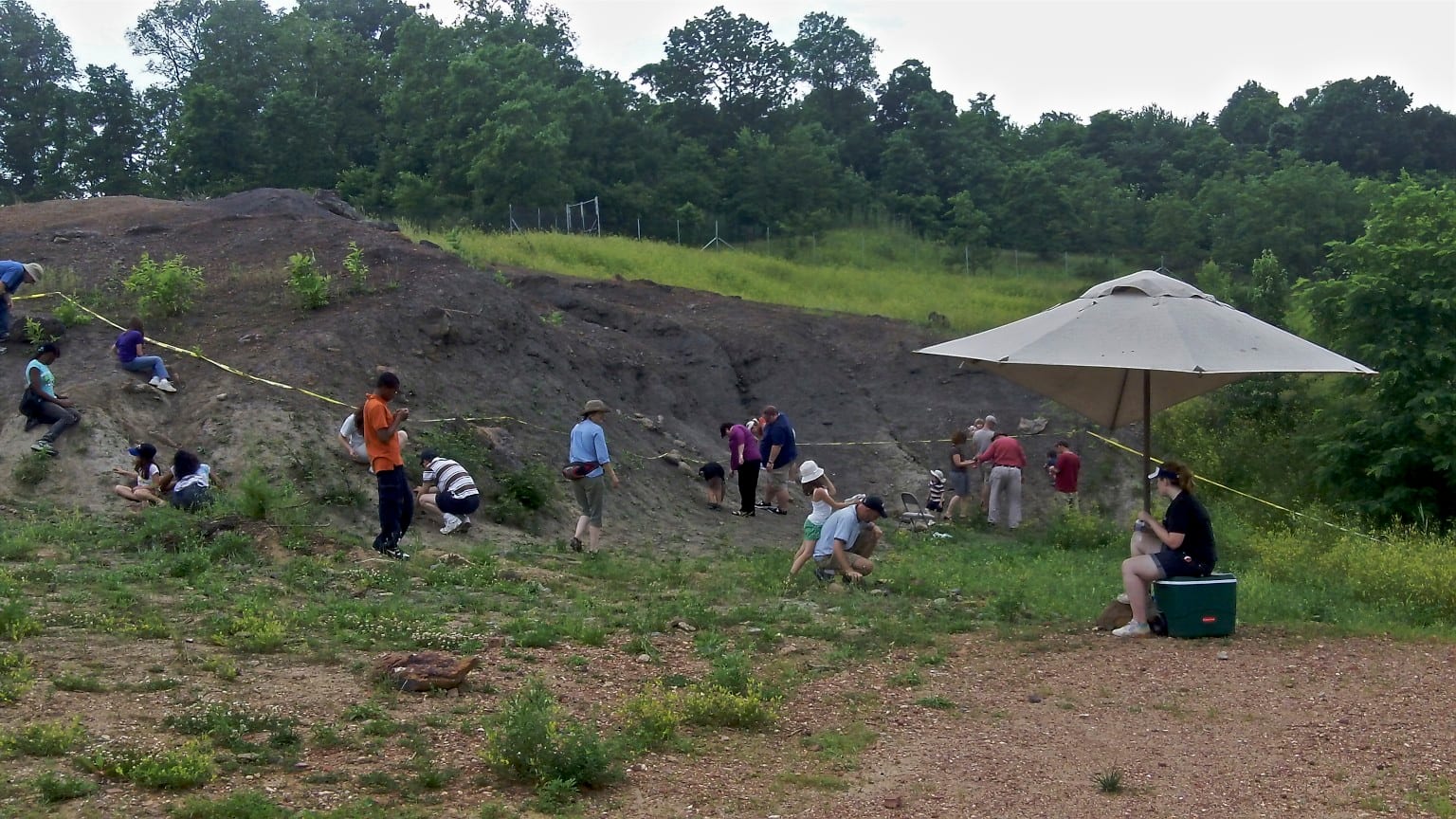
Group safety. Field trips to tidal or cliff sites are safer with a group. Clubs that visit technically demanding sites typically have experienced leaders who know the local hazard profile.
What to look for when choosing a club
Check the field trip program before joining. A club that runs four field trips per year to locations you're interested in is more valuable than one with monthly meetings but infrequent or distant site visits. Annual membership fees for US clubs are typically $20–$50. UK clubs are similar or slightly higher. Most allow visitors at meetings before joining.
Ask what the typical member base looks like. Some clubs are primarily oriented toward mineral and gem collecting with occasional fossil content. Others are dedicated fossil clubs. The mix affects which field trips are offered and what the identification nights cover. If you're specifically interested in Ordovician invertebrates, a club whose core membership collects minerals is less useful than one where several members specialize in the Ohio limestone sequence.
If there is no active club in your area, The Fossil Forum provides online community that partly substitutes, identification help, field reports, and connection with collectors in your region are all available through the forum. The Dry Dredgers in Cincinnati maintain detailed documentation of Ohio's Ordovician sites that is useful to collectors anywhere in the region, regardless of membership.
Where to go next
For the specific clubs mentioned in GFH guides, the Yorkshire Geological Society, the Dry Dredgers in Ohio, and others, those clubs are listed in the Recommended Resources section of each regional guide. See the Ohio fossil hunting guide for Midwest club contacts and the Yorkshire Coast guide for UK club contacts.
Frequently asked questions
- How do I find a fossil hunting club near me?
- In the US, the American Federation of Mineralogical Societies (amfed.org) maintains the most comprehensive directory of affiliated fossil and mineral clubs, organised by state. In the UK, the Geological Society (geolsoc.org.uk) lists affiliated geological societies, and The Fossil Forum has a UK club directory. Before joining, verify the club is currently active — directories sometimes list dissolved or dormant clubs — by sending a quick email to the listed contact address.
- What are the benefits of joining a fossil hunting club?
- The primary benefit is access to sites not publicly documented: clubs negotiate access agreements with private landowners and site managers that individual collectors cannot replicate. A club's field trip programme may include locations that have no public documentation precisely because the access is a club-maintained arrangement. Membership also provides identification events, talks from geologists and palaeontologists on specific formations, and group safety for tidal and cliff sites. Annual membership fees in the US are typically $20–$50.