gear
How to Store and Display Your Fossil Collection
By Edward Chen · Updated 31 July 2026
The two main enemies of a fossil collection are humidity and unstable temperature. A cool, dry room with consistent temperature is better for fossils than a warm, damp basement regardless of how well the individual specimens are wrapped. Beyond those environmental basics, storage is largely a question of organization, making sure every specimen is labeled, protected from physical damage, and findable when you want it.
Display adds a separate set of considerations, particularly for specimens with UV-sensitive material like amber or pyritized fossils.
Basic storage conditions
Stable, low humidity is more important than any other single factor. Relative humidity below 50% prevents the chemical deterioration that affects pyritized specimens (pyrite oxidation produces sulphuric acid that destroys fossils from within) and inhibits mould growth in specimens with remaining organic material. An inexpensive hygrometer shows the humidity level in your storage area. Silica gel desiccant packets inside storage containers help maintain low humidity for individual specimens.
Avoid storing fossils in direct sunlight. UV radiation fades amber, bleaches polished ammonites, and accelerates deterioration of resin consolidants. A north-facing shelf, a closed cabinet, or UV-filtering display cases all work.
Avoid basements and garages where temperature and humidity fluctuate significantly with seasons. A spare bedroom or study with standard home temperature control is ideal.
Individual specimen storage
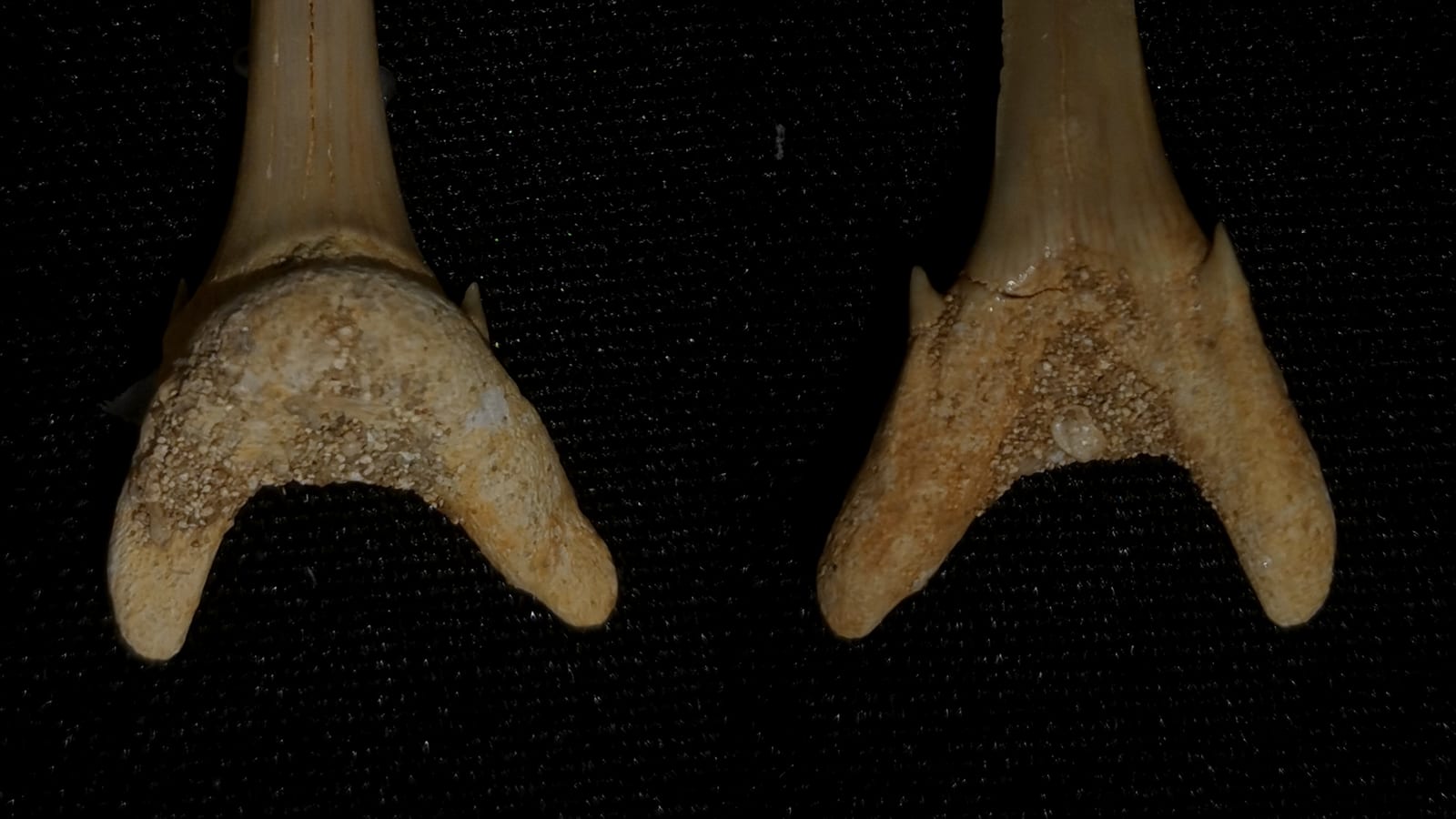
For small specimens (trilobites, shark teeth, small ammonites), shallow compartmentalized boxes, the kind used for fishing tackle, bead storage, or jewellery, are practical and inexpensive. Line compartments with thin foam sheet. Label each compartment or each specimen.
For medium specimens, acid-free tissue paper inside archive boxes (available from conservation suppliers) is the museum standard. Acid-free paper does not off-gas compounds that can damage specimens over decades. Standard paper and cardboard are not neutral, they are mildly acidic and can affect fragile organic material over long periods.
Ethafoam (polyethylene foam used in museum display and shipping) is excellent for custom-cut supports that hold irregular specimens without resting them on fragile projections. A 25mm sheet allows you to cut a custom recess for any shape.
Labeling and cataloguing
Every specimen needs a minimum label: site name, date collected, and identification if known. A label stored with the specimen is more reliable than a label on the outside of a box that gets separated. Small tags tied with cotton string, or waterproof paper labels stored in the same compartment, are both reliable systems.
A simple spreadsheet or catalogue is worth maintaining once your collection exceeds a few dozen specimens. Record: an ID number, site, date, formation, identification, and any notes about the find or preparation. The ID number goes on the label with the specimen. This makes the collection more useful to you (you can filter by site or type) and to anyone who eventually receives or studies the collection.
Display options
Glass-front display cases are the standard for showing larger specimens. A case with a felt-lined shelf keeps specimens upright and visible without risk of falling. UV-filtering glass is worth the additional cost for amber, pyritized specimens, or any material with colour preservation.
Acrylic risers and custom Ethafoam stands position specimens at angles that show their best surface. Many collectors mount specimens on small bases with waterproof label attached to the base rather than the specimen itself, this preserves the surface and keeps the label visible.
Heavy specimens need stable bases and should never be placed where they can topple. A complete large ammonite or a significant vertebrate element will damage itself and whatever is below if it falls.
What deteriorates fastest
Pyritized fossils are the most high-maintenance category. Regular inspection for white or yellow powder (early pyrite disease) and storage with desiccant is essential. At the first sign of oxidation, seek conservation advice, the process can be slowed but not reversed once started.
Amber yellows and becomes opaque with UV exposure over years. Water or cleaning fluids can cause surface crazing. Store amber away from light and handle it minimally.
Bone material from Pleistocene terrestrial sites can be structurally fragile due to permineralization being incomplete. Keep it in a stable humidity environment and avoid repeated handling without support.
Where to go next
For what to bring to collect specimens in the first place, the beginners guide on GFH covers field kit recommendations. For the types of fossils you're likely to be storing from specific UK sites, including Yorkshire coast pyritized ammonites that require specific care, the Yorkshire Coast guide covers what you'll find there.
Frequently asked questions
- How should you store fossils at home?
- Store fossils at stable, low humidity — relative humidity below 50% — in a consistent-temperature room. Basements and garages where temperature fluctuates significantly with seasons are poor environments. Silica gel desiccant inside storage containers helps maintain low humidity for individual specimens. Avoid direct sunlight, which fades amber and accelerates deterioration of resin consolidants. Label every specimen with site, date, and formation — this information is irreplaceable once specimens are mixed with others.
- How do you display fossils at home?
- Glass-front display cases with felt-lined shelves are the standard for larger specimens. UV-filtering glass is worth the additional cost for amber, pyritized specimens, or any material with colour preservation. Acrylic risers and custom Ethafoam (polyethylene foam) stands position specimens at angles that show their best surface. Mount labels on the display base rather than on the specimen to preserve the surface and keep the label visible.
- What is pyrite disease in fossils?
- Pyrite disease is the oxidation of iron pyrite in specimens that replaced organic material during fossilisation. In humid air, pyrite reacts with moisture and oxygen to produce sulphuric acid, which destroys the specimen from within. Early signs are white or yellow powder forming on the surface. To prevent it, store pyritized specimens (those with a metallic golden sheen) in sealed containers with silica gel desiccant, away from temperature fluctuations. If oxidation has started, seek conservation advice quickly — the process can be slowed but not reversed once established.