value
Where Do Museums Get Their Fossils From?
By Edward Chen · Updated 31 July 2026
Natural history museums acquire fossil specimens through four main routes: their own field excavations under permit, donations from private collectors and estates, purchases from commercial dealers, and loans and exchanges with other institutions. The proportion of each varies by museum and by the type of material. Large flagship collections at the Smithsonian National Museum of Natural History, the Natural History Museum in London, and the American Museum of Natural History in New York have been built over more than a century through all four channels.
Understanding how this system works is useful for collectors who are considering what to do with significant finds, and for anyone curious about the connection between the commercial fossil market and scientific collections.
Field excavations
Museum paleontologists conduct their own field excavations at specific sites under permits issued by the relevant land management authority. In the US, excavating vertebrate fossils on federal land requires a permit from the Bureau of Land Management or the relevant federal agency, the same permits that prohibit recreational collectors from taking vertebrate material. Museums and universities apply for these permits and operate under them, which is why they can legally excavate dinosaur skeletons from BLM land while commercial and recreational collectors cannot.
These field programs produce the most scientifically valuable specimens because collection data, exact stratigraphic position, GPS coordinates, associated material, is recorded systematically as part of the excavation. Specimens with this data are more useful for research than those with uncertain provenance.
Field programs are expensive. A multi-week field season in Montana or Wyoming with a crew of five to ten people costs $100,000–$500,000, and not every season produces scientifically significant material. Major museums with endowments and research grants can sustain this. Smaller regional museums typically cannot.
Donations from private collectors
Private collector donations are a significant source of new accessions for regional and local museums. Collectors who have assembled significant collections over decades often choose to donate to an institution where the material can be studied and displayed, rather than having it sold at estate auction or dispersed to individual buyers.
Museums generally prefer donated material with clear provenance, documented collection location, date, formation, and collector history. A trilobite with a label recording "Caesar Creek, Ohio, Ordovician, collected 1987 by J. Smith" is more useful to a museum than an identical trilobite with no provenance. This is a practical argument for the collecting habit of recording and labelling everything.
Museums do not acquire every donated specimen. Institutions receive far more donation offers than they can accommodate and typically accept material based on gaps in their existing collection, the scientific significance of the specimens, and storage capacity. If you have material you'd like to donate, contacting the relevant department (vertebrate paleontology, invertebrate paleontology, palaeobotany) with photographs and provenance information will get you a realistic assessment.
Purchases from commercial dealers
Museum purchases of commercially collected material are controversial in the paleontological community. The concern is that commercial collection of vertebrate fossils on public or private land removes material from scientific context and drives up prices for material that research institutions then have to purchase back.
The most prominent example is Sue the T. rex, excavated from private ranch land in South Dakota in 1990 and sold at auction for $7.6 million to the Field Museum of Natural History in Chicago in 1997, funded partly by corporations including Disney and McDonald's. Sue is now displayed at the Field Museum and has been the subject of extensive scientific research. The case illustrates both the problem (museum had to compete with commercial bidders for scientifically significant material) and the outcome (specimen is now in a research institution and publicly accessible).
UK museums follow stricter protocols around purchasing commercial material, partly because the cultural property framework in the UK discourages investment in fossils with uncertain provenance. The Natural History Museum in London primarily acquires through field work, donation, and inter-institutional transfer.
Loans and exchanges between institutions
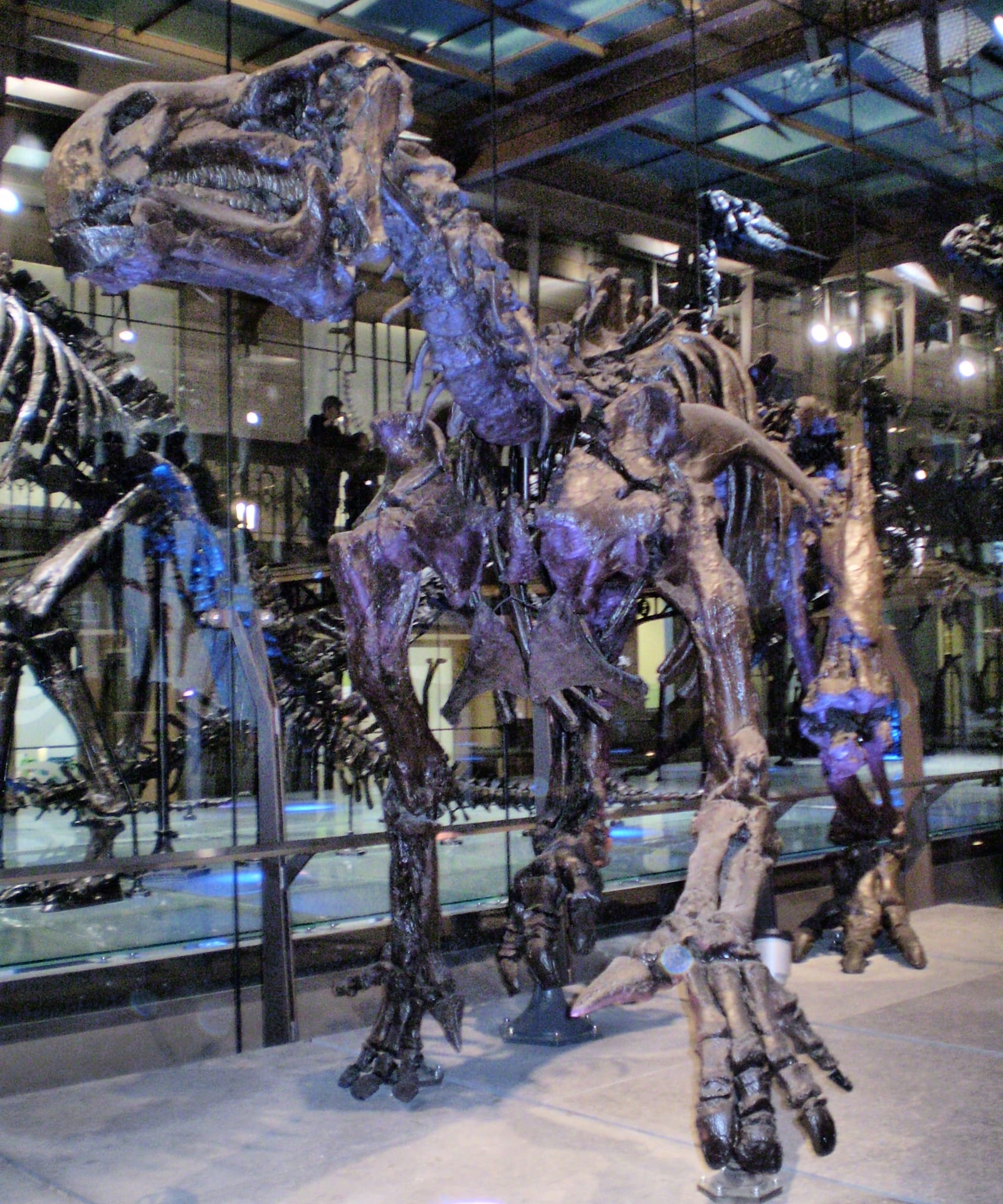
Research collections at major institutions hold vastly more material than is ever displayed publicly. A significant fraction of a major museum's fossil holdings is in storage, accessible to researchers but not on public display. Specimens that duplicate holdings well-represented elsewhere are candidates for loan or permanent transfer to institutions where they fill collection gaps.
Inter-institutional loans allow specialists at one institution to study material held at another, which is routine practice in paleontological research. These transfers are documented and reversible. Permanent transfers require formal deaccessioning procedures.
What this means for collectors
The relationship between the commercial fossil collecting community and museum acquisition is complex, but two practical points emerge for individual collectors:
First, if you find a specimen with scientific potential, a complete or articulated vertebrate element, an unusual species for the formation, or material from a poorly documented locality, contacting your nearest natural history museum is worth doing. Significant specimens that end up in institutional collections are more scientifically useful than those that stay in private hands.
Second, clear provenance documentation on anything you collect improves the likelihood that your material will be considered for institutional donation. Labelling everything with site, date, and formation is a habit with long-term consequences beyond your own collection.
Where to go next
For sites where collector finds regularly contribute to regional museum knowledge, the Yorkshire Coast guide notes Whitby Museum's collection interests, and the Isle of Wight guide covers the Dinosaur Isle Museum's voluntary reporting scheme for significant finds.
Frequently asked questions
- How do museums get dinosaur fossils?
- Museum palaeontologists conduct field excavations under permits issued by the Bureau of Land Management or relevant land management authority — the same permits that prohibit recreational collectors from taking vertebrate material. These programs record systematic collection data (stratigraphic position, GPS coordinates, associated material) that makes specimens scientifically more valuable than commercially acquired equivalents. Field seasons in Montana or Wyoming with a crew of five to ten people typically cost $100,000–$500,000, which is why only well-funded institutions with grants and endowments can sustain regular field programs.
- Can I donate a fossil to a museum?
- Yes. Museums accept well-documented fossil specimens, particularly those with clear provenance — site, date, formation, and collector history — from formations they have limited representation of. Not every donation is accepted: institutions receive far more offers than they can accommodate and select based on collection gaps, scientific significance, and storage capacity. Contact the relevant department (vertebrate palaeontology, invertebrate palaeontology) with photographs and provenance information to get an assessment. Donated specimens are credited in institutional records.
- Do museums buy fossils from private collectors?
- Some do, though it is controversial in the palaeontological community. The Field Museum of Natural History in Chicago purchased Sue, a T. rex, for $7.6 million at auction in 1997, funded partly by corporate donors. UK institutions are generally more cautious about commercial acquisitions. Most museums prefer donations over purchases, both for cost and because donations typically come with better provenance documentation. Specimens acquired through field excavation under permit are considered the most scientifically valuable.