Isle of Wight Fossil Hunting Guide
7 Best Fossil Hunting Sites on the Isle of Wight
The Isle of Wight is the single best place in the United Kingdom to find dinosaur fossils. The southwest coast from Compton Bay to Brook Bay exposes Early Cretaceous Wessex Formation mudstones that erode continuously, releasing bones, teeth, and footprints onto accessible public beaches. The island also has Eocene, Oligocene, and chalk geology across its other coasts, giving collectors a remarkable variety of fossil types within a small area.

7 fossil sites
Updated 1 August 2026
Why the Isle of Wight produces so many dinosaur fossils
The island's southwest coast tilts slightly toward the sea, which means the Wessex Formation — the terrestrial mudstone unit deposited by a river system running across southern England around 125 million years ago — is continuously undercut by wave action. As the cliffs retreat, fresh fossil material falls to the foreshore. The soft mudstone matrix weathers quickly, so bones and teeth that fell last winter are often exposed by spring. Serious collectors visit after winter storms, when significant cliff falls expose previously buried material.
The Wessex Formation at the Isle of Wight represents a floodplain and river-channel environment. Dinosaur carcasses were buried in flood deposits, then preserved in fine-grained overbank sediments. The same unit has produced plant fossils, freshwater turtle remains, crocodyliform teeth, and a remarkable early mammal fauna that has received less public attention than the dinosaurs but is equally significant scientifically.
- 1
Compton Bay: Dinosaur Trackways
England, United Kingdom
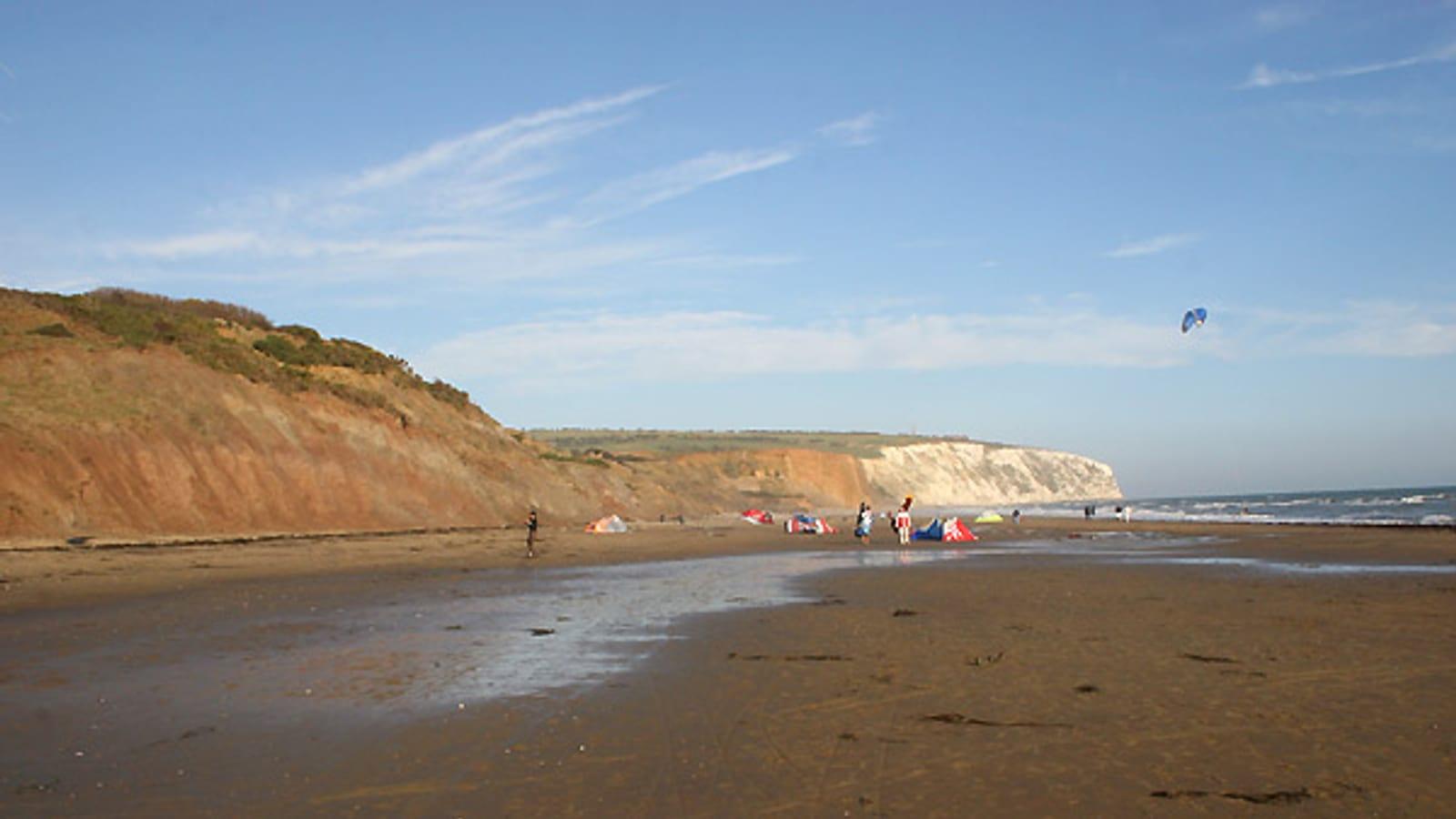
Free collectingDinosaur footprintsDinosaur bone fragmentsDinosaur teethCompton Bay is the starting point for any Isle of Wight fossil hunting trip. The Wessex Formation mudstones erode continuously from the cliffs, releasing dinosaur bones, teeth, and footprints onto the foreshore. Iguanodon, Hypsilophodon, and the large theropod Neovenator are all documented from here. Surface collecting from loose material on the beach is free; the site is managed as an SSSI but loose foreshore material may be collected.
Read the full guide → - 2
Yaverland Fossil Hunting Guide
Sandown
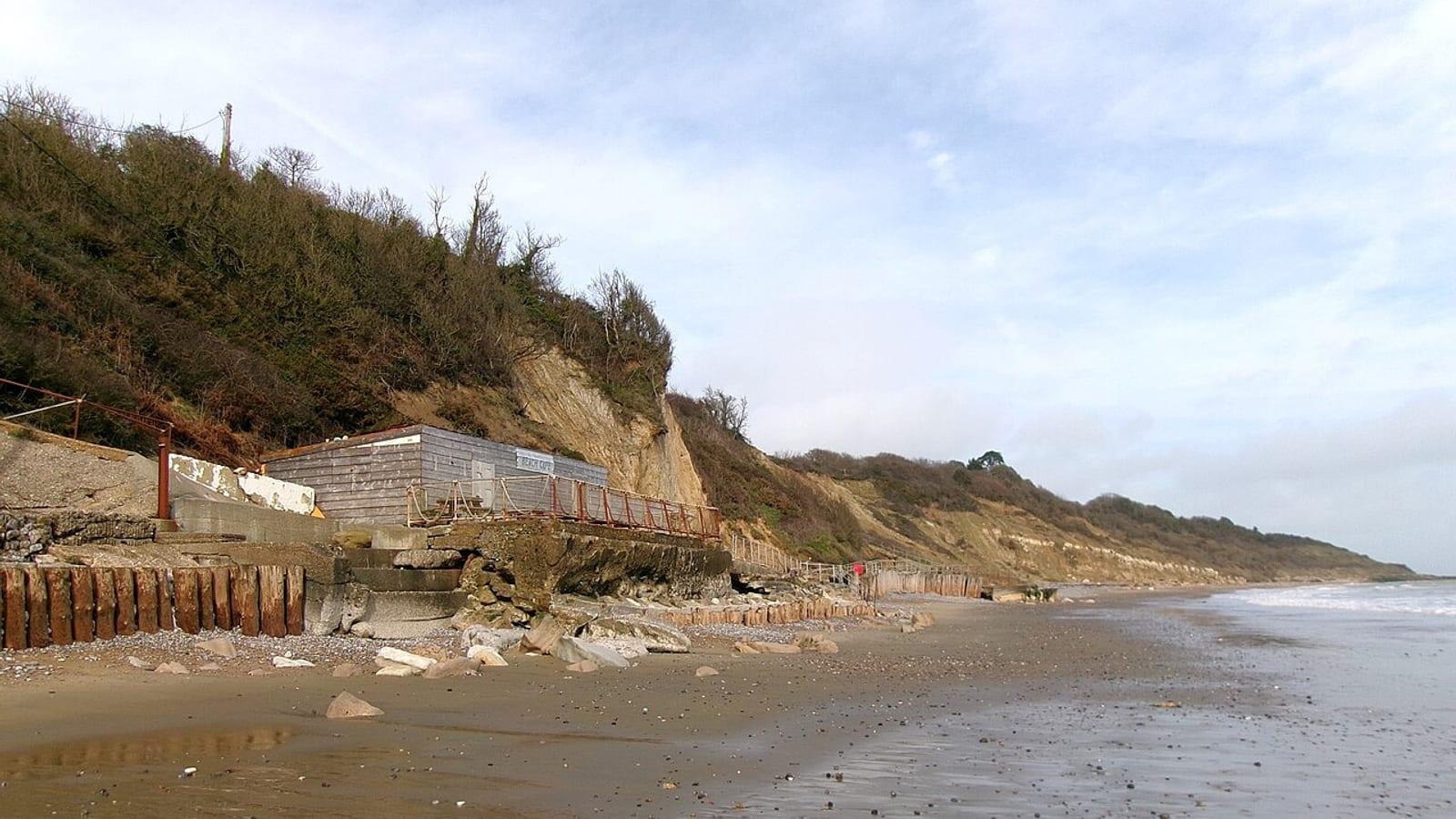
Free collectingDinosaur bone fragmentsDinosaur teethDinosaur footprintsYaverland near Sandown is the closest productive dinosaur-bearing foreshore to the island's main town. The Wessex Formation here produces bones, teeth, and occasional shell material. The site is easier to reach than Compton Bay and has a car park and café nearby, making it a good first stop for families. The southern end of the beach near Culver Cliff transitions into chalk, a completely different fauna of Cretaceous echinoids and bivalves.
Read the full guide → - 3
Brighstone Bay Fossil Hunting Guide
England, United Kingdom
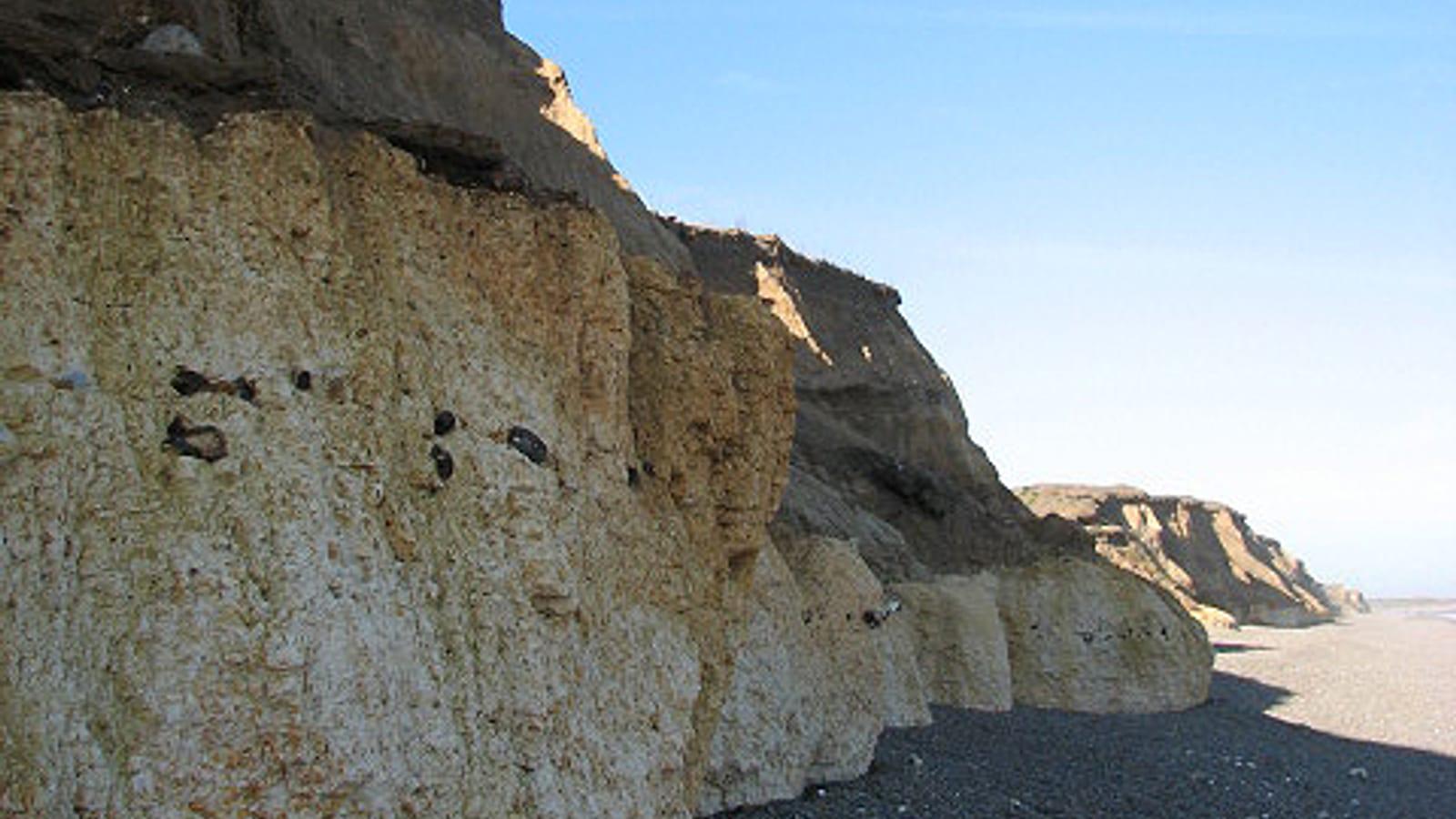
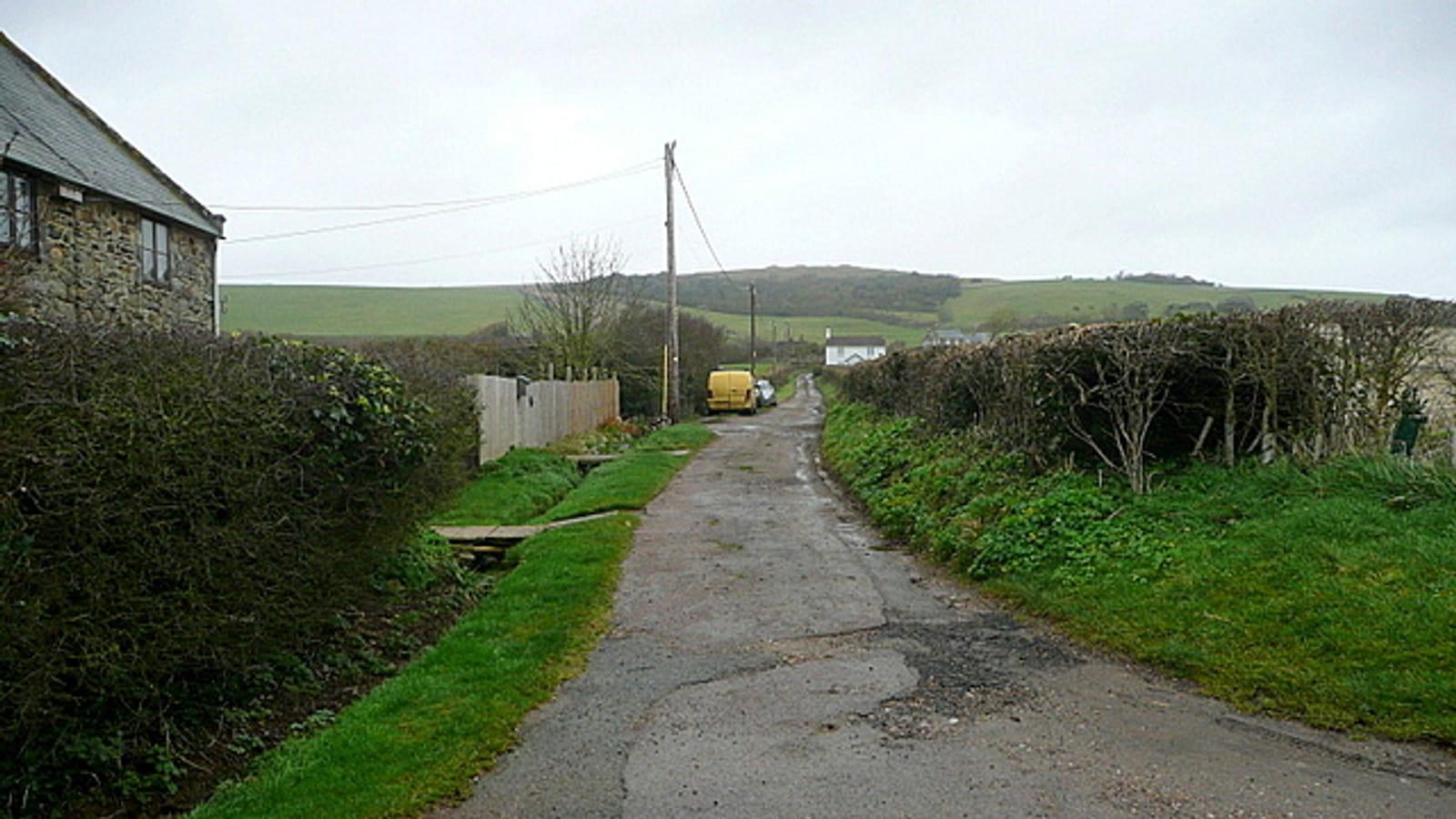
Free collectingplant debris beddinosaur teethDinosaur bonesBrighstone Bay exposes Wessex Formation mudstones similar to Compton Bay but in a quieter, less visited setting. Dinosaur bones weather out of the low cliffs and accumulate in the shingle at the base. The same horizons at Brighstone have produced partial skeletons of the sauropod Mantellisaurus and teeth of the Isle of Wight spinosaurid Ceratosuchops inferodios, described in 2021.
Read the full guide → - 4
Brook Bay Isle of Wight Fossil Hunting Guide
United Kingdom
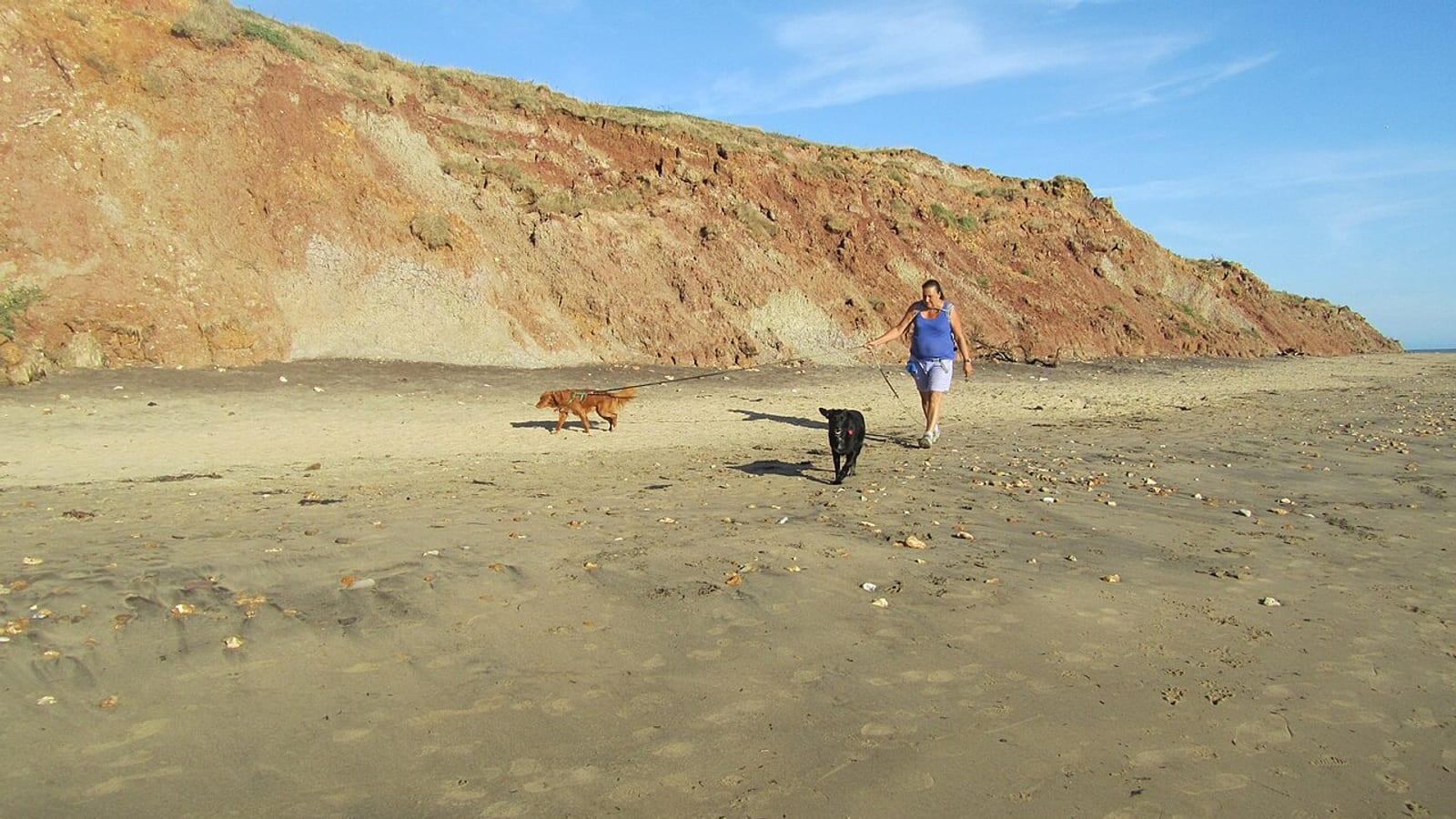
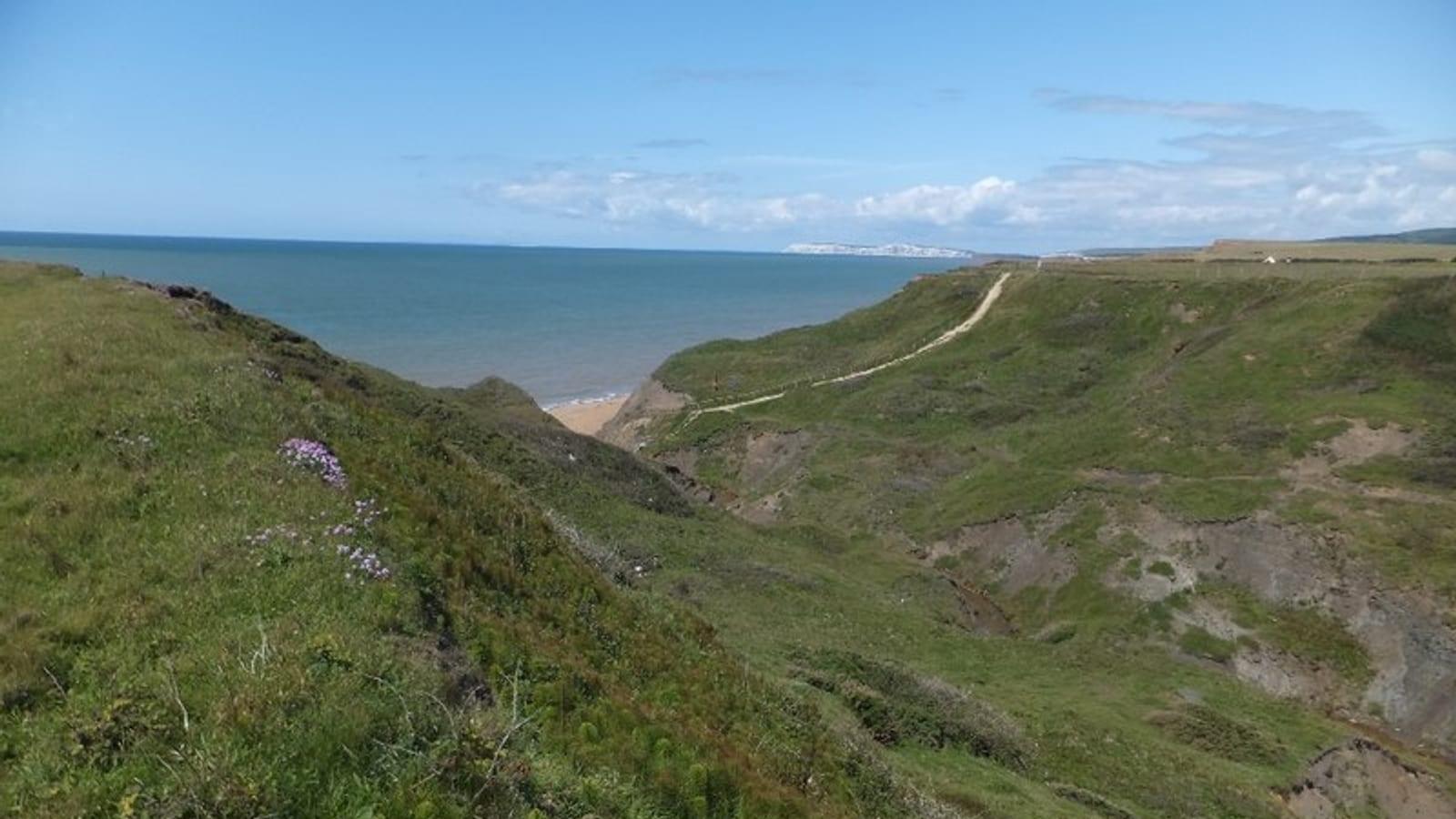
Free collectingN/ABrook Bay, between Compton and Brighstone, is one of the most scenic collecting sites on the island's southwest coast. The fossiliferous Wessex Formation alternates with hard sandstone beds, and the foreshore rock platform exposes both in-situ bone fragments and loose material. Dinosaur footprint casts — preserved in the harder sandstone — are occasionally visible at very low tides on the rock platform.
Read the full guide → - 5
Shepherds Chine Whale Chine Isle of Wight Fossil Hunting Guide
United Kingdom
Free collectingShark teethAmmonitesBrachiopodsShepherd's Chine and the adjacent Whale Chine expose the Vectis Formation — the marine unit above the terrestrial Wessex Formation — which produces marine reptile fragments including ichthyosaur and plesiosaur vertebrae. These sites are more specialist than Compton Bay but produce a different fauna. The chines (steep coastal gullies) require careful navigation, and access is limited to low tide.
Read the full guide → - 6
Whitecliff Bay Isle of Wight Fossil Hunting Guide
United Kingdom
Free collectingshark teethturtle remainsbird bonesWhitecliff Bay near Bembridge is a completely different collecting experience from the dinosaur sites on the southwest coast. Nearly vertical Eocene strata produce London Clay fossils in the northern section — shark teeth, ray teeth, crabs — grading into Bracklesham Group molluscs in the central section. The bay is famous for its exposed geological sequence and is referenced in most British geology textbooks.
Read the full guide → - 7
Hamstead Isle of Wight Fossil Hunting Guide
United Kingdom
Viewing onlyMollusc shellsPlant seeds and fragmentsfish remainsHamstead on the north coast of the Isle of Wight exposes Oligocene Hamstead Beds — the youngest fossil-bearing strata on the island — producing freshwater and brackish-water molluscs, plant material, and occasional mammal teeth. The site is tidal and the clay is soft; specialist collectors value it for its unusual Late Palaeogene fauna that differs entirely from the Cretaceous dinosaur sites across the island.
Read the full guide →
Frequently asked questions
- What dinosaurs have been found on the Isle of Wight?
- The Isle of Wight has produced more named dinosaur species than any comparable area in Europe. Named genera include Neovenator salerii (a large theropod), Iguanodon bernissartensis, Hypsilophodon foxii, Mantellisaurus atherfieldensis, Baryonyx walkeri, and two new spinosaurids described in 2021: Ceratosuchops inferodios and Riparovenator milnerae. Over 20 species are currently recognised from Early Cretaceous Wessex and Vectis Formation material.
- Is it legal to collect fossils on the Isle of Wight?
- Surface collection of loose fossils from foreshore areas below the mean high-tide mark is legal on most Isle of Wight beaches. The key restriction is that vertebrate fossils (bones, teeth) that appear scientifically significant should be reported to the Dinosaur Isle Museum in Sandown, which has a voluntary reporting scheme. Most of the best collecting sites are designated SSSIs, so hammering the cliff face or extracting fossils from bedrock is not permitted. Foreshore sections that adjoin Hampshire and Isle of Wight Wildlife Trust reserves may have additional seasonal access notices — check their website before visiting southwest coast sites.
- Which Isle of Wight beach is best for finding dinosaur fossils?
- Compton Bay on the southwest coast is the most consistently productive site for dinosaur bones and teeth. The Wessex Formation erodes rapidly here, releasing new material after every significant storm. Yaverland near Sandown is the most accessible dinosaur site for day visitors without transport. Brook Bay and Brighstone Bay are alternatives with fewer visitors and similar geology.
- Why does the Isle of Wight have so many dinosaur fossils?
- The Isle of Wight's dinosaur fossils come from the Wessex Formation, a sequence of mudstones and sandstones deposited around 125 million years ago during the Early Cretaceous. At that time, southern England sat within a broad rift valley with a warm, seasonally dry climate. Rivers draining the surrounding uplands deposited sediment across an extensive floodplain, burying the carcasses of animals that died near water channels in fine-grained overbank muds. Those conditions were ideal for bone preservation. Today, the southwest coast of the island tilts gently seaward, so wave erosion cuts directly through the Wessex Formation and exposes this buried fauna continuously along several kilometres of accessible beach.
- Can I take dinosaur fossils home from the Isle of Wight?
- You can keep loose fossil material collected from the foreshore below the mean high-tide mark at most Isle of Wight beaches, including bones and teeth that have already eroded free of the cliff. There is no law against keeping such surface finds. However, the Dinosaur Isle Museum in Sandown operates a voluntary reporting scheme for significant vertebrate specimens, and scientists depend on reported finds to document new species and build accurate records of the island's fossil fauna. If you find a bone or tooth that appears to be a substantial or unusual specimen, photographing it in situ and reporting it to the museum before removal is the recommended approach.
- What is the best time of year for fossil hunting on the Isle of Wight?
- Winter through early spring, from November to March, is the most productive period. Winter storms drive waves into the base of the Wessex Formation cliffs along the southwest coast, causing cliff falls that expose fresh material. Low spring tides in this period give the widest foreshore access. Visiting within a few days of a storm, at low tide, gives you the best chance of finding recently exposed bones before they break up in the surf. Summer is possible but the beaches are busy and the fresh material from winter cliff falls has usually been collected or broken down by then.
Recommended resources
- Dinosaur Isle Museum — Runs the voluntary reporting scheme for significant Isle of Wight vertebrate finds and displays the island's best fossil specimens — contact them before removing any substantial bone or tooth.
- Hampshire and Isle of Wight Wildlife Trust — Manages nature reserves on the island; publishes seasonal access notices for coastal sections adjoining their reserves.