Country
Fossil hunting in Croatia
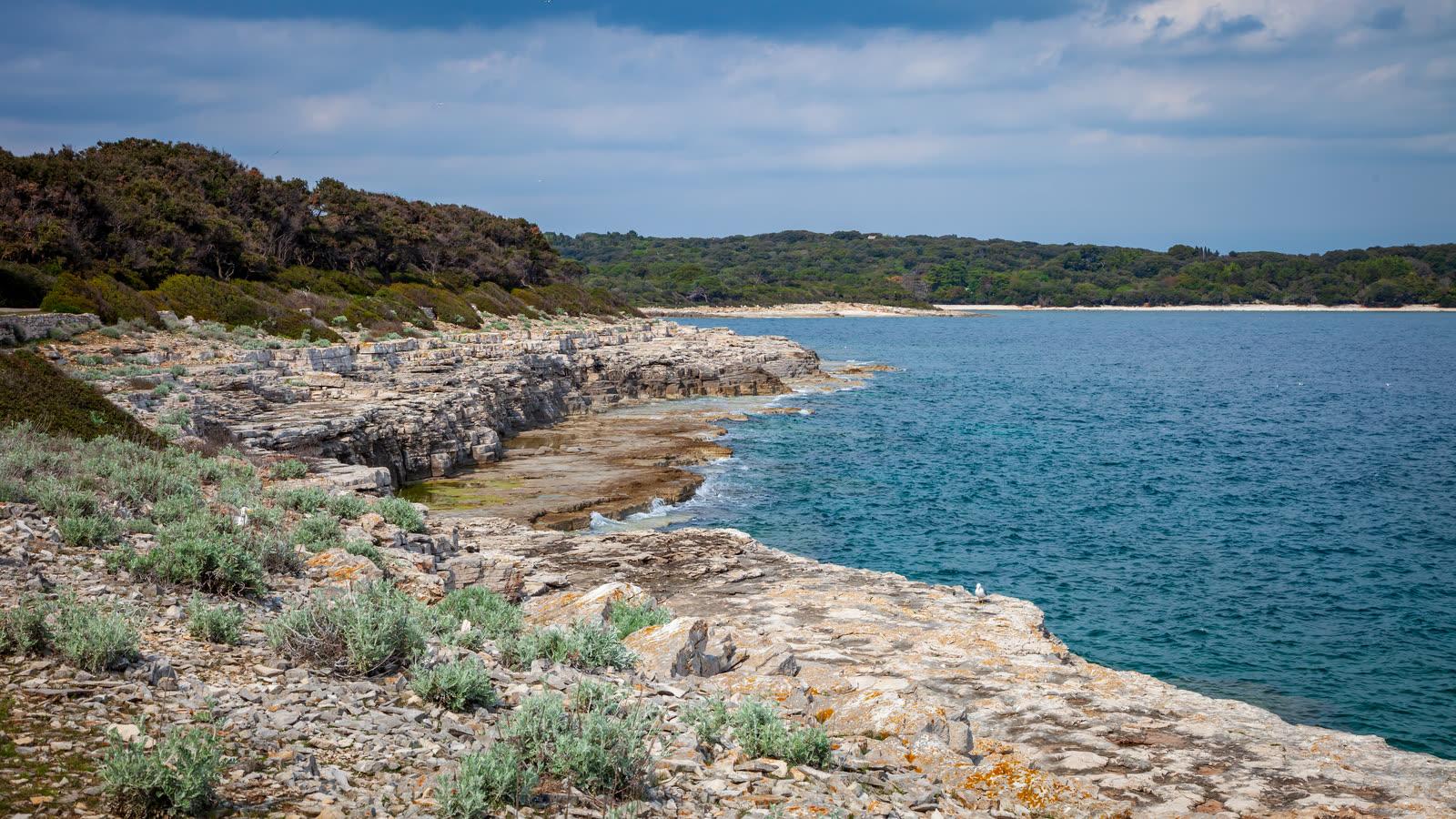
Croatia's public fossil record centers on one place. Brijuni National Park, on islands off the Istrian coast, holds 294 recorded dinosaur footprints across nine tracksites. In 2021 those tracks became the first fossils in Croatia protected by law.
The footprints break down into 167 small theropod tracks, 60 large theropod, 40 sauropod and 27 ornithopod. The oldest sit on Cape Vrbanj and date to between 130 and 125 million years ago. The park puts the rest at around 105 million years.
Two of the four tracksites on Veliki Brijun are closed to visitors. Cape Kamik and Cape Trstike lie inside an area managed by the Croatian Ministry of Defence. Cape Ploce and Cape Vrbanj are the two a visitor can reach, and the outer islands of Vanga, Galija and Vrsar are not open at all.
Access is by the national park boat from Fazana, a ride of about 15 minutes. A tourist train and a guide meet the boat on arrival. A three-toed footprint sits in a limestone block on the harbour jetty, but that block was brought from a quarry, so it is not a track in place.
1 fossil site
Updated 1 October 2026
Frequently asked questions
- Where can you see dinosaur footprints in Croatia?
- Brijuni National Park in Istria. Cape Ploce holds about 50 small theropod prints and Cape Vrbanj about 60 large theropod prints. Reach the islands on the park boat from Fazana. Two further tracksites on Veliki Brijun lie in a military area and are closed to the public.
- Can you collect fossils in Croatia?
- Not at Brijuni. The park is a national park and collecting is prohibited. In 2021 Croatia declared 24 dinosaur fossils and their sites a protected part of nature. They were the first fossils in the country to receive that status.