Country
Fossil hunting in Georgia
Dmanisi in Kvemo Kartli has produced about 100 hominin fossils, more than 8,000 animal remains and more than 11,000 stones and stone artifacts. The hominin levels date to 1.81 to 1.77 million years ago, which makes the site the earliest well-dated evidence of the genus Homo outside Africa.
The Georgian National Museum runs the site as the Dmanisi Historical and Architectural Museum-Reserve. It sits on a promontory in southern Georgia. A medieval town stands on the same ground, and the Pleistocene deposits lie beneath the medieval ruins, which is why a first-time visitor sees a castle before anything else.
The excavation stays open. A roof covers the main hominin trench and interpretive boards explain the stratigraphy. An exhibition hall holds more than 2,300 artifacts. The International Commission on Geoheritage lists the Dmanisi Collection in its geo-collections list, naming the Georgian National Museum as holder.
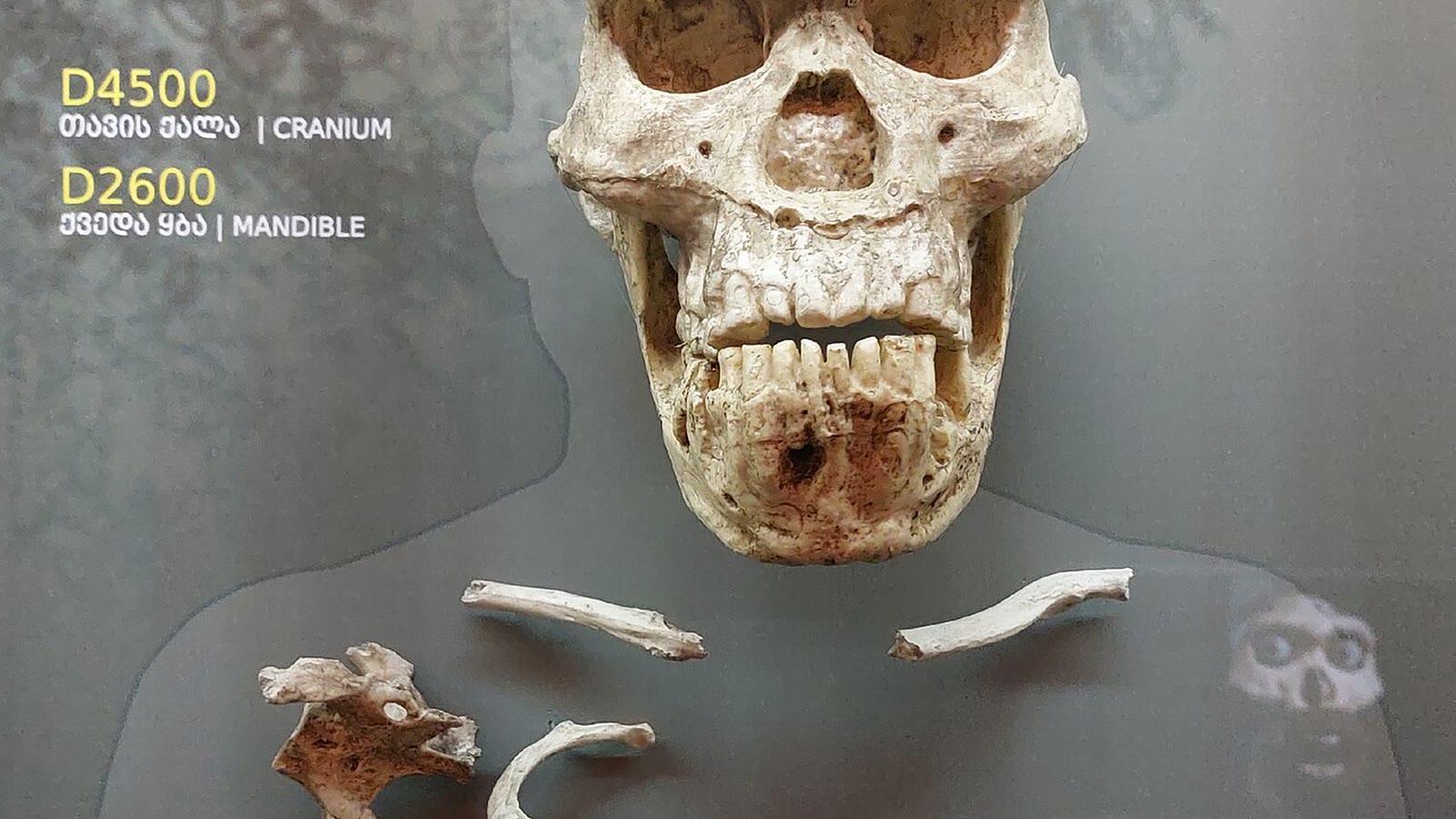
The hominin taxonomy is contested. The Dmanisi material has been assigned to Homo erectus georgicus, to Homo georgicus and to Dmanisi Homo erectus, and the question is not settled. The key specimens are the skulls D2280, D2282 and D3444, and Skull 5, specimen D4500, described in Science in 2013.
1 fossil site
Updated 12 October 2026
Frequently asked questions
- Can you collect fossils at Dmanisi?
- No. Dmanisi is a state museum-reserve and an active excavation, and the ground is protected. Do not dig, turn over spoil, or take loose bone or stone from the trench edges. Stay on the paths and behind the barriers around the roofed excavation.
- Why does Dmanisi matter?
- It holds the earliest well-dated evidence of the genus Homo outside Africa, at 1.81 to 1.77 million years ago. The underlying Masavera Basalt gives the date. Around 100 hominin specimens have come from the site.