Dmanisi Museum-Reserve Fossil Site Guide
Image: Kober (CC0)
An open-air museum-reserve in Kvemo Kartli, Georgia, where the roofed hominin excavation stays open to view. About 100 hominin fossils and more than 8,000 animal remains come from deposits dated close to 1.8 million years.
By Edward Chen · Published 12 October 2026
Introduction
Dmanisi has produced about 100 hominin fossils, more than 8,000 animal remains and more than 11,000 stones and stone artifacts. The hominin occupation levels date to 1.81 to 1.77 million years ago. That makes the site the earliest well-dated evidence of the genus Homo outside Africa.
The place is an open-air museum-reserve on a promontory in Kvemo Kartli, southern Georgia. The Georgian National Museum runs it as the Dmanisi Historical and Architectural Museum-Reserve. A medieval town sits on the same promontory, and the Pleistocene deposits lie beneath the medieval ruins.
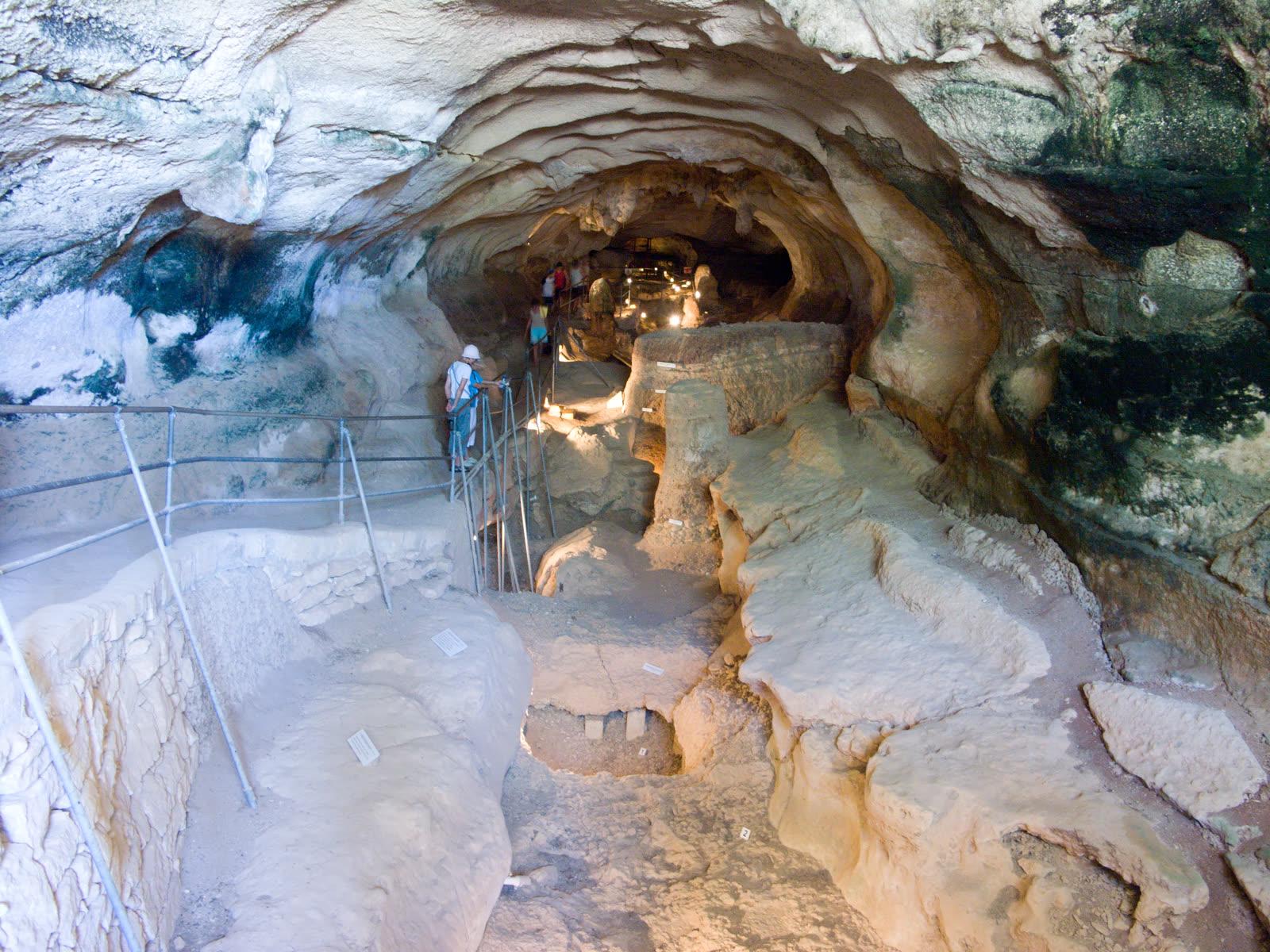
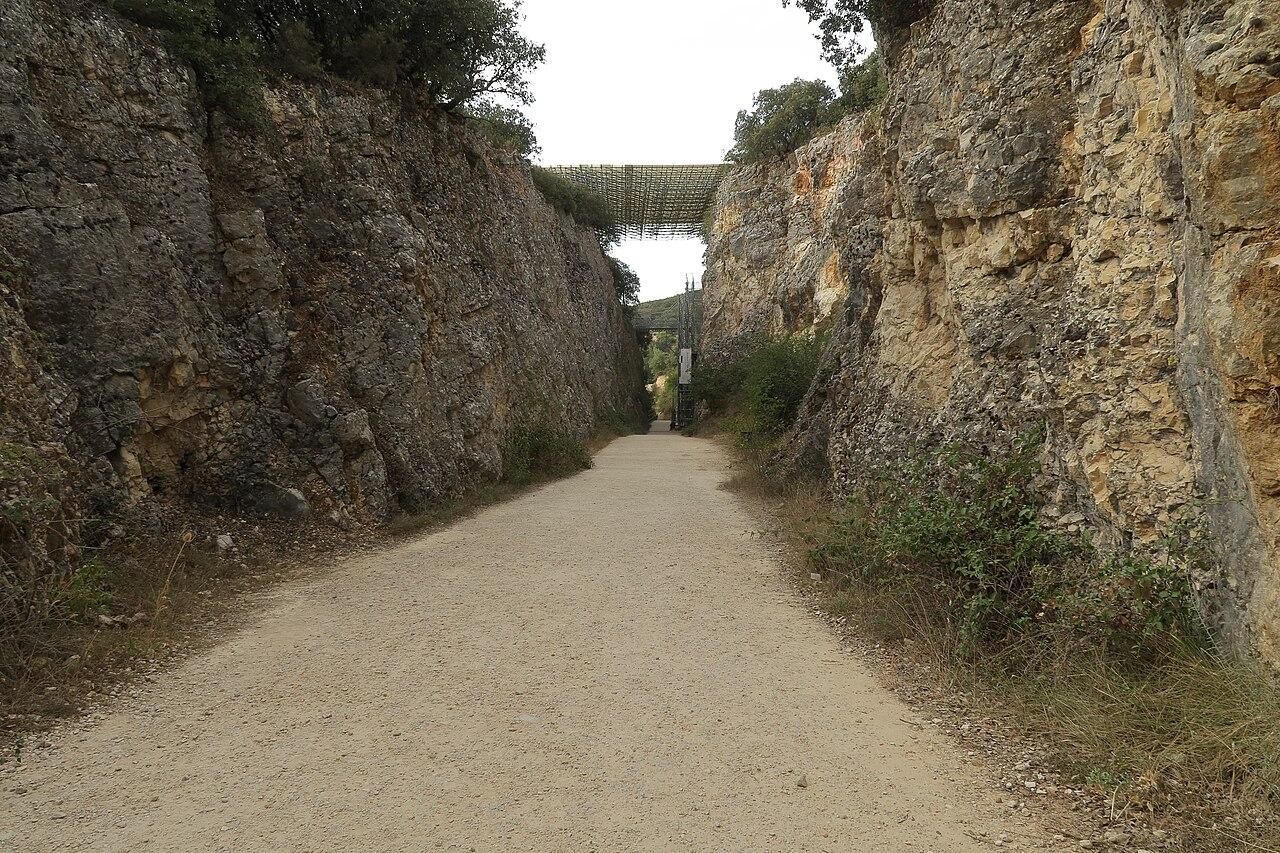
The excavation stays open. A roof covers the main hominin trench, and interpretive boards explain the stratigraphy and the finds. An exhibition hall holds more than 2,300 artifacts.
The International Union of Geological Sciences lists the Dmanisi Collection in the geo-collections list maintained by its International Commission on Geoheritage. The listing names the Georgian National Museum as the holder.
 Photo: Larry V. Dumlao, CC BY-SA 4.0, via Wikimedia Commons
Location and Directions
The excavation sits at 41.3361°N, 44.3439°E, north of the village of Patara Dmanisi in Dmanisi Municipality, Kvemo Kartli. Ferring and colleagues give the position as 55 km southwest of Tbilisi. The Georgian National Tourism Administration puts the drive at 2 hours 10 minutes.
The site occupies a promontory above the junction of the Mashavera and Pinasauri rivers. The Mashavera valley is also the reason the geology works, as the next section explains.
The museum-reserve lists its hours as every day except Monday, 11:00 to 16:00. Adult admission is 3 GEL. Students pay 1.5 GEL and school groups of up to 15 pupils pay 0.5 GEL. A guided tour costs 10 GEL on top of admission.
Opening dates vary between listings. Several sources describe the reserve as a seasonal operation that runs from May to October. Others describe it as open through the year. Telephone the reserve on +995 590 880 115 before you travel, or email info@museum.ge.
Postcode 1706 covers the village. There is no public transport to the trench itself, so plan on a car or a taxi from Dmanisi town.
What Fossils You'll Find
Nothing to collect. This is a research excavation inside a state museum-reserve, and the finds go to the Georgian National Museum in Tbilisi. What a visitor sees is the deposit in section, the trench under its roof, and the exhibition hall.
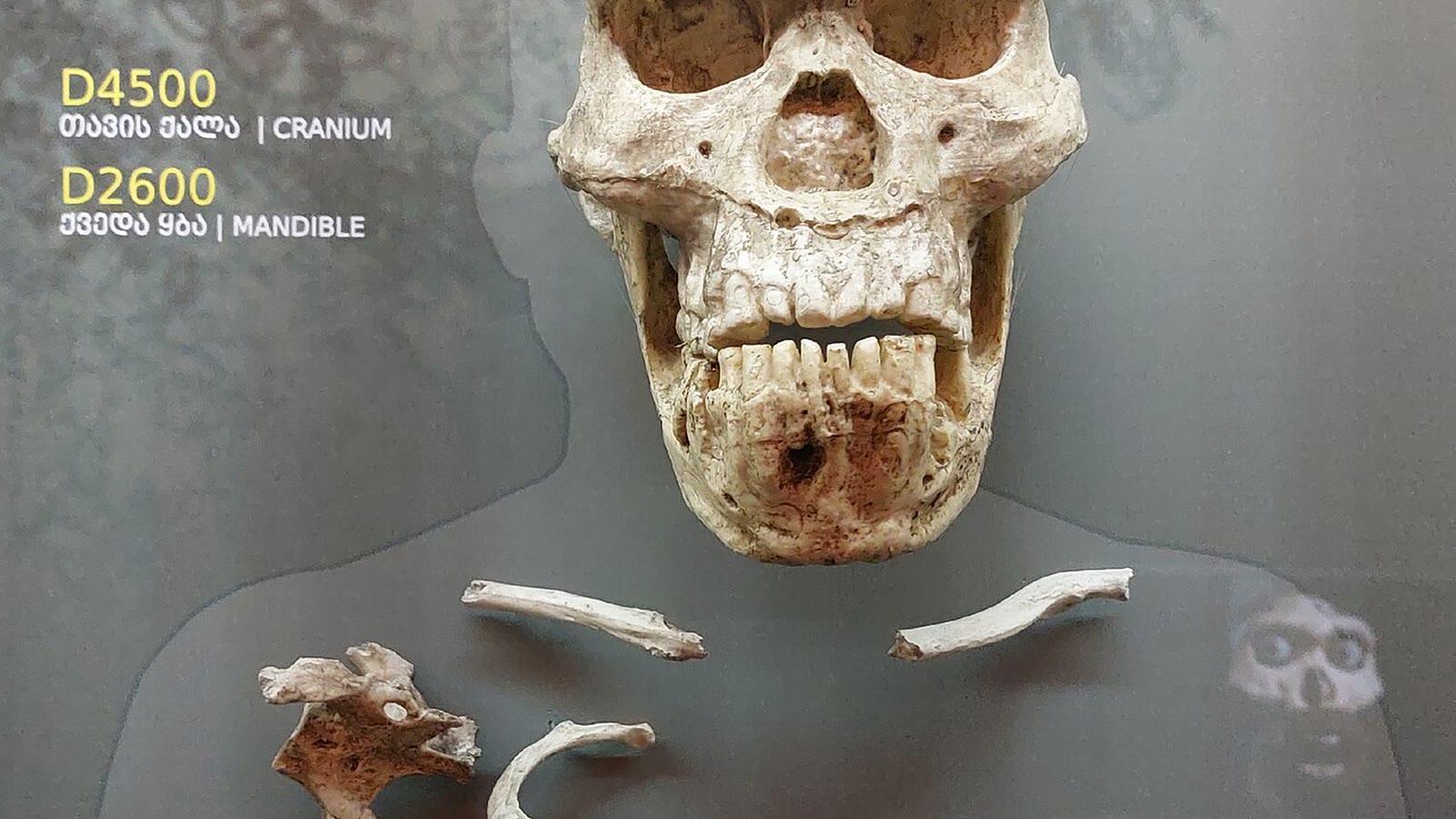
The hominin material is the reason the site is known. Five crania have come out of stratum B, with associated mandibles and postcranial bones.
- D2280 and D2282 came out in 1999. Gabunia and colleagues described them in Science in 2000 and referred them to Homo ex gr. ergaster.
- D2600 is a robust mandible found in September 2000. It became the type of Homo georgicus, named by Gabunia and colleagues in Comptes Rendus Palevol in 2002.
- D3444, with its mandible D3900, is the earliest known hominin skull that had lost almost all its teeth. Lordkipanidze and colleagues published it in Nature in 2005.
- D4500, known as Skull 5, joins the D2600 mandible. Lordkipanidze and colleagues described it in Science in 2013 as the first completely preserved adult hominid skull from the Early Pleistocene. Its braincase holds 546 cubic centimeters and sits under a large projecting face.
 Photo: Kober, CC0, via Wikimedia Commons
The name of the Dmanisi hominin is contested, and this guide will not pick a side. Three usages circulate in the literature. Homo georgicus is the species name Gabunia and colleagues published in 2002. Homo erectus georgicus treats the sample as a subspecies of Homo erectus. Many papers simply write "Dmanisi Homo erectus", and the 2025 faunal review by Martinez-Navarro and colleagues lists the site's hominin as Homo erectus. The 2013 Science paper argued from the five crania that early Homo formed a single evolving lineage. That argument is the reasoning behind the lumped usage.
The animal fauna is well studied. The 2025 review counts 27 species of large vertebrates at Dmanisi: one ostrich, Pachystruthio dmanisiensis, and 26 large mammals. Five cats are named: Homotherium latidens, Megantereon whitei, Panthera onca georgica, Acinonyx pardinensis and Lynx issiodorensis. The first two are saber-toothed cats. The other carnivores include the giant short-faced hyaena Pachycrocuta brevirostris and the canids Xenocyon lycaonoides and Canis borjgali. Herbivores include the elephant Mammuthus meridionalis, the horse Equus stenonis, the rhinoceros Stephanorhinus etruscus, the deer Praemegaceros obscurus and the bison Bison georgicus.
Geologic History
The geology starts with lava. The Mashavera valley filled with 80 to 100 meters of mafic lava just before people arrived. That lava cooled into the Mashavera Basalt, dated by the argon-argon method to about 1.85 million years ago. The spelling Masavera appears in some papers for the same unit.
Volcaniclastic and colluvial deposits lie conformably on top of the basalt. Ferring and colleagues divided the 6.2 meter section in the M5 block into nine units, A1 through B5. Stratum A carries normal magnetic polarity and falls in the upper Olduvai subchron, dated to about 1.85 to 1.78 million years ago. Stratum B carries reversed polarity from the earliest Upper Matuyama and dates to about 1.77 million years ago.
All the hominin fossils come from stratum B, and most from the B1 subunit. Pipe and gully sediments inside B1 fill cavities cut into the earlier beds. Stratum B2 seals all of B1 across the promontory, which gives the hominin layer a minimum age of about 1.76 million years ago.
No formal formation name exists for the deposits above the basalt. The published literature uses stratum and unit labels, not a formation. That is why the frontmatter on this page names stratum B and the basalt beneath it rather than a formation.
The fauna agrees with the dates. Martinez-Navarro and colleagues place the assemblage in the Calabrian stage of the Early Pleistocene and in the late Villafranchian faunal unit. The mix combines European taxa, Asian arrivals and African arrivals, and Homo erectus and Megantereon whitei belong to that African group.
 Photo: Jonathan Cardy, CC BY-SA 3.0, via Wikimedia Commons. The medieval town sits directly above the hominin-bearing beds.
Collecting Rules and Regulations
Collect nothing. Dmanisi is a state museum-reserve and an active excavation, and the ground is protected.
Do not dig. Do not turn over spoil. Do not take loose bone or stone from the trench edges or the slopes below the promontory.
Stay on the paths and behind the barriers around the roofed excavation. Excavation surfaces record the position of every find, and a footprint on an open surface destroys data.
The structures on the promontory carry their own protection. Georgia listed Dmanisi Sioni and the other buildings as Immovable Cultural Monuments of National Significance in 2007.
Photography of the trench and the exhibition hall is normal practice at the reserve, but ask the staff first. Rules at working excavations change with the season.
Report anything you see on the surface to the reserve staff. Do not pick it up.
Safety
The promontory has steep, unfenced drops to the two rivers. Keep well back from the edges.
Medieval masonry stands in ruins across the site. Loose stone shifts under a foot, and walls can be unstable.
Wear boots with ankle support. The ground is uneven rock, rubble and cut trench edges.
Summer heat in Kvemo Kartli is high and shade on the promontory is limited. Carry water and sun protection.
The reserve sits at altitude in the Lesser Caucasus. Weather turns quickly, and the access road suffers in winter and in heavy rain.
There are no services at the trench. The nearest shops and fuel are in Dmanisi town.
Check your own government's current travel advice for Georgia before you travel.
Sources
https://doi.org/10.1073/pnas.1106638108 https://pmc.ncbi.nlm.nih.gov/articles/PMC3127884/ https://doi.org/10.1126/science.1238484 https://doi.org/10.4435/BSPI.2025.07 https://www.paleoitalia.it/wp-content/uploads/2025/05/10_Martinez_Navarro_et_al_2025_BSPI_641.pdf https://iugs-geoheritage.org/geo-collections/dmanisi-collection/ https://dmo.ge/en/region/Dmanisi-Historical-and-Architectural-Museum-Reserve/ https://georgia.travel/cities-towns/dmanisi https://humanorigins.si.edu/evidence/human-fossils/fossils/d2282 https://sciencepress.mnhn.fr/sites/default/files/articles/pdf/comptes-rendus-palevol2002v1f4a7.pdf