State
Fossil sites in Nevada
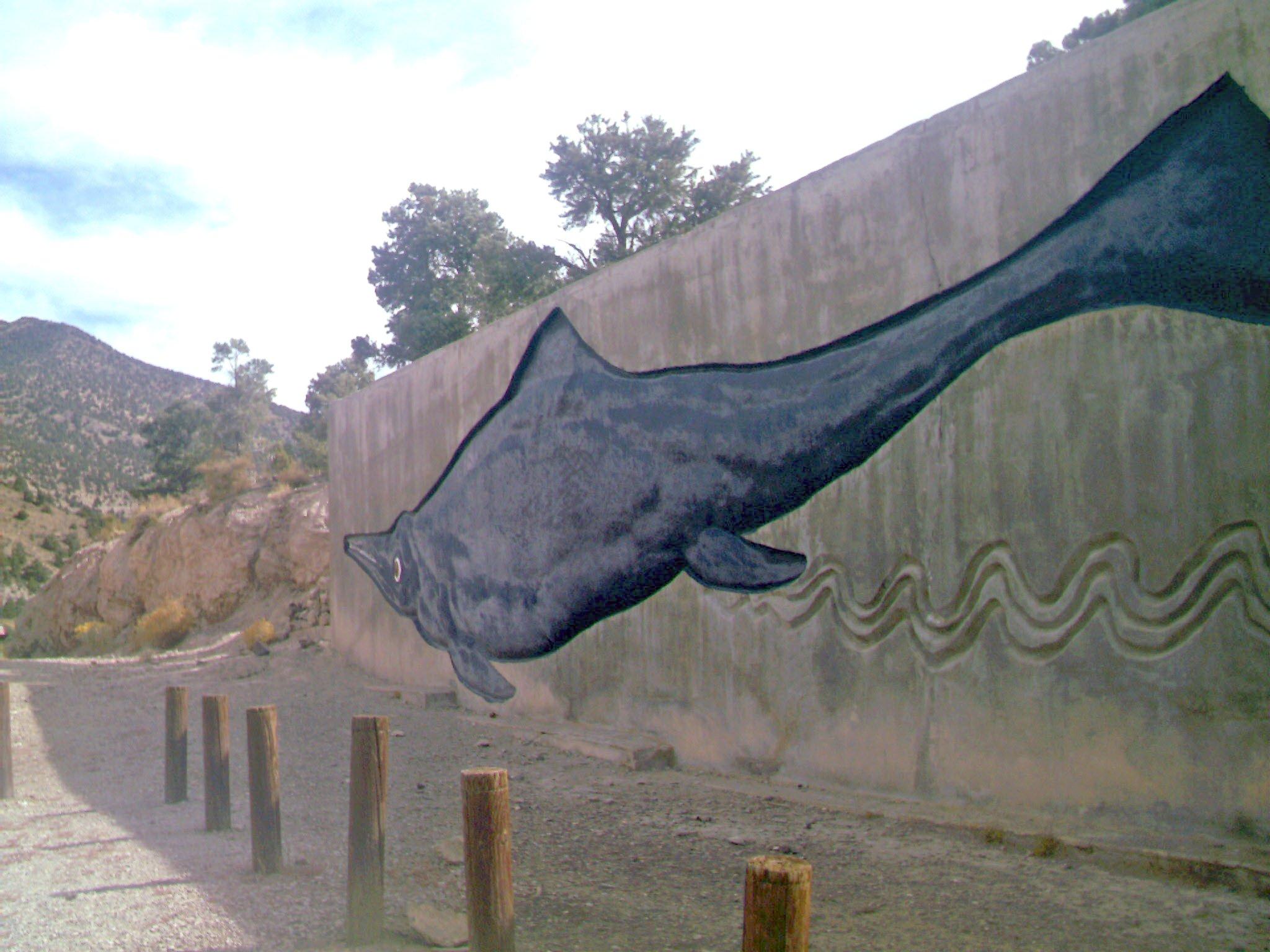
Nevada offers two viewing-only fossil destinations that bookend the state's geological history: the world's largest articulated ichthyosaur fossils at Berlin in the central desert, and Ice Age megafauna trackways and bone beds at Tule Springs just north of Las Vegas.
Berlin-Ichthyosaur State Park in Nye County preserves a Late Triassic mass-mortality bone bed of Shonisaurus popularis, an ichthyosaur reaching roughly 15 metres in length. The bones are protected in-situ under a covered fossil shelter, and guided ranger tours (typically Memorial Day through Labor Day) walk visitors through the bonebed and the adjacent ghost town of Berlin. Collecting is prohibited. The site is a viewing destination, but the scale and preservation of the specimens is unmatched in the western US.
Tule Springs Fossil Beds National Monument, about a 20-minute drive from the Las Vegas Strip, preserves Pleistocene megafauna (Columbian mammoth, American lion, dire wolf, camelops, ground sloth) within an active urban-edge desert landscape. The monument is free to enter but undeveloped. There are no visitor facilities yet, and a sturdy car plus water are required. Collecting is strictly prohibited under the Paleontological Resources Preservation Act. The site is best treated as a self-guided walk.
Fee-based fossil collecting in Nevada is possible at a handful of Cambrian and Ordovician outcrops in the Eureka and Pioche districts, but these require local guides and BLM casual-use rules. Most visiting collectors stick to Berlin and Tule Springs as the easiest first stops.
2 fossil sites
Updated 2 August 2026
Part of our national guide to the best places to fossil hunt in the United States.