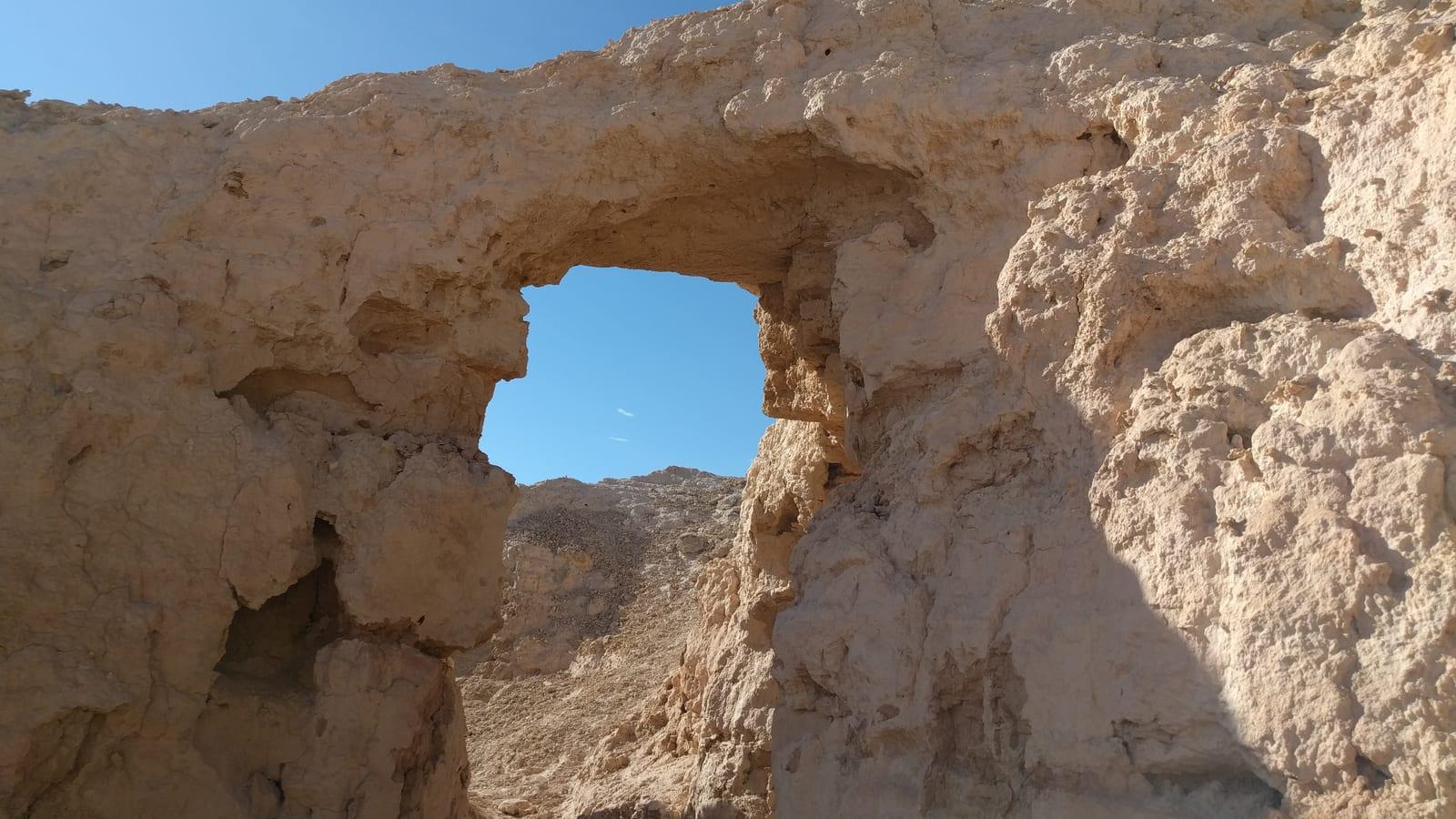
Tule Springs Fossil Beds National Monument Fossil Hunting Guide
Image: David Starner (CC BY-SA 4.0)
Tule Springs Fossil Beds National Monument protects roughly 22,650 acres of Las Vegas Valley desert on the north edge of metropolitan Las Vegas, Nevada.
By Edward Chen · Updated 31 July 2026
Introduction
Tule Springs National Monument includes a small museum, and a series of trails you can walk into the fossil beds with informational plaques. There's several miles worth of hikes you can do with loops, and the museum takes about 45 minutes to peruse if you take your time. I went in February 2025 and it was a good way to kill a couple hours while I was in Las Vegas and learn more about the geologic history of the area.
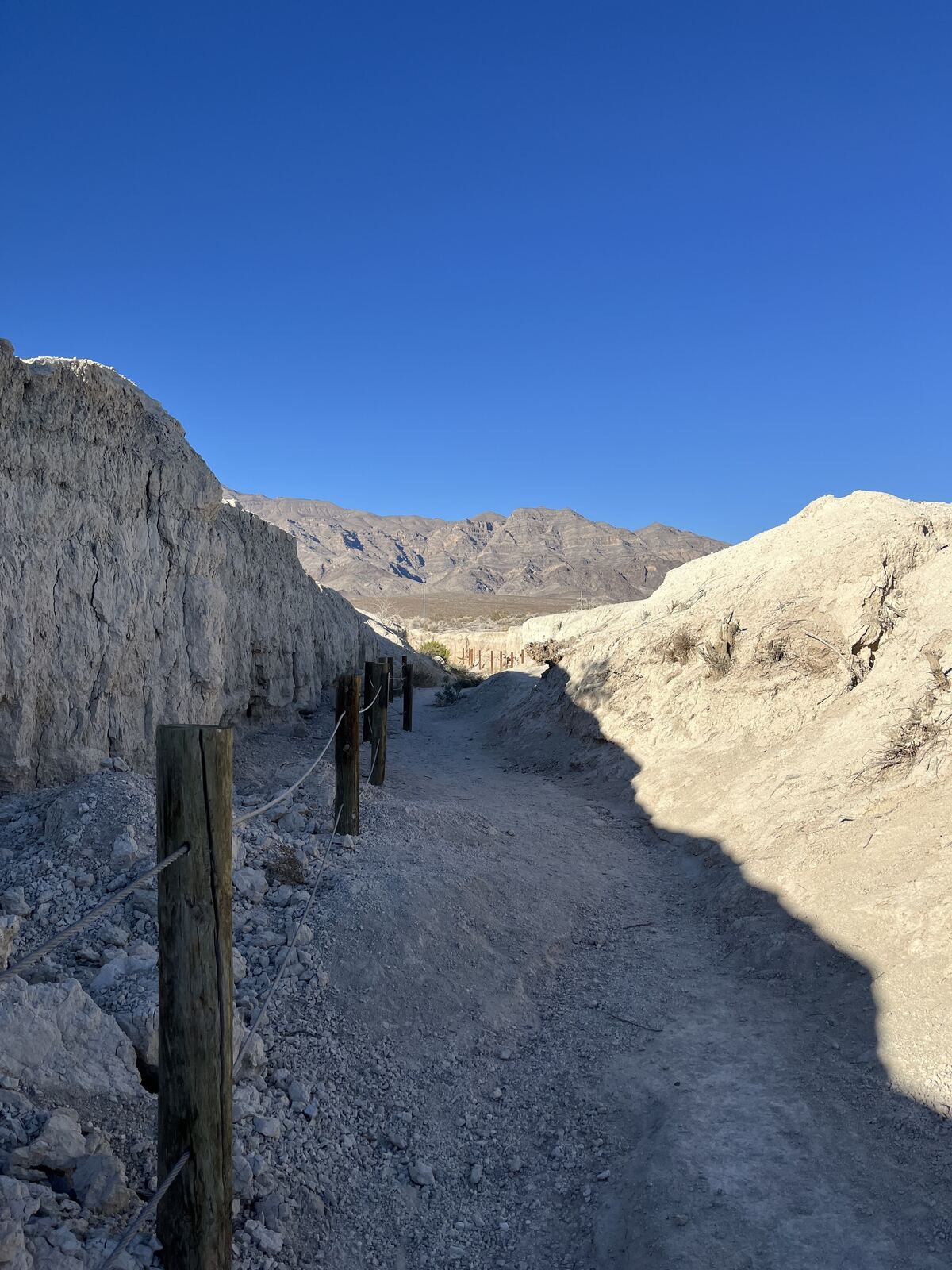
Tule Springs Fossil Beds National Monument protects roughly 22,650 acres of Las Vegas Valley desert on the north edge of metropolitan Las Vegas, Nevada. The pale, banded sediment exposed across the monument is the Las Vegas Formation, a sequence of late Pleistocene spring and wetland deposits that records about 250,000 years of cycling between hyperarid desert and the lush, perennial spring systems that Ice Age megafauna depended on. Excavations beginning in the 1930s and continuing through the 1962 "Big Dig" recovered Columbian mammoths (Mammuthus columbi), Shasta ground sloths (Nothrotheriops shastensis), Western camels (Camelops hesternus), North American horses (Equus species), bison, dire wolves (Aenocyon dirus), and American lions (Panthera atrox), along with smaller vertebrates, freshwater mollusks, and plant material that documents the Ice Age ecosystem in detail. Congress established the monument under the National Park Service in December 2014 to protect those resources, and visitor access is currently limited to a developed trailhead and a small interpretive footprint on the south edge of the monument. Everything inside the boundary is protected. This guide covers how to reach the trailhead, what visitors can actually see, the geology of the Las Vegas Formation, and the federal rules that make this strictly a viewing-only site.
Location and Directions
The monument runs east-west across the north edge of the Las Vegas Valley, in Clark County, Nevada. The administrative headquarters of the monument is in North Las Vegas. There is no developed visitor centre on monument land at the time of writing.
The main public access point is the Ice Age Park trailhead, on the south edge of the monument off Aliante Parkway in North Las Vegas. From U.S. 95 northbound, take the Aliante Parkway exit and head north. Aliante Parkway dead-ends near the monument boundary, where parking and a short interpretive trail give the easiest current public access to the Las Vegas Formation badlands. From the Las Vegas Strip, the drive is about 20 to 25 minutes north on I-15 and U.S. 95.
Additional public access exists on the south boundary of the monument along Brent Lane and Decatur Boulevard, where dirt roads enter monument land from adjacent City of North Las Vegas streets. These are open during daylight hours and provide walk-in access to the open desert. The monument has no developed roads, no campgrounds, and limited signage. There are no entrance fees.
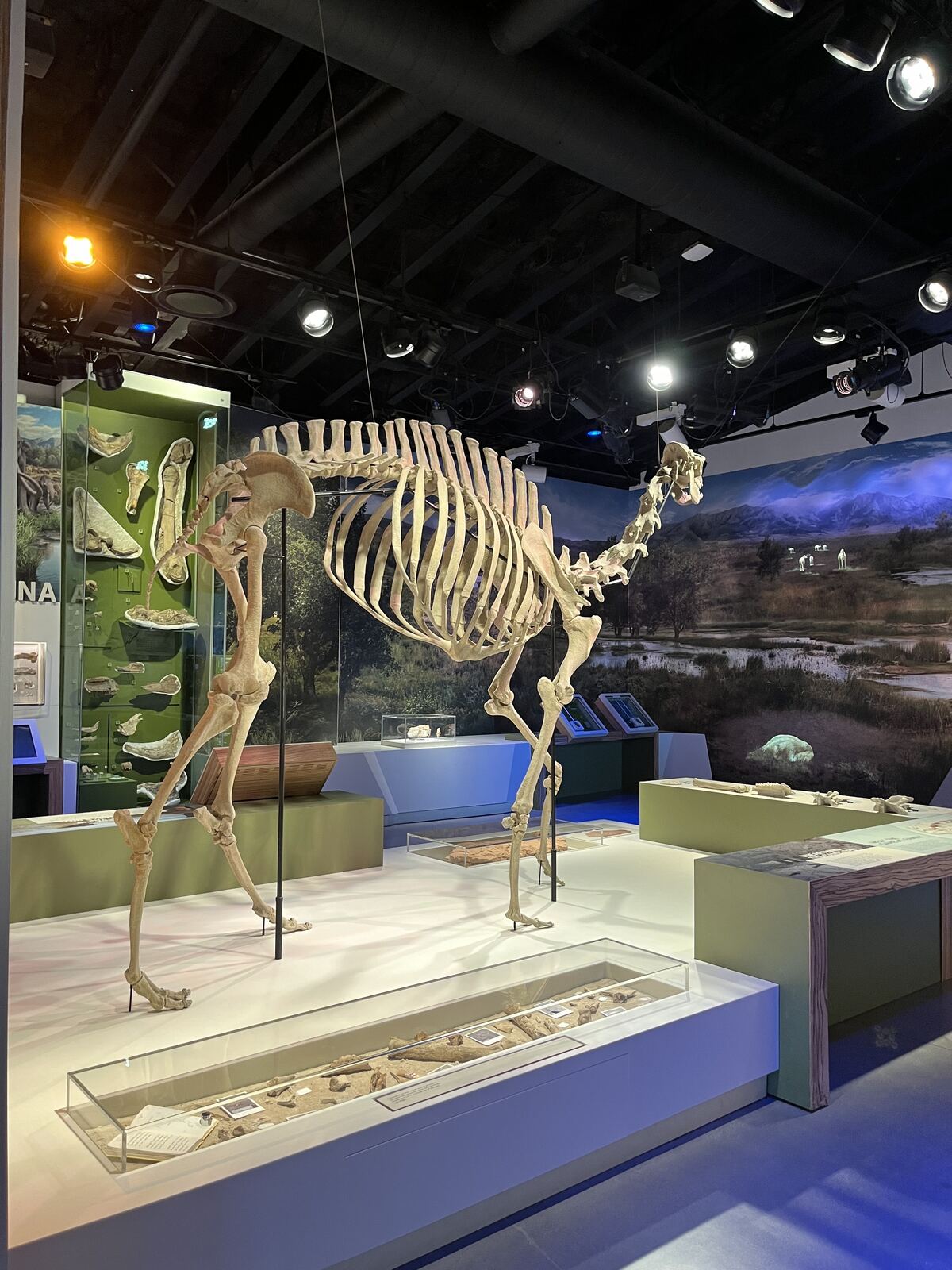
A combined Las Vegas-area visitor experience pairs Tule Springs with two off-monument partners: the Las Vegas Natural History Museum on Las Vegas Boulevard North, which exhibits Tule Springs fossils and Ice Age interpretation, and Floyd Lamb Park at Tule Springs on Tule Springs Road, the historic spring complex that gave the locality its name and now operates as a Clark County park with year-round water and trails. Floyd Lamb Park is separate from the National Monument and has its own fees.
Below is a picture I took at the Las Vegas Natural History Museum.
Bring water, sun protection, and sturdy shoes. Summer afternoons in the Las Vegas Valley regularly exceed 105 degrees Fahrenheit, and the monument has no shade. Winter temperatures are mild and the cooler half of the year (October through April) is the practical visiting window.
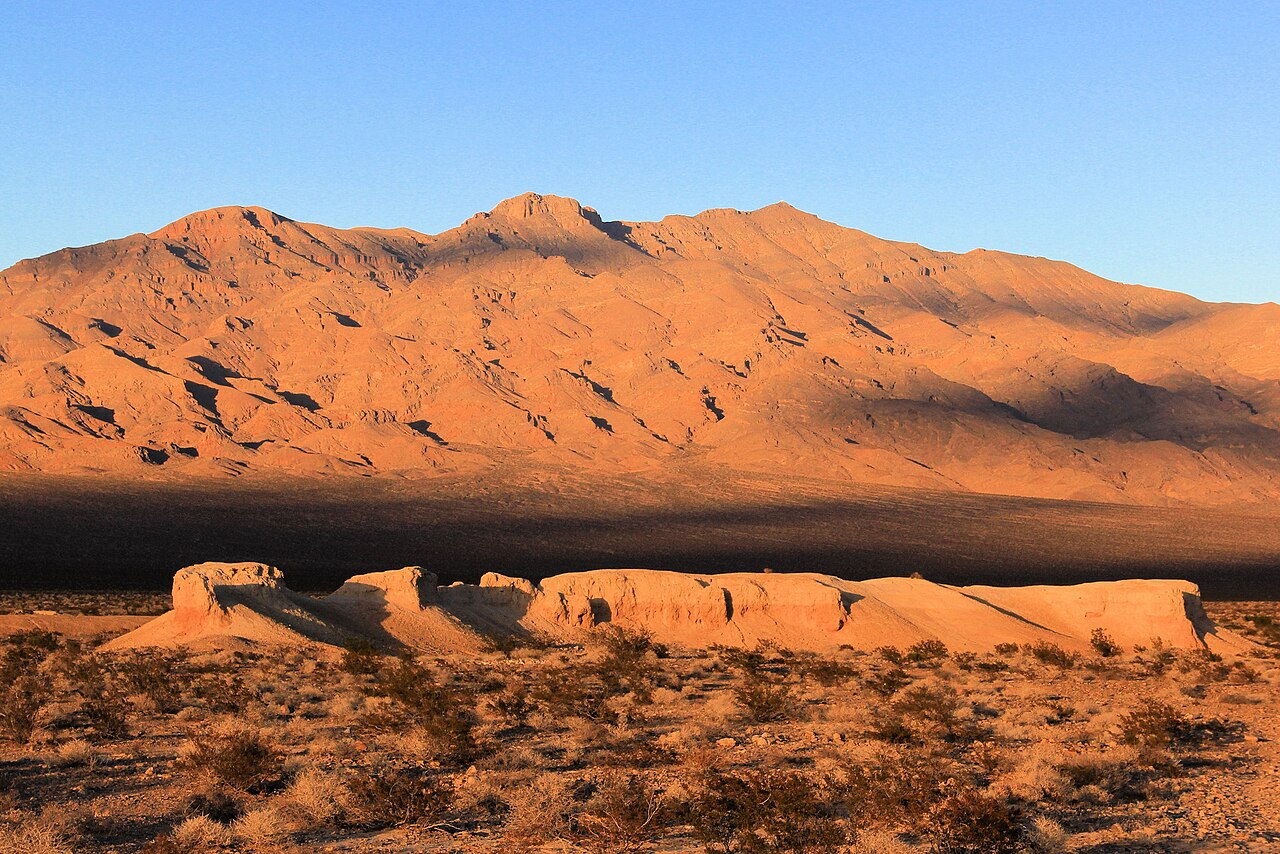 Photo: National Park Service, Public domain, via Wikimedia Commons
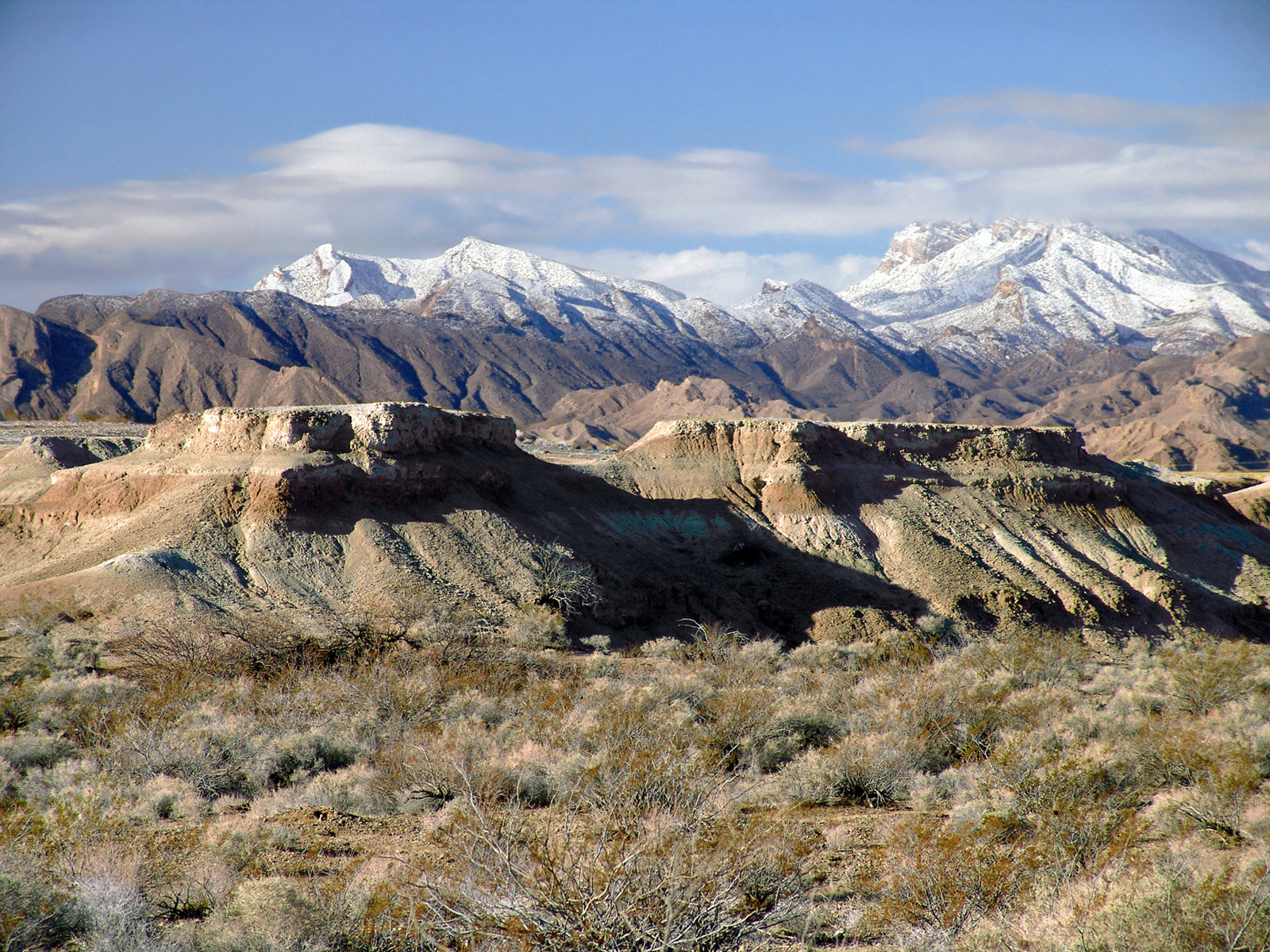 Photo: NPS Photo, public domain, via National Park Service
What Fossils You'll Find
You will not collect anything at Tule Springs. The monument is federal land managed by the National Park Service, and all fossils, archaeological materials, and natural objects are protected. What visitors can see is the Las Vegas Formation exposed in low badlands and dry washes, with occasional fossil material visible on the surface and substantial fossil interpretation provided at the Las Vegas Natural History Museum.
Fossils documented from the monument:
- Columbian mammoth, Mammuthus columbi. The headline species at Tule Springs. Tusks, molars, vertebrae, ribs, and limb bones have come from multiple localities across the monument.
- Shasta ground sloth, Nothrotheriops shastensis. Smaller of the two ground sloths documented from the Las Vegas Valley. Bones and dung have been recovered.
- Jefferson's ground sloth, Megalonyx jeffersonii. Larger ground sloth, less common.
- Western camel, Camelops hesternus. Limb bones and teeth.
- North American horses, Equus species. Several Pleistocene horse species are represented by teeth and bones.
- Bison, Bison species. Late Pleistocene bison, including the ancestor of modern bison.
- Dire wolf, Aenocyon dirus. Predator material, less common than the herbivores.
- American lion, Panthera atrox. Rare. Documented from regional Pleistocene records.
- Smaller vertebrates. Rodents, lizards, frogs, freshwater fish, and many bird species recovered from spring-edge deposits.
- Invertebrates and plant material. Freshwater snails, ostracodes, charophyte algae, and pollen that together reconstruct the Ice Age wetlands.
Fossils visible on the surface are usually small bone fragments or scattered tooth pieces in dry washes. The well-known in situ mammoth tusks recovered during the Big Dig and later excavations are now in museum collections.
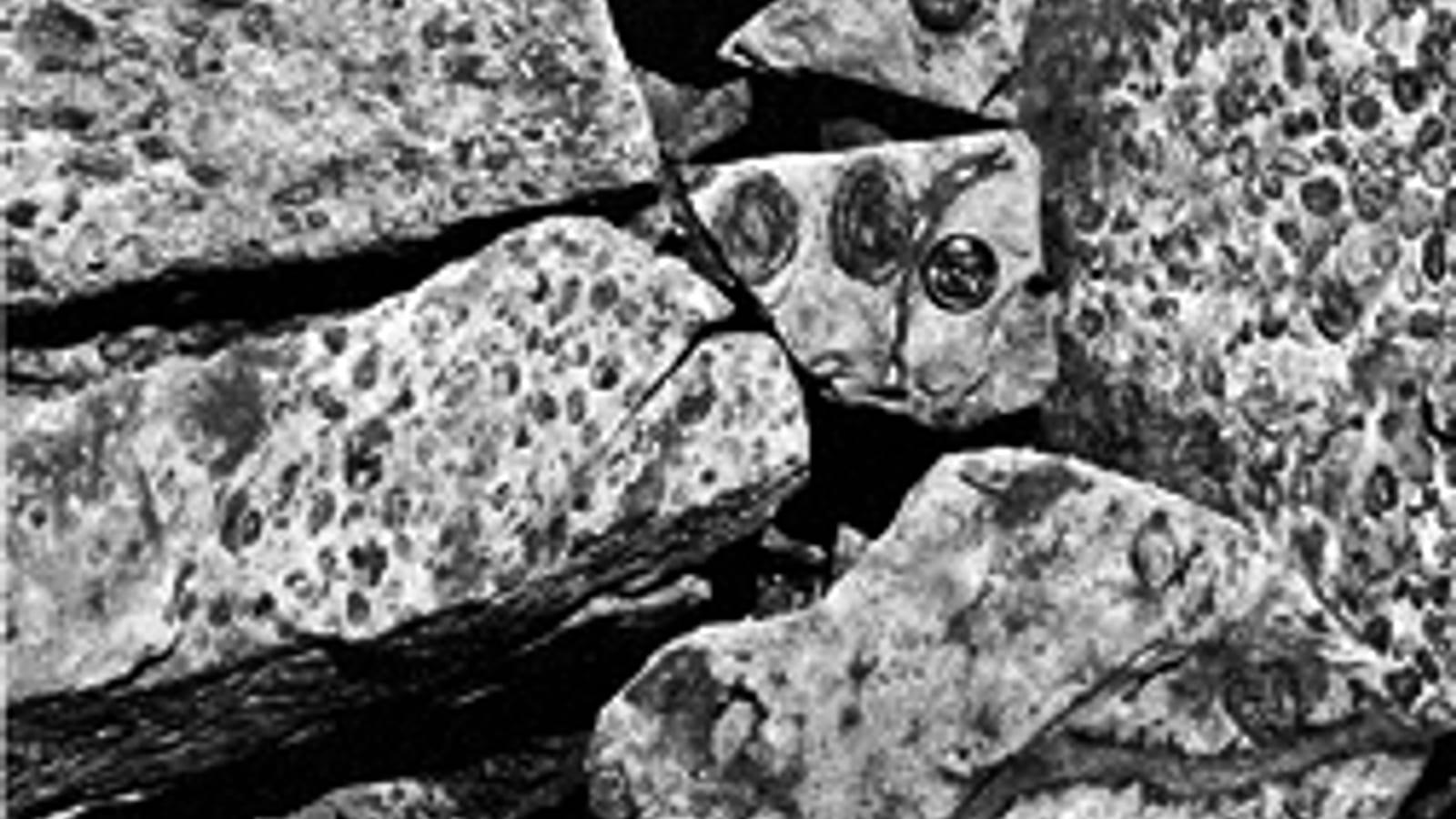
I don't believe I saw any fossils during my visit, but have heard about others finding plant fossils in the area. This is just an interesting fragment I saw when walking around to give you a sense of the composition.
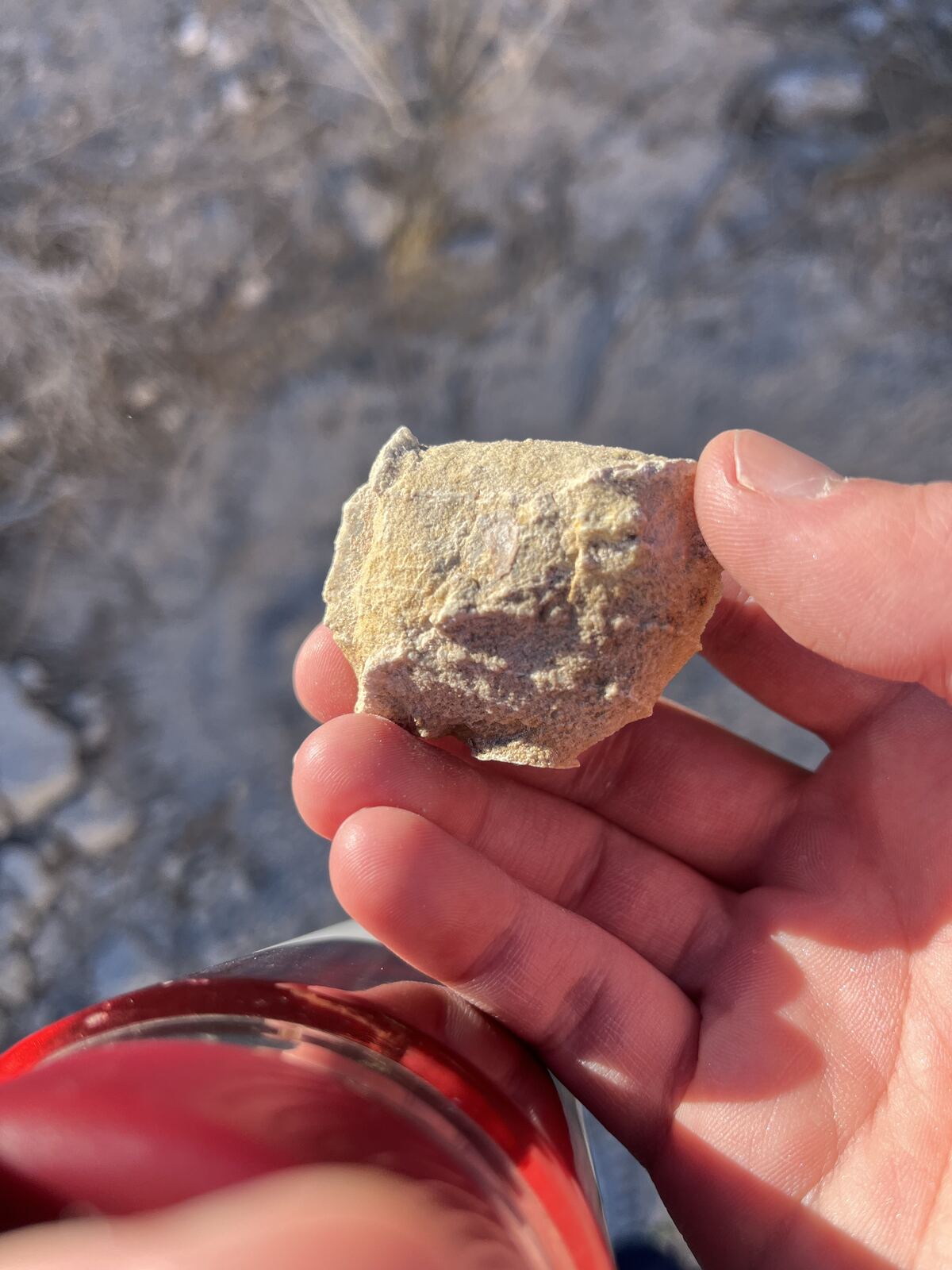
 Photo: Brett Neilson, CC BY 2.0, via Wikimedia Commons
Geologic History
The Las Vegas Formation is a late Pleistocene sequence of fine-grained spring, marsh, and floodplain sediments that filled the Las Vegas Valley during glacial-pluvial intervals. The unit ranges in age from roughly 573,000 years ago in its oldest exposed beds to about 8,500 years ago in its uppermost members, with the most fossil-rich intervals between about 100,000 and 13,000 years ago. The formation has been subdivided into named members that correspond to different climatic and hydrological intervals, with the recent USGS work of Eric Scott, Kathleen Springer, and colleagues providing the modern stratigraphic framework.
During wet intervals, perennial groundwater discharged from the Spring Mountains to the west fed an extensive network of springs and small wetlands across the floor of the Las Vegas Valley. The springs supported reed marshes, sedge meadows, and gallery woodlands, all of which attracted Ice Age herbivores and the carnivores that followed them. Carbonate-rich groundwater precipitated tufa and cemented fine carbonate-rich silt and clay around plant stems and animal bones, sealing them in beds that survived later erosion. During dry intervals, surface water shrank or disappeared and aeolian (wind-blown) silt accumulated across the dry valley floor.
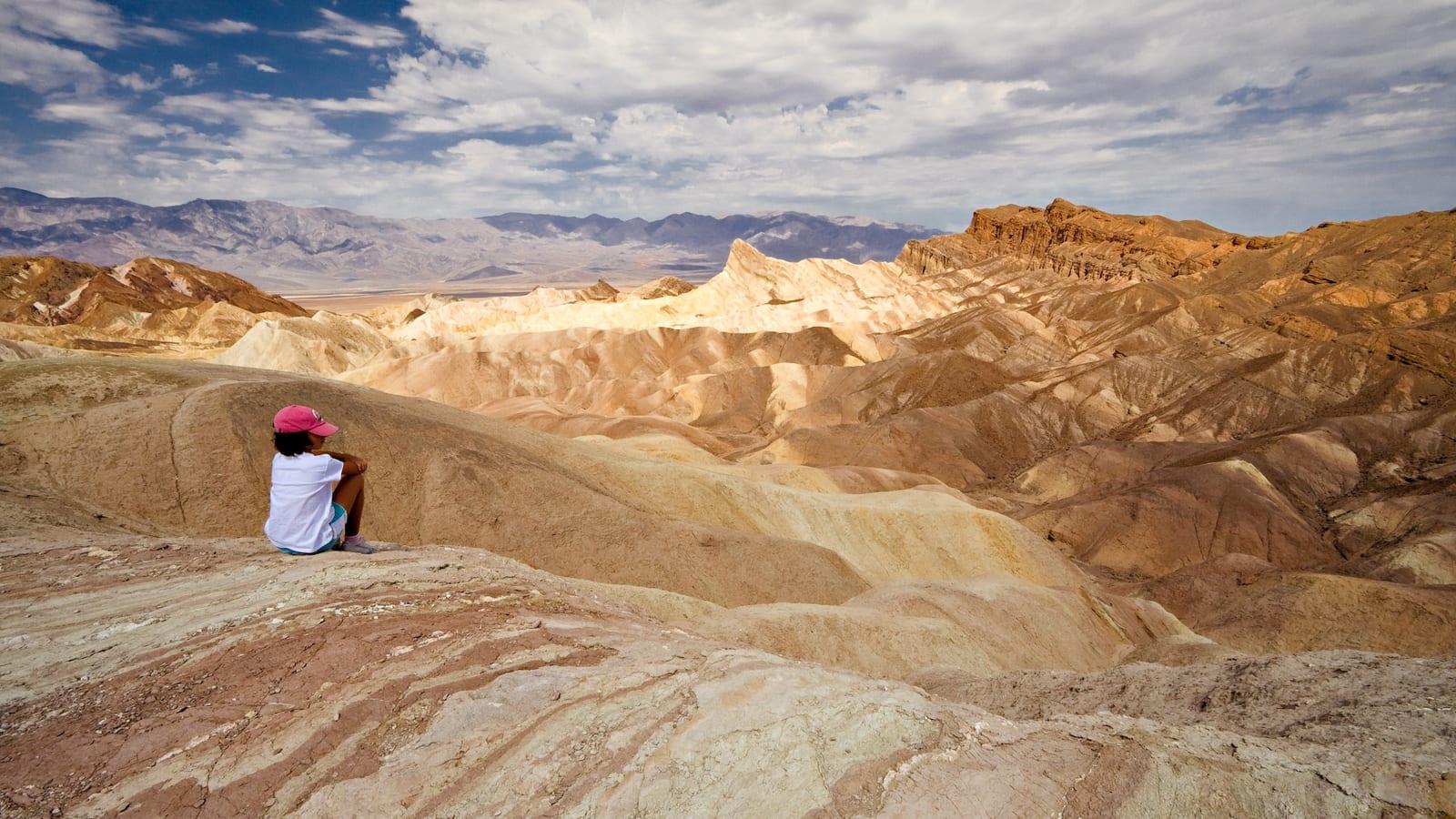
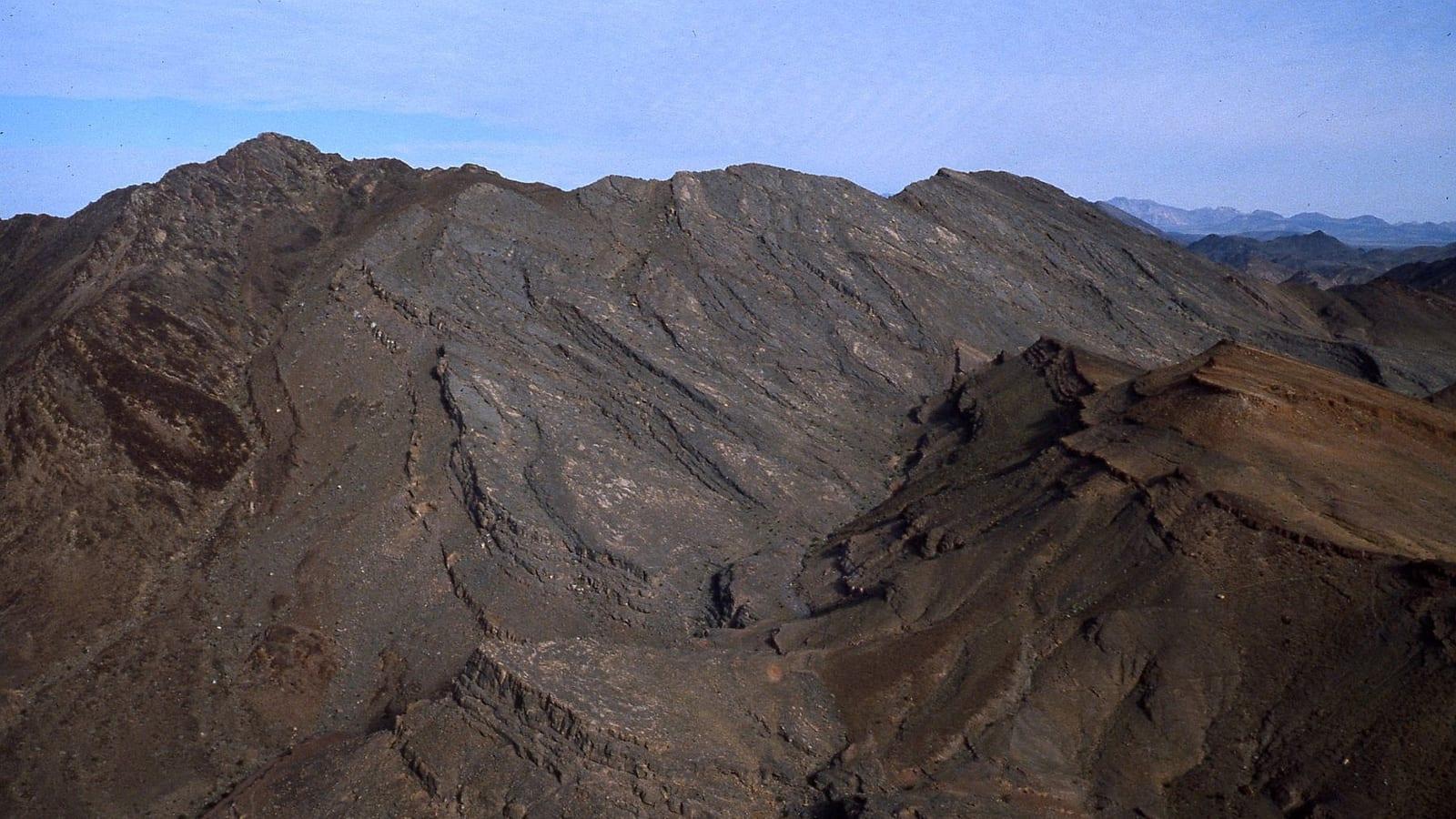
The Las Vegas Formation overlies older Tertiary sedimentary rocks and Paleozoic basement and is itself being cut by modern arroyos and urban grading. The pale colour of the badlands comes from the carbonate cement. Thin reddish-brown or black laminations are organic-rich layers from wetter intervals.
Megafauna disappeared from the Las Vegas Valley between roughly 13,000 and 11,000 years ago, in line with the broader North American late-Pleistocene extinction. Archaeological evidence of Paleoindian presence in the valley is documented from the same general interval.
 Photo: Ken Lund, CC BY-SA 2.0, via Wikimedia Commons
How Tule Springs Became a Fossil Collecting Site
Local ranchers and travellers along the Old Spanish Trail noted bone material in the Las Vegas Valley washes through the nineteenth century. The first scientific excavations were conducted by Fenley Hunter for the American Museum of Natural History in 1933. Mark Harrington of the Southwest Museum led work at the spring complex in 1933 and 1934 and again in 1955, recovering mammoth, camel, horse, and ground sloth material and reporting evidence he interpreted as Paleoindian artefacts associated with the megafauna.
The Tule Springs Big Dig of 1962, led by Richard Shutler of the Nevada State Museum, was a multi-institutional research excavation across the spring complex that aimed to test the human-megafauna association. The work produced thousands of fossil specimens and refined the chronology of the Las Vegas Formation, but did not confirm a Paleoindian association at Tule Springs itself.
Excavation and survey continued sporadically through the late twentieth century, and the modern USGS-led research programme on the Las Vegas Formation built the stratigraphic and chronological framework still in use. In December 2014, Congress passed and the President signed the National Defense Authorization Act for Fiscal Year 2015, which included Title III, Subtitle A, establishing Tule Springs Fossil Beds National Monument under the National Park Service and protecting the fossil-bearing badlands from further development. The monument is one of the newest NPS units and is still in early-phase development. Visitor infrastructure is expected to expand over the next decade.
Collecting Rules and Regulations
Collecting is prohibited. Tule Springs Fossil Beds is a unit of the National Park System and is managed under the National Park Service Organic Act and the Paleontological Resources Preservation Act of 2009 (PRPA). Removing, damaging, or disturbing any paleontological resource, archaeological resource, plant, animal, or rock on monument land is a federal offence. Casual collection of common invertebrate fossils that is permitted on some BLM and USFS lands is not permitted in National Park Service units.
Practical rules:
- Stay on the developed trails at the Ice Age Park trailhead and along marked boundary access points. The monument interior is mostly undeveloped open desert with no signed routes.
- Photograph fossils in place if you find them. Do not pick up bone fragments, teeth, or shells.
- Significant surface finds should be photographed, GPS-located, and reported to monument staff at the National Park Service Tule Springs office. Reporting helps researchers. Collecting does not.
- No vehicles off existing roads. No camping. No fires. Pets must be leashed.
- The monument has no entrance fees, no visitor centre on site at the time of writing, and no water. Bring everything you need.
- Floyd Lamb Park at Tule Springs and the Las Vegas Natural History Museum are the recommended supplementary stops. Both are off monument land and have their own rules.
Safety
Tule Springs is open desert on the edge of a city, which makes it easy to reach and easy to underestimate.
Heat is the main hazard. Summer afternoons in the Las Vegas Valley regularly exceed 105°F, the monument has no shade, no water, and no visitor centre on site, and the pale badland surfaces radiate. October through April is the practical visiting window. If you go in summer, go at first light, carry far more water than you expect to drink, and keep the walk short.
The monument interior is undeveloped, with no roads, no signed routes, and few reliable landmarks once you are among the badlands, where the sediment looks much the same in every direction. Stay on the developed trail at the Ice Age Park trailhead unless you are confident with a map and a GPS, and tell someone where you are going.
The Las Vegas Formation weathers into steep-sided washes and undercut banks that collapse under weight. Stay out of narrow washes. The desert floods hard and fast during summer monsoon storms, and a dry wash is a poor place to be when a storm is sitting over the mountains.
Rattlesnakes are active from spring through autumn, and the washes and rock shade are where they rest. Watch where you step and where you put your hands. Cactus and cholla are widespread.
The monument shares its southern boundary with North Las Vegas streets and the access points are unstaffed. Mobile coverage is generally good on that edge, which is one advantage of an urban monument, but it drops away in the washes.
Sources
- National Park Service, "Tule Springs Fossil Beds National Monument." https://www.nps.gov/tusk/index.htm
- National Park Service, "Tule Springs Paleontology." https://www.nps.gov/tusk/learn/nature/index.htm
- Springer, K.B., Manker, C.R., and Pigati, J.S., 2015. "Dynamic response of desert wetlands to abrupt climate change." Proceedings of the National Academy of Sciences, 112.
- Scott, E., and Springer, K.B., 2003. "CEUS / Mojave Desert Pleistocene Vertebrates." Quaternary International 109-110.
- U.S. Department of the Interior, "Paleontological Resources Preservation Act." https://www.nps.gov/subjects/fossils/fossil-protection.htm
- Public Law 113-291, National Defense Authorization Act for Fiscal Year 2015, Title III, Subtitle A.

.jpg)
_(7186589960).jpg)