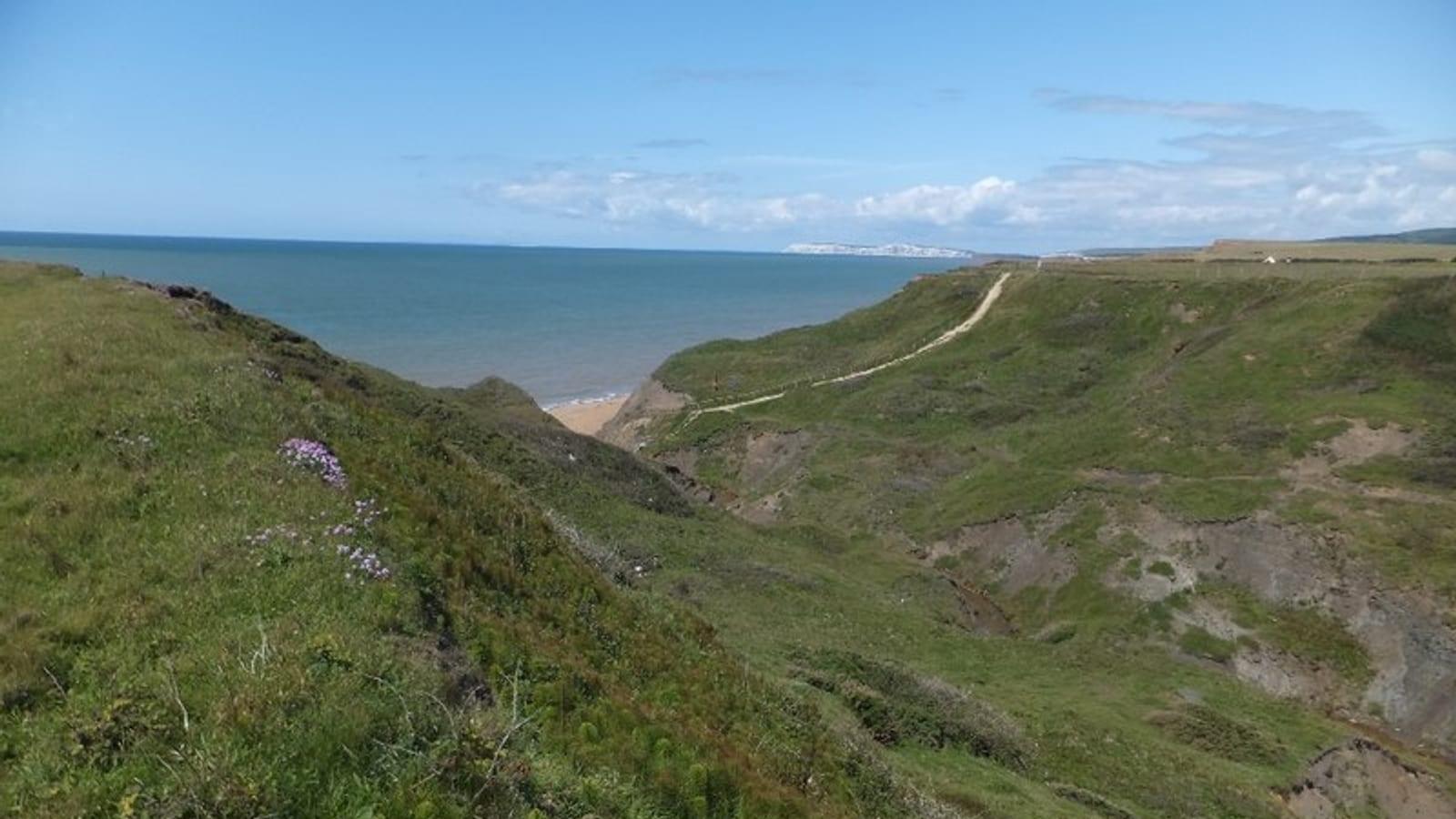
Shepherds Chine Whale Chine Isle of Wight Fossil Hunting Guide
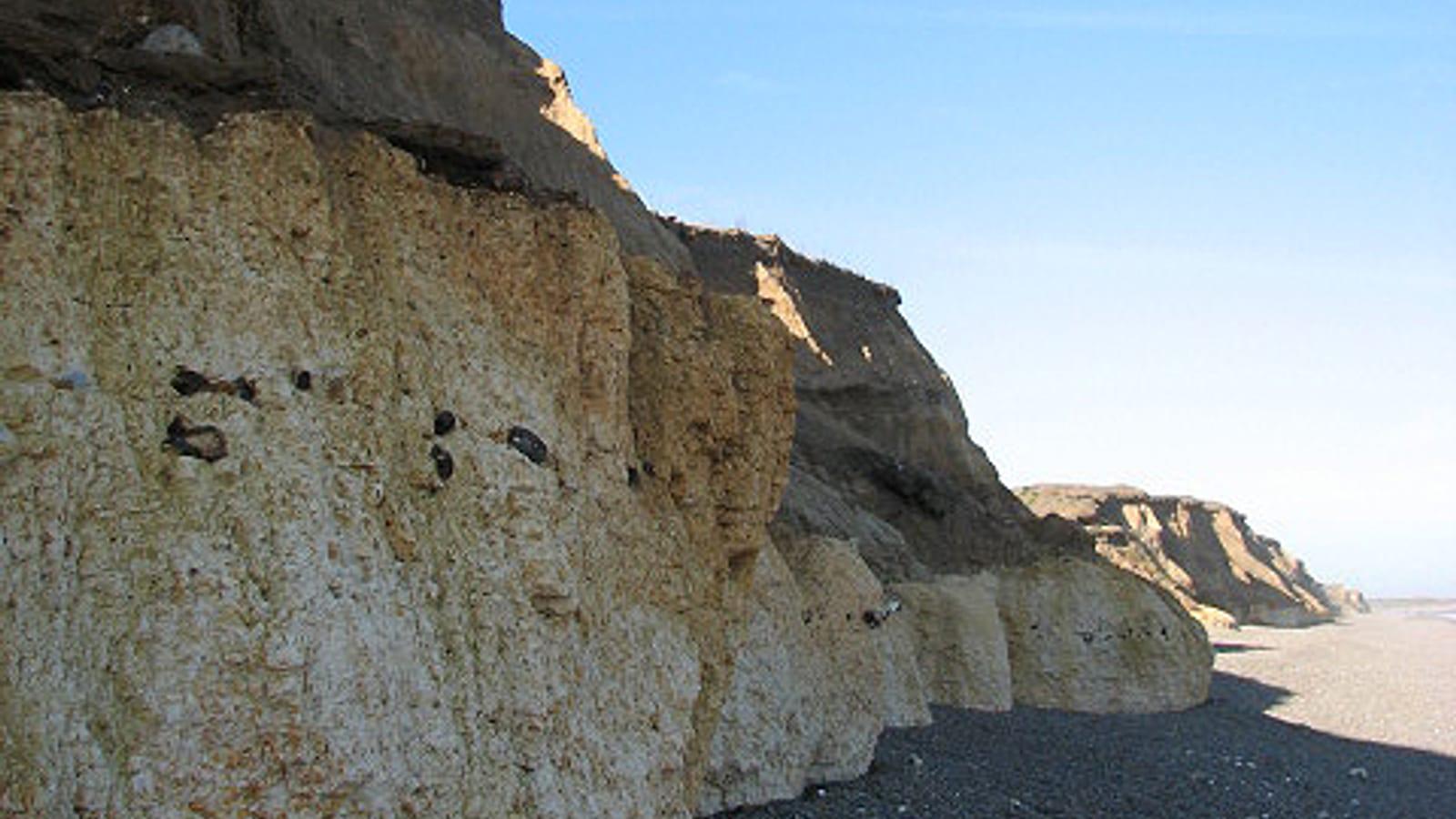
Image: David Smith (CC BY-SA 2.0)
Shepherd's Chine and Whale Chine on the Isle of Wight expose Early Cretaceous Atherfield Clay with lobsters, ammonites, and shark teeth. Free foreshore collecting guide.
By Edward Chen · Updated 31 July 2026
Introduction
Shepherd's Chine and Whale Chine at Atherfield on the southwest coast of the Isle of Wight expose the Atherfield Clay Formation and Lower Greensand Group, a sequence of Early Cretaceous marine deposits laid down approximately 121 to 115 million years ago as the sea flooded over the dinosaur-bearing Wealden floodplains. The transition from terrestrial to marine environments is visible directly in the cliff section, and the marine beds above it have yielded a wide range of fossils: the lobster Meyeria vectensis with preserved colour patterns, shark teeth, ammonites, brachiopods, bivalves, fish remains, and occasional dinosaur bone from the underlying Wealden. The hard calcareous concretions known as Crackers, some exceeding a metre in diameter, can contain beautifully preserved specimens.
This section of the Isle of Wight coast is one of the most historically important fossil localities in Britain, studied exhaustively by William Henry Fitton between 1824 and 1847. His stratigraphic divisions of the Lower Greensand are still in use today, and Atherfield is the type locality for the Atherfield Clay Formation and its members. The beach is free to access and loose collecting is permitted.
 Photo: David Smith, CC BY-SA 2.0, via Wikimedia Commons
Location and Directions
Address
Shepherd's Chine and Whale Chine, Military Road (A3055), Atherfield, Isle of Wight, PO38 2HL, England.
Directions and Parking
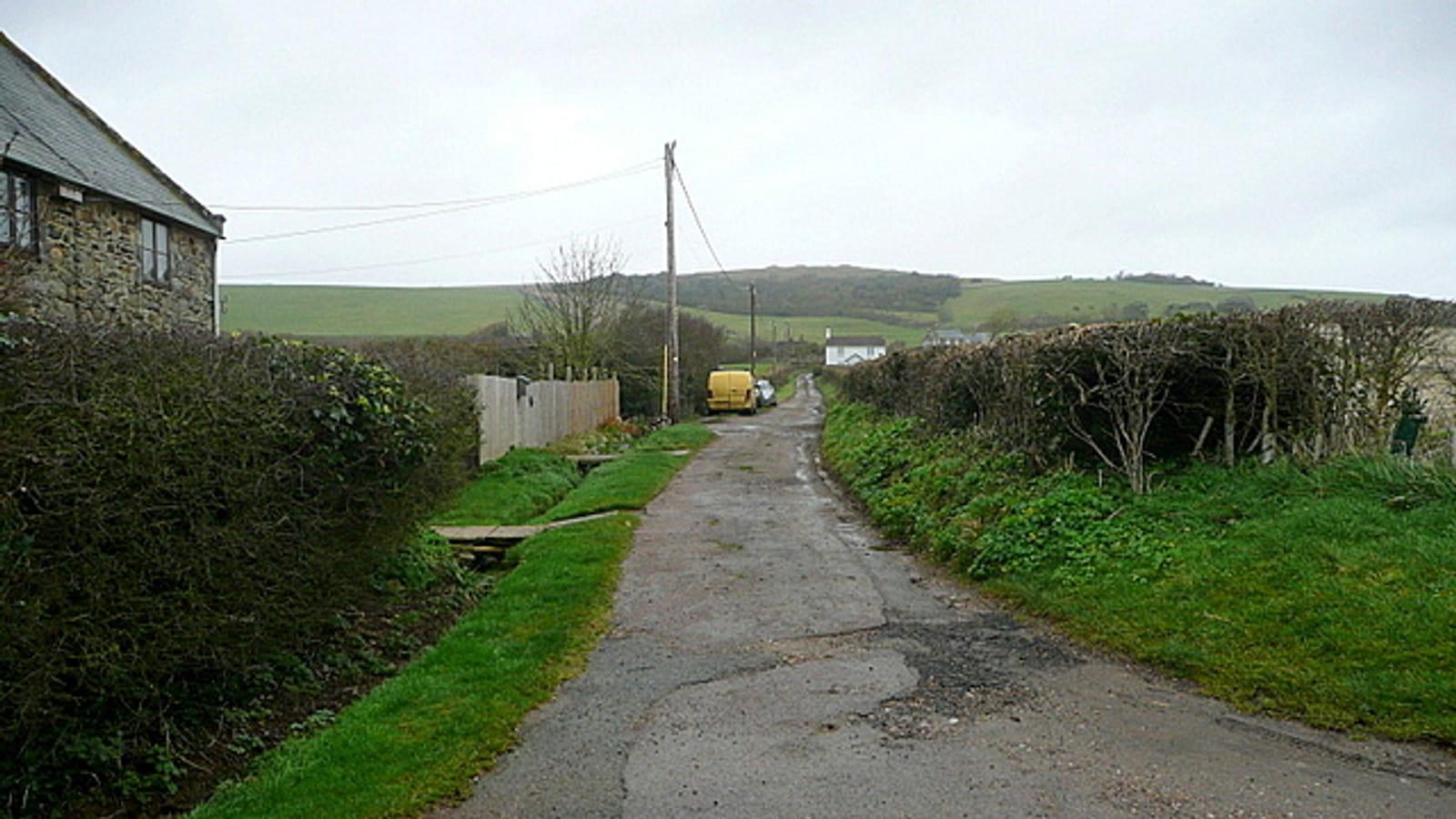
From Newport, take the A3055 (Military Road) southwest towards Chale. Pass through Shorwell and continue along the Military Road. Look for the Sandy Lanes Holiday Resort (formerly Atherfield Bay Holiday Camp) on the left side of the road. Parking is available on grass verges near the holiday camp entrance. From the parking area, follow the footpath down through Shepherd's Chine, a steep erosional gully, to reach the beach. The descent takes approximately 10 minutes. At the beach, walk left (west) along the foreshore to access the most productive fossil areas beneath the cliff section. Whale Chine is a short distance further west. The foreshore is best accessed at low to mid tide. Public toilets may be available at the holiday camp in season.
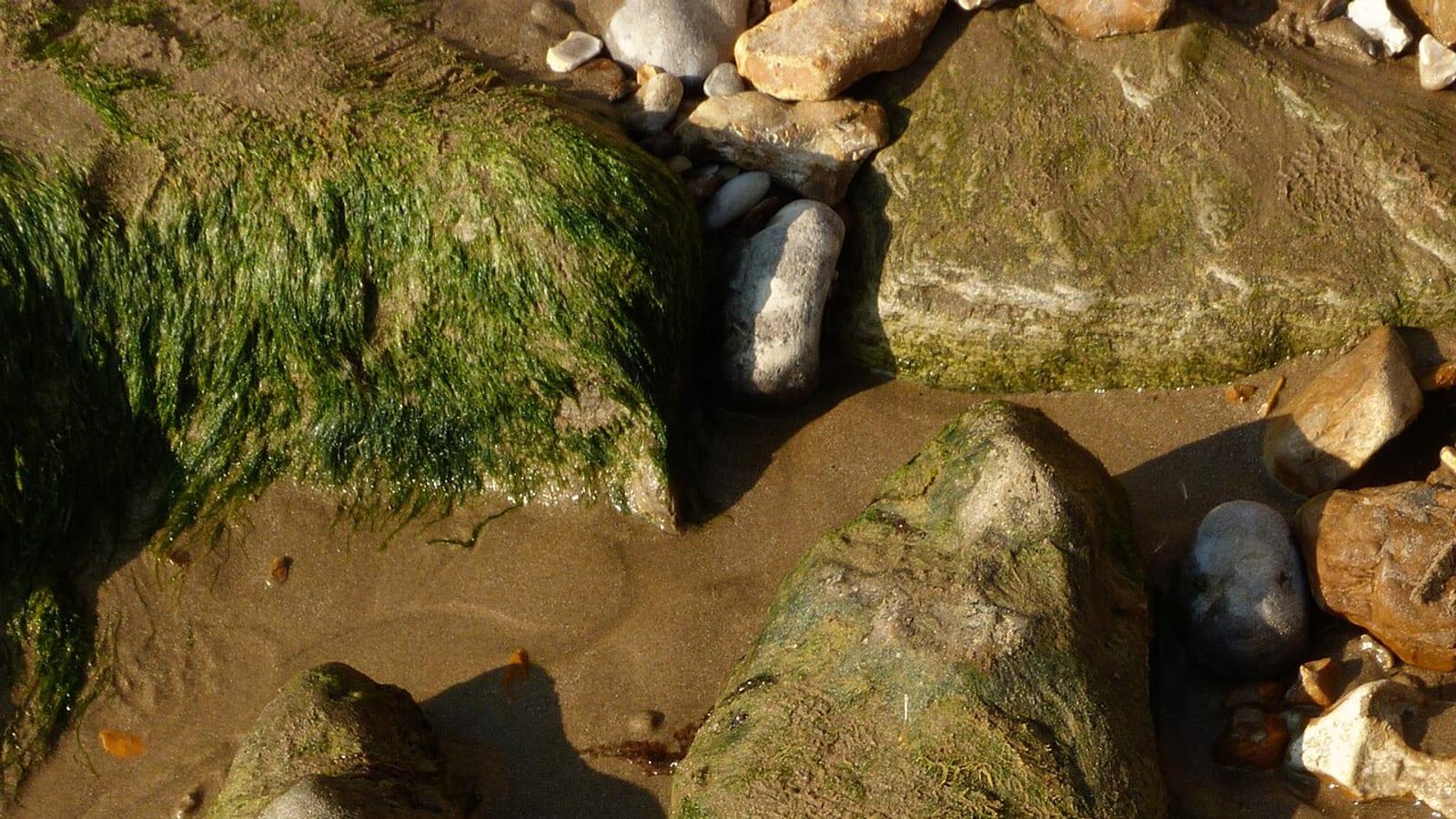
 Photo: Coast west of Brighstone Holiday Centre by Robin Webster, CC BY-SA 2.0, via Wikimedia Commons
What Fossils You'll Find
The Atherfield Clay Formation here is subdivided into several members, each with its own characteristic fossil assemblage. The Perna Bed at the base is named for the large bivalve Gervillia (formerly Perna) found within it. The Lower and Upper Lobster Beds are the most celebrated horizons, yielding complete specimens of the lobster Meyeria vectensis, some with preserved colour patterns. These are found in the Crackers concretions that weather out of the cliff and onto the foreshore.
The Crackers are door-knob shaped calcareous concretions, some exceeding a metre in diameter, with a soft interior that can be split to reveal three-dimensionally preserved specimens. Opening a Cracker requires a substantial geological hammer and patience. The results can be outstanding. Ammonites from the overlying Crioceras Beds include the heteromorph species Australiceras and other uncoiled forms characteristic of the Aptian stage. Shark teeth, including hybodont species, occur throughout the formation. Fish remains, including vertebrae and scales, are found in the finer beds. Brachiopods are common in some horizons, and echinoid remains turn up occasionally.
Dinosaur material is rarer here than at Brighstone or Brook, but the proximity of the underlying Wealden means that reworked bone fragments do occur at the formation boundary. Any bone material should be treated as significant and reported to Dinosaur Isle.
Geologic History
The Ancient Environment
The Atherfield Clay Formation was deposited during the Early Aptian stage of the Lower Cretaceous, approximately 121 to 115 million years ago. The sequence represents a marine transgression: the sea advancing over the former freshwater floodplain of the Wealden dinosaur country. The Isle of Wight at this time lay at a paleolatitude roughly equivalent to modern North Africa, around 20 to 30 degrees north, with a warm subtropical climate characteristic of the Cretaceous greenhouse period.
The Vectian Basin received muddy and sandy sediment from surrounding land areas as the transgressing sea deepened. Calcareous nodule formation in the muddy seafloor created the Crackers during early diagenesis, trapping organisms before their decay could destroy them. The Lobster Beds in particular record a seabed community of exceptional diversity and preservation, with well-oxygenated bottom waters supporting abundant benthic life including crustaceans, bivalves, brachiopods, and fish. Storm events periodically introduced coarser sediment and reworked material, creating the varied bedding visible in the cliff section. The overlying Ferruginous Sands and Crackers Member record shallower, higher-energy conditions as the deposit accumulated.
How Shepherd's Chine Became a Fossil Collecting Site
The Military Road coast at Atherfield has been eroding for centuries, and the Atherfield Clay is a notably soft formation that yields readily to wave action. The chines, including Shepherd's Chine and Whale Chine, are erosional valleys cut by freshwater streams that have incised through the cliff sequence, creating the access points to the beach that they still provide today. Whale Chine takes its name not from a whale but from the Wavell family who owned Atherfield Farm from 1557 to 1636. The site gained scientific renown through Fitton's detailed stratigraphic work in the early nineteenth century, and subsequent specialists including White, Insole, and Radley have continued to refine the stratigraphy. The cliffs continue to erode and fresh Crackers appear on the foreshore regularly after storms and frost cycles.
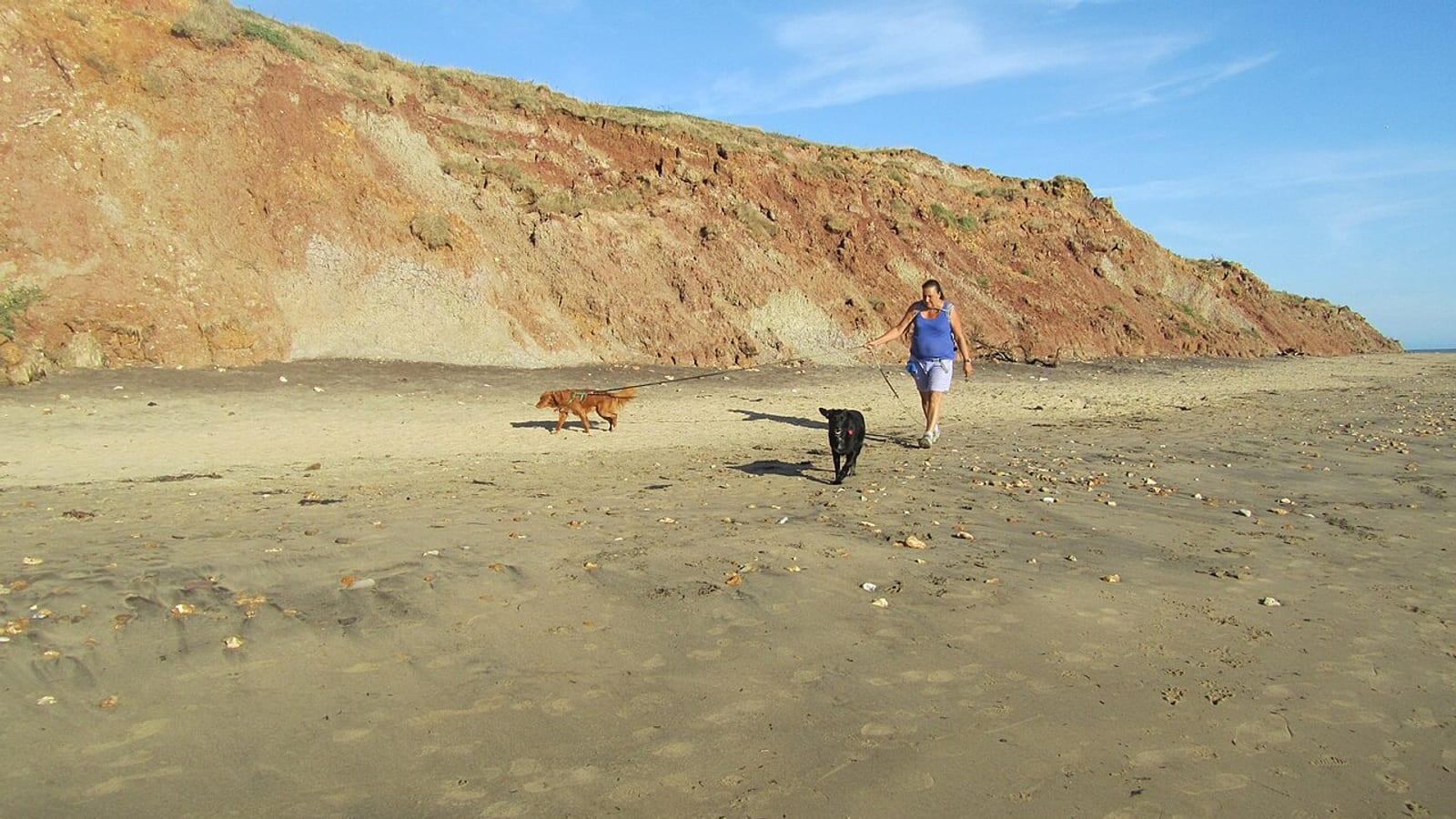
 Photo: Cliff top east of Chilton Chine by Robin Webster, CC BY-SA 2.0, via Wikimedia Commons
Collecting Rules and Regulations
Is Fossil Collecting Allowed?
Shepherd's Chine and Whale Chine are public beaches and collecting loose fossils from the foreshore is permitted. The standard Isle of Wight code of practice applies: collect only loose material already detached from the cliff, do not dig into or undercut the cliff face, and report significant vertebrate finds to Dinosaur Isle museum at Sandown. Significant invertebrate finds of scientific importance, such as complete lobster specimens, may also be of interest to the museum. The Atherfield Clay cliffs are notoriously unstable and prone to sudden collapse, so the most important safety rule is also the most important collecting rule: work the foreshore only and stay well away from the cliff face.
Recommended Tools
A heavy geological hammer is needed to open Crackers effectively, as the outer shell is hard. Cold chisels help to split them along any natural weaknesses. Bring ample padding material for transporting Cracker contents, as specimens can be fragile once exposed. Safety glasses are advisable when splitting hard nodules. A smaller hammer and chisels for routine foreshore work complete the kit.
Safety
The Atherfield Clay cliffs are among the most unstable on the Isle of Wight. Cliff collapses occur without warning. Maintain a minimum distance of several metres from the cliff base at all times. Do not stand beneath overhanging sections even briefly. The Crackers that litter the foreshore have often fallen recently from above, and fresh falls indicate active instability. Check the tide before descending through the chine. The foreshore narrows at high water and can become inaccessible.