Hamstead Isle of Wight Fossil Hunting Guide
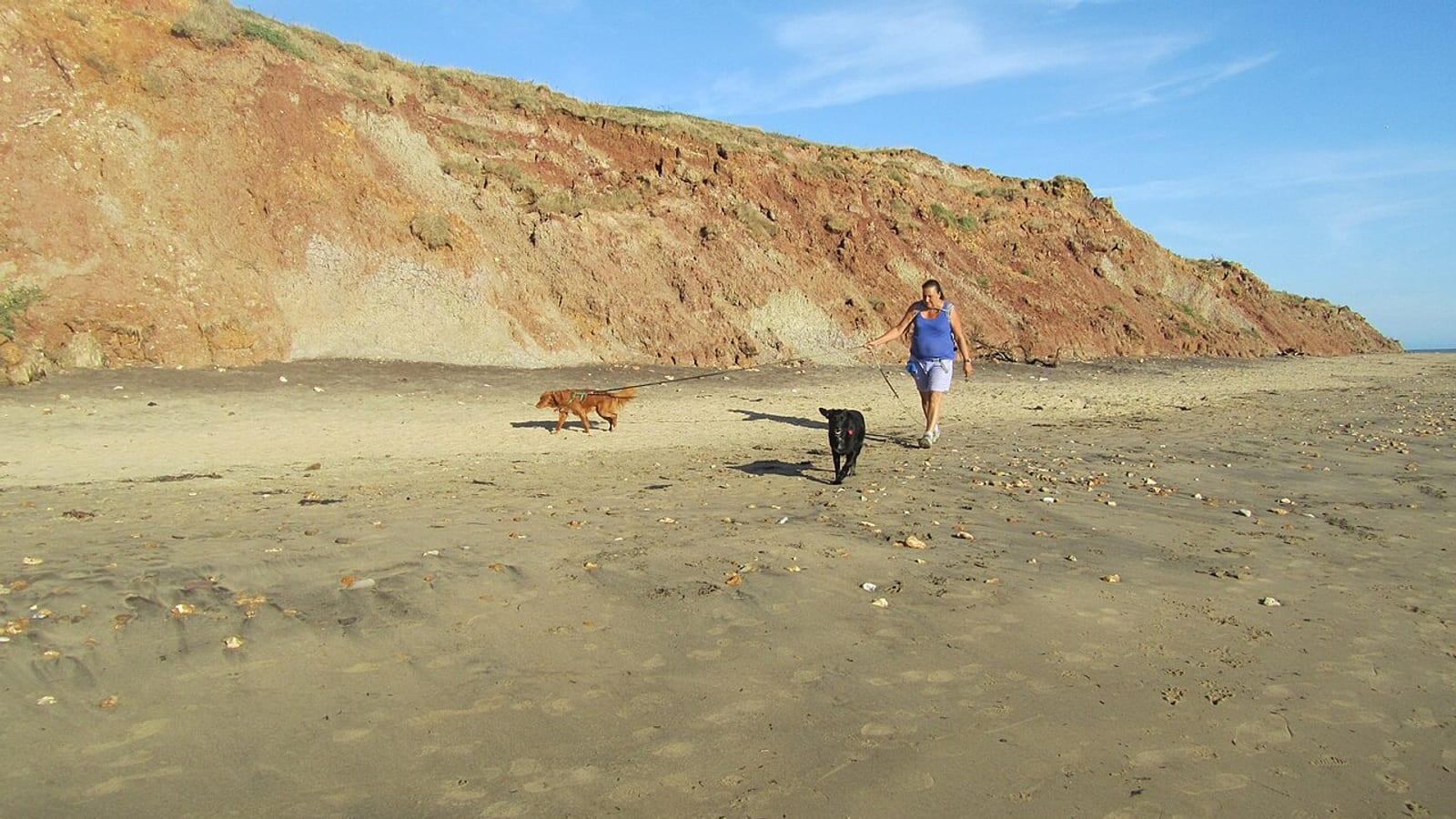
Image: Graham Horn (CC BY-SA 2.0)
Hamstead on the Isle of Wight is England's best Oligocene fossil site, with crocodile teeth, turtle fragments, and mammal teeth on the foreshore. SSSI collecting guide.
By Edward Chen · Updated 1 August 2026
Introduction
Hamstead Ledge on the north coast of the Isle of Wight is the best Oligocene fossil collecting locality in England and one of the finest of its age anywhere in the United Kingdom. The Early Oligocene beds exposed here yield mammals, crocodiles, turtles, fish, crustaceans, molluscs, and plant material from a warm lagoonal and coastal plain environment that existed approximately 34 to 32 million years ago. The site is particularly significant because it records the fauna that survived just after the Grande Coupure, the major faunal turnover that marked the Eocene-Oligocene transition. Crocodile remains including an entirely new species identified from skull fragments in 2014 have been found here by members of the public.
The site is a SSSI, and fossils can be found simply lying on the foreshore without any need for tools. Mollusc shells, plant fragments, and isolated teeth wash onto the beach regularly. This guide covers how to reach the site from Yarmouth, what to look for along the foreshore, the geological context, and the collecting rules that apply.
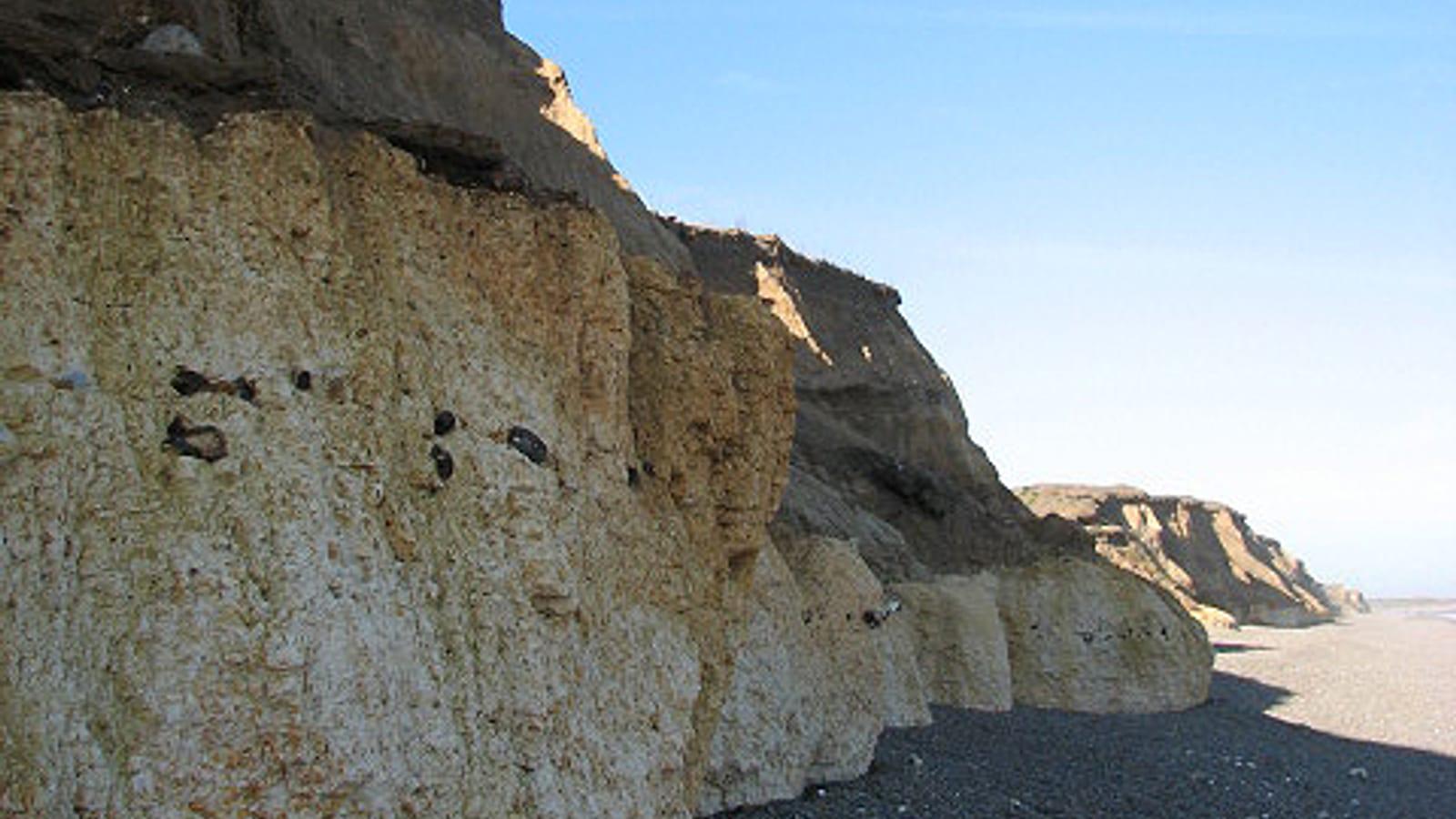
 Photo: Mypix, CC BY-SA 4.0, via Wikimedia Commons
Location and Directions
Address
Hamstead Ledge, between Hamstead Bay and Bouldnor Cliff, north coast Isle of Wight, near Yarmouth, Isle of Wight, PO41, England. OS Grid Reference: SZ 374 901.
Directions and Parking
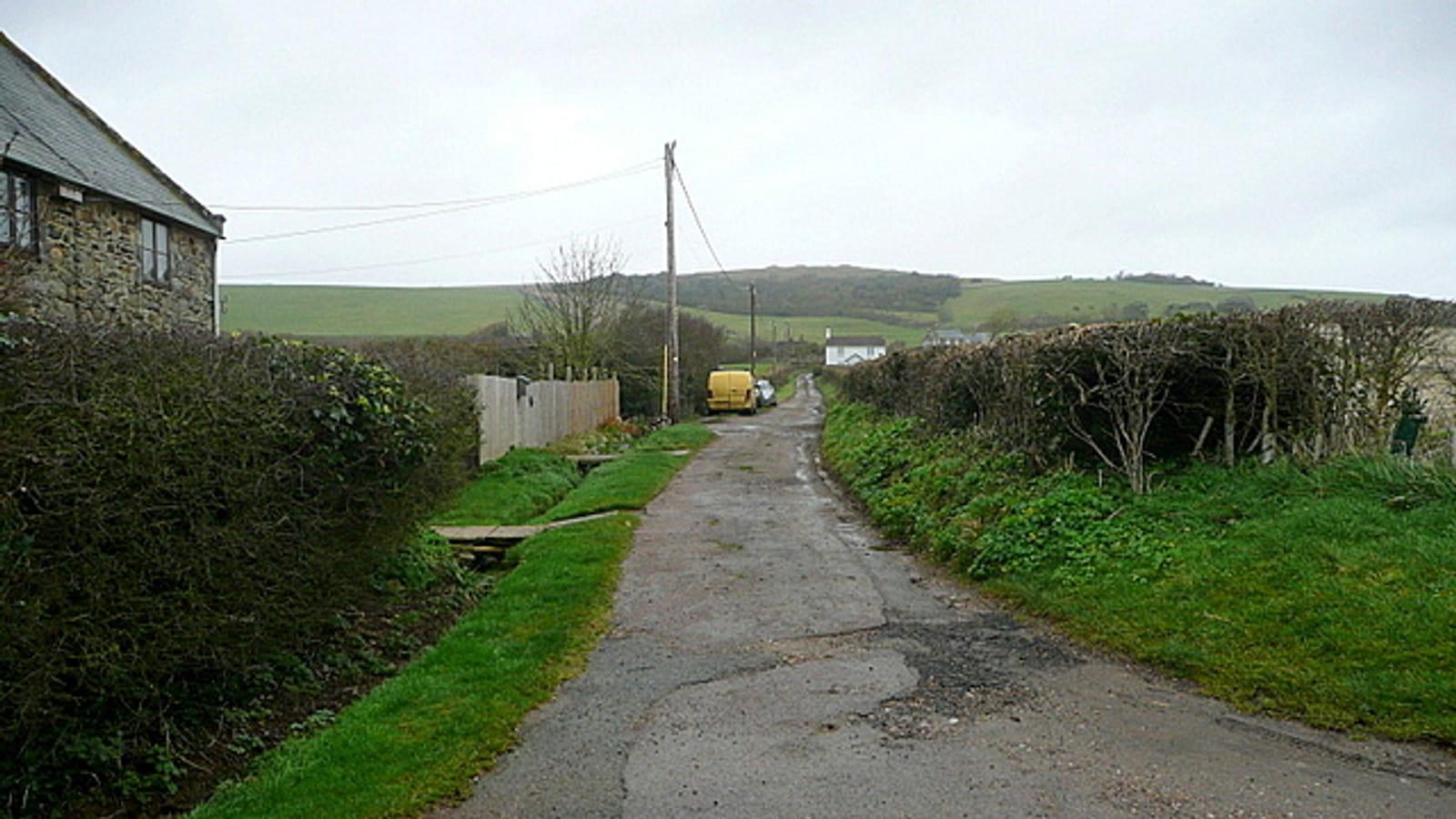
From Yarmouth ferry terminal, park in one of the public car parks in Yarmouth town. Then walk east along the coastal path or foreshore towards Hamstead. The most direct route is to walk east from the town along the shoreline at low to mid tide. An alternative approach: drive east from Yarmouth along the main road, park at the viewpoint east of town at approximately SZ 367 899, then walk down to the shore. From this car park, walk east along the road and turn left down a gravel track at approximately SZ 371 898, continuing through a small copse to reach the beach at SZ 374 901. Do not attempt to park in private tracks or roads as these serve agricultural access and large vehicle access must be kept clear. The productive middle section of the foreshore between Hamstead Bay and Bouldnor Cliff is best accessed from either end by walking along the beach. The site is best visited at low tide when the Hamstead Ledge reef and foreshore are fully exposed.
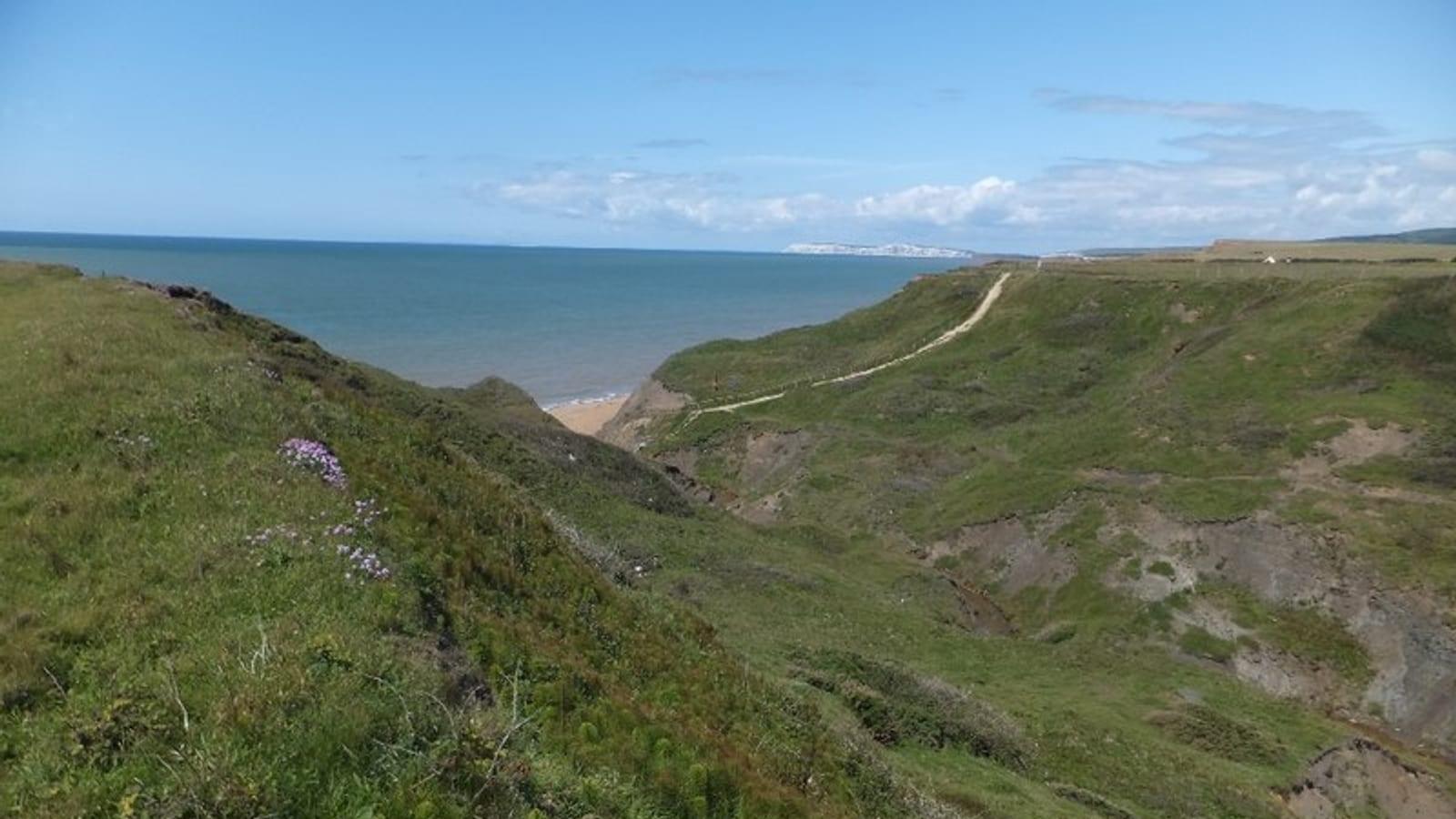
 Photo: The Solent seen over the woods of Hamstead Cliff by David Smith, CC BY-SA 2.0, via Wikimedia Commons
What Fossils You'll Find
The Hamstead Member and Bouldnor Formation expose a range of material directly on the foreshore without excavation. Mollusc shells including gastropods and bivalves are the most common surface finds, often lying loose on the tidal flats and ledges. Plant seeds and fragments from the Bouldnor Formation seed beds are extracted naturally by erosion and accumulate at the strand line. Sieving the sediment at the water's edge increases the yield of seeds considerably.
Vertebrate material is rarer but occurs: fish remains including scales, teeth, and bone fragments are found on the foreshore. Crocodile remains are the most sought material here. The dominant species is Diplocynodon, whose isolated teeth and osteoderms (bony skin plates) are the most frequently encountered crocodile material. In 2014, analysis of skull fragments found by two different families at different times was published as a new species of tiny crocodile, demonstrating that significant discoveries are still possible from casual surface collecting. Turtle shell fragments, attributed to Trionyx and Emys, occur regularly. Mammal teeth are rare but have been found, including teeth of Elomeryx, a hippo-like anthracothere. These tiny teeth require careful searching of accumulated material at the strand line.
The upper part of the Hamstead Member contains a marine horizon with the oyster Ostrea callifera, and the shells of this and other marine bivalves can be found where this layer outcrops. The contrast between the freshwater and lagoonal layers and the marine horizon reflects the oscillating depositional conditions of the Oligocene coastal environment here.
Geologic History
The Ancient Environment
The Hamstead Member and Bouldnor Formation belong to the Solent Group, deposited during the Early Oligocene, specifically the Rupelian stage, approximately 34 to 30 million years ago. This interval marks the global transition from the warm Eocene greenhouse to cooler Oligocene conditions, associated with the formation of the Antarctic ice sheet and a significant drop in global sea levels. The Isle of Wight lay at a paleolatitude somewhat closer to the equator than today, and despite the global cooling trend, the local environment remained warm and subtropical.
The depositional setting was a low-lying coastal plain with shallow lagoons, freshwater lakes, and rivers draining into occasional shallow marine incursions. The Hamstead Member records a largely freshwater to brackish lagoonal system that attracted a diverse vertebrate fauna. Crocodiles and turtles inhabited the shallow warm waters. Mammals came to the water's edge. Fish populated the lakes and rivers. The organic-rich muddy sediments preserved this material with exceptional quality. The marine horizon within the Hamstead Member represents one of the brief episodes when the sea flooded the lagoon system, introducing normal marine conditions briefly before freshwater conditions were re-established. The Bouldnor Formation seed beds above record a later phase with well-developed vegetation growing on the coastal margins.
The fauna at Hamstead postdates the Grande Coupure, the major extinction and replacement event at approximately 33.9 million years ago that saw many Eocene mammal genera replaced by new arrivals from Asia. The Hamstead mammal fauna belongs to the post-Grande Coupure world.
How Hamstead Became a Fossil Collecting Site
The north coast of the Isle of Wight has been eroding steadily for centuries, driven by wave action from the Solent and the tidal currents of the western Solent approaches. The Bouldnor cliffs are composed of relatively soft Oligocene sediments that erode readily, continuously delivering fossils to the foreshore. The Hamstead Ledge reef protects part of the beach and slows erosion in its lee, allowing material to accumulate rather than being immediately dispersed. The combination of soft matrix and durable bone and shell means that vertebrate remains can be found on the surface of the beach long after their matrix has weathered away.
Collecting Rules and Regulations
Is Fossil Collecting Allowed?
Hamstead Ledge is a SSSI. The SSSI designation means that you must not damage the in-situ cliff faces or bedrock. Collecting loose fossils from the foreshore, including molluscs, plant material, fish remains, and isolated crocodile teeth and osteoderms, is acceptable under responsible access practice. Significant vertebrate finds, including mammal teeth, more complete crocodile material, or turtle shell with clear anatomical structure, should be reported to the Dinosaur Isle museum at Sandown or directly to Natural England. In 2014, the families who found the skull fragments that proved to be a new crocodile species cooperated with researchers, and their finds are now in the scientific literature. That is the model for how significant material should be handled.
Recommended Tools
No heavy tools are needed or appropriate. A sieve with a mesh size of approximately 1 to 2 millimetres is the most useful piece of equipment for recovering seeds and small mammal teeth from the sediment at the strand line. A hand lens is essential for examining potential teeth and small bones. Bags and tissue paper for wrapping finds complete the kit.
Safety
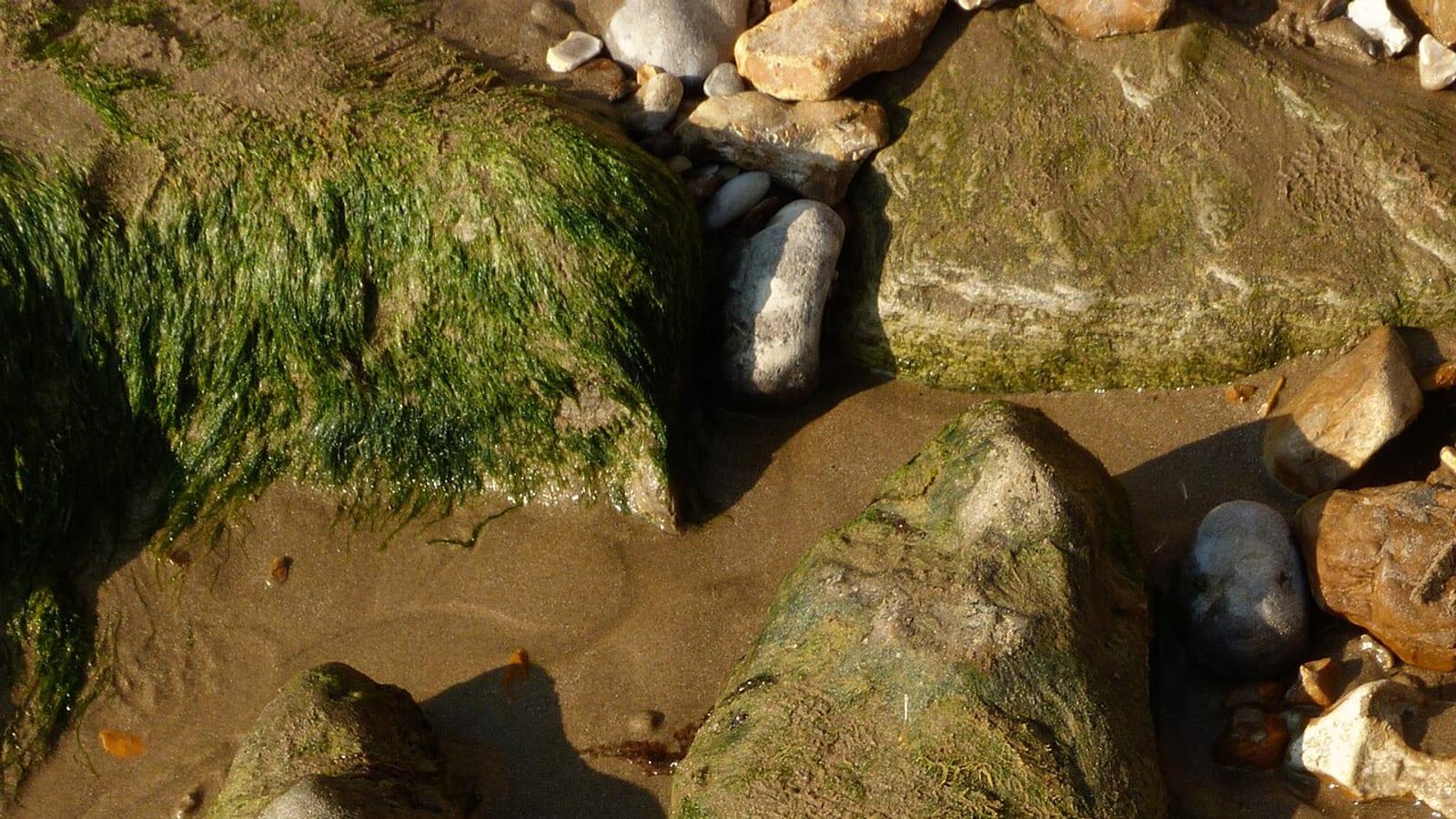
The Bouldnor cliffs are unstable and liable to fall. Maintain a safe distance from the cliff base at all times. The foreshore can be slippery on the algae-covered ledge rock. Tide awareness is important as the bay is affected by the tidal range of the western Solent. Check tide times before visiting and monitor conditions during your visit.
Sources
- https://ukfossils.co.uk/2006/08/11/hamstead/
- https://webapps.bgs.ac.uk/memoirs/docs/B07302.html
- https://www.redfunnel.co.uk/isle-of-wight-guide/things-to-do/activities/dinosaur-fossil-hunting
- https://wessexcoastgeology.soton.ac.uk/wight.htm
- https://www.yarmouth-harbour.co.uk/environment/landscape/geology-and-palaeontology/