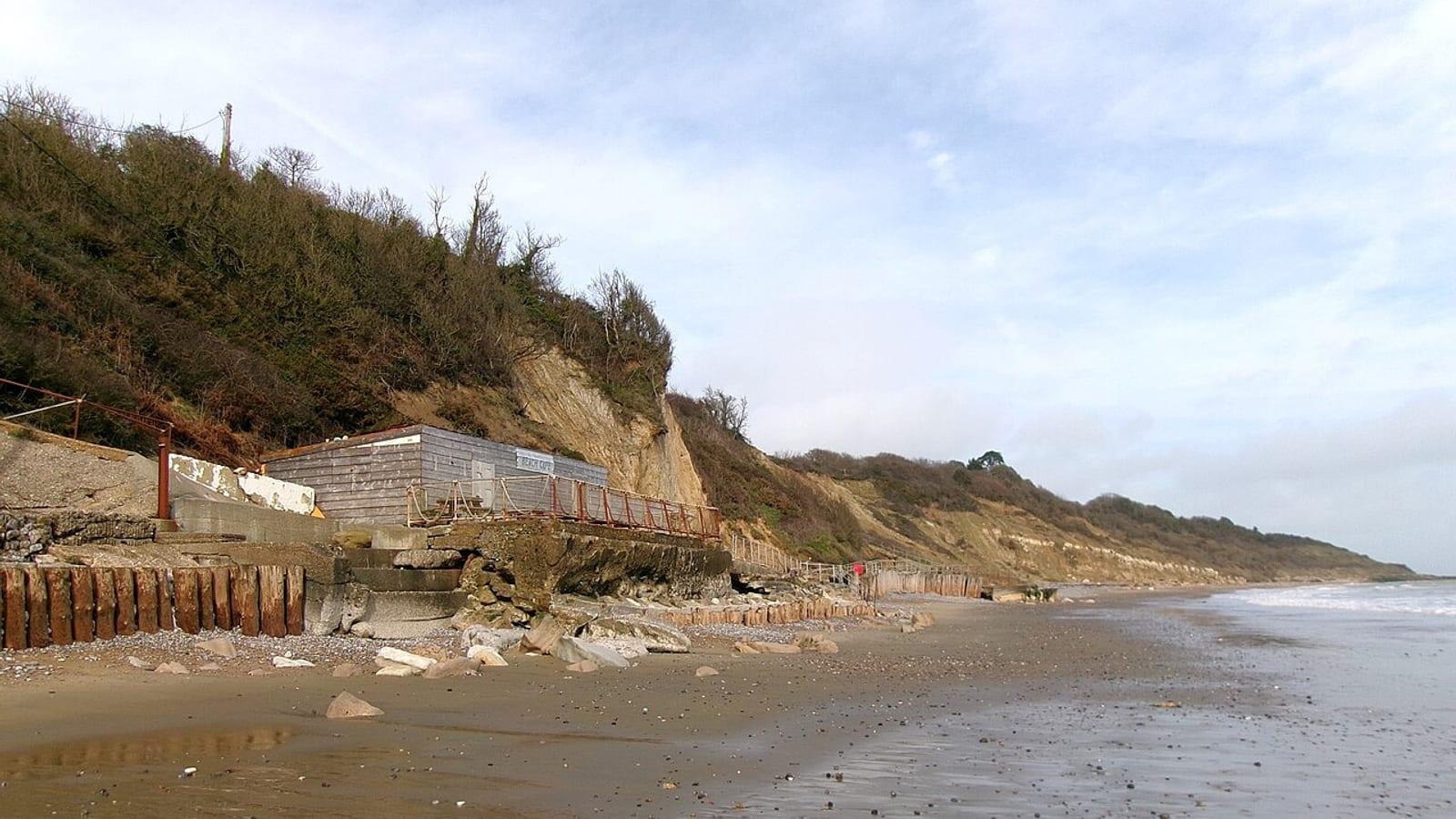
Whitecliff Bay Isle of Wight Fossil Hunting Guide
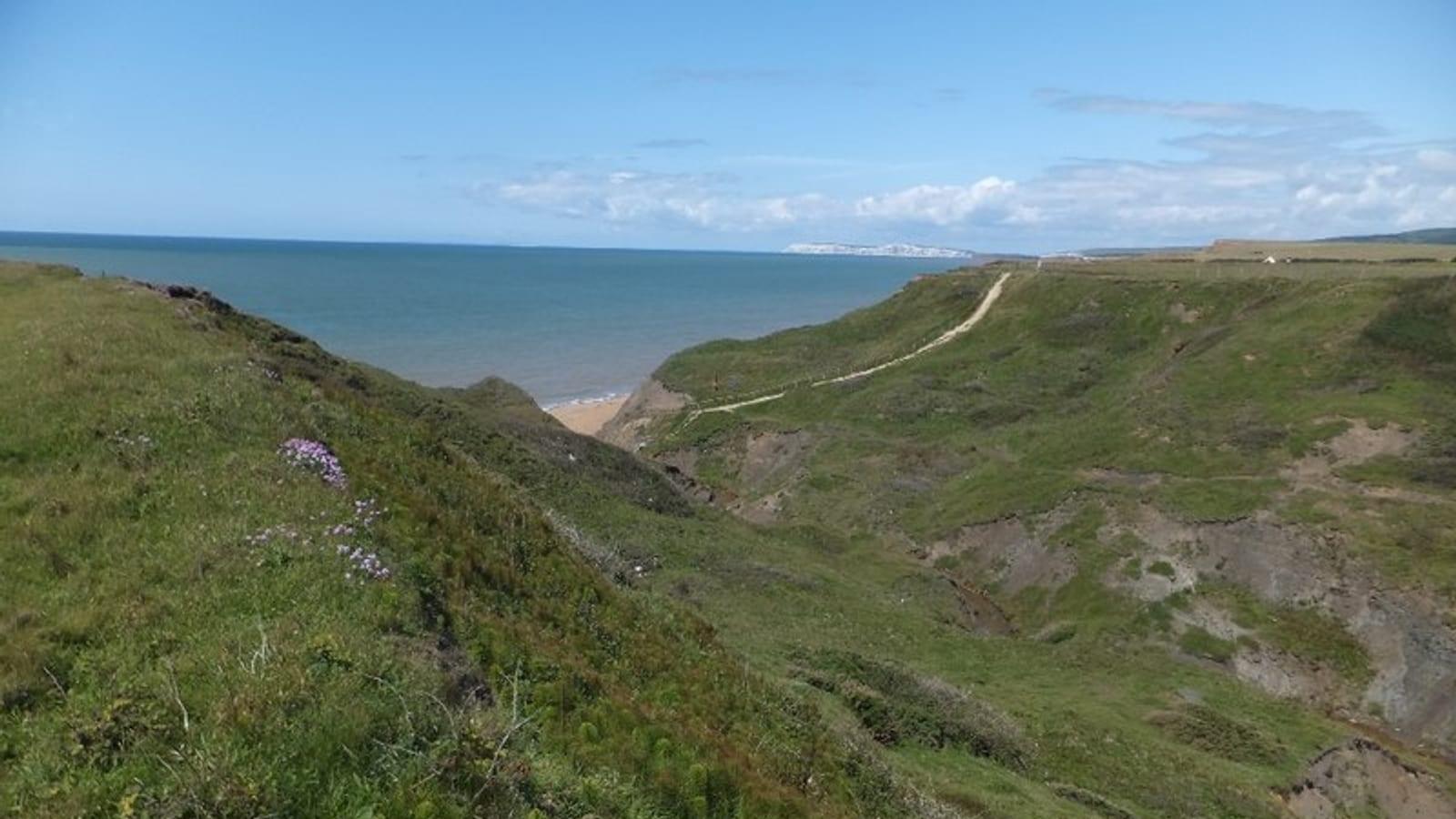
Image: ITookSomePhotos (CC BY-SA 4.0)
Whitecliff Bay near Bembridge on the Isle of Wight exposes 20 million years of Eocene strata tilted vertical, with shark teeth, molluscs, and London Clay fossils.
By Edward Chen · Updated 31 July 2026
Introduction
Whitecliff Bay near Bembridge on the east coast of the Isle of Wight is one of the most complete Palaeogene reference sections in Europe. Within approximately one kilometre of beach frontage, roughly 500 metres of vertically tilted strata span from Upper Cretaceous Chalk at the base through to Upper Eocene deposits at the top, recording around 20 million years of geological history from the Late Palaeocene to the Late Eocene. The sequence includes the Reading Formation, London Clay, Whitecliff Sand, Bracklesham Group, Barton Clay, and Headon Hill Formation, each deposited in successively shallower and more restricted conditions as the Hampshire-Dieppe Basin gradually filled and shoaled.
The site is part of the Whitecliff Bay and Bembridge Ledges SSSI, and access to the beach is via the grounds of Whitecliff Bay Holiday Park. The beach is publicly accessible and collecting loose material is permitted. This guide covers how to reach the beach, which fossils occur in which formations, the geological history of the sequence, and the collecting rules.
 Photo: ITookSomePhotos, CC BY-SA 4.0, via Wikimedia Commons
Location and Directions
Address
Whitecliff Bay, off Hillway Road, near Bembridge, Isle of Wight, PO35 5PL, England.
Directions and Parking
From Sandown, take the B3395 east through Yaverland towards Bembridge. Before reaching Bembridge village, watch for a small side road on the right signposted to Whitecliff Bay. Turn right onto this road, then right again onto Peacock Hill. Follow the road to Whitecliff Bay Holiday Park. The car park at the holiday park provides the primary access to the beach. A parking charge may apply. Two steep concrete paths lead from the holiday park down to the beach. From Fishbourne ferry terminal: take the A3054 to Ryde, then A3055 to Brading, then B3395 towards Bembridge. Alternative access for those arriving on foot: the coastal path from Sandown or from Bembridge village provides walking access to the beach. At the beach, the southern end shows the older formations (Chalk, Reading Beds, London Clay) while the northern end shows the younger Eocene formations (Barton Clay, Headon Hill).
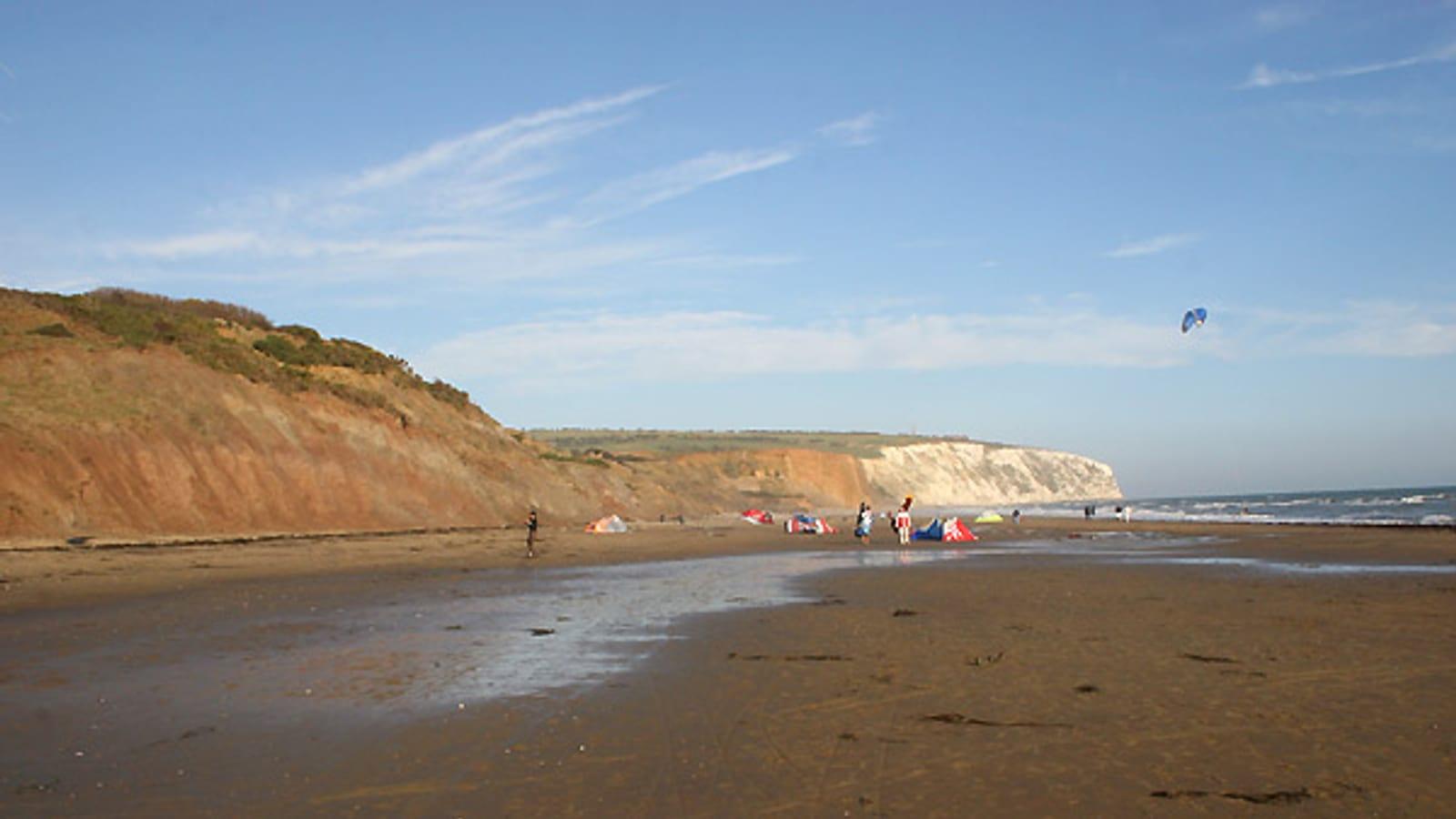
 Photo: Whitecliff Bay by Ian S, CC BY-SA 2.0, via Wikimedia Commons
What Fossils You'll Find
The Bracklesham Group beds are particularly productive for molluscs. Nummulitid foraminifera, visible as small coin-shaped discs in some of the limestone beds, are also found here. Shark teeth, including those of Striatolamia and related genera, occur through the Bracklesham beds. The Barton Clay, higher in the sequence, yields a rich molluscan fauna including gastropods and bivalves preserved in the grey clay. The Headon Hill Formation at the top of the sequence records the transition to lagoonal and freshwater conditions and yields freshwater molluscs, plant material, and occasional vertebrate remains.
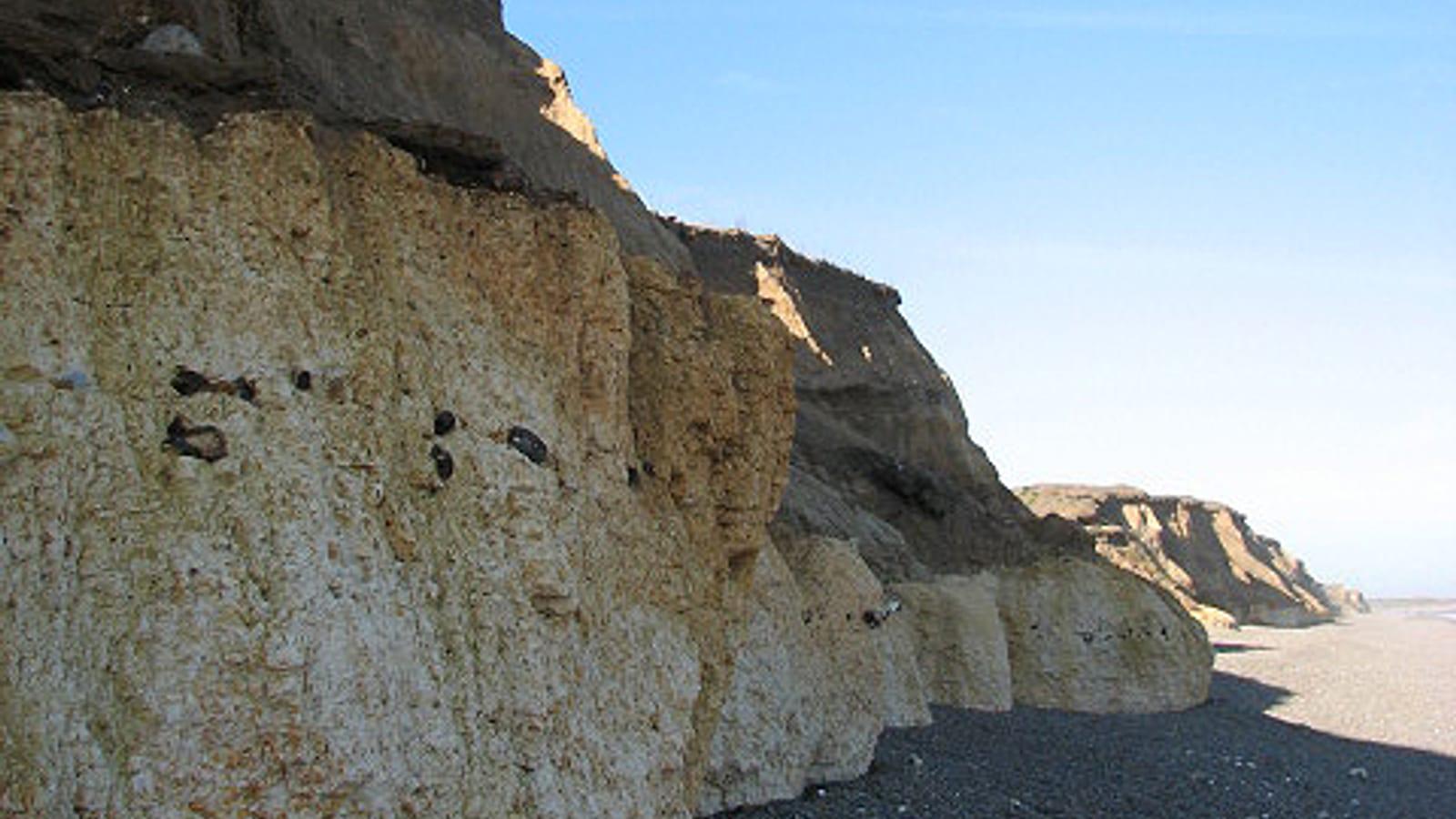
The eroded Cretaceous Chalk at the southern end of the beach is largely devoid of fossils by the time it reaches the beach surface, but flint nodules derived from the Chalk are abundant and can occasionally preserve sponge casts and echinoid internal moulds.
Geologic History
The Ancient Environment
The sequence at Whitecliff Bay spans the Late Palaeocene to Late Eocene, approximately 56 to 36 million years ago, recording the history of the Hampshire-Dieppe Basin during the Eocene greenhouse climate. Global temperatures during the Eocene were significantly higher than today. Average annual temperatures in southern England were comparable to a modern subtropical climate, frost was absent, and warm shallow seas covered much of the Hampshire Basin.
The Reading Formation at the base of the Palaeogene sequence here was deposited in a shallow coastal environment following the retreat of the Cretaceous sea. Above it, the London Clay records a deeper, open-marine phase when a warm sea covered much of southern England. Progressive shallowing through the sequence reflects the gradual infilling of the basin: the Bracklesham Group records warm, shallow, near-shore conditions, the Barton Clay records a slightly deeper but still warm marine environment, and the Headon Hill Formation records the final transition to restricted lagoonal and freshwater conditions as the basin effectively closed.
The strata at Whitecliff Bay are not horizontal. They have been tilted to near-vertical during the Miocene Alpine orogeny, when compressional forces from the collision of Europe and Africa were transmitted northward through the crust and buckled the Hampshire Basin into a series of folds and faults. The Whitecliff Bay section lies on the limb of one of these folds, and the tilting has exposed the complete stratigraphic sequence in plan view along the beach rather than in the more usual horizontal arrangement.
How Whitecliff Bay Became a Fossil Collecting Site
The vertical tilting of the Palaeogene sequence means that coastal erosion cuts across the beds at a high angle, exposing a cross-section through 20 million years of geological time in a single beach walk. Natural erosion by the sea continues to wear back the cliffs and expose fresh surfaces. The holiday park that owns the beach has maintained public access to the foreshore over the years. The site has attracted geologists since the early nineteenth century and became the type section for the Bracklesham Group (Middle Eocene). Ian West's detailed geological guide to Whitecliff Bay, available online, remains one of the most useful resources for planning a visit.
Collecting Rules and Regulations
Is Fossil Collecting Allowed?
Whitecliff Bay is part of the Whitecliff Bay and Bembridge Ledges SSSI. The beach is owned by the holiday park but public access is maintained. Collecting loose fossils from the beach and foreshore for personal use is permitted. You must not hammer or damage the in-situ cliff faces. Vertebrate finds of significance should be reported to Dinosaur Isle museum at Sandown. The SSSI designation means that any activity that could damage the special interest of the site requires consent from Natural England.
Recommended Tools
A geological hammer for splitting nodules and loose clay blocks, cold chisels, a sieve for recovering small teeth and seeds from weathered London Clay, and wrapping material for finds are all useful. The beach walk itself, moving from one formation to the next, is the primary collecting strategy. A copy of Ian West's geological guide downloaded before visiting will help you identify which bed you are working in.
Safety
The cliffs at Whitecliff Bay include both hard chalk sections and softer clay and sand sections, with the softer sections prone to slumping and small falls. Do not approach the cliff base. The beach can narrow significantly at high tide, particularly in the southern section. The steep access paths from the holiday park can be slippery in wet weather. Take particular care on the descent.
.jpg)
