Washington Fossil Hunting Guide
6 Best Fossil Hunting Sites in Washington
Washington splits sharply between the one site where you keep what you find and the sites where you only look. Stonerose Interpretive Center at Republic sells a day on an Eocene lake bed and lets each visitor keep three fossils. Racehorse Creek in Whatcom County is free plant-fossil collecting on state land. The other four sites, Ginkgo Petrified Forest, Larrabee State Park, Alki Beach and Fort Ward Park, are viewing only, because state parks, Seattle Parks and Bainbridge Island Metro Parks all prohibit the removal of natural material. Knowing which rule applies where is most of the planning for a Washington fossil trip.
6 fossil sites
Updated 3 August 2026
What makes Washington productive
Two Eocene settings carry the best of the state's plant record. In the northwest, the Chuckanut Formation accumulated 55 to 50 million years ago on a low coastal plain of rivers, swamps and coal-forming wetlands that drained west into a shallow arm of the Pacific. It is one of the thickest non-marine Eocene successions in North America, over 6,000 meters in cumulative thickness in places, and the plants in it record a frost-free subtropical lowland forest of palms, tree ferns and broadleaf hardwoods. In the northeast, a chain of graben basins held a highland lake system that extended into southern British Columbia. Fine volcanic ash settled through still, low-oxygen water and buried leaves, insects and fish in the laminated mudstone now quarried at Stonerose. Greenwood and colleagues put the mean annual temperature at the lake margin at 8 to 9 degrees Celsius, cool enough for a temperate forest and mild enough that snow was rare.
The two younger records are marine and volcanic. The Blakeley Formation accumulated from about 33 to 25 million years ago on a sandy shelf in 20 to 100 meters of water, while the Cascades were rising to the east and the future Puget Lowland was still a shallow embayment. Slow sedimentation let calcareous concretions grow around single buried animals, which is why a cracked Blakeley concretion can hold a whole crab. Movement on the Seattle Fault later tilted those beds to 60 degrees or more, and Quaternary glaciers stripped the younger cover, leaving the sandstone at the modern tide line at Alki Point and Fort Ward. East of the Cascades the Columbia River Basalt Group buried a Miocene forest instead. Lava flows and the lakebed sands of the Vantage Sandstone Member entombed waterlogged logs about 15.5 million years ago, and silica-rich groundwater replaced the wood cell by cell to produce the petrified logs at Ginkgo.
- 1
Stonerose Interpretive Center Fossil Hunting Guide
Washington, United States
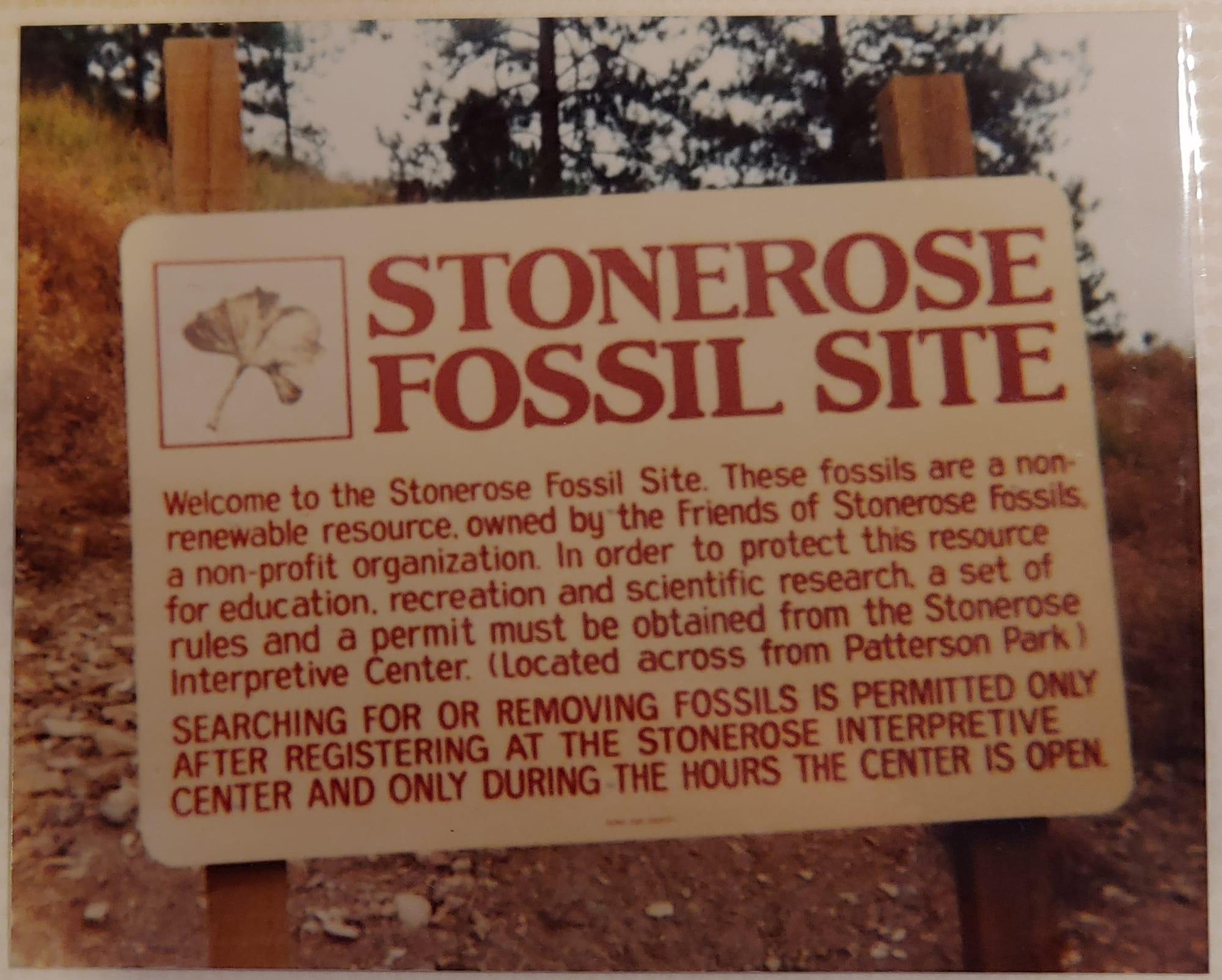
Pay to digFossil LeavesInsectsFishStonerose is the one site in this guide where a visitor pays a fee, splits shale and takes fossils home. The quarry works the Klondike Mountain Formation, a highland lake deposit of about 51 million years ago that preserves leaves, insects and fish. Staff run an orientation, show how to part the shale along its bedding planes, and identify every find at the end of the session. Each visitor keeps up to three fossils per day, and the centre retains anything of scientific value in exchange for a replacement specimen. No tools and no previous experience are needed, which makes this the best first fossil trip in the state for families.
Read the full guide → - 2
Racehorse Creek Chuckanut Fossil Fields Hunting Guide
Washington, United States
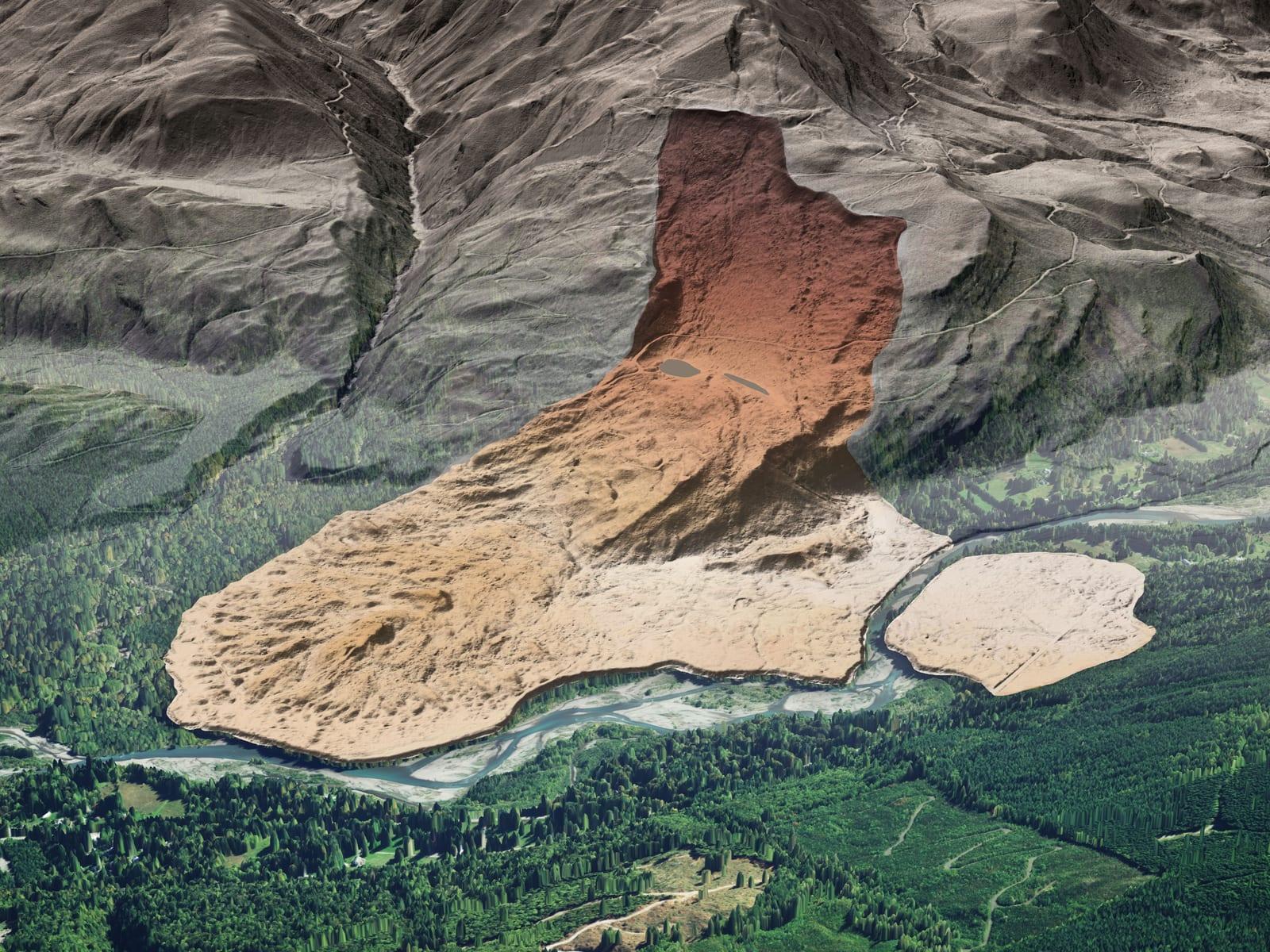
Free collectingFossil palm fronds (Sabalites)Tree fern fronds (Cyathea pinnata)Fossil leavesRacehorse Creek is the only free collecting ground in this guide. A January 2009 landslide dropped fresh blocks of Chuckanut Formation rock onto a slope of Washington DNR land, and those blocks carry palm fronds 30 to 60 cm across, tree fern fronds and broadleaf hardwood leaves. The WA DNR Rockhounding policy allows plant fossils to be collected here and protects all vertebrate material, which matters more at this site than at most. The same blocks hold roughly 20 tridactyl footprints of a giant flightless Eocene bird, the only authenticated record of that animal's tracks anywhere in the world. The access trail is unmaintained and the slope is steep and unstable, so this is a trip for experienced collectors in dry weather.
Read the full guide → - 3
Ginkgo Petrified Forest State Park Fossil Hunting Guide
Washington, United States
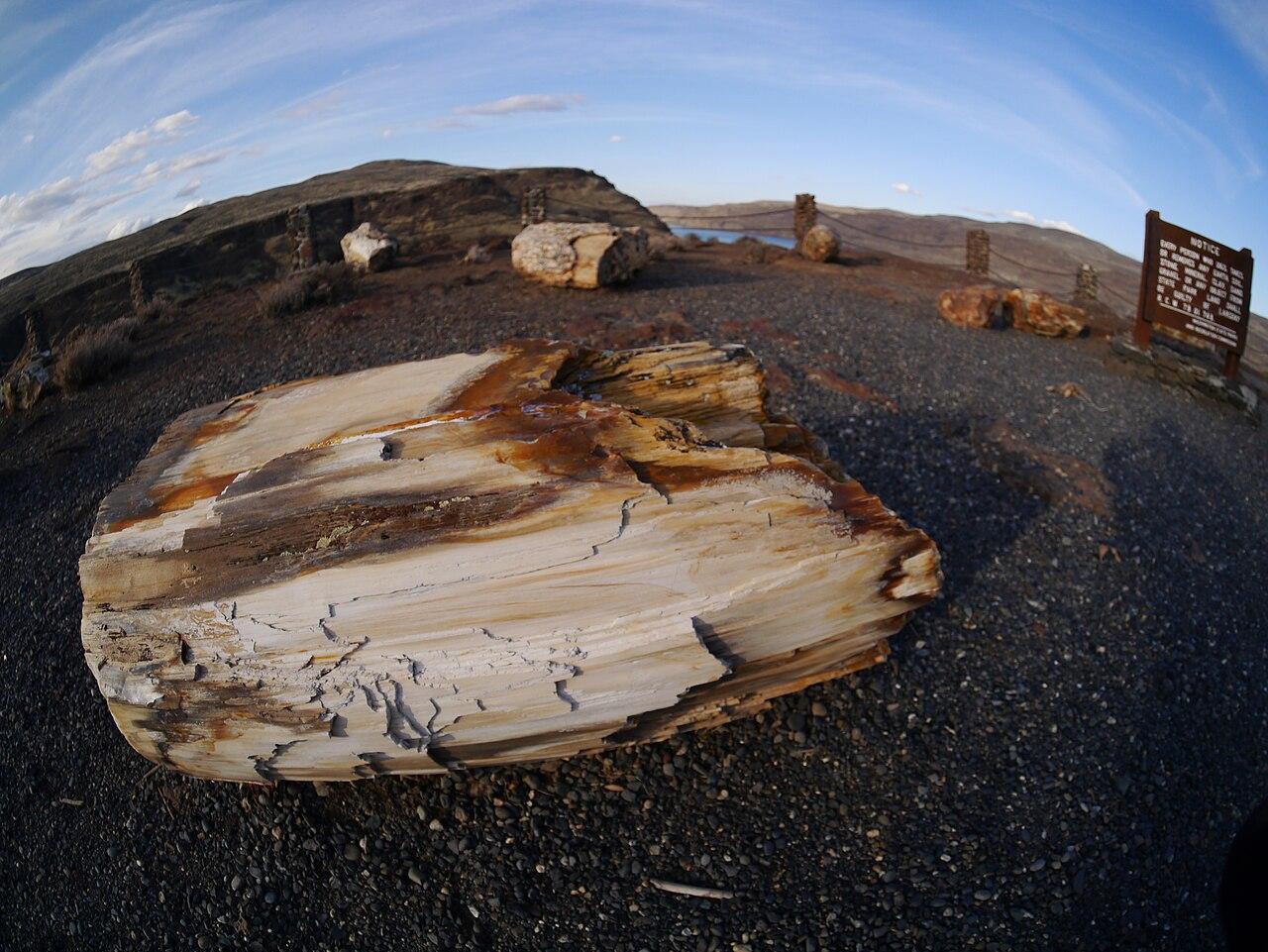
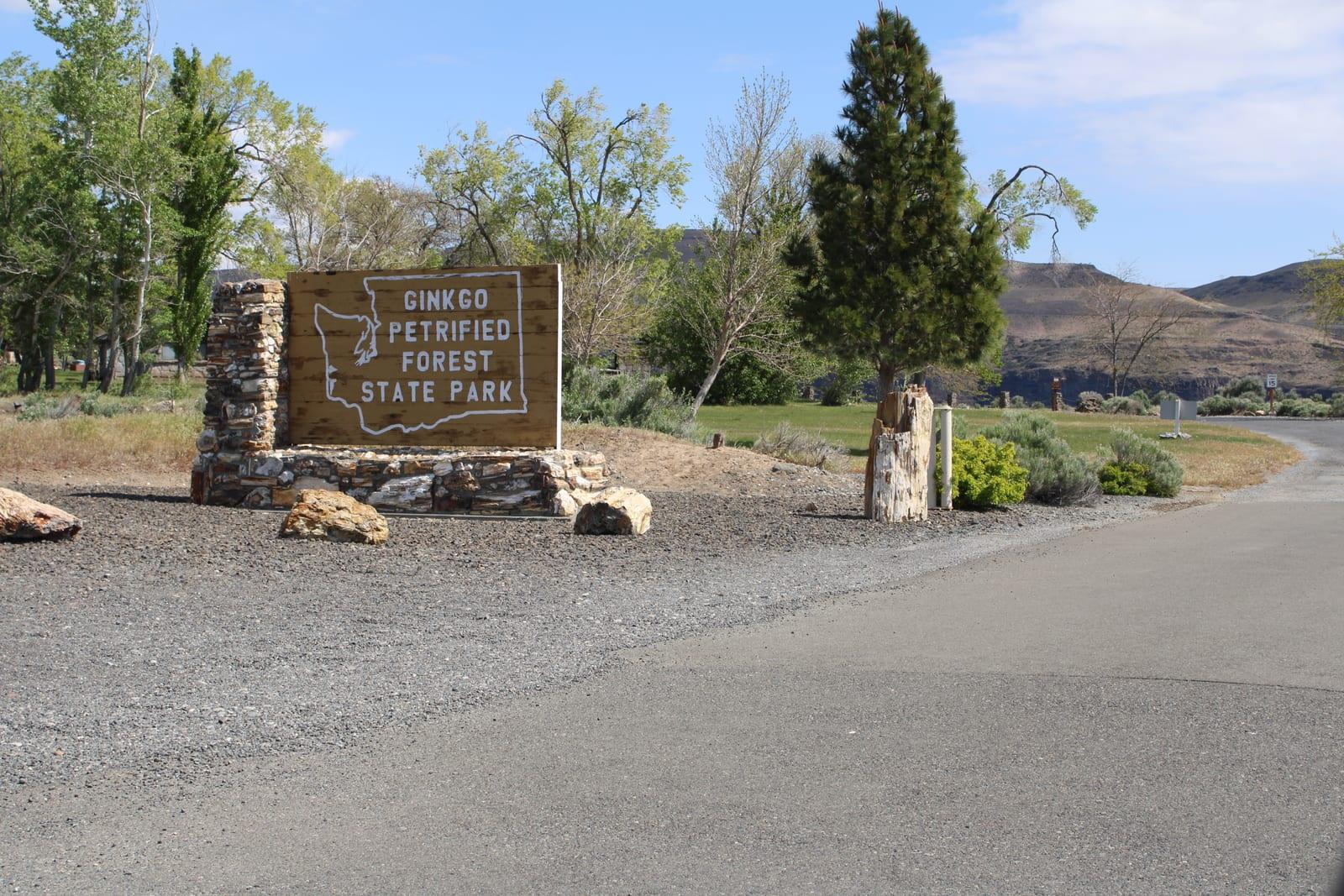
Viewing onlyPetrified wood (Ginkgo)Petrified wood (50+ species)Fossil wood (Douglas-fir-related)Ginkgo Petrified Forest protects more than 50 species of petrified wood on the Columbia River at Vantage, including the genus that gives the park its name. The logs were buried by middle Miocene lava flows and lakebed sediment of the Columbia River Basalt Group about 15.5 million years ago, then replaced cell by cell with silica. Visitors walk interpretive trails to see specimens in place, some of them under glass kiosks, and read the polished cross-sections at the Interpretive Center. Collecting inside the park is prohibited under Washington State Parks rules, and a Discover Pass is required for vehicle parking. The park page notes that petrified wood, the Washington state gem since 1975, may be collected on adjacent BLM land in the Saddle Mountains within federal rockhounding limits.
Read the full guide → - 4
Chuckanut Drive & Larrabee State Park Fossil Hunting Guide
Washington, United States
Viewing onlyFossil palm fronds (Sabalites)Fossil leavesPlant debrisLarrabee State Park is the easiest place to see the Chuckanut Formation without a hike up a landslide. The Rock Trail climbs through standing sandstone cliffs and the Clayton Beach Trail drops to a shoreline pocket beach, both cut into the same Eocene coastal-plain rock that produces the Racehorse Creek palm fronds. Washington State Parks rules prohibit collecting inside the park, so this is a site for looking at plant impressions on weathered bedding planes and photographing them. The site page points collectors instead at the WA DNR-managed Chuckanut Mountains inland, where plant fossils may be taken under the Rockhounding policy. Low tide widens the shoreline ledges where the clearest impressions show, and a Discover Pass is required to park.
Read the full guide → - 5
Alki Beach Blakeley Formation Fossil Hunting Guide
Washington, United States
Viewing onlyMarine mollusksCrab concretionsShark teeth (rare)Alki Beach puts a marine fossil outcrop inside Seattle city limits, about 8 miles from downtown by car or 12 minutes by King County water taxi. At minus tides the tan sandstone of the Oligocene Blakeley Formation emerges from under the beach gravel as wide weathered ledges, carrying mollusk shells, burrows and escape structures. The formation is known for calcareous concretions that split open to reveal articulated crabs and fish, and the Burke Museum keeps a working collection of them. Alki is a Seattle city park, so this is viewing only and no rock, fossil or shoreline material may be removed. Take non-slip footwear, because the wet bedrock is slippery and the exposure is only usable for the hour or two either side of a low tide.
Read the full guide → - 6
Fort Ward Park (Blakeley Formation) Fossil Hunting Guide
Washington, United States
Viewing onlyMarine mollusksCrab concretionsTrace fossilsFort Ward is the only public land that reaches the Blakeley Formation near its named type section. Restoration Point, the bluff that made the formation's name, sits immediately east inside a private gated community and cannot be visited, which catches out most first-time arrivals. Along the Fort Ward shoreline the same sandstone dips as steeply as 60 degrees, tilted by the Seattle Fault that crosses Rich Passage just south of the park, so weathered shells show in cross-section in the rock face. Bainbridge Island Metro Parks run the park for passive use, so collecting is prohibited here too. The combination of relict gun batteries, a half-mile shoreline path and a Seattle ferry crossing makes it the most rewarding half-day of the four viewing sites.
Read the full guide →
Planning your visit
When to visit
Stonerose sets the calendar for the state, because its season has typically run from mid-May to mid-October, Wednesday through Sunday, and it closes in snow or heavy rain. Racehorse Creek is best in dry summer and autumn weather, since the landslide slope is hazardous when wet. The two Puget Sound shoreline sites depend on tides rather than seasons, so work from the NOAA Seattle predictions and target a minus tide. At Vantage the limit is heat, and the Ginkgo page advises against the shrub-steppe trails in the early afternoon through July and August.
What to bring
Stonerose needs the least kit of any site here, because the shale parts with fingers or a flat tool and staff supply the method. Racehorse Creek needs the most: sturdy footwear for talus and brush, gloves, a small hammer and chisel for splitting float, water and an offline map, since cell service is intermittent and there are no facilities. For Alki Beach and Fort Ward, take non-slip footwear for wet bedrock and a tide table. Carry a Discover Pass for the two state parks, and water and sun protection for the desert trails at Vantage, where rattlesnakes are present.
Rules and access
The Washington Department of Natural Resources sets the baseline for state land through its Rockhounding policy: plant fossils may be collected for personal use on most DNR-managed ground, and vertebrate fossils are protected and need a scientific permit. That single rule is why a visitor may carry a palm frond off the Racehorse Creek slope and may not lift a track-bearing slab from beside it. Washington State Parks prohibit collecting at Ginkgo and Larrabee, and both require a Discover Pass to park. Seattle Parks and Recreation and Bainbridge Island Metro Parks prohibit removing any natural material from Alki Beach and Fort Ward. Stonerose runs under its own agreement with the landowners, where paying visitors keep up to three fossils each per day.
Getting there
Seattle is the practical base for half the list. Alki Beach is about 8 miles from downtown over the West Seattle Bridge, or a 12-minute King County water taxi to Seacrest Park. Fort Ward is a Washington State Ferry crossing to Winslow and then about 4 miles south. Larrabee State Park sits roughly 7 miles south of Bellingham on Chuckanut Drive, and Racehorse Creek lies inland from Bellingham on WA-542 past Kendall. Ginkgo Petrified Forest is on Interstate 90 at the Columbia River crossing, about 145 miles east of Seattle. Republic is the outlier at roughly three hours from Seattle, or two and a half hours from Spokane on US-395 and WA-20, so plan an overnight stay.
Want every documented location, not just the curated top sites? Browse the full index of Washington fossil sites for the complete list, including locations beyond this guide. This guide is part of our national roundup of the best places to fossil hunt in the United States.
Frequently asked questions
- Can you collect fossils in Washington State?
- It depends entirely on who manages the land. Under the Washington Department of Natural Resources Rockhounding policy, plant fossils may be collected for personal use on most DNR-managed land, while vertebrate fossils are protected and require a scientific permit. Washington State Parks prohibit collecting outright, which rules out Ginkgo Petrified Forest and Larrabee. Alki Beach is a Seattle city park and Fort Ward is a Bainbridge Island Metro Park, and both prohibit the removal of any natural material. Stonerose Interpretive Center is the exception, because it operates under its own agreement with the landowners and lets each paying visitor keep up to three fossils per day.
- Which Washington fossil site is best for a first visit?
- Stonerose Interpretive Center in Republic. It is the only structured public digging site in the state, the shale splits with fingers or a flat tool rather than heavy equipment, and staff give an orientation before anyone starts. The Burke Museum lists Stonerose among its top recommendations for people who want to see Washington fossils. Allow for the drive, because Republic sits in remote Ferry County about 130 miles north of Spokane and roughly three hours from Seattle.
- What fossils does Washington produce?
- Three records dominate. The Early Eocene Chuckanut Formation in Whatcom County yields palm fronds, tree fern fronds and broadleaf hardwood leaves from a warm coastal plain, plus protected bird, crocodile and turtle trackways. The Klondike Mountain Formation at Republic preserves leaves, insects and fish from a highland lake, with more than 200 species documented and some of the earliest known fossils of the rose and maple families. The Oligocene Blakeley Formation around Puget Sound produces marine bivalves, gastropods and the concretions that contain articulated crabs.
- Do Washington fossil sites charge an entry fee?
- Stonerose charges admission to the dig site, and its 2025 rates were 18 US dollars for adults, 12 for seniors, 7 for youth and free for children under five, with a family pass at 43. The interpretive centre museum and gift shop are free. Ginkgo Petrified Forest and Larrabee State Park both require a Washington State Parks Discover Pass for vehicle parking. Racehorse Creek, Alki Beach and Fort Ward Park have no fee.
- When is the tide low enough to see the Blakeley Formation?
- The bedrock at Alki Point is most visible at minus tides, below 0.0 feet at the NOAA Seattle gauge, when wide swaths of the rock platform are dry. Seattle gets two highs and two lows a day, so check the NOAA Seattle tide predictions and plan to arrive ahead of the low rather than on it. The same advice applies to the Fort Ward shoreline on Bainbridge Island.
- Why is Washington petrified wood protected in the state park but collectable nearby?
- The rule follows the land manager rather than the rock. Inside Ginkgo Petrified Forest State Park, disturbing or removing fossils is prohibited under Washington State Parks rules and state law. The Ginkgo site page notes that personal petrified-wood collection is permitted on adjacent Bureau of Land Management ground in the Saddle Mountains south of Vantage, within standard federal rockhounding limits of about 25 lb per day and 250 lb per year for non-commercial use.
Recommended resources
- WA DNR Washington Geological Survey: Rockhounding · The authority on what may be collected on state land in Washington. Plant fossils are allowed for personal use on most DNR-managed parcels, vertebrate fossils need a scientific permit, and the collection status of individual properties changes, so check it before each trip.
- Burke Museum: Where to See Fossils in Washington State · The state museum's own shortlist of public fossil destinations, which includes Stonerose and Ginkgo Petrified Forest. The Burke is also the institution to contact about a scientifically unusual find.
- Stonerose Interpretive Center · Season dates, opening hours, current admission rates and local lodging for the dig site at Republic. The season has typically run from mid-May to mid-October, Wednesday through Sunday, so confirm before a long drive.