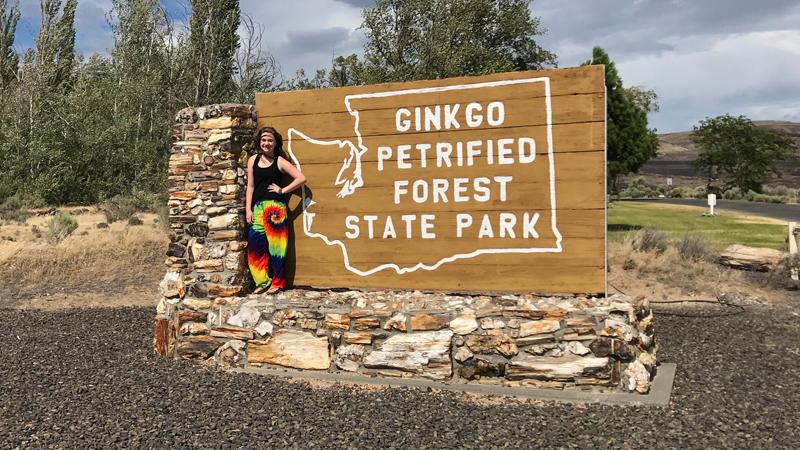
Ginkgo Petrified Forest State Park Fossil Hunting Guide
Image: Chris Light (CC BY-SA 4.0)
Ginkgo Petrified Forest State Park at Vantage on the Columbia River preserves one of the world's most diverse petrified-wood floras, more than 50 species, including the genus Ginkgo, trapped in middle Miocene Columbia River Basalt Group lavas and lahars about 15.5 million years ago. The park is viewing-only under Washington State Parks rules. Petrified wood is the Washington state gem; collecting is permitted on adjacent BLM and Bureau of Reclamation lands within rockhounding limits.
By Edward Chen · Updated 31 July 2026
Introduction
Ginkgo Petrified Forest State Park is a 7,470-acre Washington State Park on the west bank of the Columbia River at Vantage, in eastern Kittitas County. The park preserves one of the most diverse petrified-wood floras in the world, more than 50 tree species, including the genus Ginkgo, entombed in middle Miocene volcanic deposits of the Columbia River Basalt Group about 15.5 million years ago. Petrified wood from the deposit was designated the Washington state gem in 1975, and the park is the largest dedicated petrified-wood preserve in the United States.
The park is viewing-only under Washington State Parks rules. Visitors learn about the petrified forest at the Interpretive Center (overlooking the Columbia / Wanapum Lake at the highway exit), walk the interpretive trails to see in-place specimens (some of them under glass kiosks), and look at the polished cross-sections on display. Collection of petrified wood is prohibited inside park boundaries. Adjacent federal land, Bureau of Land Management in the Saddle Mountains south of Vantage, and parts of the surrounding sagebrush steppe, is open to personal petrified-wood collection under federal rockhounding limits.
This page is included because the Burke Museum's "Where to See Fossils in Washington State" overview lists Ginkgo as one of the recommended public Washington fossil destinations. It is a Miocene site, not Eocene, so it complements rather than substitutes for the Stonerose, Chuckanut, and Blakeley pages on this site.
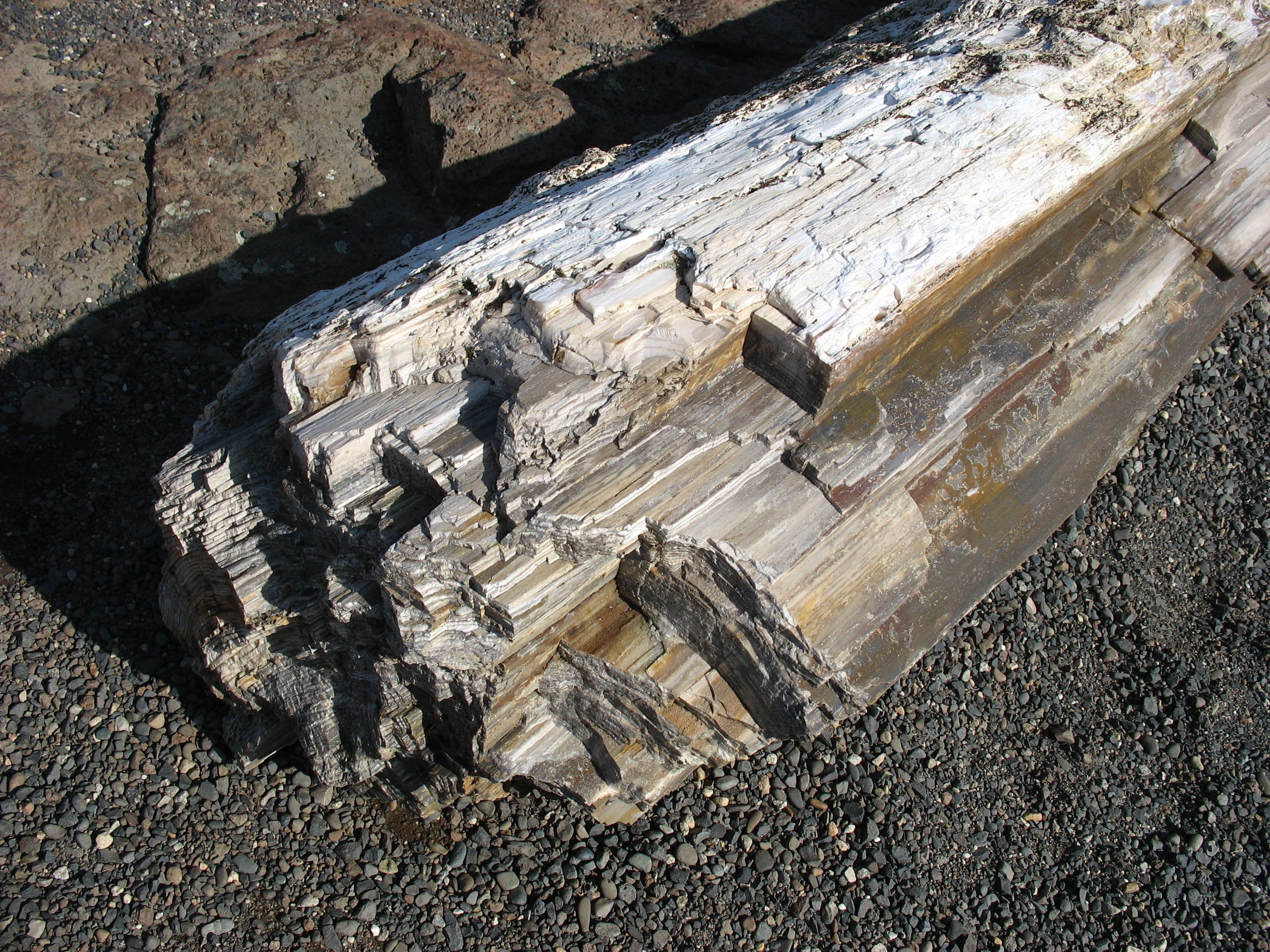 Photo: No machine-readable author provided. Justinleif~commonswiki assumed (based on copyright claims)., Public domain, via Wikimedia Commons

Location and Directions
Ginkgo Petrified Forest State Park is at Vantage on Interstate 90 at the Columbia River crossing, about 28 miles east of Ellensburg and 145 miles east of Seattle. The Interpretive Center is on the west bank of the Columbia at 4511 Huntzinger Road, immediately south of the I-90 bridge. The trails to in-place petrified wood are at the upland portion of the park west of the highway, accessed via Recreation Road from the interpretive area.
Practical notes
A Washington State Parks Discover Pass is required for vehicle parking. The Interpretive Center is open seasonally (typically Memorial Day through Labor Day, with reduced spring/fall hours). The trails to the petrified wood kiosks are open year-round during daylight, weather permitting. The park is in shrub-steppe desert with extreme summer heat, bring water, sun protection, and avoid the trails in the early afternoon during July and August. Rattlesnakes are present. Wanapum Lake (the impounded portion of the Columbia upstream of Wanapum Dam) is at the eastern edge of the park. The park also includes 27,000 feet of freshwater shoreline at the Wanapum Recreation Area, which has year-round camping.
Photo: Smithsonian National Museum of Natural History, CC0, via Smithsonian Open Access
What Fossils You'll Find
The petrified wood at Ginkgo was preserved in middle Miocene volcanic and volcaniclastic deposits of the Columbia River Basalt Group, the largest Cenozoic flood basalt province in North America. About 15.5 million years ago, a sequence of basalt flows from the Columbia River Basalt province inundated a lowland landscape covered in mixed temperate forest. Trees were toppled and buried by lava flows and by intervening sedimentary deposits (notably the Vantage Sandstone Member, an interflow deposit). Some trees were waterlogged in a Miocene lake at the time of burial, which trapped them in anoxic sediment beneath the next basalt flow. Groundwater rich in dissolved silica subsequently permineralized the wood, replacing organic tissues with chalcedony, opal, and other forms of silica that preserve cell-level anatomy in microscopic detail.
The park's collection forms a key reference set for Miocene Pacific Northwest paleobotany. The Burke Museum maintains research-grade Columbia Plateau petrified-wood collections. The Washington Geological Survey covers the geology of the locality on its WA100 geotourism site.
"A spectacular collection of petrified wood is found at Ginkgo Petrified Forest, a state park located near the small central Washington town of Vantage, and the park preserves remains of ancient ginkgo trees as well as more than 50 other species of tree." Burke Museum, "Where to See Fossils in Washington State"
Geologic History
The Columbia River Basalt Group is the largest Cenozoic flood basalt province in North America, covering approximately 210,000 square kilometres of the Pacific Northwest in roughly 350 individual lava flows erupted between about 17 and 6 million years ago. The peak eruption phase, 16.5 to 14.5 million years ago, included the Grande Ronde Basalt and Wanapum Basalt formations, the units that crop out at Vantage. Individual lava flows of these formations are commonly 30 to 50 metres thick, and the cumulative basalt stack in the Columbia Plateau exceeds 1.5 kilometres.
Between successive basalt flows, modest amounts of time (thousands to tens of thousands of years) allowed soils, lakes, and forests to develop on the cooled lava surface. The Vantage Sandstone Member is one such interflow deposit, a layer of sand, silt, and plant debris representing a Miocene lakebed and floodplain. The Ginkgo petrified-wood flora is preserved at the contact between the Vantage Sandstone and the overlying Frenchman Springs Member basalt flow. Trees that fell into the lake or were buried by the basalt flow itself were preserved by anoxic conditions and silica-rich groundwater.
The modern Columbia River cuts through this stack of basalt and interbedded sediment. The Wanapum Dam impoundment (Wanapum Lake) drowns the river along the park's eastern shoreline. Erosion along the river canyon has exposed cross-sections of the basalt stack, revealing the Vantage Sandstone and its fossil-wood horizon as a tan band between the dark basalt flows above and below.
How the petrified forest became a state park
The petrified-wood locality at Vantage was known to local residents and to Wanapum tribal members long before scientific description. Industrial development of the area in the 1930s, particularly Civilian Conservation Corps work along the new state highway and the construction of the Vantage Bridge, brought systematic excavation of the fossil-wood horizon. In 1934 the state legislature authorised the creation of Ginkgo Petrified Forest State Park, and the original Interpretive Center was built by the CCC in 1938. The park is on the National Register of Historic Places as a Civilian Conservation Corps-built park complex. The original interpretive trails and kiosks remain in service.
 Photo: Roc0ast3r, CC0, via Wikimedia Commons

Collecting Rules & Regulations
Is Fossil Collecting Allowed?
No, not inside the state park boundary. Personal petrified-wood collection is permitted on adjacent BLM lands in the Saddle Mountains and elsewhere on the Columbia Plateau, within standard federal rockhounding limits.
Key Points:
- Inside Ginkgo Petrified Forest State Park: viewing only. Disturbing or removing fossils is prohibited under Washington State Parks rules and state law.
- A Washington State Parks Discover Pass is required for vehicle parking.
- For collecting, target BLM-managed land in the Saddle Mountains south of Vantage. Federal rockhounding limits apply (typically 25 lb per day, 250 lb per year, plus one larger piece per year, for personal non-commercial use).
- The Burke Museum is the institutional gateway for any scientifically significant petrified-wood finds.
- Petrified wood is the official Washington state gem (designated 1975).
Sources
Nearby sites
 Alki Beach Blakeley Formation Fossil Hunting GuideMarine mollusks, Crab concretions
 Fort Ward Park (Blakeley Formation) Fossil Hunting GuideMarine mollusks, Crab concretions
 Stonerose Interpretive Center Fossil Hunting GuideFossil Leaves, Insects
 Wheeler High School Fossil Beds Fossil Hunting GuideFossil Leaves, Fish