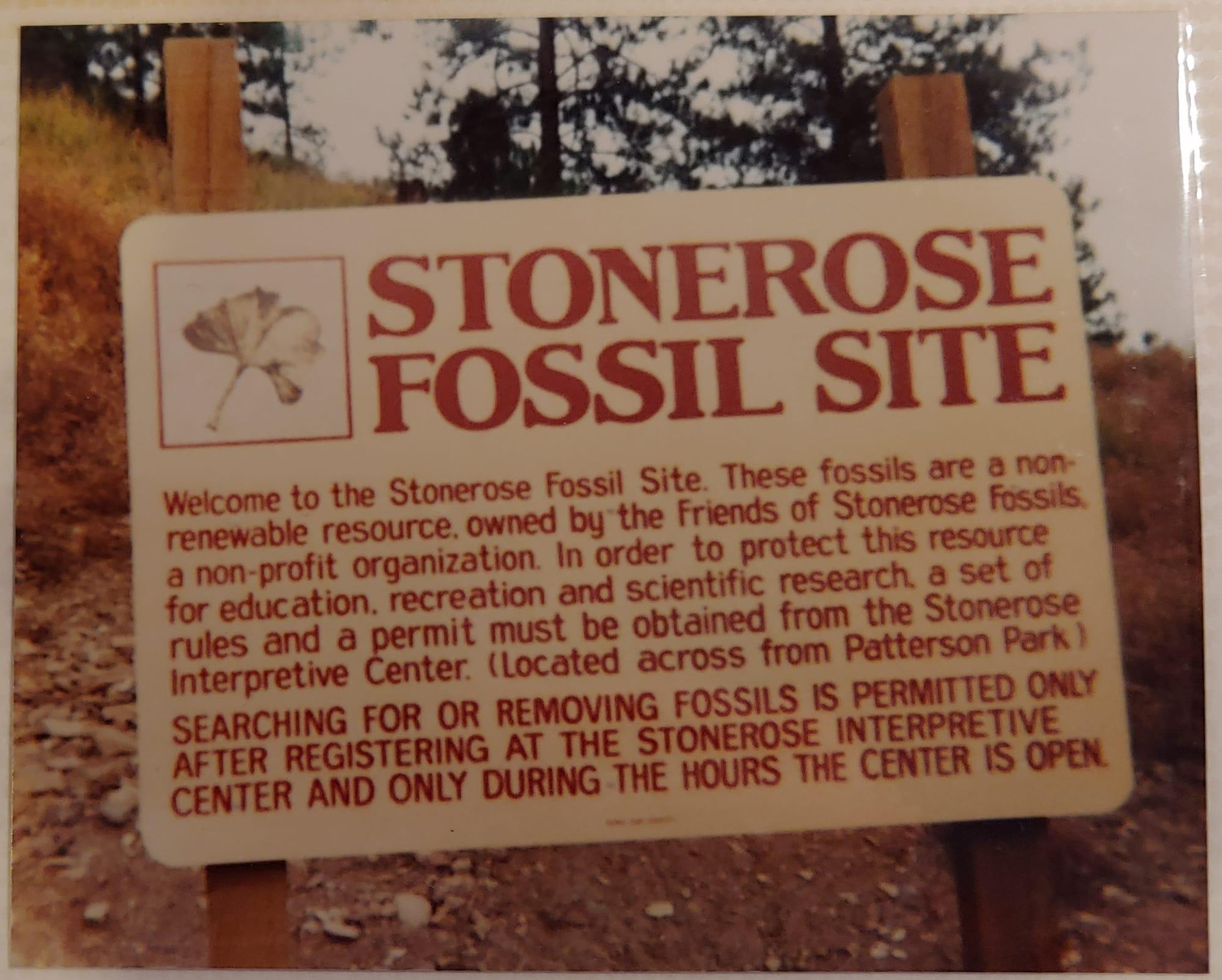
Stonerose Interpretive Center Fossil Hunting Guide
Image: Walter Siegmund (CC BY-SA 3.0)
Stonerose Interpretive Center in Republic, Washington offers public fee-based digging in the Early Eocene Klondike Mountain Formation, a lagerstätte approximately 51 million years old that preserves fossil leaves, insects, and fish in fine-grained lacustrine shale.
By Edward Chen · Updated 1 August 2026
Introduction
Stonerose Interpretive Center in Republic, Washington is the most prominent structured public fossil digging site in Washington State and one of the most accessible Eocene fossil localities in the Pacific Northwest. The Burke Museum's "Where to See Fossils in Washington State" overview lists Stonerose among its top Washington recommendations for visitors. The site sits within an outcrop of the Klondike Mountain Formation, a lacustrine deposit laid down in a highland lake approximately 51 million years ago. The fine-grained volcanic shale splits cleanly along bedding planes to reveal well-preserved fossil leaves, insects, and fish, often in exceptional detail.
The formation is classified as a lagerstätte, a term used for deposits where preservation conditions were exceptional enough to capture soft-bodied and delicate organisms that rarely survive as fossils. Over 200 species have been documented from the Klondike Mountain Formation and the broader Eocene Okanagan Highlands lake system of which it forms the southernmost extent. The Republic flora includes some of the earliest known fossils of the rose family (Rosaceae) and maple family (Aceraceae), making the site scientifically significant as well as accessible to the public.
Visitors may dig for their own fossils at the main Boot Hill site for a small admission fee. Staff explain how to split the shale and identify what you find. After identification, visitors keep up to three fossils per day. The interpretive centre and museum are free to enter and house a permanent display of notable finds from the formation.
Location and Directions
Republic is in Ferry County, in the remote northeast of Washington State, roughly 130 miles north of Spokane. The town sits in a forested valley at about 2,600 feet elevation, surrounded by the Colville National Forest.
From Spokane, take US-395 north to Kettle Falls, then WA-20 west to Republic. The drive is approximately two and a half hours. From the west, take US-2 east to Wilbur, then WA-21 north through Keller Ferry to Republic. Allow around three hours from Seattle.
The interpretive centre is at 15 North Clark Ave in downtown Republic, on the corner of Highway 20 and Clark Avenue. Street parking is available in the town centre. The museum and gift shop are free to enter and open Wednesday through Sunday from 8am to 5pm during the main season (mid-May through mid-October). Check the Stonerose website for exact season dates each year.
The fossil dig site is a short uphill walk from the centre. Staff provide orientation before visitors head to the site.
What Fossils You'll Find
The most common finds at Stonerose are fossil plant leaves preserved in the fine-grained tuffaceous shale. The Klondike Mountain Formation preserves the remains of a diverse highland forest that grew at an elevation similar to or slightly above the modern town. According to the USGS bulletin by Wolfe and Wehr (1987), the flora includes representatives of the rose family, maple, elm, alder, oak, sequoia, hawthorn, and dawn redwood, among others. Many of these are identifiable from the outline and venation pattern of the leaf, and the Stonerose team sells a guidebook to help visitors make identifications in the field.
Insect fossils are rarer but documented from the formation. Published research cited in the Geoscience Canada lagerstätten review includes damselflies, caddisflies, beetles, and ants. The preservation in some specimens is detailed enough to show wing venation. Finding a complete insect requires patience, but fragments appear with some regularity.
Fish fossils also occur at the site. The species documented include Amia (bowfin), a freshwater fish whose modern relative still lives in North America, along with smaller species typical of still, cool highland lakes.
Visitor finds are reviewed by staff before keeping. Specimens of unusual scientific value are retained by the centre, and the visitor receives a replacement fossil of similar quality. This policy is described on the Stonerose website and is how the centre maintains its research collection.
"Most of the fossils at Stonerose are leaf fossils, but occasionally insects can be found. The area was once part of an ancient lake, and plants, insects and fish fossils have all been found here." Burke Museum, "Where to See Fossils in Washington State"
 Photo: Kevmin, CC BY-SA 3.0, via Wikimedia Commons

Geologic History
Approximately 51 million years ago, a large lake system occupied a chain of graben basins running through what is now northeast Washington and extending into southern British Columbia. The Republic Basin, where Stonerose is located, formed as a result of crustal extension after a major period of volcanic activity, with the lake floor accumulating fine volcanic ash and organic-rich silt.
Greenwood et al. (2005) report that climate analysis of the fossil leaves indicates mean annual temperatures around 8 to 9 degrees Celsius at the lake margin, consistent with a cool, humid highland forest. Winter temperatures were mild enough that snow was rare. The surrounding landscape supported dense temperate broadleaf forests with plants similar to those now found in eastern North America and eastern Asia, a distribution that reflects continental-scale climate and forest migrations over the subsequent 50 million years.
The lake sediments were periodically blanketed by fine volcanic ash from eruptions associated with the Challis volcanic arc. These ash falls killed organisms and buried them rapidly in low-oxygen water, suppressing decay and allowing the exceptional preservation that makes the formation scientifically significant. The finely laminated mudstone layers with the best fossil preservation correspond to these rapid burial events.
Collecting Rules and Regulations
Admission to the fossil site is required. As of 2025, fees were $18 for adults (18 to 61), $12 for seniors (62 and over), $7 for youth (5 to 17), and free for children under five. A family pass covering two adults and two youth is $43. The interpretive centre museum and gift shop are free. Stonerose members dig free.
Each visitor may keep up to three fossils per day. Specimens of special scientific significance are retained by the Stonerose collection, and the visitor receives a replacement fossil. No permit is needed beyond paying the site admission. Digging tools are not required. The shale splits with fingers or a flat tool along bedding planes.
The site is operated by Stonerose Interpretive Center, a 501(c)(3) non-profit organisation. Proceeds support the educational and research programmes of the centre.
The Stonerose collecting arrangement is governed by the agreement between the Center and the landowners. It operates independently of the broader Washington Department of Natural Resources Rockhounding policy that covers DNR-managed land elsewhere in the state. Under that broader WA DNR policy, plant fossils may be collected for personal use on most DNR-managed land, but vertebrate fossils are protected and require a scientific permit. At Stonerose, follow the centre's instructions. Everywhere else in Washington, follow the WA DNR Rockhounding page.
Safety
The fossil site is at elevation and the terrain involves gentle slopes. Appropriate footwear for loose rocky ground is advisable. The site is open in all dry weather during the operating season. It closes during snow or heavy rain.
Republic is a remote town with limited accommodation. The Stonerose website lists nearby lodging and dining options. Visitors travelling from Spokane or Seattle should plan an overnight stay to make the most of a full day at the site. The nearest hospital is in Ferry County or Spokane.
The climate in northeast Washington is semi-arid with warm summers. Sun protection and water are recommended for summer visits. Afternoon thunderstorms are possible in July and August.
Sources
- Stonerose Interpretive Center: official site
- Stonerose: admission and fossil-hunting fees
- Wikipedia: Stonerose Interpretive Center
- Wikipedia: Klondike Mountain Formation
- Geosciences (MDPI): Klondike Mountain Formation lagerstätten review
- WA DNR Washington Geological Survey: Rockhounding
- Burke Museum: Where to See Fossils in Washington State
- Burke Museum: Cruisin' the Fossil Freeway, Washington fossils
Nearby sites
 Ginkgo Petrified Forest State Park Fossil Hunting GuidePetrified wood (Ginkgo), Petrified wood (50+ species)
 Racehorse Creek Chuckanut Fossil Fields Hunting GuideFossil palm fronds (Sabalites), Tree fern fronds (Cyathea pinnata)
 Clarkia Fossil Bowl Fossil Hunting GuidePlants, Leaves
 Chuckanut Drive & Larrabee State Park Fossil Hunting GuideFossil palm fronds (Sabalites), Fossil leaves