Whitby Yorkshire Fossil Hunting Guide
Image: Christine Matthews (CC BY-SA 2.0)
Whitby in Yorkshire yields Jurassic ammonites, ichthyosaur bones, belemnites, and Whitby jet from Toarcian shale cliffs at Saltwick Bay. Free tidal foreshore collecting.
By Edward Chen · Updated 31 July 2026
 Photo: Christine Matthews, CC BY-SA 2.0 via Wikimedia Commons
Introduction
Whitby on the Yorkshire coast sits on one of the thickest and most varied Jurassic sequences in Britain, and the foreshore at Saltwick Bay has produced significant marine reptiles, ammonites, belemnites, and the jet for which the town is historically famous. The Whitby Mudstone Formation, also known as the Alum Shale, spans the Toarcian stage and has yielded more than 200 primary type specimens, including holotypes of species described nowhere else. The Yorkshire Fossil Festival, now in its third decade, is hosted here specifically because of what the local cliffs continue to produce.
This guide covers the two main access routes, the fossils you can find, the geology of the Whitby sequence, and the specific safety and timing rules that this tidal site demands.
Photo: Smithsonian National Museum of Natural History, CC0, via Smithsonian Open Access
Location and Directions
Address
The primary collecting area is Saltwick Bay, accessed via the coastal footpath from Whitby Abbey headland. For reference, the Abbey sits above Whitby, North Yorkshire YO22 4JT. Town-centre car parks throughout Whitby are signposted from the A171.
Directions and Parking
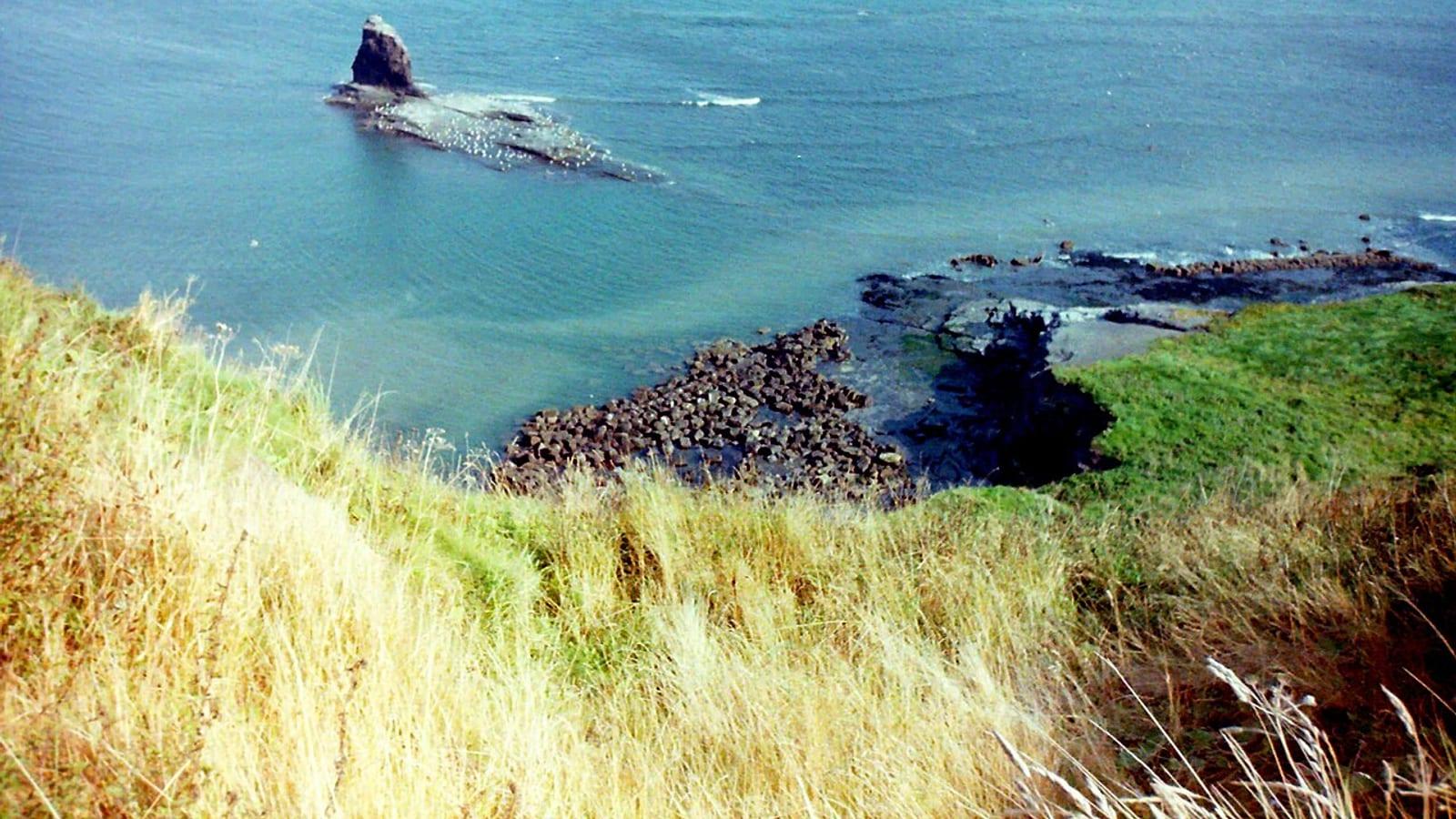
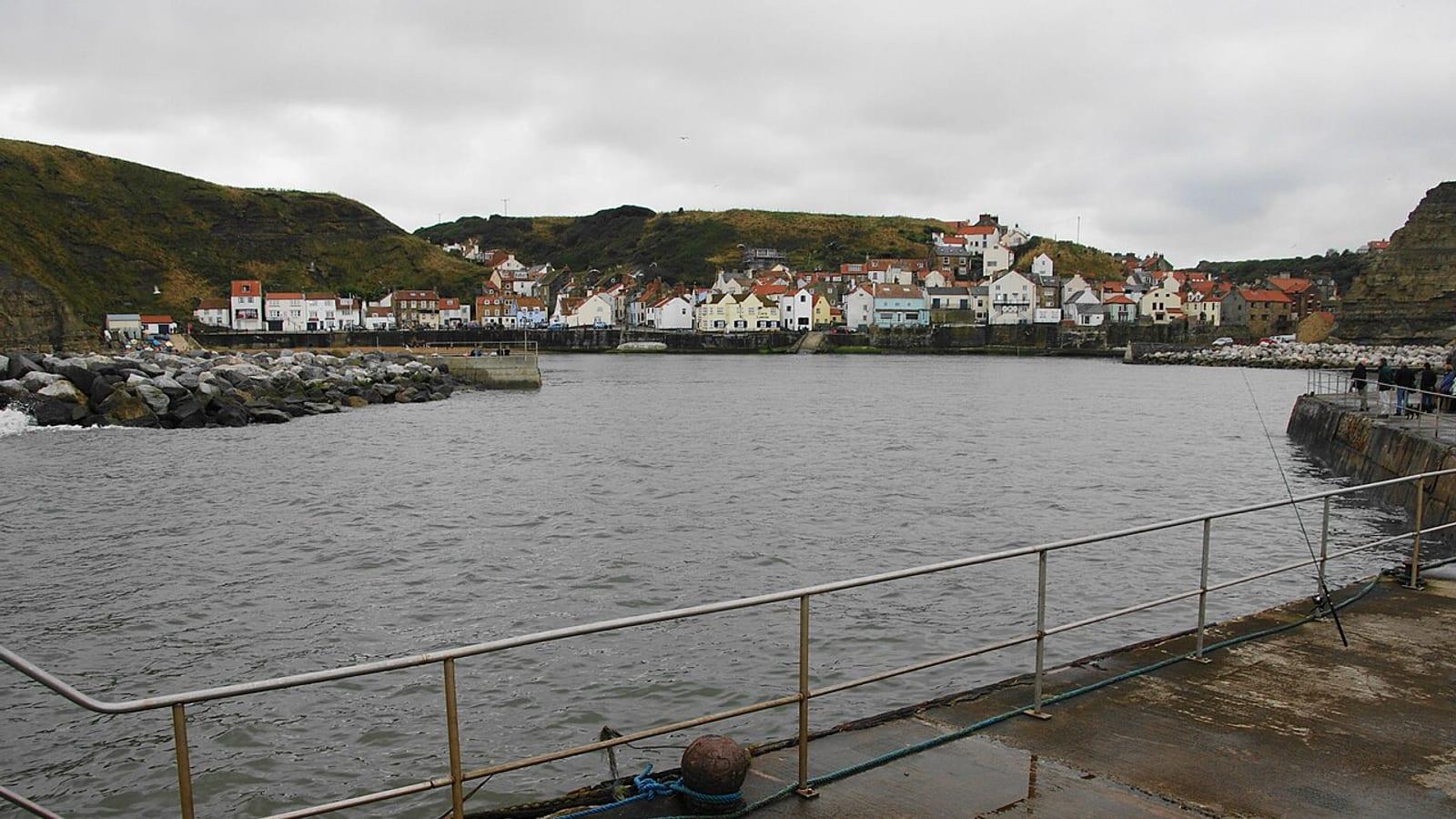
Park in one of Whitby's central car parks, all of which are signposted from the A171. From the town, cross the swing bridge and climb the 199 steps to Whitby Abbey, then follow the coastal footpath south-east toward Saltwick Bay. The descent to the beach requires care on the stepped path. The beach at Saltwick Bay is only fully accessible for approximately three to four hours around low tide. You must return to the cliff path before the tide turns, as the bay fills completely and there is no safe escape route along the foreshore once the water rises. An alternative approach from the East Pier is possible for experienced visitors who know the local tide patterns thoroughly, but the Abbey route via the coastal path is the standard and safer access for most collectors.
What Fossils You'll Find
Ammonites are the most commonly found fossils at Whitby and appear in several zones within the Whitby Mudstone. The genera Dactylioceras, Hildoceras, and Harpoceras are characteristic of the Toarcian and have been collected from these cliffs for centuries. Most specimens are found as crushed or partially three-dimensional examples in dark shale, turning up as loose material on the beach or in freshly fallen blocks. Pyritised ammonites occur here, where the shell material has been replaced by iron pyrite. These are particularly striking when freshly exposed, though pyrite is unstable and will deteriorate if not treated and stored correctly after collection.
Whitby Jet is fossilised wood from a coniferous tree related to the modern Monkey Puzzle, preserved in the Toarcian shales. It is hard, black, takes a high polish, and has been carved into jewellery in Whitby since the Bronze Age. On the beach you may find fragments ranging from small splinters to hand-sized pieces. True Whitby jet is lighter than it looks, warm to the touch compared to black glass, and will leave a brown streak on unglazed porcelain. It is most often found in the lower shale exposures and on the upper foreshore after storms.
Belemnites are extremely common throughout the Whitby sequence. The elongate bullet-shaped guards appear in large numbers in some shale beds and make an excellent beginner find. Marine reptile material, including ichthyosaur vertebrae, ribs, and occasional skulls, has been found at Saltwick Bay and from the cliffs to the south. These are rare, but the site has a documented history of significant reptile finds. Any bone-like material in dark brown or black preservation in the shale is worth a close examination.
Dinosaur footprints of the ichnotaxon Deltapodus brodricki, attributed to stegosaurs, have been recorded in the overlying Saltwick Formation at the upper foreshore level, adding a terrestrial element to an otherwise marine fauna.
Geologic History
The Ancient Environment
The Whitby cliffs expose the Whitby Mudstone Formation (Alum Shale Member, Cement Shale Beds, Hard Shale Beds), overlain by the Dogger Formation and the Saltwick Formation. These sediments span the Toarcian stage of the Early to Middle Jurassic, approximately 183 to 174 million years ago. The lower Whitby Mudstone was deposited in a shallow marine environment at a latitude equivalent to the present-day Mediterranean. The dark colour of the shale indicates low-oxygen conditions at the seafloor, which allowed organic material including soft tissue, jet wood, and complete marine reptile carcasses to be preserved rather than decomposed.
The overlying Saltwick Formation represents a different environment entirely: coastal plain conditions with rivers, deltas, and shorelines where large dinosaurs walked. The jet seams in the Whitby Mudstone represent drifted logs of coniferous woodland from the nearby land, waterlogged, sunk to the anoxic seafloor, and gradually replaced by carbon-rich material during diagenesis.
How Whitby Became a Fossil Collecting Site
The Yorkshire coast between Whitby and Robin Hood's Bay is subject to continuous wave erosion, with the soft Jurassic shales offering moderate resistance. Cliff falls, storm damage, and daily tidal scouring keep the Saltwick Bay foreshore supplied with fresh material throughout the year. The Alum industry, which operated along this coast from the 17th century onwards, exposed large sections of the Whitby Mudstone during quarrying, contributing to the early scientific documentation of the fauna. Today, natural erosion does the work, and the beach is regularly refreshed after storms or periods of heavy rain that accelerate cliff instability.
 Photo: Saltwick Bay by JThomas, CC BY-SA 2.0, via Wikimedia Commons
Collecting Rules and Regulations
Is Fossil Collecting Allowed?
Surface collecting from the beach and foreshore at Saltwick Bay is permitted and free. Personal, non-commercial collection of loose material is legal under UK law. The cliffs at Whitby have SSSI designation for their scientific importance. Hammering the standing cliff face or extracting material from in-situ rock is prohibited. Picking up loose material from the beach and foreshore surface, and splitting fallen shale blocks already on the beach, is the accepted and legal collecting method. Significant scientific finds, particularly marine reptile material, should be reported to the Whitby Museum.
Recommended Tools
A geological hammer and small chisel for splitting loose shale blocks on the beach, a hand lens, padded containers for fragile pyritised specimens, and newspaper or foam for wrapping jet finds are useful. Wear sturdy boots with grip for the rock platform. Pyritised ammonites should be coated with a consolidant such as Paraloid B-72 soon after collection to slow oxidation.
Safety
Saltwick Bay is a tidal trap. The bay fills completely at high tide and the cliffs are unclimbable from the beach. You must leave via the cliff path before the tide cuts off the access point. Check tide times before every visit and set a firm turnaround time. The cliffs above Saltwick Bay are unstable and produce frequent falls. Keep well away from the cliff base at all times. The rock platform is covered in algae and is slippery in wet conditions.