Fur Island Knudeklinterne Fossil Hunting Guide
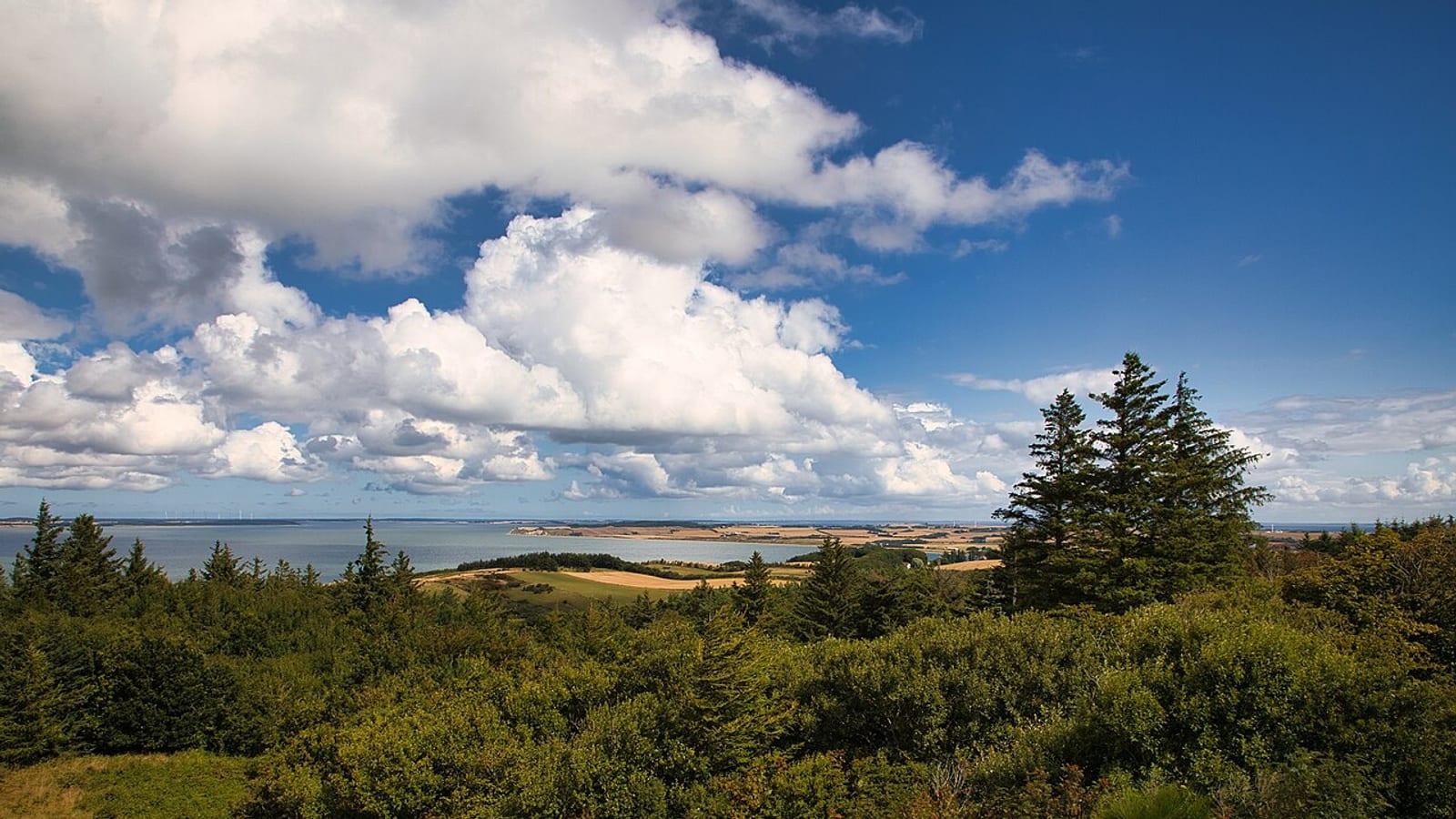
Image: Dietmar Rabich (CC BY-SA 4.0)
Free fossil collecting at Fur island's Knudeklinterne cliffs. Split Eocene moler for fish and insects at the type section of the Fur Formation, no permit needed.
By Edward Chen · Updated 31 July 2026
Introduction
The Knudeklinterne cliffs on the northwest coast of Fur island rise 10 to 15 meters above the Limfjord waters in alternating bands of light moler and dark volcanic ash. These cliffs are the type locality for the Knudeklint Member of the Fur Formation, the reference section that geologists use to correlate Early Eocene deposits across the North Sea Basin. For fossil collectors, they offer something the supervised museum site 8 kilometers away cannot: open field collecting on a natural foreshore, with no fees, no boundaries, and the genuine experience of finding 55-million-year-old fish and insects where they erode out of the cliff. Complete fish fossils with preserved scales weather from the moler between ash layers. Insect fossils with intact wing patterns occur in the harder carbonate nodules called cementsten. The journey to Fur from Copenhagen is substantial at roughly 4 hours, but the geology repays it and the site is quiet. This guide covers how to get there, what to collect, the geological history of the formation, and how to collect safely.
Location and Directions
Address
Knudeklinterne coastal cliffs, northwest coast of Fur island, Municipality of Skive, Central Denmark Region. The site is an undeveloped natural area with no formal address. Use the GPS coordinates 56.8378°N, 8.9605°E for navigation.
Getting There
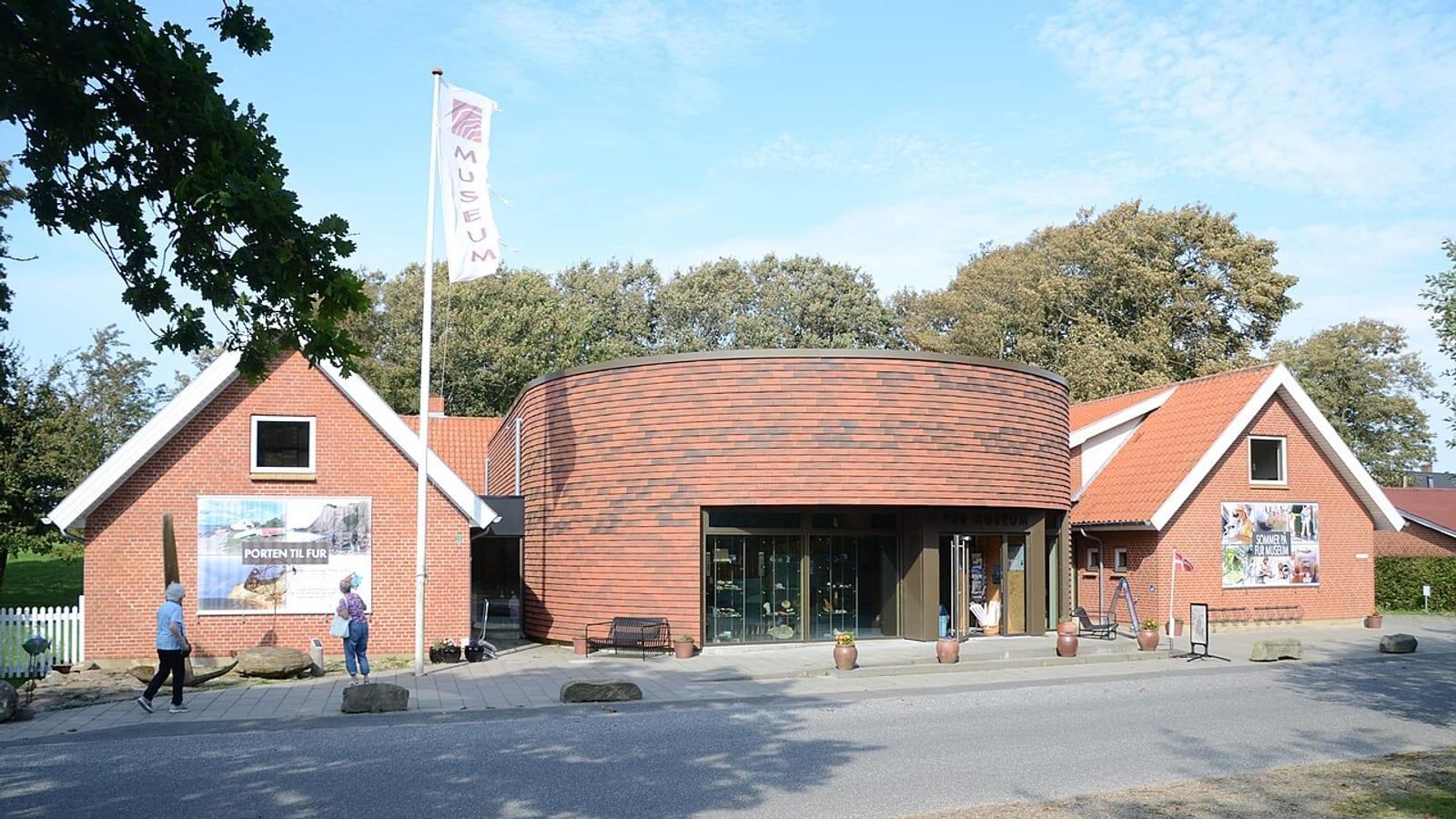
From Copenhagen, drive northwest on the E20 motorway toward Odense, then continue on Route 26 through Viborg to Skive (approximately 310 kilometers, 3.5 hours). From Skive, drive north about 25 kilometers through Salling to the ferry harbour at Branden, and take the Fur ferry. The ferry operates 24 hours a day with departures every 20 minutes. The round-trip vehicle fare is approximately 90 DKK (13 USD). Once on Fur, drive northwest across the island following the main road, then turn north on Redstenen road toward the coast, a total of 8 kilometers from the ferry landing. Park at the marked viewpoint, which has space for 5 to 8 vehicles. A trail marked with blue blazes descends through forest to the beach in about 10 minutes. There are no facilities at this site. The nearest services are at the Fur Museum (8 kilometers) or in Nykobing Mors.
 Photo: Frans-Banja Mulder, CC BY 3.0, via Wikimedia Commons
What Fossils You'll Find
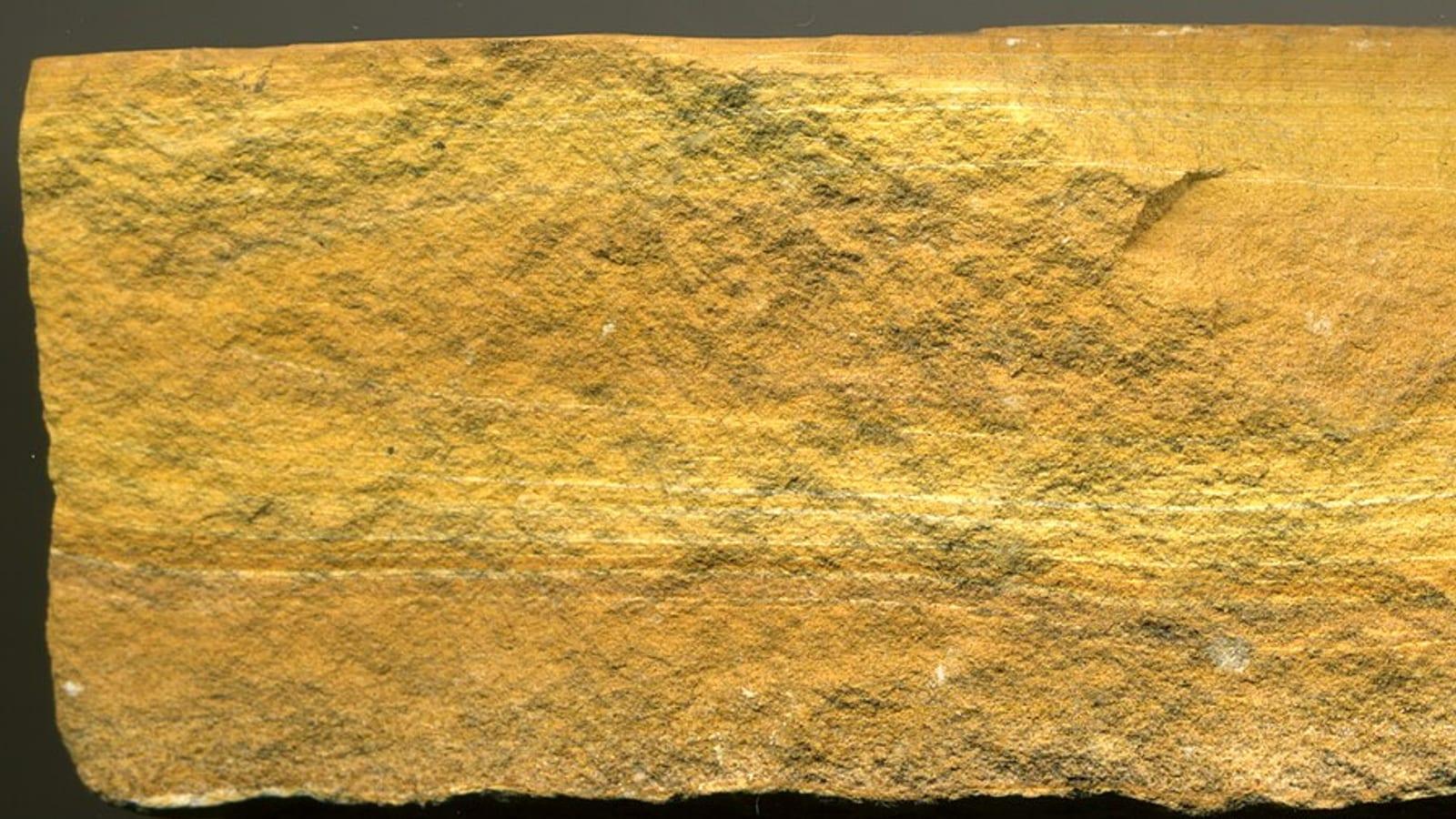
The beach at Knudeklinterne is covered with moler fragments that fall from the cliffs above, along with occasional hard cementsten concretions. Two types of collecting work here. The first is splitting soft moler: pick up a flat piece, orient your hammer blow parallel to the visible banding of ash and moler layers, and tap to split along the natural bedding plane. Most pieces reveal nothing. Those that split through a fish burial show the animal as a dark impression in the light-colored moler matrix. Common finds are small complete fish 3 to 10 centimeters long, along with fish scales, fin rays, and plant fragments. The dark ash layers frequently show plant impressions.
The second method is breaking cementsten. These rounded, gray-brown carbonate nodules are far harder than the surrounding moler and require a geological hammer of at least 500 grams to fracture. Strike the nodule sharply to split it, then examine each broken face. Cementsten preserve three-dimensional fossils rather than flat compressions: insects with raised body structures, fish preserved in relief, and occasionally plant stems. Finding a well-preserved insect in a cementsten is among the best finds available at any Fur Formation site.
Other finds include plant seeds, woody debris, and, very rarely, bird bones and turtle fragments. Over 60 fish species are documented from the Fur Formation. Even a partial fish identification can be confirmed later at the Fur Museum.
Geologic History
The Ancient Environment
The Knudeklinterne cliffs expose the Knudeklint Member, the lower division of the Fur Formation, deposited during the Early Eocene Epoch approximately 56 to 54 million years ago. The formation accumulated on the floor of a shallow subtropical sea 50 to 100 meters deep. Moler, the rock type visible in these cliffs, is composed of roughly one-third clay minerals and two-thirds diatom frustules, the microscopic silica shells of single-celled algae. Diatoms lived in the sunlit surface water in enormous numbers, and their shells accumulated on the seafloor at a rate of 1 to 2 centimeters per thousand years.
Over 179 volcanic ash layers are numbered and traceable across the Knudeklinterne section and beyond. These ash falls came from the North Atlantic Igneous Province, a massive volcanic system active as Greenland separated from Europe and the Atlantic Ocean opened. Individual eruptions ejected hundreds to over 1,000 cubic kilometers of ash. The ash settled through the water column, rapidly burying organisms living on or near the seafloor. Oxygen-poor bottom waters already suppressed bacterial activity, and the hermetic seal of fine ash particles completed the preservation conditions. Fish buried this way retain scales, fin structure, and sometimes stomach contents. Insects that fell into the water or were washed from coastal forests into the sea were preserved in the same manner.
Sea surface temperatures in the Fur Formation sea reached 20 to 25 degrees Celsius. Denmark sat at approximately 45 to 50 degrees north latitude at this time, further south than its present position, and greenhouse atmospheric conditions kept the climate subtropical year-round. Dense tropical forests of palms, magnolias, and laurels covered nearby land.
How Knudeklinterne Became a Fossil Collecting Site
The Knudeklinterne cliffs are actively eroded by Limfjord wave action and seasonal freeze-thaw cycles. This ongoing erosion continuously exposes fresh moler and releases new fossil material onto the beach below. The cliff section has been known to geologists since the 1800s and was designated the type locality for the Knudeklint Member in early 20th-century stratigraphic work. Radiometric dating in the 1980s and 1990s confirmed the precise ages of the numbered ash layers. Unlike quarry sites where collecting depends on commercial extraction, Knudeklinterne is self-renewing: winter storms and ice action break down the moler faces each year, replenishing beach material.
Collecting Rules and Regulations
Is Fossil Collecting Allowed?
Fossil collecting at Knudeklinterne is free and requires no permit. The beach is accessible year-round, 24 hours a day. All common fossils found on the beach or in loose moler fragments may be kept. There are no quantity or size limits. Under Danish law, scientifically significant specimens technically belong to the state, but ordinary fish and insect fossils from personal collections are not subject to this provision.
Recommended Tools
Bring a geological hammer of at least 500 grams, heavier is better for breaking cementsten. A cold chisel helps direct splitting in moler. Safety glasses are essential and must be worn when splitting rock or breaking cementsten. Gloves protect your hands on sharp flint and moler edges. Carry a backpack or bucket for finds, and pack specimens in newspaper or bubble wrap for the journey home. Moler compression fossils are fragile and will break if not protected.
Safety
Stay at least 5 meters from the cliff base at all times. Moler cliffs are unstable and chunks can fall without warning, particularly after rain and during freeze-thaw periods. Do not hammer on or dig into the cliff faces, this destabilizes the exposures and is not permitted on protected geological sites. The Limfjord has minimal tidal range (under 30 centimeters), so rising water is not a hazard, but wave splash can reach the collecting area during windy conditions. The beach surface can be slippery when wet. Best conditions for collecting are spring (April to May) after winter weathering has loosened material, and autumn (September to October) when visitor numbers are low.