Katbjerg Odde Mariager Fjord Fossil Hunting Guide
Collect Paleocene bryozoan colonies on Mariager Fjord at Katbjerg Odde. Free foreshore access with calm water for wading. Medieval town of Mariager 3 km away.
By Edward Chen · Published 27 April 2026
Introduction
Katbjerg Odde is a small peninsula jutting into Mariager Fjord in northern Jutland where limestone ledges at the waterline contain Paleocene bryozoan colonies in exceptional abundance. The fjord here is calm enough for wading and swimming, making this one of the few fossil sites in Denmark where geology and family beach time genuinely overlap. The bryozoans date to the Danian Stage, approximately 66 to 62 million years ago, when colonial filter-feeding animals built reef-like mound structures on the seafloor during the recovery period following the Cretaceous mass extinction. Complete colonies showing branching and encrusting patterns are common, and the fjord-side setting is among the most pleasant of any Paleocene site in Denmark. The medieval town of Mariager, with its historic cobbled streets and churches, is about 6 kilometers east and provides restaurants, accommodations, and the kind of historic town center that makes the journey feel worthwhile for non-collecting companions. This guide covers how to reach the site, what to collect and how, the geological history, and practical details for a full day visit.
Location and Directions
Address
Katbjerg Odde, Katbjergvej, 9550 Mariager, Mariagerfjord Municipality, North Denmark Region. Use GPS coordinates 56.6434°N, 9.9044°E for navigation. The site is an undeveloped peninsula with no formal address.
Getting There
From Copenhagen, drive west on the E20 across the Great Belt, then north on the E45 past Aarhus and Randers to Hobro (approximately 320 kilometers, about 3.5 hours). From Hobro, drive east on Route 555 along the southern shore of Mariager Fjord toward Mariager. Approximately 3 kilometers before Mariager town, turn north on Katbjergvej and drive 2 kilometers to the parking area at the tip of the peninsula. The drive from Copenhagen takes approximately 3.5 to 4 hours. There is no practical public transport to this specific location. The parking area is small. Arrive early on summer weekends. Mariager town (about 6 kilometers east) has restaurants, a small supermarket, hotels, and historic sights including a medieval convent church.
What Fossils You'll Find
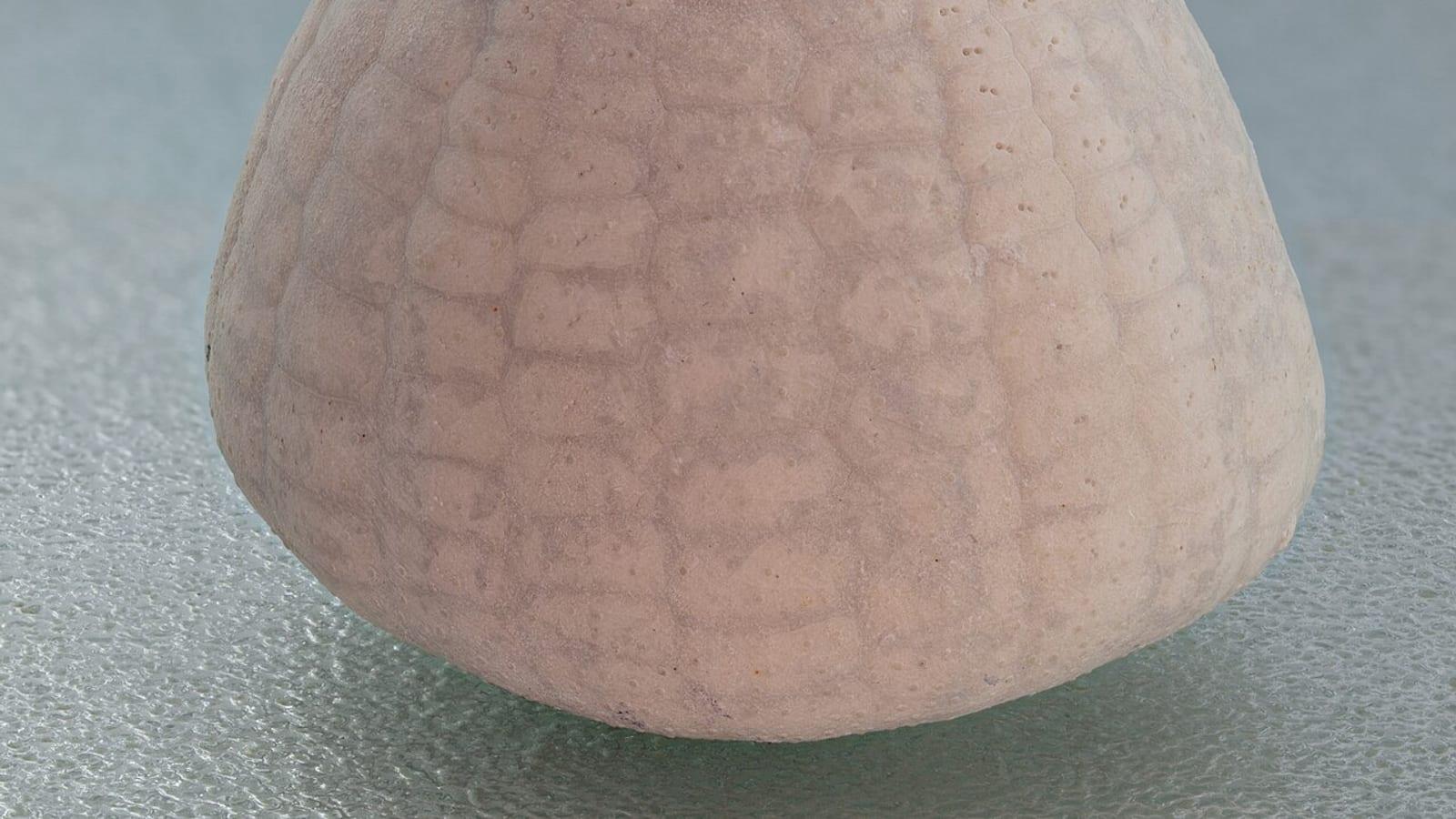
Bryozoans are overwhelmingly the dominant fossil at Katbjerg Odde and are found in unusual abundance. The limestone ledges at the waterline on both sides of the peninsula contain colonies in multiple forms: branching types with cylindrical arms, flat encrusting sheets spread across rock surfaces, and fenestrate types with regular geometric window-like patterns. Complete colonies 5 to 30 centimeters across are common. The best collecting is on the west side of the peninsula where limestone ledges extend into the water. Wading in the calm fjord with water shoes gives access to ledges that are partially submerged at normal water levels.
Sea urchins occur regularly in the limestone matrix. Danian sea urchins are mostly irregular echinoids with flattened heart shapes. Tests range from 2 to 4 centimeters and are found as molds or with shell material present. Brachiopods attach to bryozoan surfaces and appear as ribbed shells 1 to 3 centimeters across. Small bivalves and gastropods occur in the matrix between colonies. The overall diversity is typical of a Danian bryozoan reef community, a snapshot of life rebuilding in the warm Paleocene seas following the asteroid extinction event.
Bring a geological hammer of at least 500 grams to extract specimens from the ledges. A cold chisel gives controlled splitting. Some of the best pieces require levering loose from the ledge surface rather than hammering directly.
Geologic History
The Ancient Environment
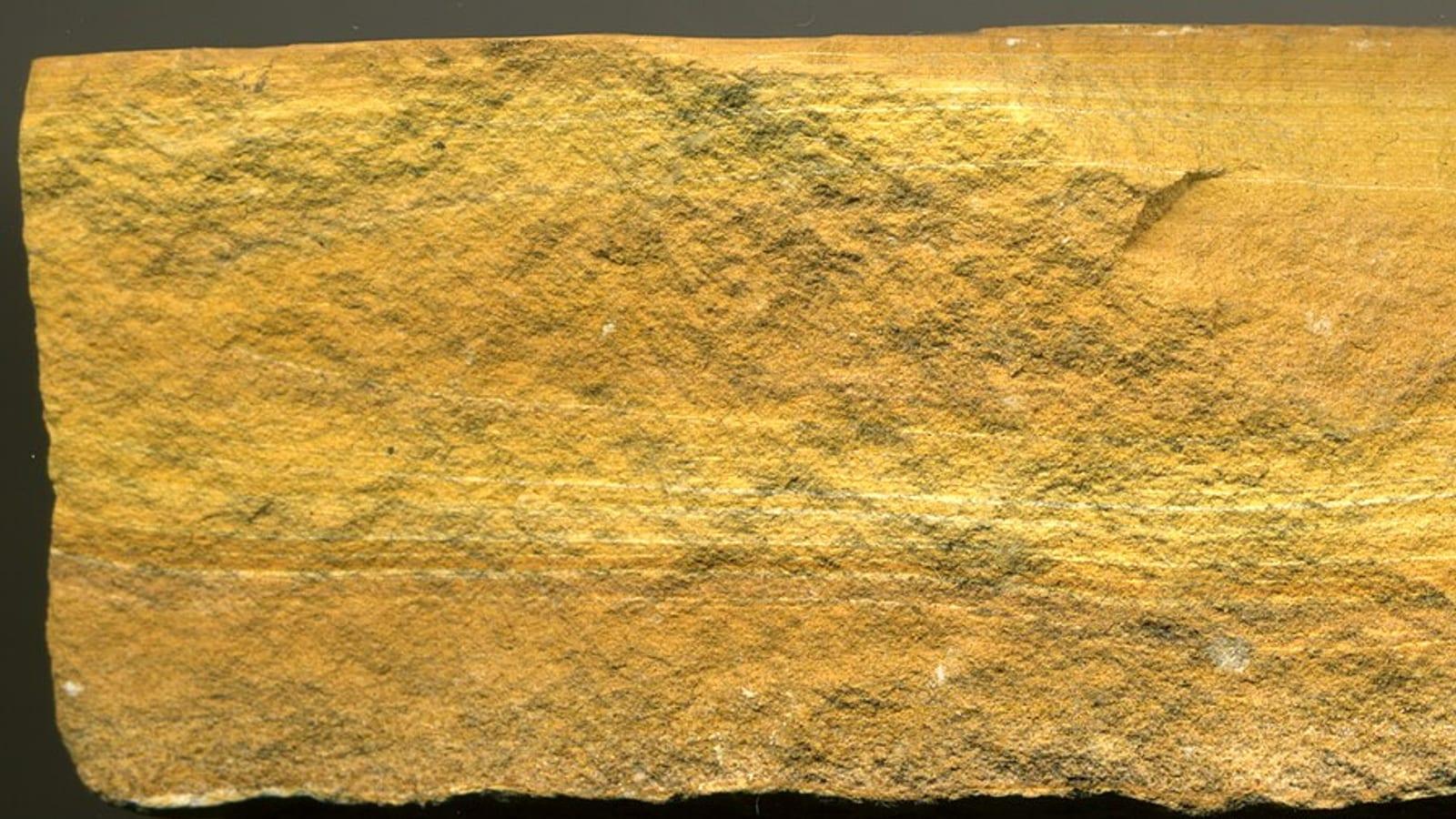
The Katbjerg Odde limestone belongs to the Danian Stage of the Early Paleocene, approximately 66 to 62 million years ago. This period represents the initial phase of marine ecosystem recovery following the Cretaceous-Paleogene mass extinction, which eliminated roughly 75 percent of species including non-avian dinosaurs. The limestone was deposited in a warm, clear sea approximately 50 to 100 meters deep. Instead of the microscopic coccolithophore-dominated chalk of the preceding Cretaceous, the Danian seafloor was built by larger carbonate-secreting organisms, primarily bryozoans, along with brachiopods, sea urchins, and bivalves.
Sea surface temperatures reached 20 to 24 degrees Celsius based on oxygen isotope analysis. No polar ice existed. Denmark sat at approximately 45 to 50 degrees north latitude with elevated atmospheric CO2 sustaining subtropical warmth year-round. Gentle currents supplied food particles for the filter-feeding bryozoan colonies without bringing the silt that would have smothered them. The excellent preservation of delicate bryozoan structures indicates burial in place, with minimal transport after death. The limestone is 85 to 90 percent calcium carbonate, confirming clear-water conditions throughout deposition.
How Katbjerg Odde Became a Fossil Collecting Site
The Mariager Fjord region has been known for Danian fossils since the 1800s when Danish geologists mapped the limestone outcrops. Small-scale limestone quarrying occurred in the 19th and early 20th centuries. Katbjerg Odde became known among collectors in the mid-20th century as word spread through Danish fossil clubs about the bryozoan abundance on the peninsula's limestone ledges. The peaceful fjord setting, calm waters suitable for families, and proximity to historic Mariager make this site attractive for a wider range of visitors than purely remote geological sites. No formal management or protection applies specifically to the collecting area.
Collecting Rules and Regulations
Is Fossil Collecting Allowed?
Fossil collecting at Katbjerg Odde is free and requires no permit. The site is accessible during daylight hours year-round. Tools are allowed, this is a natural foreshore rather than a protected cliff site. Common fossils may be kept under Danish law with no quantity limits.
Recommended Tools
Bring a geological hammer of at least 500 grams. A 1-kilogram hammer gives better leverage for extracting larger bryozoan colonies from ledge faces. A cold chisel provides control when splitting limestone. Safety glasses are essential when hammering. Gloves protect your hands on sharp limestone edges. Water shoes allow productive wading access to the west-side ledges. A backpack or bucket carries finds. Bring newspaper or bubble wrap for packing specimens.
Safety
The main hazards at Katbjerg Odde are the typical ones for rocky foreshore collecting: sharp limestone edges, wet slippery rock surfaces, and the risk of wading in deeper water without adequate preparation. The Mariager Fjord is calm, no significant tidal range, no ocean swell, but the bottom is rocky and uneven near the fossil ledges. Water shoes with grip are essential if you wade. Keep children supervised near the water. No cliff rockfall hazard exists at this site. Best collecting conditions are spring (April to May) and autumn (September to October). Summer weekends can be busy in this popular area of Jutland.