Liselund Park Mons Klint Beach Access Fossil Hunting Guide
Reach Møns Klint's fossil beach via Liselund Park's gentler forest trail instead of the 497-step staircase. Free belemnite collecting, 20 DKK parking, Møn island.
By Edward Chen · Updated 30 July 2026
Introduction
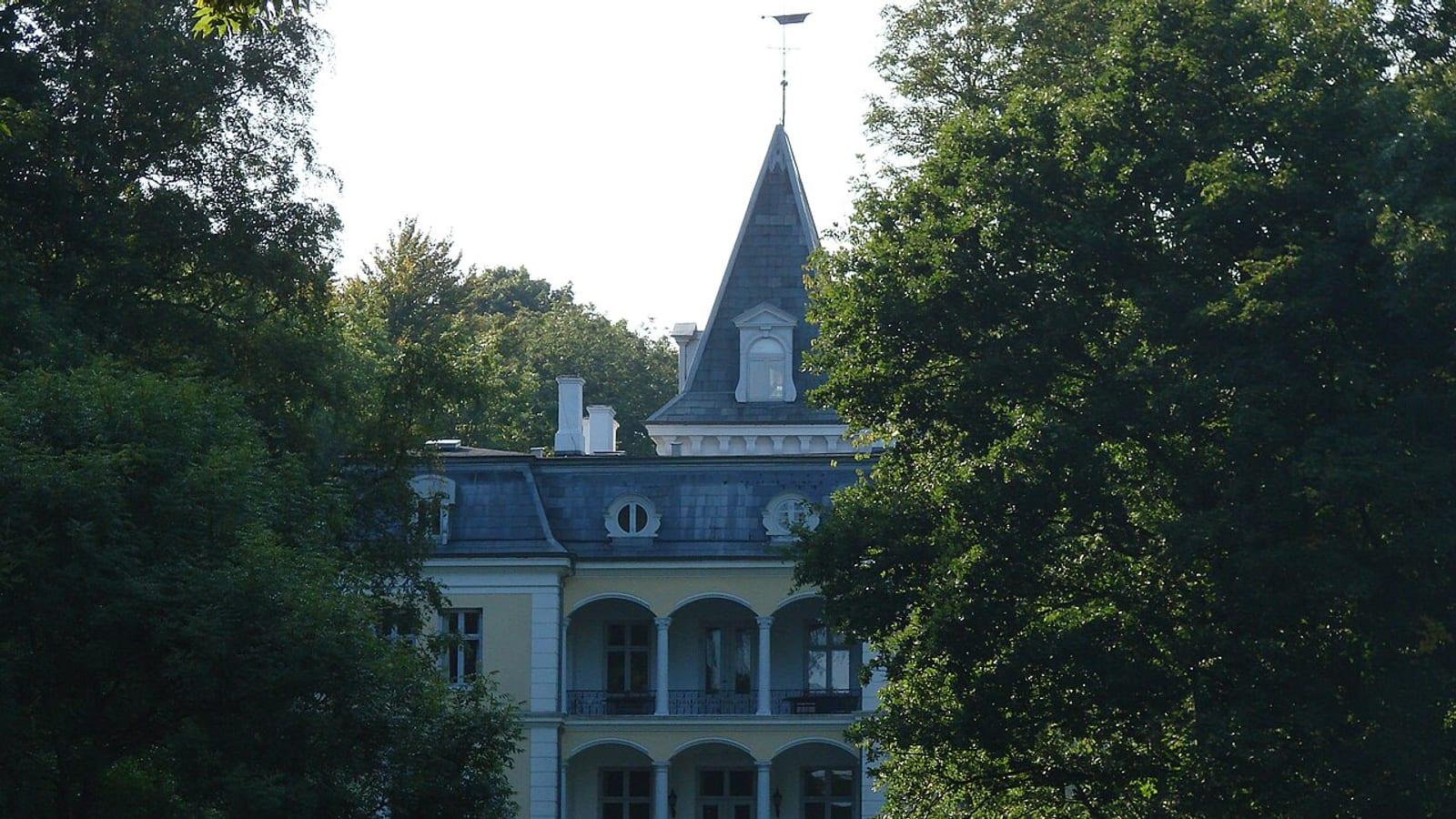
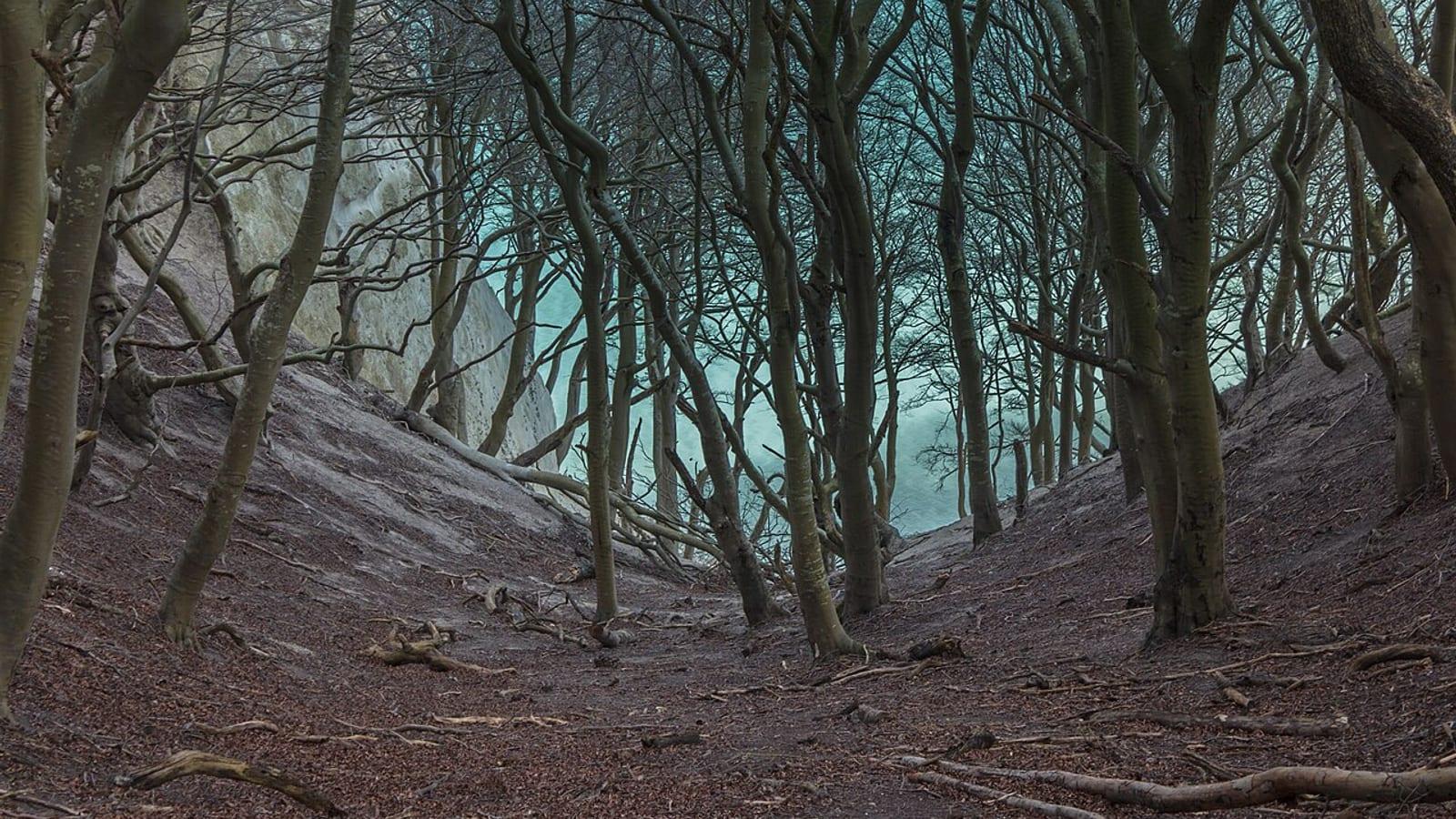
Liselund Park on Møn island gives visitors a gentler route to the same Late Cretaceous fossil beach as the main GeoCenter Møns Klint access, without the 497-step staircase. The park was designed between 1792 and 1795 as a romantic landscape garden in the English style, and the trail to the beach descends through mature beech forest at a substantially easier grade than the cliff stairs at the GeoCenter. The walk takes 15 to 20 minutes each way. At the bottom, several hundred meters of beach below 100 to 110-meter white chalk cliffs yield the same fossils as elsewhere on Møns Klint: abundant belemnites, sea urchins, brachiopods, and bryozoans from the warm shallow seas of the Late Cretaceous Period, 70 million years ago. The beach at this section typically sees fewer collectors than the main GeoCenter area. For families with young children, visitors who cannot manage steep stairs, or anyone who wants to combine fossil collecting with a walk through a historic landscape garden, Liselund is the best access point on Møns Klint.
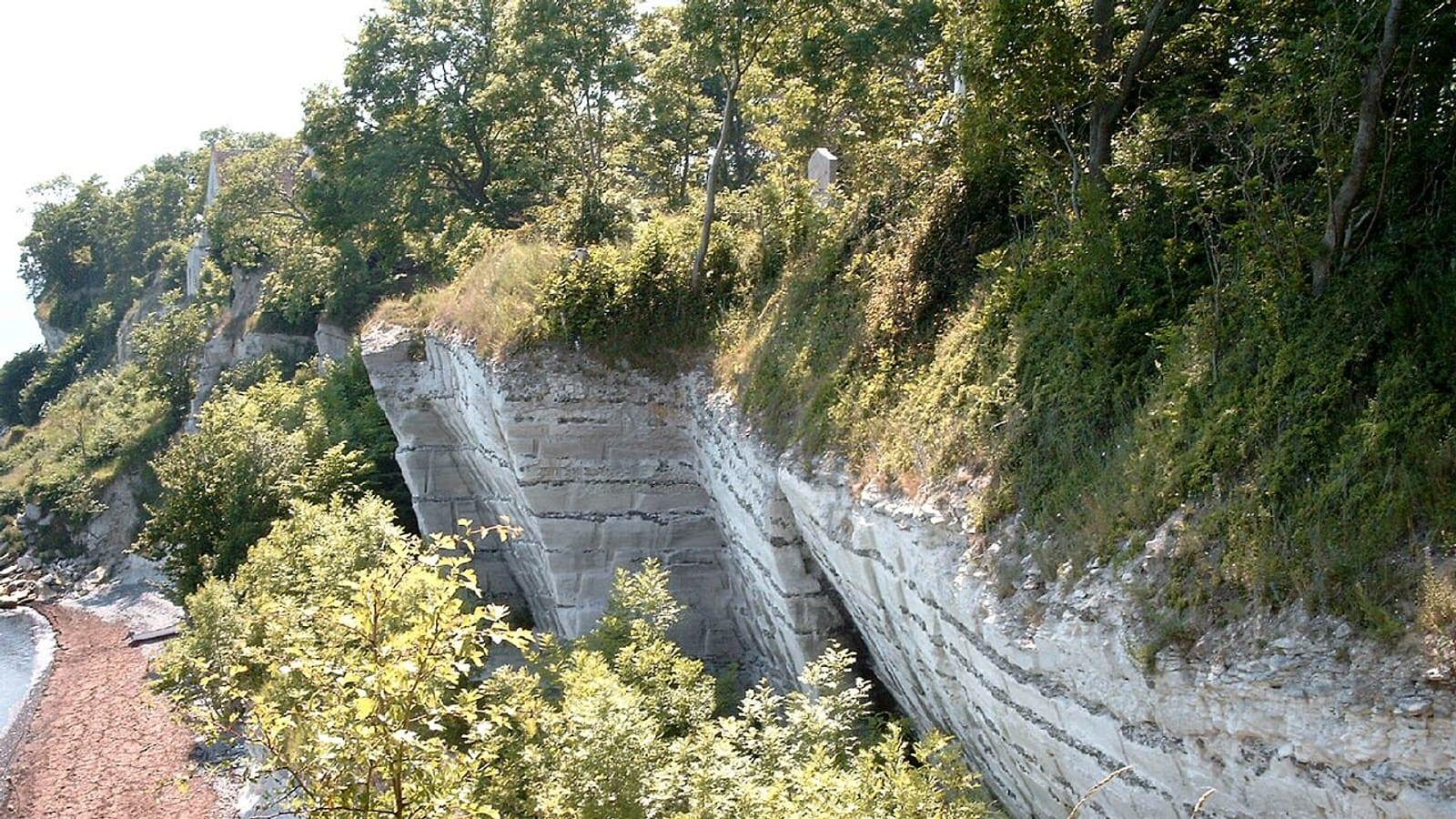
 Photo: Allie_Caulfield from Germany, CC BY 2.0, via Wikimedia Commons
Location and Directions
Address
Liselund Park, Liselundvej 4, 4791 Borre, Møn, Denmark. The park is on the island of Møn, Vordingborg Municipality, Zealand.
Getting There
From Copenhagen, drive south approximately 120 kilometers on Route 22 through Køge and Præstø to Vordingborg, then cross the bridge to Møn island on Route 287. Follow the signs toward GeoCenter Møns Klint on Klintevej. The Liselund Park entrance is marked on Klintevej approximately 2 kilometers before the GeoCenter, turn in at the park entrance and park in the designated lot. Parking costs 20 DKK (approximately 3 USD) payable by machine or credit card. GPS coordinates for the parking area: 55.0005°N, 12.5232°E. Basic restrooms are available at the park entrance. The marked trail to the beach starts from the parking area and descends through the forest on a natural dirt and gravel surface. Wear footwear appropriate for uneven ground.
What Fossils You'll Find
The Møns Klint Formation chalk at Liselund contains the same Late Cretaceous marine fauna as the rest of Møns Klint. Belemnites are extremely abundant. Finding 10 to 20 during a typical beach walk is standard, and after winter storms when fresh cliff fall coats the beach, numbers can be much higher. The cylindrical fossils range from 3 to 12 centimeters long. Look for them on the chalk rubble between the waterline and the cliff base.
Sea urchin tests and isolated spines occur regularly. Complete tests are 2 to 4 centimeters across and preserve best in fresh cliff fall material rather than on the wave-washed open beach. After storms, work through the loose chalk debris where it has piled against the cliff base. Brachiopod shells preserve as small ribbed forms in chalk blocks. Bryozoan colonies appear as irregular masses of lace-like carbonate. Bivalve molds occur in cliff fall pieces. Flint nodules throughout the beach sometimes contain natural fossil molds where the original shell material dissolved away. Shark teeth and fish bones are rare but worth looking for in the fine gravelly material at the base of fresh cliff falls.
The beach at Liselund typically has fewer visitors than the GeoCenter section, which means less competition for fresh material after storm events. Spring visits after winter erosion are particularly productive.
Geologic History
The Ancient Environment
The chalk exposed at Liselund belongs to the Møns Klint Formation, Upper Maastrichtian Stage of the Late Cretaceous Period, approximately 72 to 66 million years ago. A warm, clear sea 100 to 150 meters deep covered this region. The chalk accumulated from the continuous rain of coccolithophore shells, calcium carbonate plates from single-celled algae that flourished in the nutrient-rich surface waters. The rate of accumulation was approximately 2 to 3 centimeters per thousand years. Sea surface temperatures reached 18 to 22 degrees Celsius based on oxygen isotope analysis. No polar ice caps existed, and sea levels stood 150 to 200 meters above present. Denmark sat at approximately 40 to 45 degrees north latitude at this time, in a warm temperate to subtropical climatic zone.
Atmospheric CO2 levels during the Late Cretaceous were estimated at 4 to 6 times pre-industrial values, creating greenhouse conditions that moderated seasonal temperature variation and maintained warmth at high latitudes. The stable warm environment supported a diverse marine community including belemnites, ammonites, fish, sharks, and abundant bottom-dwelling invertebrates.
Black flint bands appear throughout the chalk. Flint formed when silica dissolved from sponge spicules migrated through the porous chalk and precipitated as cryptocrystalline quartz. Flint frequently preserved fossil shapes as natural molds.
How Liselund Became a Fossil Collecting Site
The Pleistocene Ice Age transformed the original horizontal chalk beds into the steep cliff geometry visible today. Massive glaciers advancing from Scandinavia applied enormous lateral pressure to the chalk, tilting layers into near-vertical positions and folding some sections into dramatic patterns. Once exposed to the Baltic Sea, continuous wave erosion began cutting the cliff base, releasing fresh material onto the beach with every storm. This process has operated for thousands of years and continues today. Liselund Park itself was created in 1792 to 1795 as a romantic landscape garden, the trail to the beach dates from the park's original design, and fossil collecting has been possible here since at least the early 1800s when naturalists visited alongside artists and writers drawn to the scenery.
Collecting Rules and Regulations
Is Fossil Collecting Allowed?
Fossil collecting at Liselund beach is free. No permit is required beyond the 20 DKK parking fee. The beach is accessible during daylight hours year-round. Under Danish law, common fossils collected for personal use may be kept. All the fossils you would normally find on this beach, belemnites, sea urchins, brachiopods, are yours to take.
Recommended Tools
No tools are permitted. Only loose surface material may be collected. Hammering on or digging into the cliff face is prohibited at all Møns Klint locations. This rule protects both the cliff stability and public safety. Surface collecting produces good results without tools. Bring a backpack or bucket, and pack specimens in soft material for the journey home.
Safety
Rockfalls occur without warning at Liselund as at all Møns Klint sections. The cliffs here reach 100 to 110 meters, any falling chalk block travels with significant force. Maintain a minimum distance of 10 to 15 meters from the cliff base at all times. Do not collect during high winds. The Baltic Sea has minimal tidal range, so rising water is not a hazard, but storm waves can be powerful, avoid the beach in severe weather. Wear sturdy footwear with grip for both the forest trail and the beach surface. The return walk up from the beach is gentler than the GeoCenter stairs but still a solid uphill walk of 15 to 20 minutes.
t.jpg)