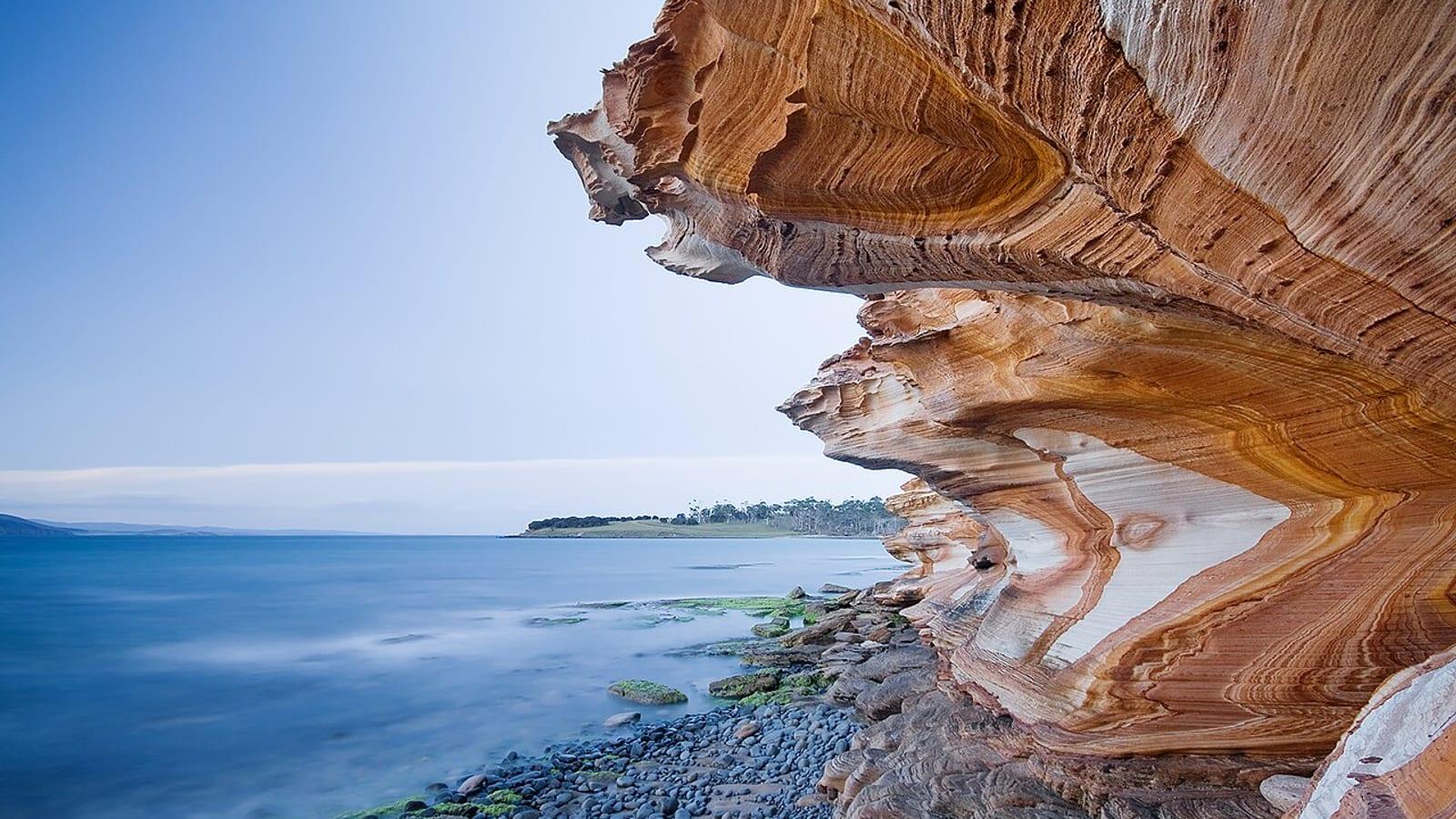
Maria Island Fossil Cliffs Fossil Hunting Guide
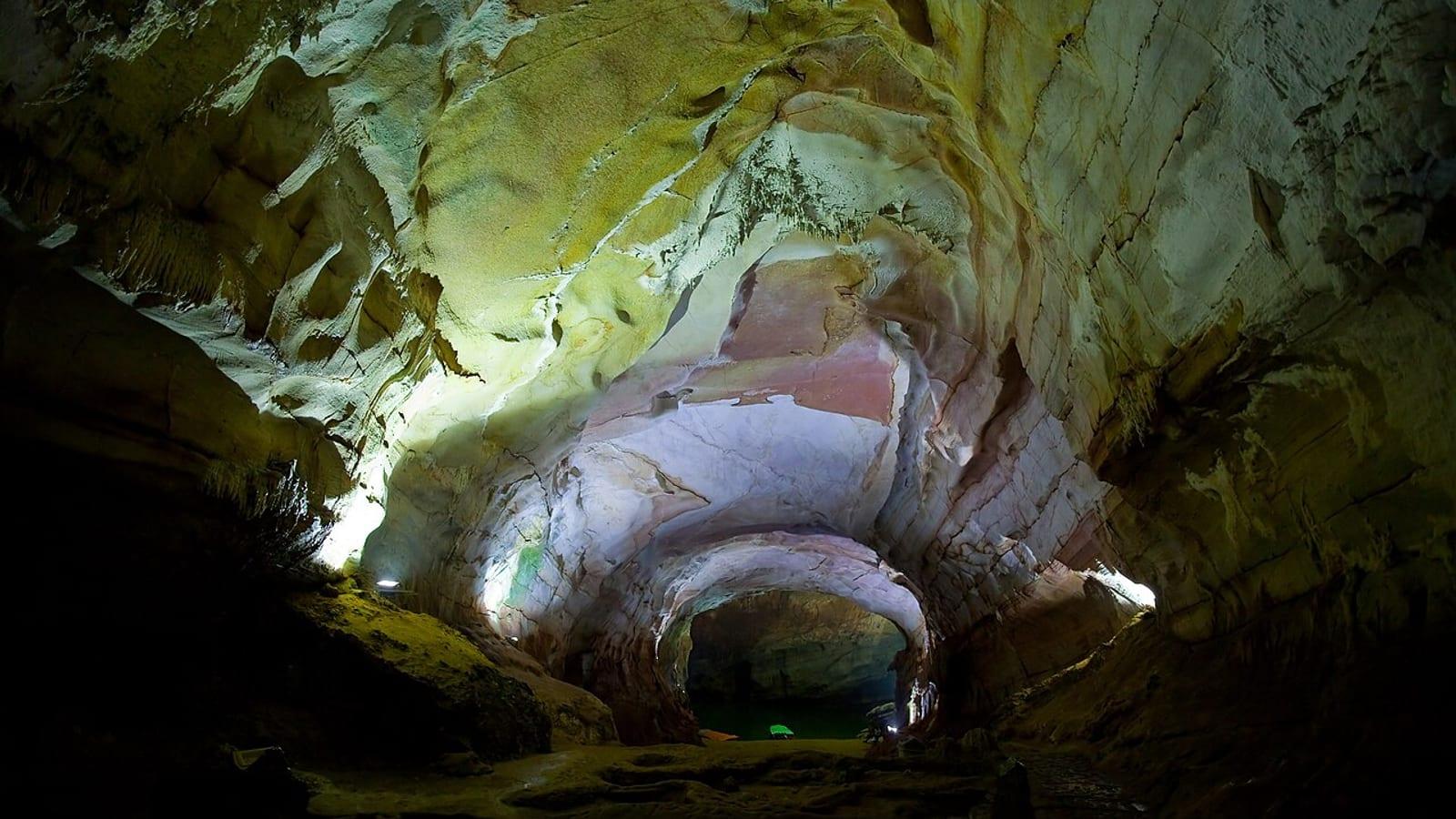
Image: JJ Harrison (https://www.jjharrison.com.au/) (CC BY-SA 3.0)
Maria Island's Fossil Cliffs expose 290 Ma Permian marine beds with brachiopods, bryozoans, and glacial dropstones viewable on a short walk from Darlington.
By Edward Chen · Updated 1 August 2026
Introduction
Stand at the base of Maria Island's coastal cliffs and you are looking at 290-million-year-old seafloor. The limestone and sandstone faces that rise from the beaches on the island's eastern shore are packed with brachiopod shells, bryozoans, crinoids, and other invertebrates from a cold Permian sea that covered southeastern Australia long before the continent took its current shape. These are not museum replicas or reconstructed dioramas, the fossils sit exactly where the sediments buried them, eroding from the cliff face with every storm season.
Maria Island National Park sits off the east coast of Tasmania, accessible by ferry from Triabunna. The island has no private vehicles, no shops, and no roads open to tourists, which means the fossil cliffs see a fraction of the visitors that comparable sites on the mainland attract. This guide covers how to reach the island, where the fossil-bearing outcrops are located, what species you are likely to see, and the rules that apply to visiting them.
Location and Directions
Address
Maria Island National Park, Maria Island, Tasmania 7190. The main visitor hub is Darlington, on the island's northwestern shore.
Directions
Drive to Triabunna, which is located 88 km northeast of Hobart via the A3 Tasman Highway. The drive takes approximately 75 minutes. Triabunna has a small supermarket, a service station, and limited parking near the ferry terminal on the Esplanade.
The Maria Island Ferry departs from the Triabunna wharf. The crossing to Darlington takes approximately 30 minutes. Check the current seasonal timetable at the ferry operator's website before travel, as departure times vary by season and weather. Bicycles can be taken on the ferry and are an efficient way to move around the island.
From the Darlington ferry dock, the Fossil Cliffs are reached by walking north along the coastal track for approximately 2 km. The track is well-maintained and relatively flat. Allow 45 minutes one-way on foot, or 15 minutes by bicycle. The cliffs themselves are accessed via a short descent to the beach. The beach access involves loose rocks and an uneven surface, wear sturdy footwear. There is no fencing along the cliff edge.
Parking is available at Triabunna near the ferry wharf. There is no vehicle access on Maria Island itself.
What Fossils You'll Find
The Fossil Cliffs expose Permian marine sediments containing a diverse assemblage of cold-water invertebrates. The most abundant fossils are brachiopods, whose shells are common throughout the cliff face and on loose rocks at the base of the outcrops. Alongside them is Eurydesma, a thick-shelled ribbed bivalve rather than a brachiopod, and the index fossil of the cold Early Permian seas around Gondwana. Many specimens are still articulated, meaning both shells are joined as they were in life.
Bryozoans form lacy or branching colonies visible in cross-section on weathered cliff surfaces. Look for pale, net-like patterns on the rock faces. Some bryozoan colonies grew to considerable size and can be traced across several metres of cliff exposure.
Crinoid stem segments, small, disc-shaped ossicles with a central hole, are scattered throughout the limestone beds. Complete crinoid crowns are rare but have been found here. The ossicles are easiest to spot on wet rock surfaces after rain or spray.
Glacial dropstones are one of the more striking features of the Fossil Cliffs. These are large, isolated boulders of foreign rock types sitting within finer-grained marine sediments, dropped from floating ice when glaciers were calving into the Permian sea. Finding a rounded granite or metamorphic boulder surrounded by fine sandstone and brachiopod shells is a direct record of icebergs in this ancient ocean.
This site is viewing only. No fossil collecting is permitted within Maria Island National Park under Tasmanian and Commonwealth law.
Geologic History
The Ancient Environment
The fossils at the Fossil Cliffs were deposited during the Early Permian, approximately 290 to 270 million years ago, in a formation known as the Darlington Limestone and associated Permian marine sediments. At that time, Tasmania was part of the supercontinent Gondwana and was positioned at a high southern latitude, close to the South Pole. The climate was cold, glacial periods alternated with warmer interglacials, and sea levels fluctuated dramatically as ice sheets expanded and retreated.
The sea that covered this region was shallow and cold, similar in temperature to the modern Southern Ocean. Despite the cold, the seafloor supported rich communities of suspension feeders, brachiopods, bryozoans, and crinoids that filtered food particles from the water column. The periodic input of glacial sediment, including ice-rafted dropstones carried by icebergs from continental glaciers, interrupted normal marine sedimentation and is now a defining feature of the exposed sequence.
How the Maria Island Fossil Cliffs Became a Fossil Viewing Site
After deposition, the Permian sediments were buried under younger rocks and subjected to low-grade metamorphism and structural deformation during the formation of the Tasman Fold Belt. Tasmania's separation from Antarctica and the opening of the Southern Ocean from about 35 million years ago brought the island to its current position and exposed ancient rock sequences to a new regime of coastal erosion. The east coast of Maria Island is exposed to swell generated across the Tasman Sea. Over thousands of years, wave action has stripped away softer overlying sediments, cut sea cliffs into the Permian sequence, and continues to exhume new fossil material. The island was declared a national park in 1972, and the fossil-bearing cliffs have been a protected, visitor-accessible feature of the park ever since.
Visiting Rules and Regulations
Is Fossil Collecting Allowed?
Fossil collecting is not permitted at Maria Island. All geological and biological material within the national park is protected under the Tasmanian National Parks and Wildlife Act 1970 and the Commonwealth Environment Protection and Biodiversity Conservation Act 1999 (EPBC Act). Removing fossils, rocks, or any natural material from the park is an offence and carries significant penalties. Visitors may observe, photograph, and sketch fossils in their natural setting, that is the extent of permitted interaction with the fossil material.
Recommended Equipment
Bring sturdy closed-toe shoes or hiking boots for the walk to the cliffs and the descent to the beach. The beach at the base of the cliffs has loose rocks and uneven footing. A hand lens or magnifying glass (10x) is useful for examining brachiopod shell texture and bryozoan colony structure. A camera with a macro setting will allow you to document specimens without disturbing them. Bring water, as there are no facilities between Darlington and the Fossil Cliffs. Weather on Maria Island can change quickly, carry a waterproof layer even on clear days.
Safety
The cliffs are actively eroding and cliff falls are a real hazard. Do not stand directly beneath the cliff face. Stay on the beach side and observe the outcrops from a safe distance. Avoid visiting in strong winds or immediately after heavy rain, when rock falls are more likely. The beach access track is steep and loose, descend carefully, especially on the return climb. There are no rangers stationed at the Fossil Cliffs, so carry a phone and let someone know your itinerary. A current Parks Pass is required to visit Maria Island National Park and is purchased online or at the ferry terminal.
Sources
Nearby sites
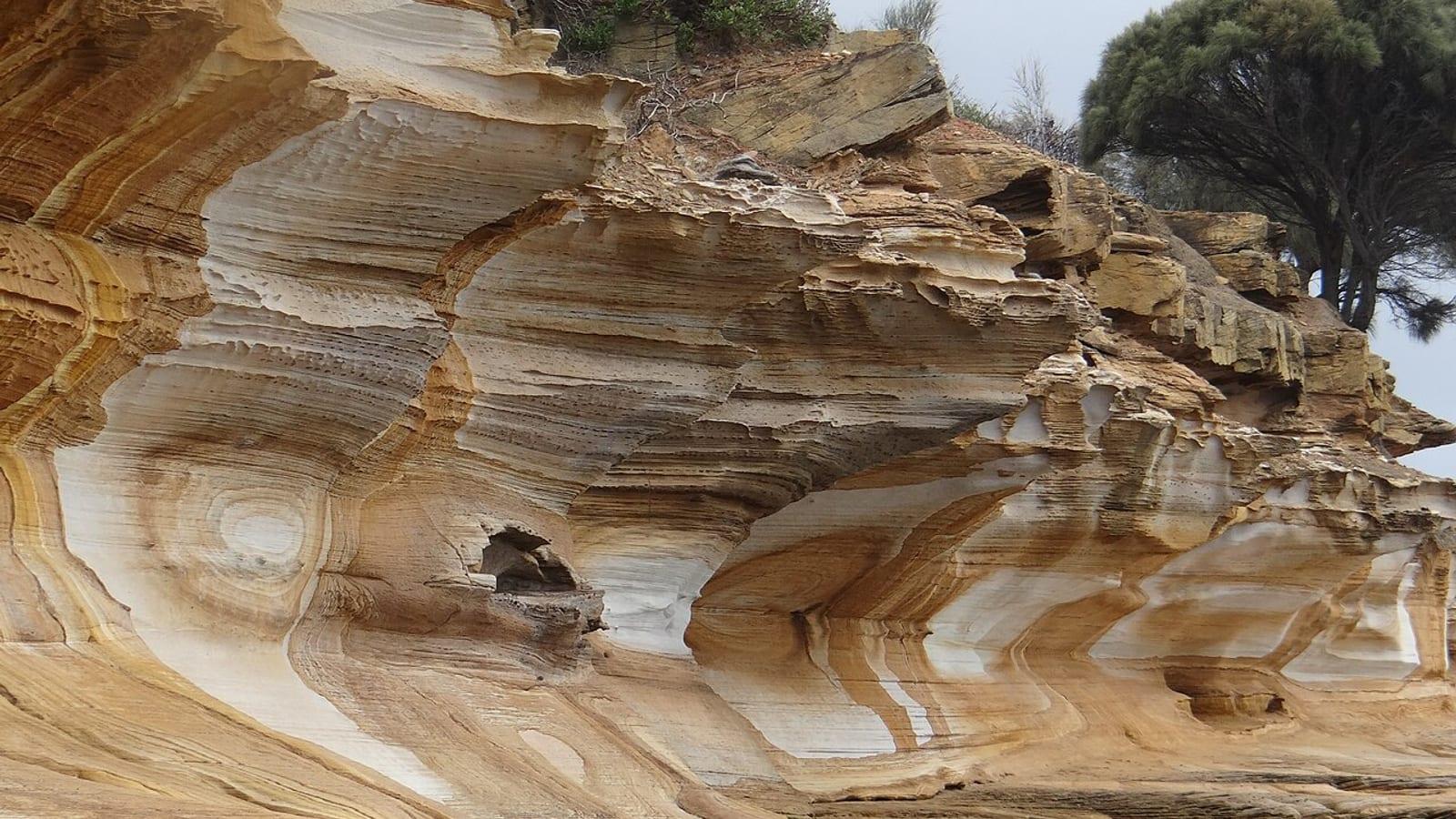 Painted Cliffs Maria Island Fossil Hunting Guidetrace fossils, sedimentary structures
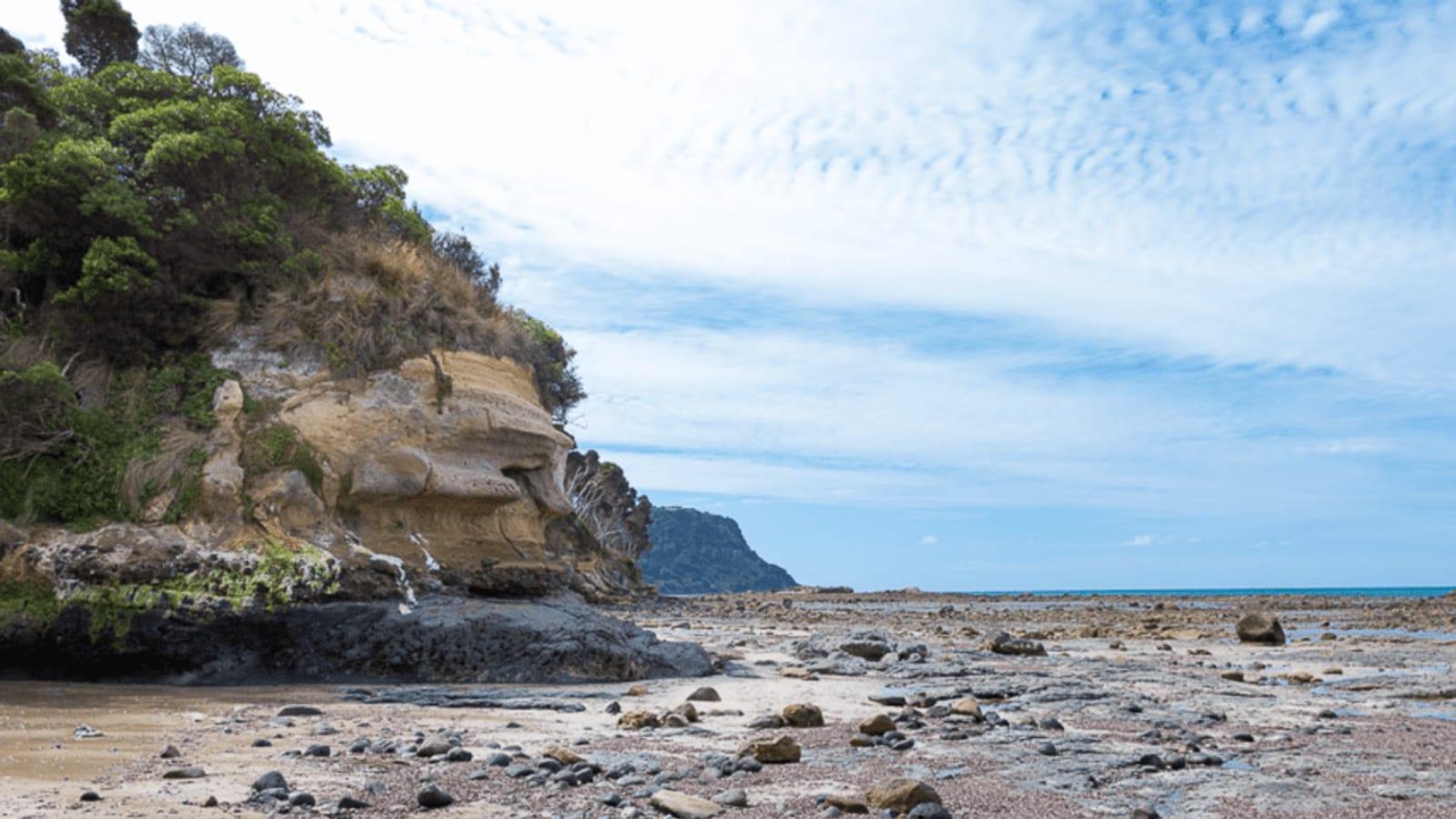 Fossil Bluff Wynyard Fossil Hunting GuideBivalves, Gastropods
 Eagles Nest Cape Paterson First Dinosaur Fossil Hunting GuideTheropod dinosaur material, Ornithopod dinosaurs
 The Caves Inverloch Fossil Hunting GuideDinosaur bones and teeth, Early mammal teeth