Permian · 298.9 – 251.9 Ma
Permian fossil sites
The Permian saw the rise of synapsid 'mammal-like reptiles' that would dominate the next era of vertebrate evolution. The period ended with the largest mass extinction in Earth's history, eliminating an estimated 95% of marine species.
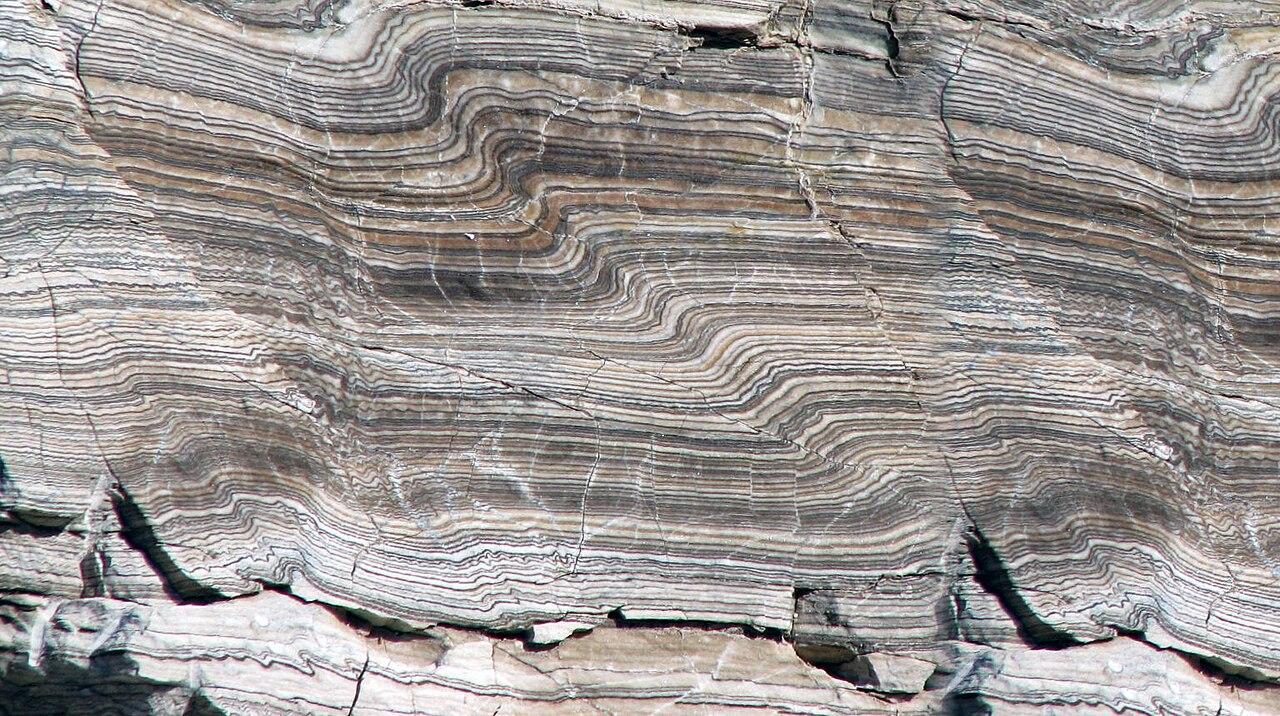
The Permian ended in the largest extinction in Earth history. Around 252 million years ago most marine species disappeared. Before that, the continents had assembled into Pangaea, and the interior of that supercontinent turned dry. Deserts spread inland. Reef systems flourished on the margins while inland basins filled with red beds.
Permian fossils divide along the same line. Marine rocks preserve brachiopods, bryozoans, and the fusulinid foraminifera that look like grains of wheat. Terrestrial rocks preserve synapsids, the lineage that eventually produced mammals. Glossopteris leaves mark the cool southern half of Pangaea and helped establish that those continents once joined.
This guide covers four Permian sites, the smallest count of any period here. All four are viewing sites and none permit collecting. They sit in South Australia, Tasmania, Texas, and the Western Cape of South Africa. The Guadalupe Mountains in Texas expose an entire fossil reef in cross section, which is rare anywhere in the world.
4 fossil sites
Updated 4 August 2026
Life of the period
Three to know from the Permian
You will not find all of these yourself. They are the animals and plants that make the period worth reading about.

Sailed synapsidDimetrodon Not a dinosaur, and it died out before the first dinosaur appeared. It is a synapsid, which makes it a closer relative of yours than of any dinosaur. The sail was likely used for display.
James St. John, CC BY 2.0

Buzzsaw sharkHelicoprion It left a spiral whorl of teeth and nothing else, because the rest was cartilage. Researchers spent a century placing the spiral on the snout, the back, and the tail. A 2013 scan settled it in the lower jaw.
James St. John, CC BY 2.0
Gondwana seed fernGlossopteris The same tongue-shaped leaf turns up in Australia, India, Africa, South America, and Antarctica. That distribution was early evidence that the southern continents once joined. Scott's last expedition carried specimens when the party died.
Smithsonian National Museum of Natural History, CC0
All Permian sites

Guadalupe Mountains National Park Fossil Reef Guide
Texas, United States
Brachiopods, Crinoids, Ammonoids, Nautiloids
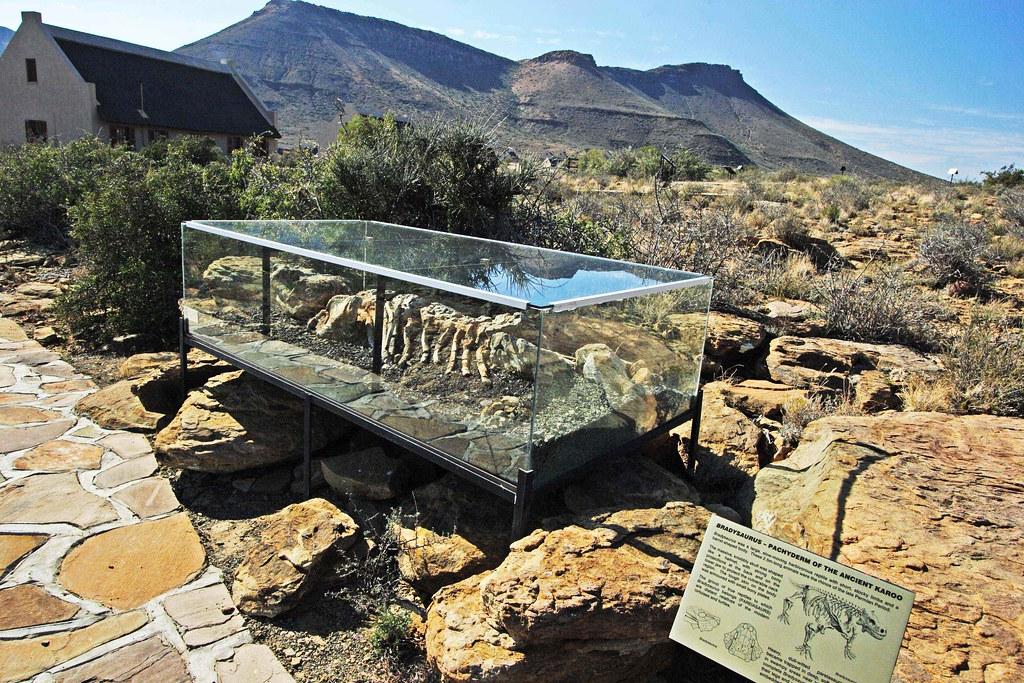
Karoo National Park Fossil Trail Fossil Hunting Guide
Western Cape, South Africa
Dicynodonts (Aulacephalodon, Oudenodon), Gorgonopsids (Rubidgea), Pareiasaurs (Pareiasaurus serridens), Therocephalians
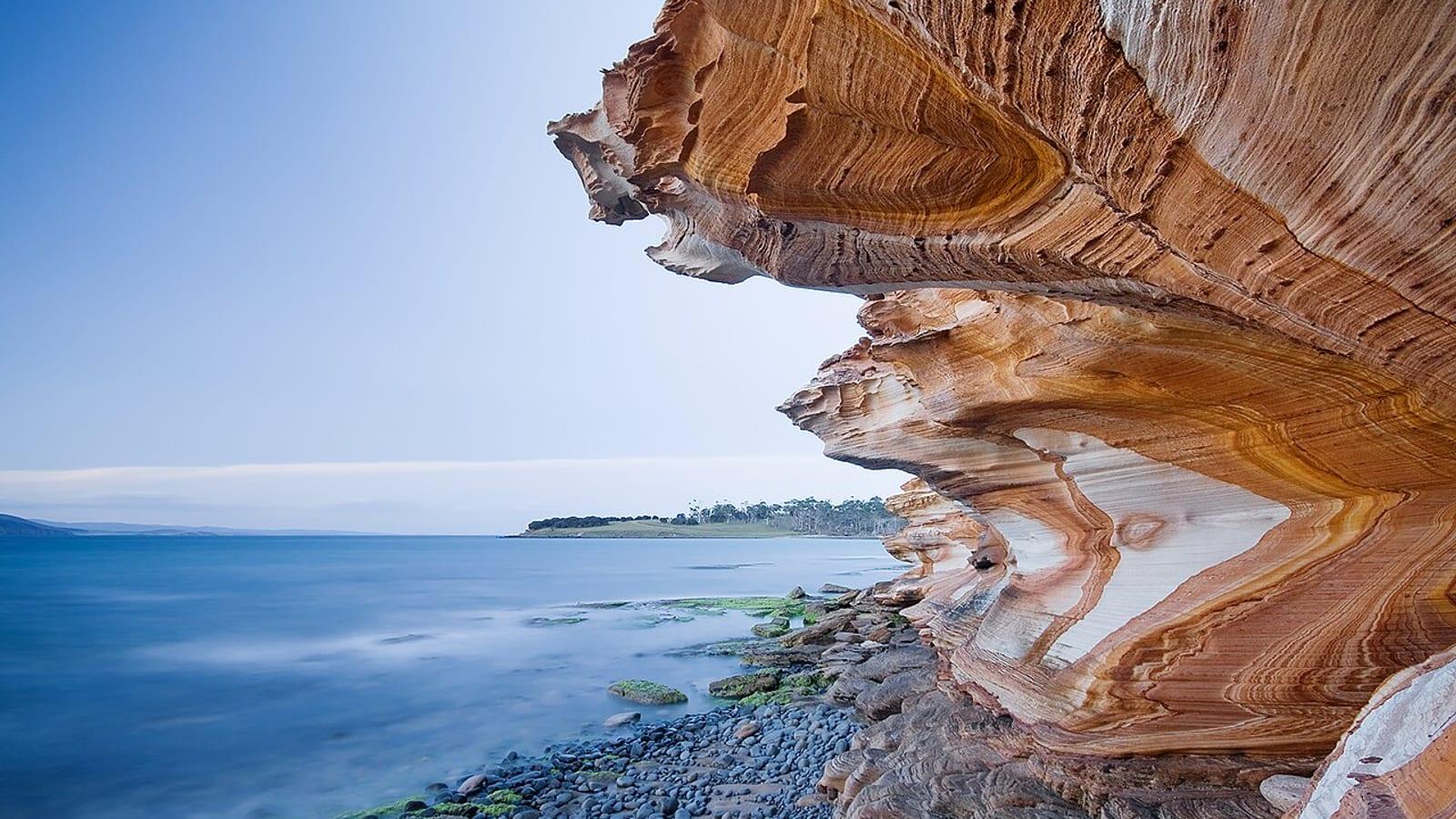
Maria Island Fossil Cliffs Fossil Hunting Guide
Australia
brachiopod shells, bryozoans, crinoids
Porcupine Gorge National Park Fossils Fossil Hunting Guide
Australia
Glossopteris, Glossopteris leaves, Fossilised wood, prohibited
Frequently asked questions
- Why are there so few Permian sites?
- Permian rock is less widely exposed than Jurassic or Cretaceous rock, and much of it sits in remote or protected ground. All four sites in this guide are viewing sites, which reflects how often Permian exposures fall inside parks and reserves.
- What is Glossopteris?
- Glossopteris is a seed fern with tongue-shaped leaves and a net of veins. It grew across the southern continents during the Permian. Finding the same leaf in Australia, India, Africa, and South America was early evidence that those landmasses once joined.
- What ended the Permian?
- An extended pulse of volcanism in what is now Siberia. It released carbon dioxide and sulfur over hundreds of thousands of years. The oceans warmed, lost oxygen, and acidified. Roughly 80 percent of marine species died out.