Boesdal Beach Stevns Klint Fossil Hunting Guide
Image: Jensga via Wikimedia Commons (CC BY-SA 3.0)
Quiet fossil collecting at Boesdal beach on Stevns Klint, a UNESCO World Heritage Site. Free access to abundant Cretaceous belemnites with far fewer visitors than Højerup.
By Edward Chen · Updated 1 August 2026
Introduction
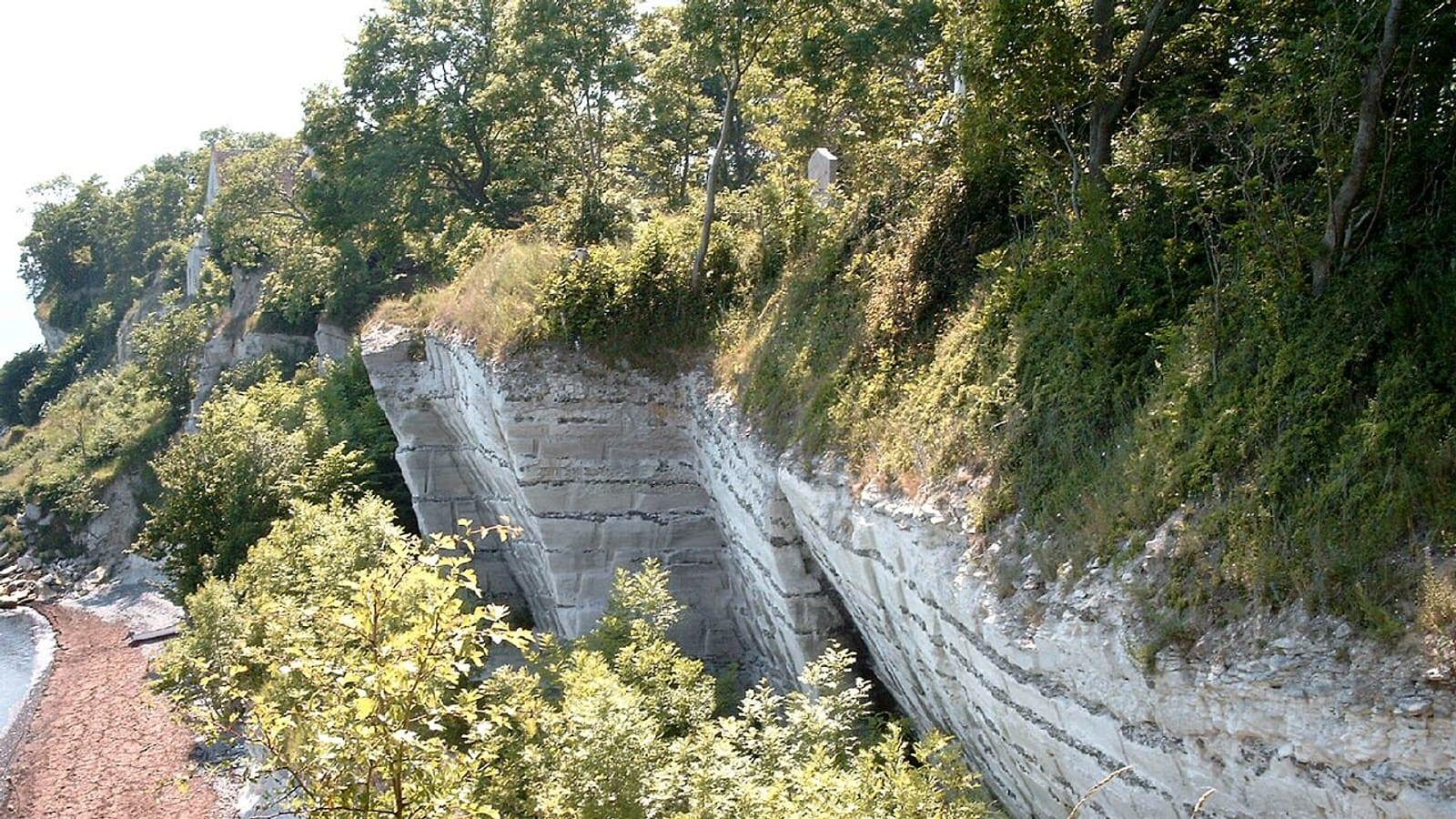
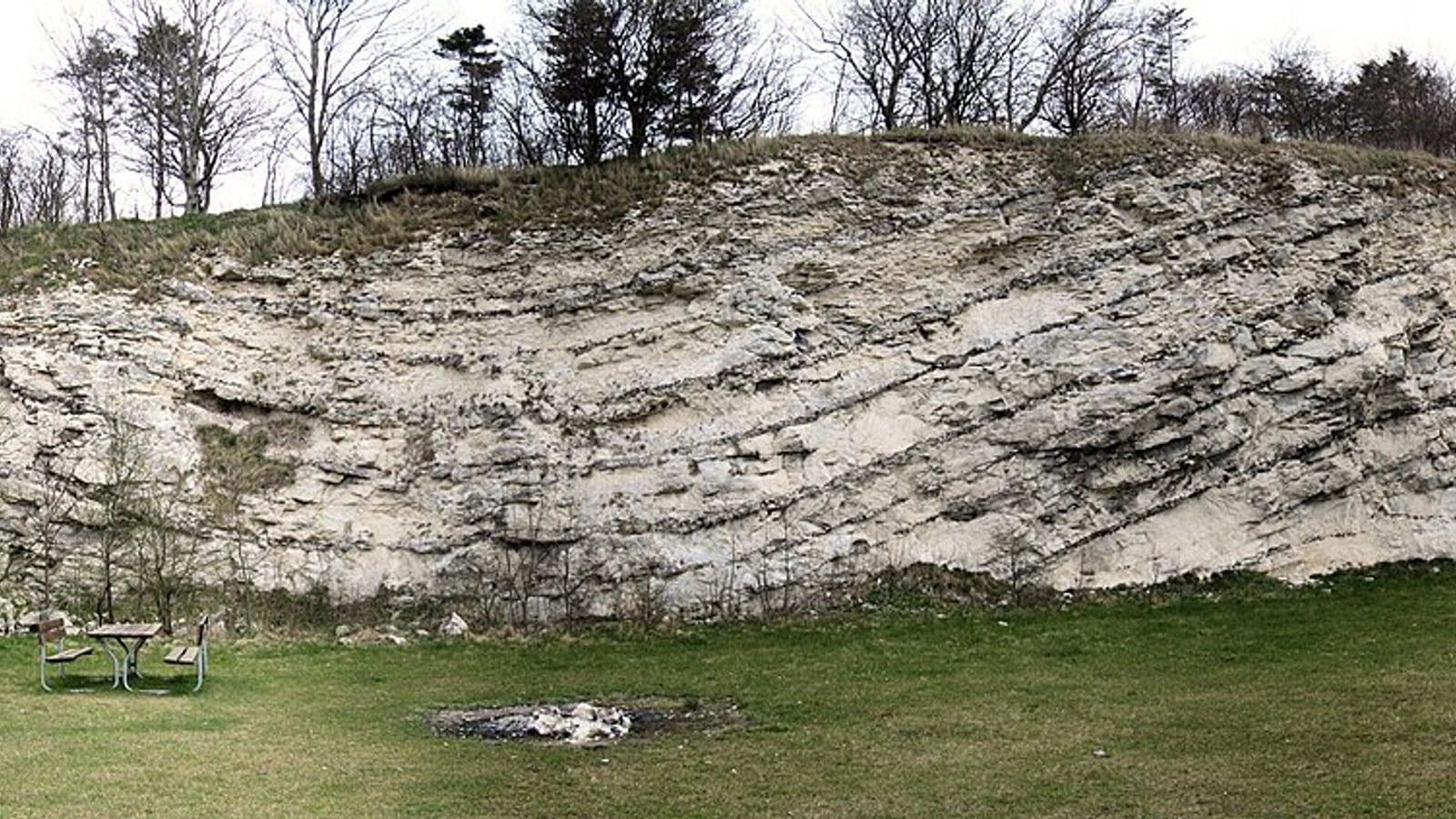
Boesdal beach sits between the famous Højerup Church access point (2 kilometers north) and Rødvig Harbor (4 kilometers south) along the UNESCO World Heritage coast of Stevns Klint. Where Højerup draws large numbers of visitors drawn by the historic church and interpretive signs, Boesdal sees a fraction of that traffic, you may have the entire beach to yourself on a weekday outside summer. The fossil collecting is identical: abundant Late Cretaceous belemnites, sea urchin tests and spines, and other marine invertebrates weather continuously from the white chalk cliffs. The cliffs here reach 12 to 15 meters and preserve the complete Cretaceous-Paleogene boundary sequence, with the dark fish clay layer marking the asteroid impact at 66 million years ago visible in the face above. The site is a former chalk quarry that operated from approximately 1880 to 1930, and the modified cliff geometry from that operation slightly changes the beach character compared to natural Stevns Klint sections. There are no facilities and parking is very limited, but for collectors seeking quiet and high fossil density, Boesdal delivers.
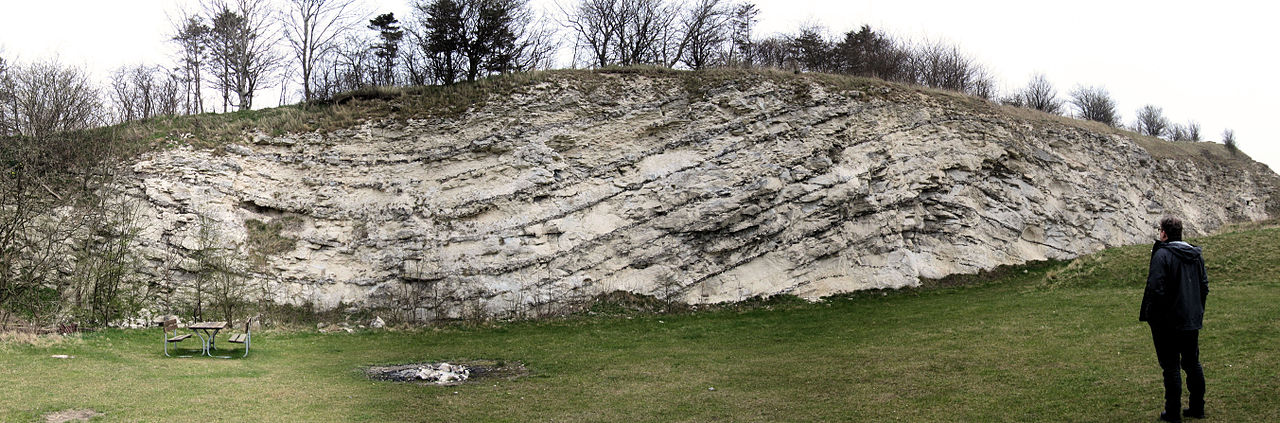 Photo: Jensga, CC BY-SA 3.0, via Wikimedia Commons
Location and Directions
Address
Boesdal beach access, Højeruplundvej, 4660 Store Heddinge, Stevns Municipality, Zealand, Denmark. Use GPS coordinates 55.2912°N, 12.4489°E for navigation. Parking is limited to 6 to 8 vehicles on the road shoulder.
Getting There
From Copenhagen, drive south approximately 60 kilometers on Route 261 to Store Heddinge. From Store Heddinge, drive southeast following signs toward Stevns Klint and Højerup. Turn south on Højeruplundvej and continue to the small parking area on the right side of the road. The drive from Copenhagen takes about 1 hour. An informal trail descends through scrubby vegetation from the parking area to the beach in approximately 10 minutes. The trail is moderately steep. There are no facilities at the site. The nearest services are in Store Heddinge (5 kilometers northwest) or at Rødvig Harbor (4 kilometers south), which has a small harbor café and facilities.
What Fossils You'll Find
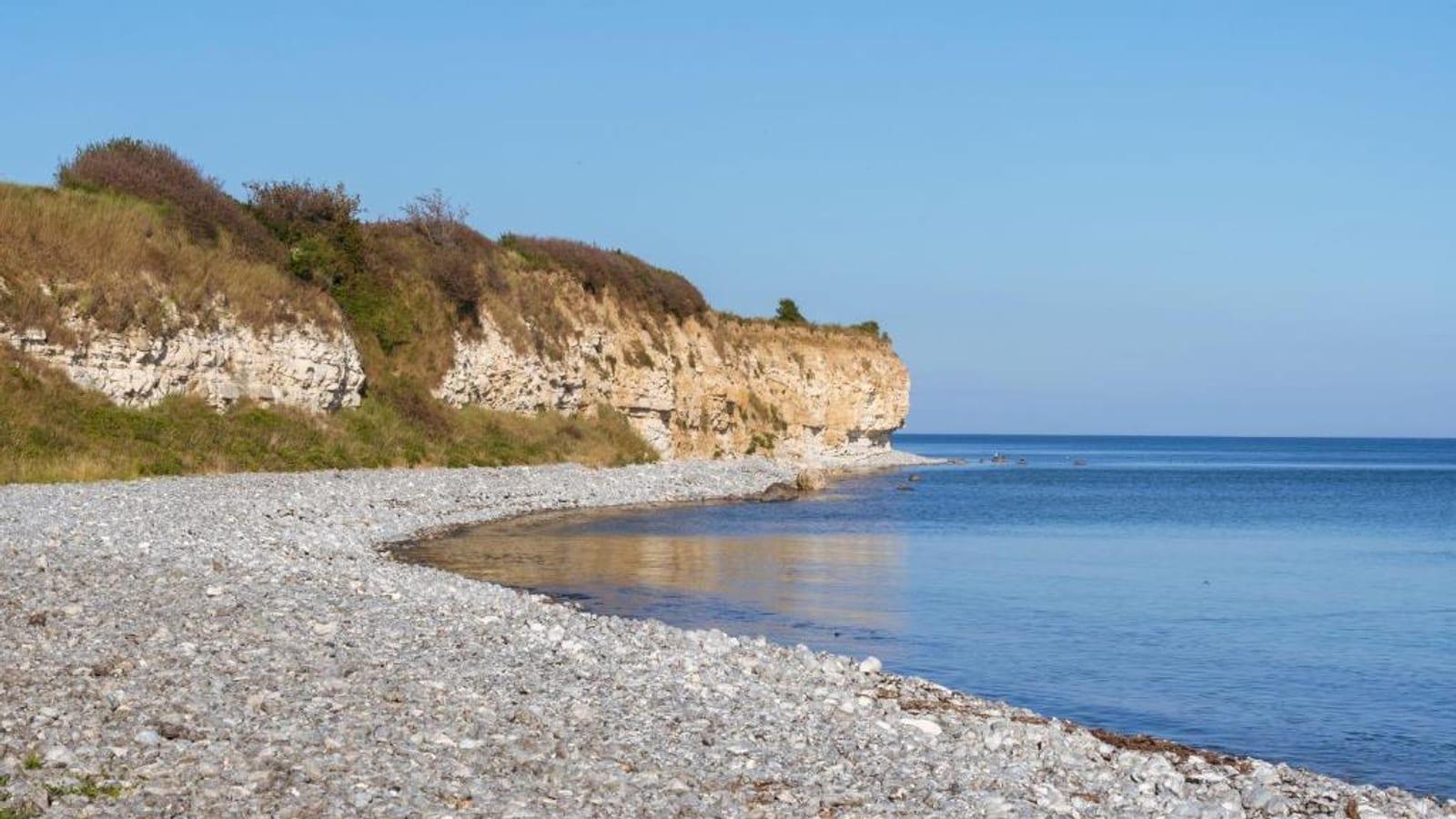
 Photo: Ashley Dace, CC BY-SA 2.0 via Wikimedia Commons
Belemnites are extraordinarily abundant at Boesdal. Collectors who visit after winter storm periods regularly find 15 to 25 specimens during a single beach walk, and productive sessions in optimal conditions can yield 50 or more. The cylindrical fossils range from 3 to 12 centimeters long and appear scattered across the chalk debris above the waterline and in fresh cliff fall accumulations. Boesdal's lower visitor count means fresh material is less disturbed between visits.
Sea urchin tests and spines occur regularly. Complete tests up to 4 centimeters across appear in fresh cliff fall material. Spines are scattered widely across the upper beach. Brachiopod shells, bryozoan fragments, and bivalve molds occur throughout the chalk rubble. Fish bones and shark teeth are rare but have been found here, particularly by collectors working the fine-grained material near fresh falls. The K-Pg boundary layer, the dark fish clay band, is visible in the cliff face above the beach and can be examined closely from a safe distance. This layer contains the iridium-enriched clay deposited globally at the moment of the asteroid impact 66 million years ago.
Geologic History
The Ancient Environment
The Boesdal section exposes approximately 5 to 6 million years of stratigraphy across the Cretaceous-Paleogene boundary at 66 million years ago. The lower white chalk belongs to the Upper Maastrichtian Stage and formed in a warm shallow sea 100 to 150 meters deep. It is nearly pure calcium carbonate (typically 95 percent or higher), composed primarily of coccolithophore shells accumulated at roughly 2 to 3 centimeters per thousand years. Sea surface temperatures reached 18 to 22 degrees Celsius.
The centimeter-thick fish clay at the K-Pg boundary contains iridium at 30 to 160 times normal crustal concentrations, shocked quartz grains, and microtektites, all products of the Chicxulub asteroid impact. A 10-kilometer asteroid struck the Yucatan Peninsula and triggered global catastrophe: impact ejecta and wildfire soot darkened the atmosphere, photosynthesis collapsed, and ocean food chains failed. The fish clay preserves this event in the rock record of Stevns Klint.
Above the boundary, gray Danian limestone of the Early Paleocene contains a reduced fauna representing the survivor species that repopulated the oceans in the aftermath of mass extinction. The changed composition of the rock above versus below the boundary, less pure, with more clay and larger skeletal fragments, reflects the altered ocean chemistry and biology of the early Paleocene.
How Boesdal Became a Fossil Collecting Site
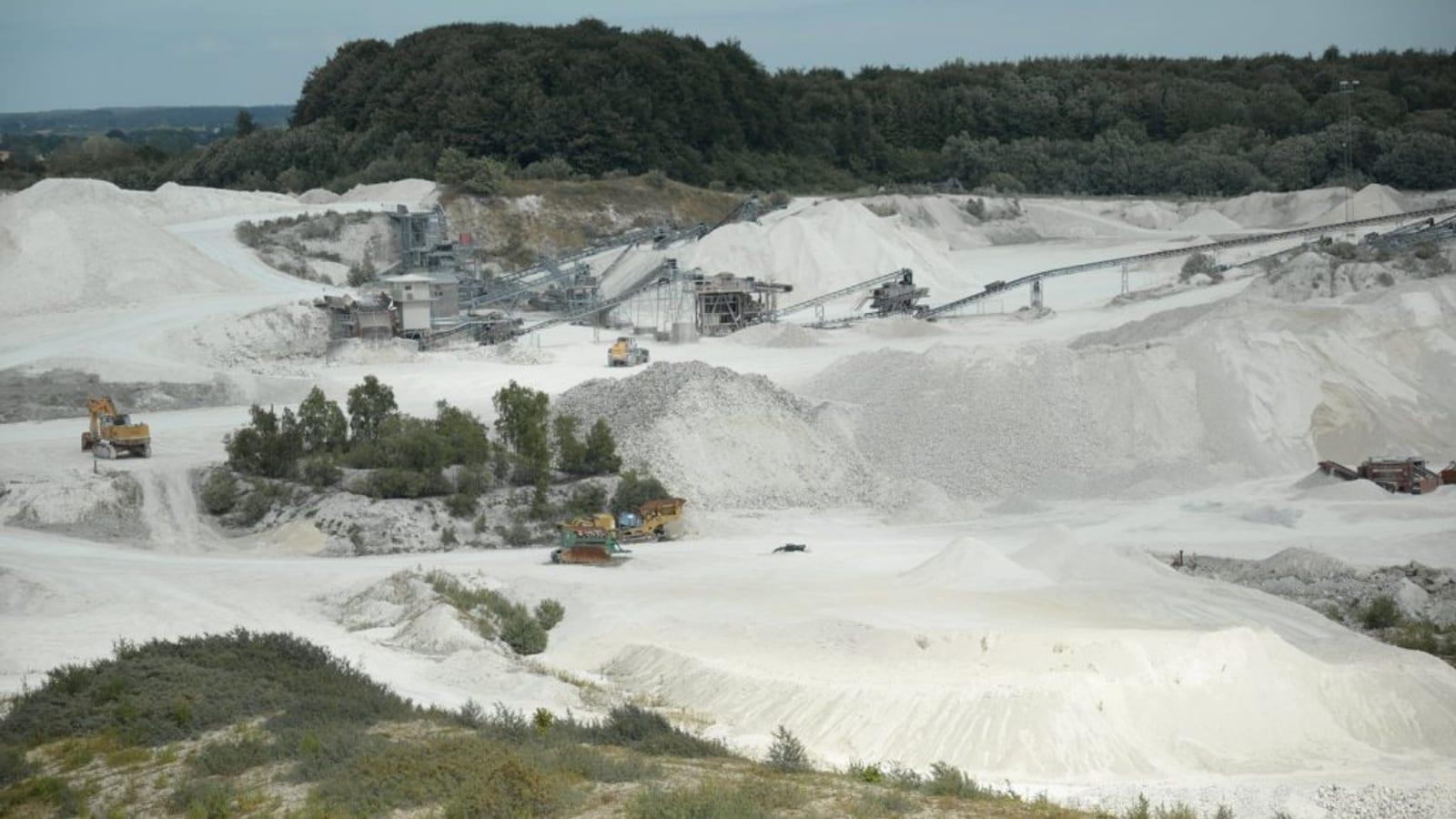
The Boesdal chalk quarry operated from approximately 1880 to 1930, extracting chalk for agricultural lime and local construction. The quarry cut back the cliff to a slightly different geometry than natural Stevns Klint sections. Once operations ceased, the site revegetated and the beach below continued to receive fresh fossil material from natural cliff erosion. The site provided iridium samples for early K-Pg boundary research in the 1980s alongside the more prominent Højerup section. It has been used for fossil collecting by local enthusiasts and visiting collectors for decades, but has never been developed or formally managed as a collecting site.
Collecting Rules and Regulations
Is Fossil Collecting Allowed?
Fossil collecting at Boesdal is free and requires no permit. The beach is accessible 24 hours a day year-round. Boesdal is part of the UNESCO World Heritage Site Stevns Klint, and the same rules apply here as throughout the designated area: no tools, no hammering, and no digging into the cliff face. Only loose surface collecting is permitted. Common fossils may be kept under Danish law.
Recommended Tools
No tools are permitted. Surface collecting of loose material is the only allowed method. A backpack or bucket is useful for carrying finds. Pack specimens carefully. Chalk belemnites can break in transit if knocked together. The beach at Boesdal is productive enough through surface collecting alone that the tool restriction does not significantly limit what you can find.
Safety
The chalk cliffs at Boesdal are unstable. Rockfalls occur without warning. Maintain a minimum distance of 10 to 15 meters from the cliff base at all times and watch overhead while collecting. The Baltic Sea has minimal tidal range, but storm waves can be powerful, avoid the beach in severe weather. The access trail is moderately steep and can be slippery when wet. Wear footwear with grip. Best conditions for collecting are after winter storms (March to April), spring (April to May), and autumn (September to October).