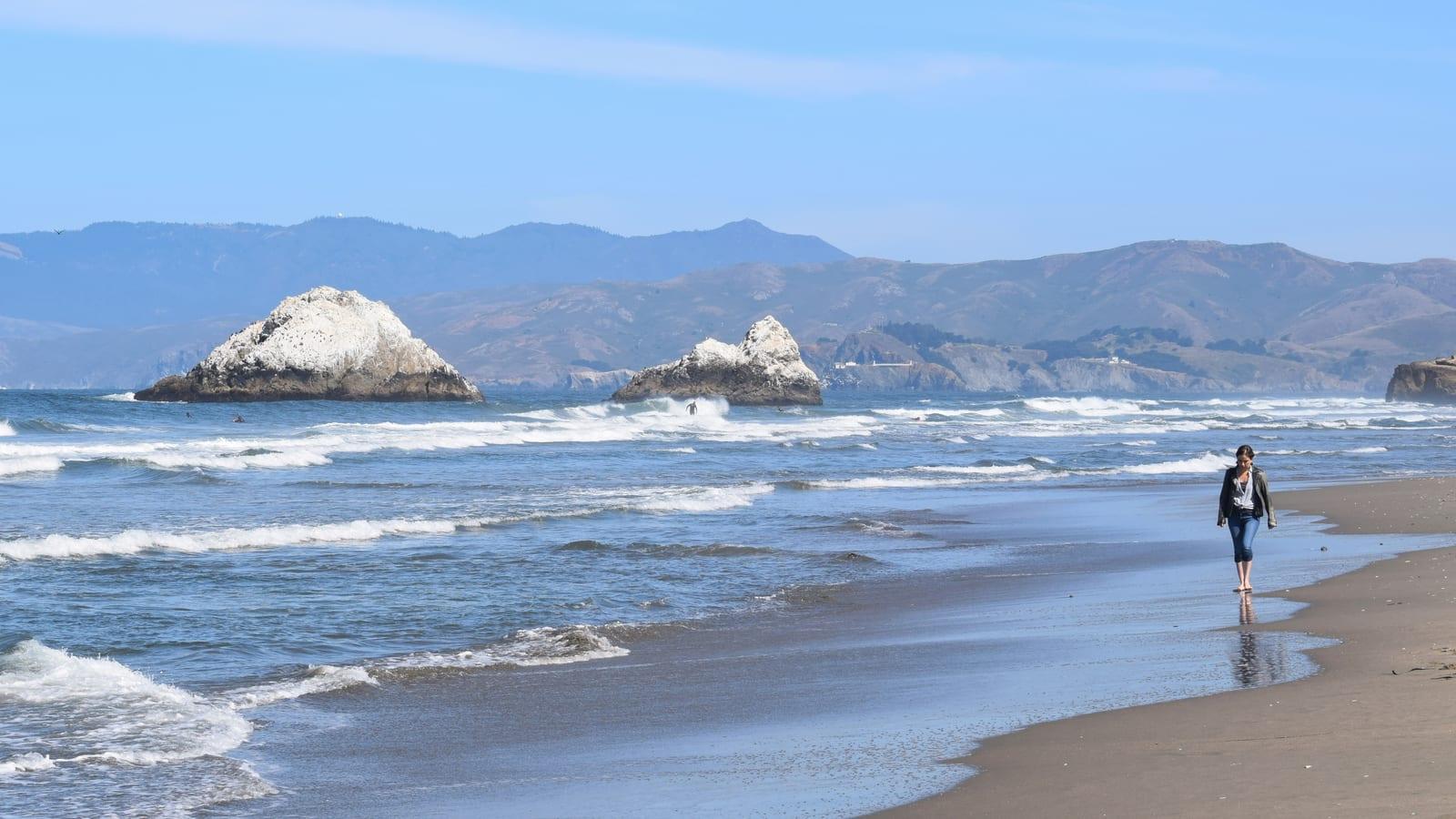
Golden Gate National Recreation Area Fossil Hunting Guide
Image: Radomianin (CC BY-SA 4.0)
The Golden Gate National Recreation Area, located in San Francisco, California, is a treasure trove for paleontology enthusiasts.
By Edward Chen · Published 26 July 2023
Introduction
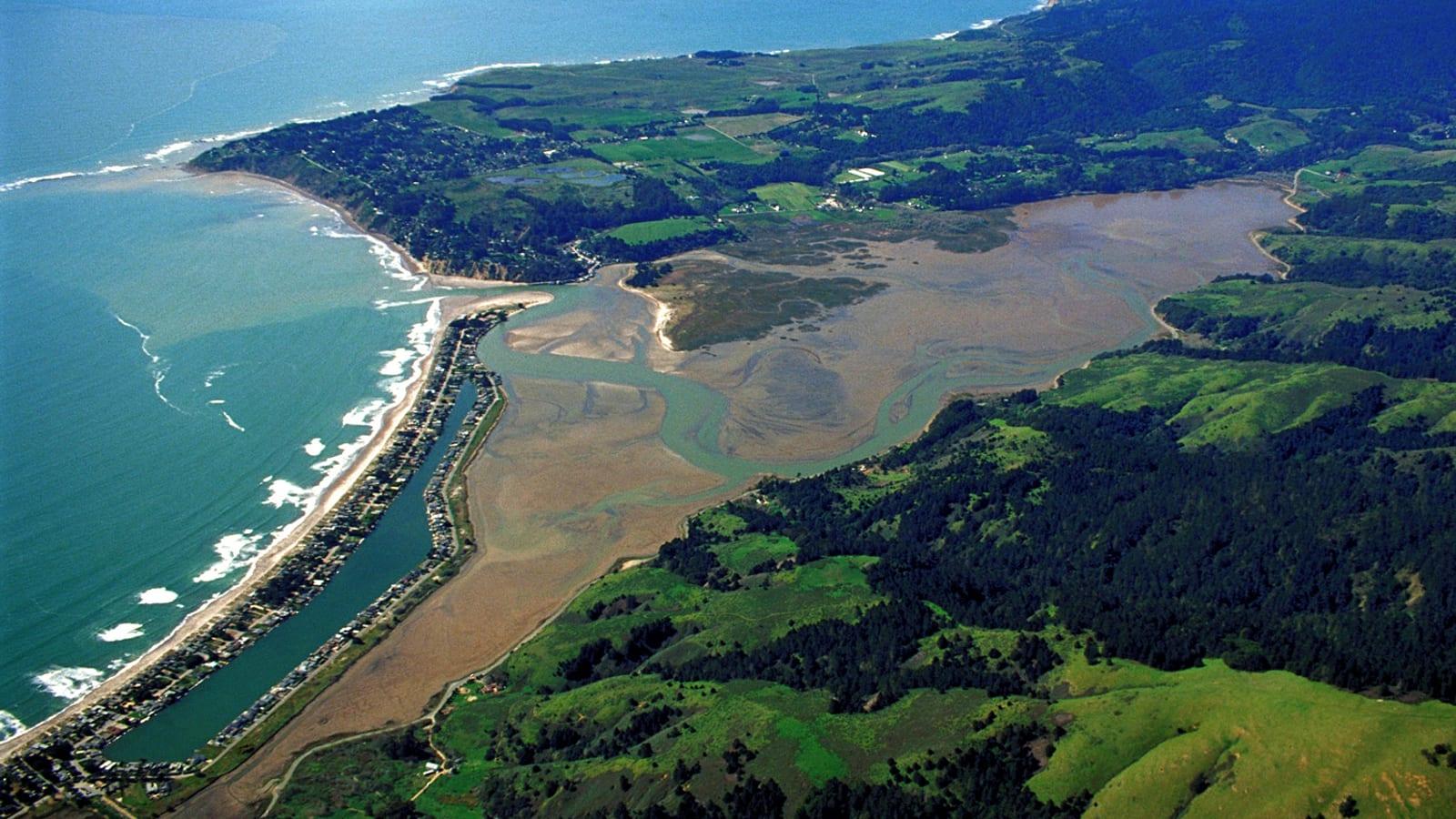
The Golden Gate National Recreation Area (GGNRA) encompasses over 33,000 hectares (82,000 acres) of land on both sides of the Golden Gate strait, and within that area are three geologically distinct units that have produced fossils of scientific importance. Fort Funston, at the southern end of Ocean Beach in San Francisco, exposes the fossil-bearing Merced Formation in dramatic sea cliffs visible from a cliff-edge trail. The Marin Headlands, north of the bridge, display the distinctive red-orange banded radiolarian chert of the Franciscan Complex on nearly every ridge top and road cut. The Sutro Baths area and the Lands End trail offer access to Pleistocene beach deposits. No collecting is permitted anywhere within the GGNRA, it is an NPS unit subject to federal law, but the exposures are extensive, often accessible without a trail approach, and supported by interpretive material from the University of California Museum of Paleontology.
Location and Directions
The GGNRA has multiple access points depending on which geological feature you want to visit.
Fort Funston is the primary palaeontological stop. It is located at the south end of Ocean Beach, San Francisco, accessed from Skyline Boulevard (Highway 35) at the intersection with John Muir Drive. There is a free parking lot at Fort Funston off Skyline Boulevard. From downtown San Francisco, take 19th Avenue south to Skyline Boulevard and turn right. Fort Funston is approximately 1 mile (1.6 km) north on the left. By public transport, San Francisco Muni Route 18 runs along 46th Avenue to the park boundary. The walk from the nearest stop to the cliff-edge trail is approximately 10 minutes.
Marin Headlands are accessed via the Alexander Avenue exit from US-101 northbound immediately after the Golden Gate Bridge, or via Conzelman Road westbound from the Sausalito junction. Multiple pull-outs along Conzelman Road give direct access to chert outcrops. Free parking is available at several overlooks.
Sutro Baths / Lands End is reached from the Lands End parking area off Point Lobos Avenue at 48th Avenue in the Richmond district. San Francisco Muni Route 38 stops nearby.
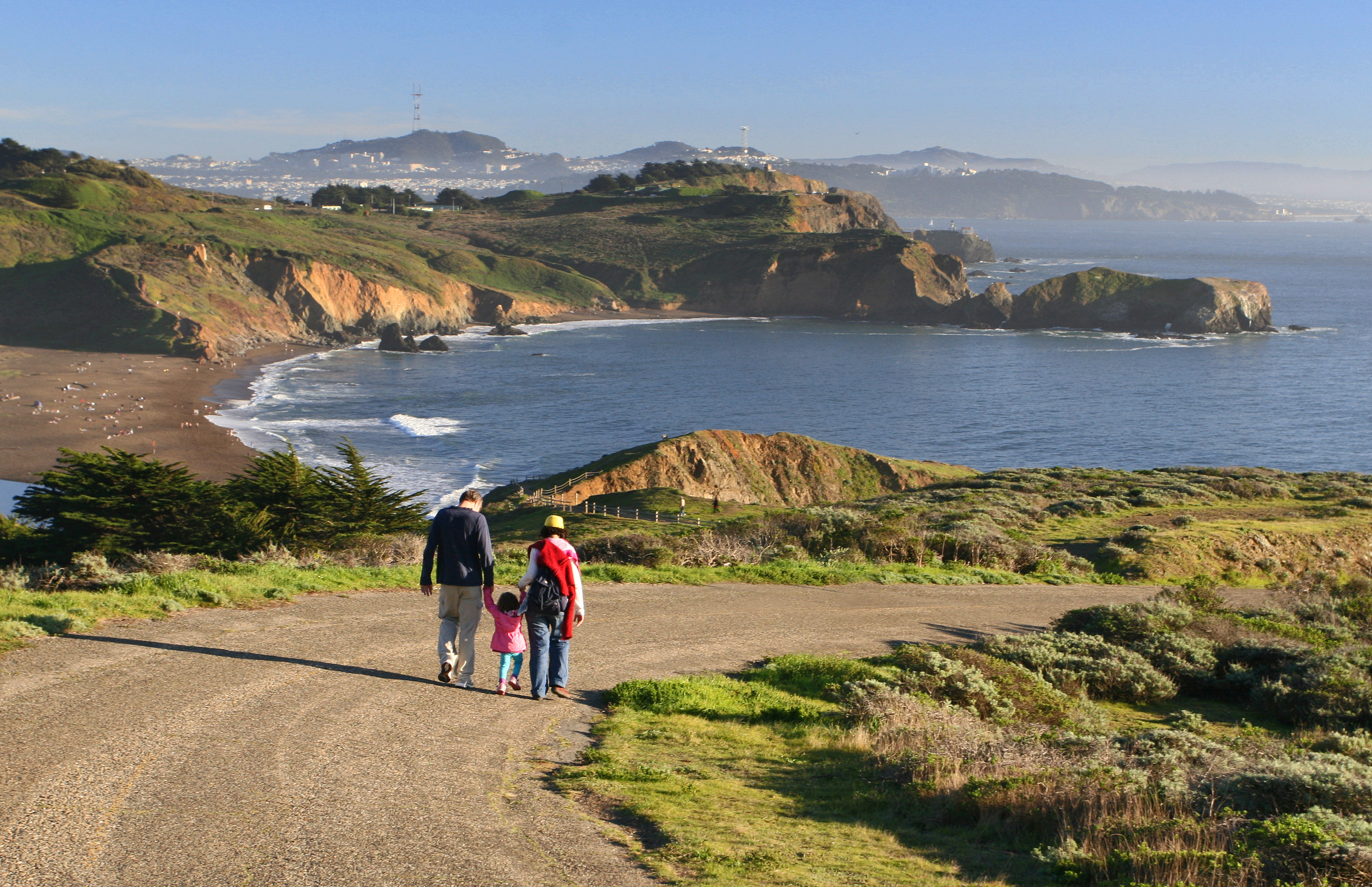 Photo: NPS photo/Will Elder, public domain, via National Park Service
What You'll See
The GGNRA's geological diversity means each area offers different fossil types and different scales of observation.
Fort Funston, Merced Formation:
- Marine invertebrates in cliff faces. The Merced Formation sea cliffs at Fort Funston contain fossil-bearing sand and clay beds visible in cross-section along the cliff edge. Bivalve shells, particularly whole valves of clams and mussels, are visible in place in the cliff walls. Some beds are densely packed with shell material. Others are nearly barren. The fossils are best observed from the cliff-edge trail, looking down and across at the cliff face, do not approach the cliff edge closely, as the sand is actively slumping.
- Pliocene/Pleistocene fauna. The Merced Formation at Fort Funston spans the Pliocene-Pleistocene boundary, approximately 2.5 to 0.5 million years ago, and the fauna reflects fluctuating glacial-period sea temperatures. Cool-water and warm-water species alternate through the beds, documenting repeated ocean temperature shifts tied to ice age cycles.
Marin Headlands, Franciscan Complex:
- Radiolarian chert. The red, orange, and green banded chert of the Marin Headlands ridgetops is a biological rock, composed almost entirely of the silica skeletons of radiolarians, single-celled zooplankton that lived in Jurassic and Early Cretaceous open-ocean surface waters. The radiolarians themselves are microscopic and not individually visible, but the rock they built is one of the most photographed geological features in the Bay Area. Road cuts on Conzelman Road expose fresh cross-sections of the interbedded chert and red mudstone sequence.
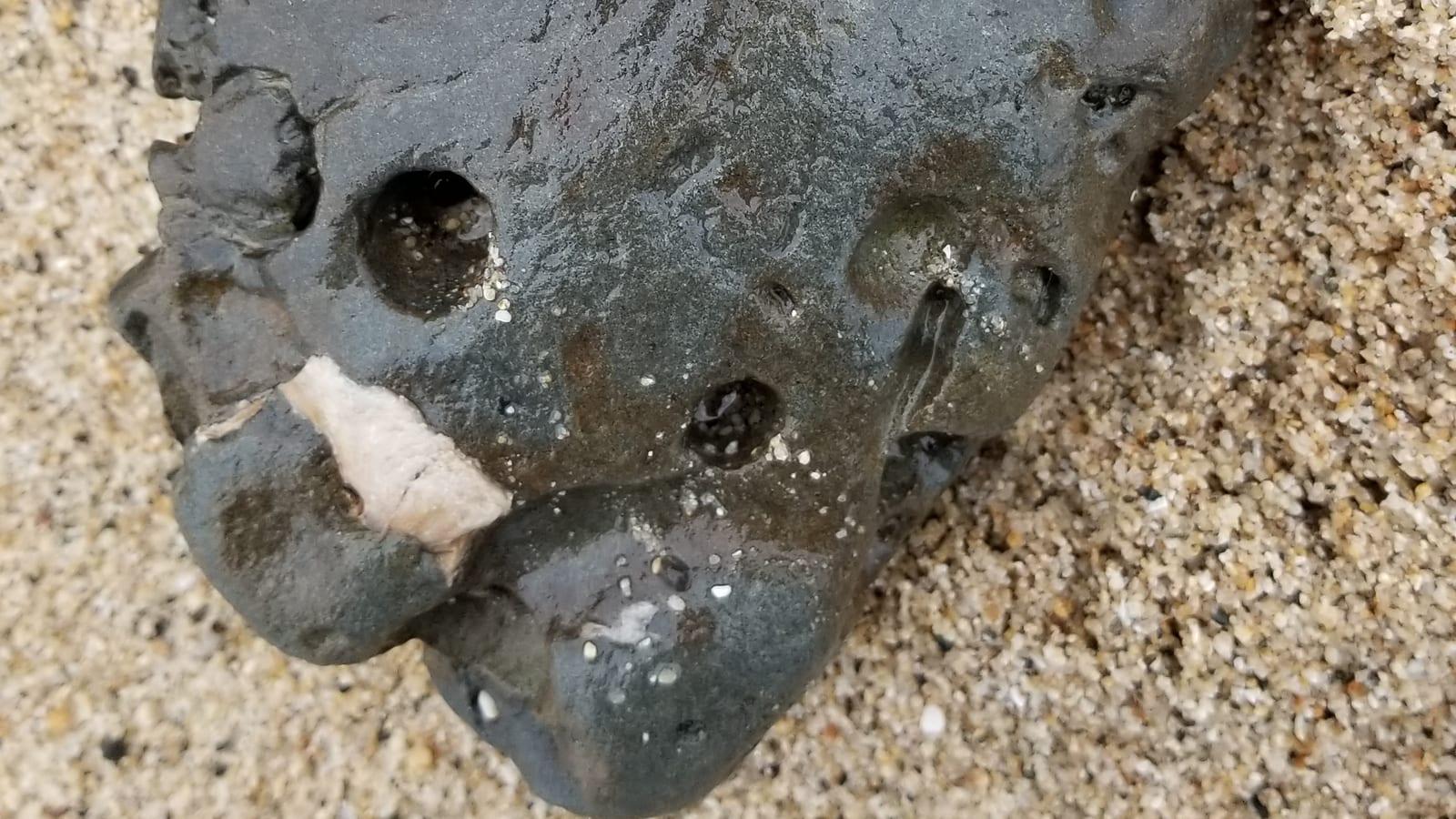
- Pillow basalts. Below the chert sequence, the ancient oceanic crust that carried the chert to California is preserved as rounded, dark green to black pillow basalt, visible in road cuts on the lower flanks of the headlands. These lavas erupted on the mid-ocean ridge approximately 190 million years ago, in the Early Jurassic.
Geologic History
The GGNRA sits at the intersection of three distinct geological terranes with very different histories, now juxtaposed by faulting.
The Franciscan Complex of the Marin Headlands is the oldest and most complex. It formed as oceanic crust and deep-sea sediments were scraped off the Pacific Plate and accreted to the North American continent margin during a subduction episode that ran from approximately 165 to 80 million years ago. The chert-basalt sequence records: ocean crust formation at a mid-ocean ridge (the basalt), accumulation of radiolarian ooze on the ocean floor over tens of millions of years (the chert), and eventual scraping and deformation during subduction.
The Merced Formation at Fort Funston is much younger, late Pliocene to Pleistocene, approximately 2.5 to 0.5 million years ago, and was deposited in a shallow, wave-agitated nearshore and beach environment on the western edge of the San Francisco peninsula. Sea level rose and fell repeatedly during this interval as ice ages came and went, depositing alternating terrestrial dune sands and marine shell beds that are now stacked vertically in the Fort Funston cliffs. The Merced Formation is one of the best-exposed and most complete records of Pleistocene coastal sea-level change on the US Pacific Coast.
The Colma Formation, exposed in scattered locations within the GGNRA, is even younger, late Pleistocene, approximately 120,000 years old, and records a warm interglacial high-stand sea level. Fossil mollusc assemblages from the Colma include species that no longer live as far north as San Francisco, indicating sea-surface temperatures warmer than today during the last interglacial.
Visiting Rules and Regulations
The Golden Gate National Recreation Area is administered by the National Park Service. Federal law prohibits collection or removal of any natural object, including fossils, rocks, shells, and sediment, from any location within the GGNRA.
No tools, digging, or surface disturbance of any kind is permitted. Observation, photography, and sketching are unrestricted. The cliff faces at Fort Funston are actively eroding and several sections are fenced for safety. Do not approach the unfenced cliff edge closely and stay on the designated trail. The chert outcrops in the Marin Headlands are accessible on foot from road pull-outs. Stay on existing trails and do not disturb the rock faces.
The UCMP (University of California Museum of Paleontology) has published an online geological guide to GGNRA sites that provides detailed locality information and geological background. See the sources below. Visitor centres at Fort Mason (main GGNRA headquarters) and at Marin Headlands (Fort Barry) carry printed geology guides and staff who can answer questions about the park's palaeontological resources. Most areas of the park have free access. Parking at Fort Funston and Marin Headlands overlooks is free.
Safety
The GGNRA covers a very large area on both sides of the Golden Gate, and the geological points of interest sit on coastal bluffs and beaches where the Pacific sets the terms.
Sneaker waves and rip currents kill people on this coast every year. Ocean Beach in particular has some of the most dangerous surf in California, with powerful rips and cold water. Do not swim, do not wade, and stay well up the beach when a swell is running. Never turn your back on the water when working a rock platform.
The bluffs are unstable. The cliffs here are weak, weathered rock that fails without warning, and undercut edges give way. Stay behind fences and on marked trails, do not climb, and do not walk along the base of a bluff.
Fog and cold. This coast is frequently cold, windy, and fogbound even in summer, and visitors from inland underestimate it badly. Bring windproof and warm layers whatever the forecast in the city says.
Check tides before working any beach beneath a headland, since access can be cut off.
Nothing may be collected. The GGNRA is a National Park Service unit, and removing fossils, rocks, or any natural material is prohibited under federal law across the whole area. This is a place to look at geology in place, and the enforcement here is real given the visitor numbers.
Sources
- National Park Service. "Golden Gate National Recreation Area." https://www.nps.gov/goga/index.htm](https://www.nps.gov/goga/index.htm)- National Park Service. "Geologic Activity, GGNRA." https://www.nps.gov/goga/learn/nature/geologicactivity.htm
- University of California Museum of Paleontology. "Golden Gate National Recreation Area." https://ucmp.berkeley.edu/science/parks/golden_gate.php](https://ucmp.berkeley.edu/science/parks/golden_gate.php)- Clifton, H.E., and others. "Sedimentary structures and processes in the Merced Formation at Fort Funston." SEPM Special Publication, 1971.