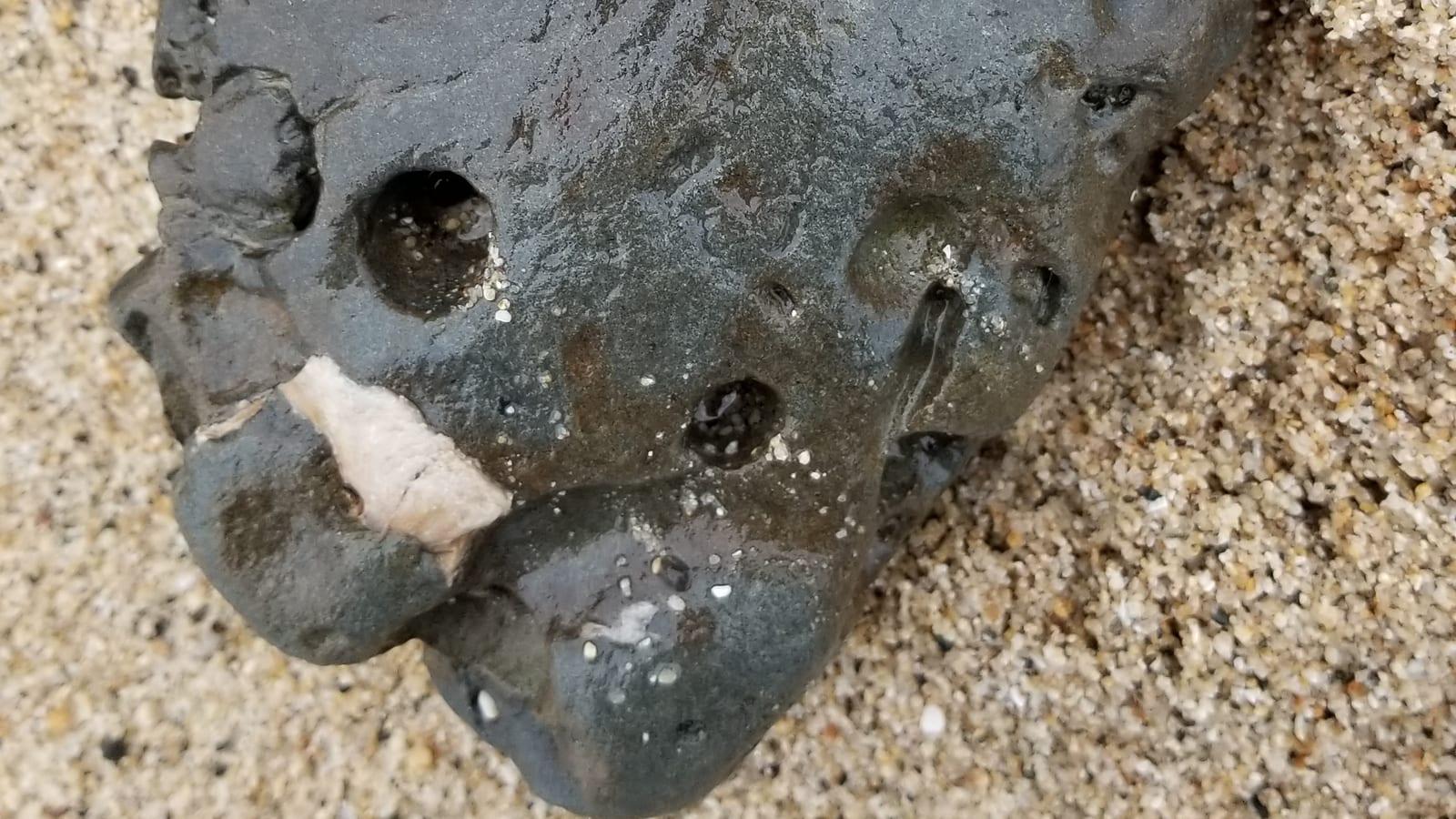
Half Moon Bay Fossil Hunting Guide
Image: Pacific Southwest Region USFWS (Public domain)
The coastal bluffs around Half Moon Bay expose the Pliocene Purisima Formation, a marine unit that yields scallops and other shells, sand dollars, shark teeth, and occasional marine mammal bone. The beaches are state parks, so this is a place to view and photograph fossils rather than collect them.
By Edward Chen · Updated 3 August 2026
Introduction
The coastal bluffs around Half Moon Bay, on the San Mateo County coast south of San Francisco, are cut into the Pliocene Purisima Formation. This marine sandstone and siltstone was laid down between roughly 7 and 2.5 million years ago, and it carries scallops and other shells, sand dollars, shark teeth, and the occasional bone of a whale or seal.
The Purisima Formation runs along much of this coast, from Half Moon Bay south toward Santa Cruz, and it is one of the better-known fossil-bearing units in the Bay Area. At Half Moon Bay the beaches sit within the state park system, so this is a place to look and photograph rather than to dig.
This stretch of coast is the formation's home ground in a literal sense. Haehl and Arnold named the Purisima Formation for the fossil-bearing marine rocks in the sea cliffs at the mouth of Purisima Creek, a few miles south of Half Moon Bay in the same county. The rock you look at here is the reference material for a unit that geologists trace as far north as Point Reyes and as far south as the Santa Cruz Mountains.
Location and Directions
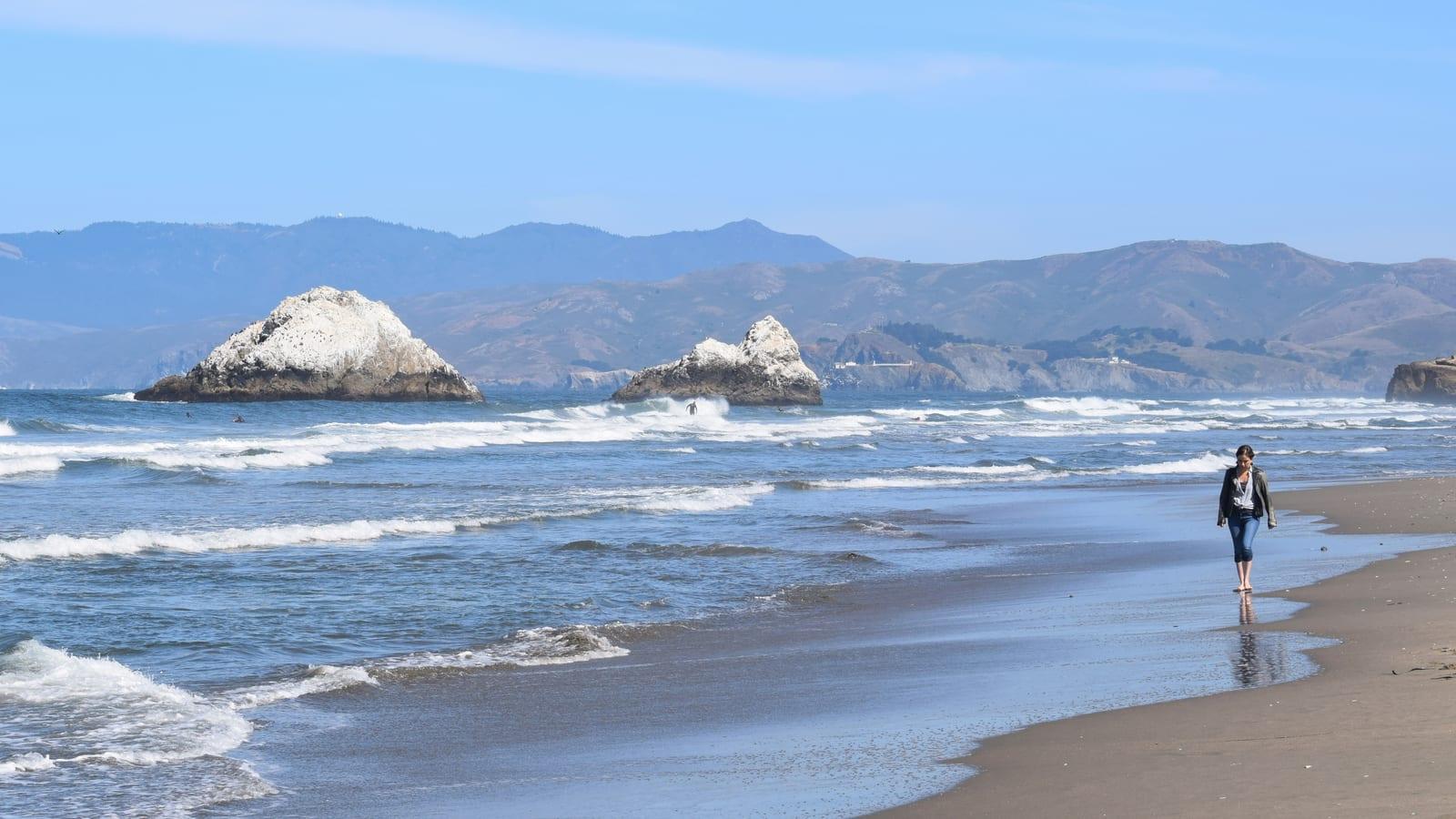
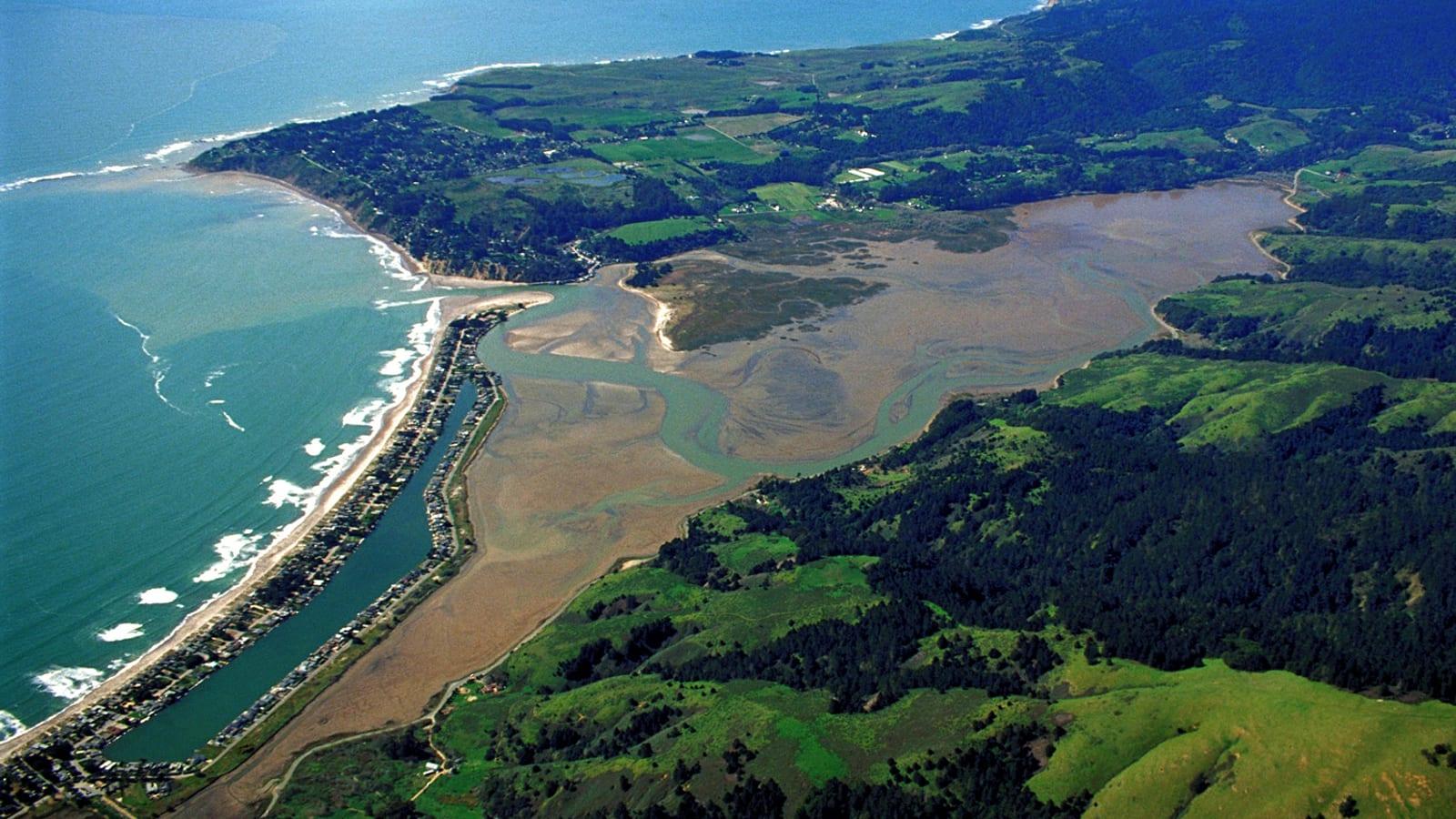
Half Moon Bay lies on State Route 1 about 25 miles south of San Francisco, near 37.48°N, 122.45°W. Half Moon Bay State Beach runs along the town's western edge, with several access points and parking areas off Kelly Avenue and along the coast highway. Pillar Point and the bluffs to the north expose more of the same formation.
The state beach has a day-use fee, restrooms, and a coastal trail along the top of the bluffs. The town itself has food, fuel, and lodging.
 Photo: F ASTILY, CC BY-SA 4.0, via Wikimedia Commons
 Photo: Manzanita Starwood, CC BY-SA 4.0, via Wikimedia Commons
What Fossils You'll Find
The Purisima Formation preserves a shallow-marine fauna.
Bivalves are the most common find, including scallops and clams, often as imprints or as pale mineralized shell in the sandstone. Sand dollars weather out of some beds as flat, round disks. Shark teeth turn up, most often small and dark against the lighter rock. Bone from marine mammals such as whales, dolphins, and seals occurs less often and is scientifically valuable.
The shelly fauna at Pillar Point has been catalogued in some detail. Glen listed 31 species of molluscs from the Purisima Formation there in 1959, and the assemblage is distinctive enough that later workers treat it as a named unit, the Pillar Point fauna, one of three molluscan faunas Powell defined within the formation. Its age-diagnostic species is the scallop Lituyapecten purisimaensis, which places these beds in the Pliocene.
Look along freshly eroded bluff faces and in the loose material and gravel at the base of the cliffs and on the beach, where the sea has already freed and concentrated the harder fossils. Wet rock and low tide make finds easier to spot.
Geologic History
The Purisima Formation accumulated on the seafloor of a cool, shallow shelf between about 6.9 and 2.5 million years ago, as sand and silt washed off the rising Coast Ranges and settled among the shells of the animals living there. It is not one uniform rock. The formation takes in conglomerate, sandstone, siltstone, mudstone, and diatomite, and that variety reflects a shoreline whose depth and energy shifted over several million years. Its beds record a productive nearshore sea, which is why marine mammal and shark remains appear alongside the shells.
Those shifts are readable in the fossils. Powell's three molluscan faunas, the La Honda, the Pillar Point, and the Santa Cruz from oldest to youngest, each record different conditions, and the Pillar Point fauna stands out for representing distinctly deeper water than the other two. Vertebrate remains in the formation are often concentrated into bonebeds rather than scattered evenly, a pattern that reflects how waves and currents reworked and gathered bone on a shallow seafloor before burial.
Movement along the San Andreas and related faults later uplifted and tilted the formation, and the modern surf has cut it back into the bluffs seen along the Half Moon Bay coast today. Erosion keeps exposing fresh fossil-bearing rock, especially after winter storms.
 Photo: Manzanita Starwood, CC BY-SA 4.0, via Wikimedia Commons
Collecting Rules and Regulations
Half Moon Bay State Beach and the other state beaches along this coast are part of the California state park system, where collecting fossils, rocks, and other natural features is prohibited. Treat these beaches as viewing and photography sites.
Some of the bluffs are on other public or private land with their own rules, and the cliffs themselves are unstable and protected in places. Do not dig into or undercut them. Vertebrate fossils, including marine mammal bone, are protected everywhere. If you find articulated bone, photograph it, note the location, and report it rather than removing it.
Safety
The bluffs here are soft and actively eroding, and blocks fall without warning, so stay back from the cliff edge above and do not sit or dig at the base below. The surf on this coast is powerful, with sneaker waves and strong rip currents, so watch the ocean and keep a safe distance from the water on the rocks. Check a tide table before working the lower beach, wear shoes with grip, and bring layers, since the coast is often cold and foggy.
Sources
https://pubs.usgs.gov/of/1998/of98-594/of98-594_2a.pdf https://pubs.usgs.gov/pp/2007/1740/pp1740.pdf https://journals.plos.org/plosone/article?id=10.1371/journal.pone.0091419 https://santacruzmuseum.org/exhibit/geology-and-fossils/ https://www.parks.ca.gov/?page_id=531