Gram Clay Pit Fossil Hunting Guide
Image: Hjart (CC BY-SA 4.0)
Gram Clay Pit, in southern Jutland between Haderslev and Ribe, is the best place in Denmark to find Late Miocene marine fossils.
By Edward Chen · Updated 1 August 2026
Introduction
Gram Clay Pit, in southern Jutland between Haderslev and Ribe, is the best place in Denmark to find Late Miocene marine fossils. The pit is a former brick and tile clay works that closed in 1988 and has since been managed as a public fossil site by Museum Sønderjylland, with a dedicated natural history museum on the rim. Below the topsoil lies tens of metres of dark, organic-rich clay laid down on the floor of the Gram Sea between roughly 11 and 7 million years ago. The clay preserves a marine fauna that the rest of Denmark cannot match: complete fossil whales, articulated bony fish, several species of shark including large Otodus megalodon teeth, sea urchins, snails, mussels, crabs, and seal remains. Most visitors come for shark teeth and small fish, and most leave with at least a few. This guide covers how to reach the site, what to expect at the digging area, how the clay was deposited, and the rules that the museum applies to keeping or reporting finds.
Location and Directions
Gram Clay Pit and the Gram Lergrav Palæontologi museum sit at the northern edge of the small town of Gram in Haderslev Municipality, southern Jutland.
The address is Lergravsvej 2, 6510 Gram, Denmark. From Haderslev, follow Route 24 (Ribevej) southwest for about 20 kilometres and watch for signs to "Gram Lergrav" or "Palæontologi" as you approach Gram. From Ribe, follow Route 24 northeast for about 30 kilometres. The museum is roughly one kilometre north of Gram town centre and is signposted from the main road.
Free parking is available next to the museum, with space for cars and coaches. The clay pit itself is part of the museum grounds and is reached on foot from the visitor entrance through a short path that drops onto the digging area. You buy the entry ticket inside, watch a brief introduction in the exhibition, and then walk out to the pit.
The clay pit is open year-round during daylight, but the museum building, which is where you pick up loan tools and pay admission, has shorter hours. Summer hours, from 1 May to 31 August, are typically 10:00 to 17:00. Winter hours are reduced, often around 13:00 to 16:00, and the museum is closed between Christmas and New Year. Check the Museum Sønderjylland website before driving out.
The site is reasonably wheelchair-accessible at the museum and rim, but the floor of the pit is uneven, often wet, and not suited to wheelchairs.
What Fossils You'll Find
The clay weathers slowly, and the best finds turn up in newly slumped or recently rained-on faces. Surface searching is productive on its own. Light digging with a small hand spade is usually enough.
- Shark teeth. Most visitors find at least a handful per session. The fauna includes Otodus megalodon, Carcharias sand tigers, Cetorhinus basking sharks, Hexanchus cowsharks, and several Carcharhinus species. Megalodon teeth are uncommon but real. The Gram megalodon material is the basis for a major museum exhibit and ongoing research at Museum Sønderjylland.
- Bony fish. Small fish bones and isolated Diaphyodus and Argyropelecus otoliths and teeth are abundant. Articulated fish, especially Holosteus and lanternfish, occur in better-preserved layers and are responsible for the museum's reputation.
- Whale and seal bone. Vertebrae, ribs, ear bones, and limb fragments of small to mid-sized whales and seals appear regularly. Several whale species described from Gram, including Uranocetus and the more recently named Dagonodum mojnum, are unique to the formation. Vertebrate bone must be reported to museum staff before you leave.
- Crabs and lobsters. Small decapod claws and carapace fragments, sometimes preserved in calcareous concretions.
- Echinoids. Small irregular sea urchins, often as flattened tests in the clay.
- Molluscs. Snails and mussels, mostly as internal moulds.
- Birds and rays. Rare. A handful of bird and ray specimens have been described.
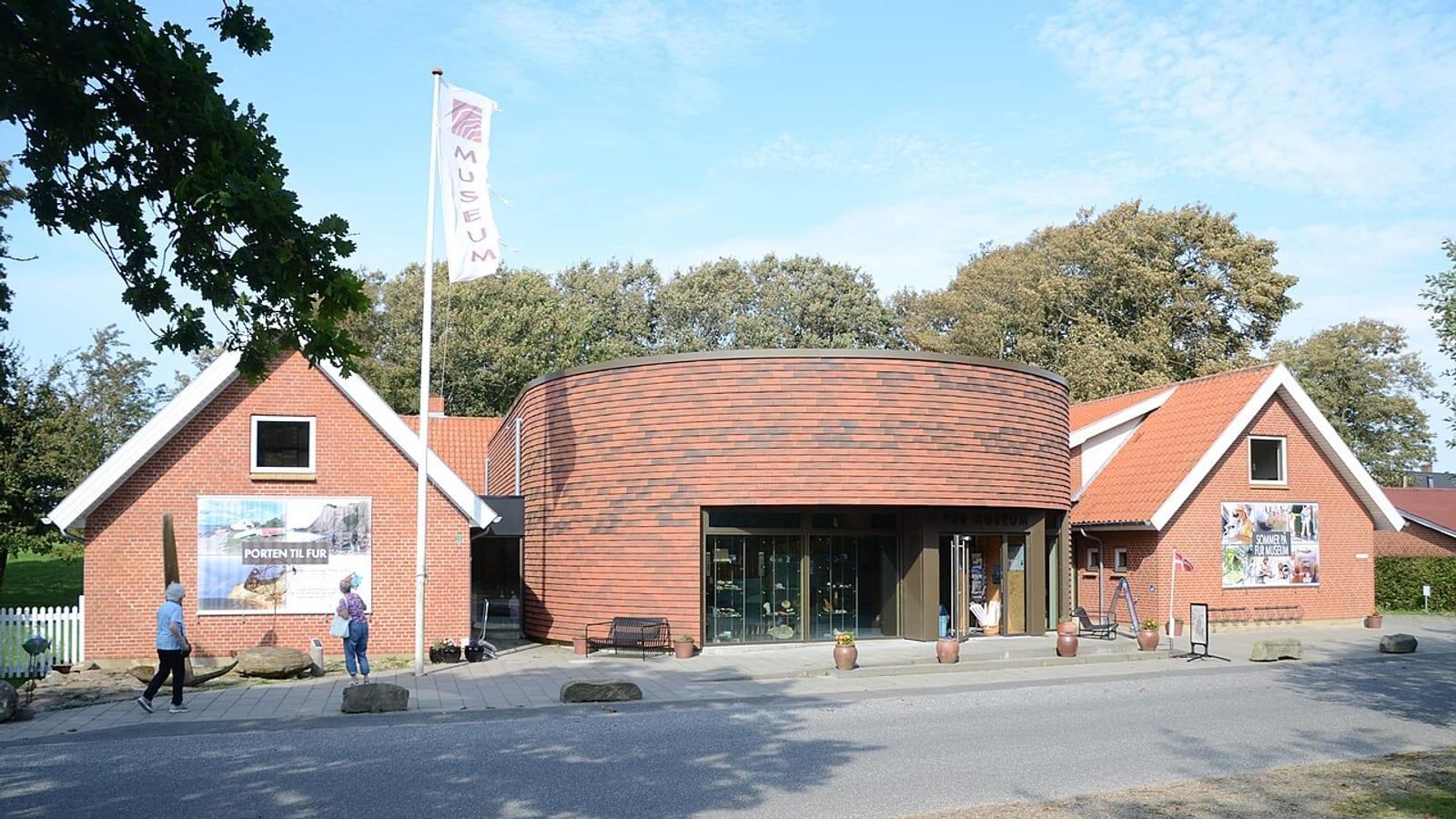
The 60-centimetre Holosteus fish in the user-submitted account is now in the Natural History Museum of Denmark in Copenhagen. A cast and the original negative impression are on display in Gram and in Fur Museum, the sister site for related Cenozoic Danish faunas.
Geologic History
The fossiliferous unit at Gram is the Gram Formation, the youngest of the major Miocene marine units of Denmark. It belongs to the Late Miocene Tortonian and early Messinian stages, with the main fossil-rich clay deposited between approximately 11.6 and 7.2 million years ago.
The formation is divided into three packages: a basal glauconitic sand, the Gram Clay in the middle, and a thin Gram Sand at the top. The clay alone reaches around 35 metres thick at Gram and is the unit you see in the pit. It accumulated on a shallow shelf within the Gram Sea, an arm of the proto-North Sea that flooded across what is now Jutland during a Late Miocene high stand of sea level. Water depths estimated from foraminifera and macrofauna are typically in the range of 50 to 100 metres, with cool-temperate to warm-temperate conditions and a moderately diverse benthos.
Bottom waters were poorly oxygenated for long stretches, which is why so much organic matter and fine clay accumulated and why fossils preserved so well. Whale and large fish carcasses sank into anoxic mud before they could fall apart, and finer skeletal material settled out as discrete laminae. After the Miocene, Denmark was uplifted, eroded, and partly buried by Pleistocene glacial sediments. At Gram, the clay was close enough to the surface that brick and tile works in the late 19th and 20th centuries quarried it on a commercial scale, removing the overburden and exposing the fossiliferous beds that visitors now work.
How Gram Clay Pit Became a Fossil Collecting Site
Industrial use came first. Companies including Medusa Portland Cement and several local brickworks dug the Gram clay through the 19th and 20th centuries for brick, tile, and drainpipe production. Workers regularly turned up shark teeth, fish, and whale bone, and museum staff in southern Jutland began curating the better specimens through the early 20th century.
When commercial extraction stopped in 1988, the abandoned pit was already a recognised fossil locality. Museum Sønderjylland took over management, and in 2005 a purpose-built museum was opened next to the pit specifically to house the fossils, the working preparation lab, and the public visitor and digging programme. Significant scientific finds have followed almost every year, including the description of Dagonodum mojnum (the "Mojn whale") in 2017 and continuing work on Gram's Otodus megalodon material that produced a major new exhibit and research output in 2025.
Collecting Rules and Regulations
The pit is open for public collecting during museum opening hours, but everything happens under museum management. Independent digging outside opening hours is not permitted.
- Pay the entry ticket at the museum reception. The clay pit is included in the standard visitor admission. There is no extra collecting fee.
- The museum loans wellington boots, hand digging tools, and trays free of charge from the entrance. You do not need to bring your own equipment.
- All invertebrate fossils, fish, shark teeth, and small bone fragments may be kept for personal collections.
- All vertebrate finds beyond small fragments, in particular whale and seal bone, articulated fish, large shark teeth, and any complete or partial skeletons, must be reported to museum staff before you leave the pit. Significant material is retained by the museum for its scientific collection. This rule is part of why the site has produced so many new species.
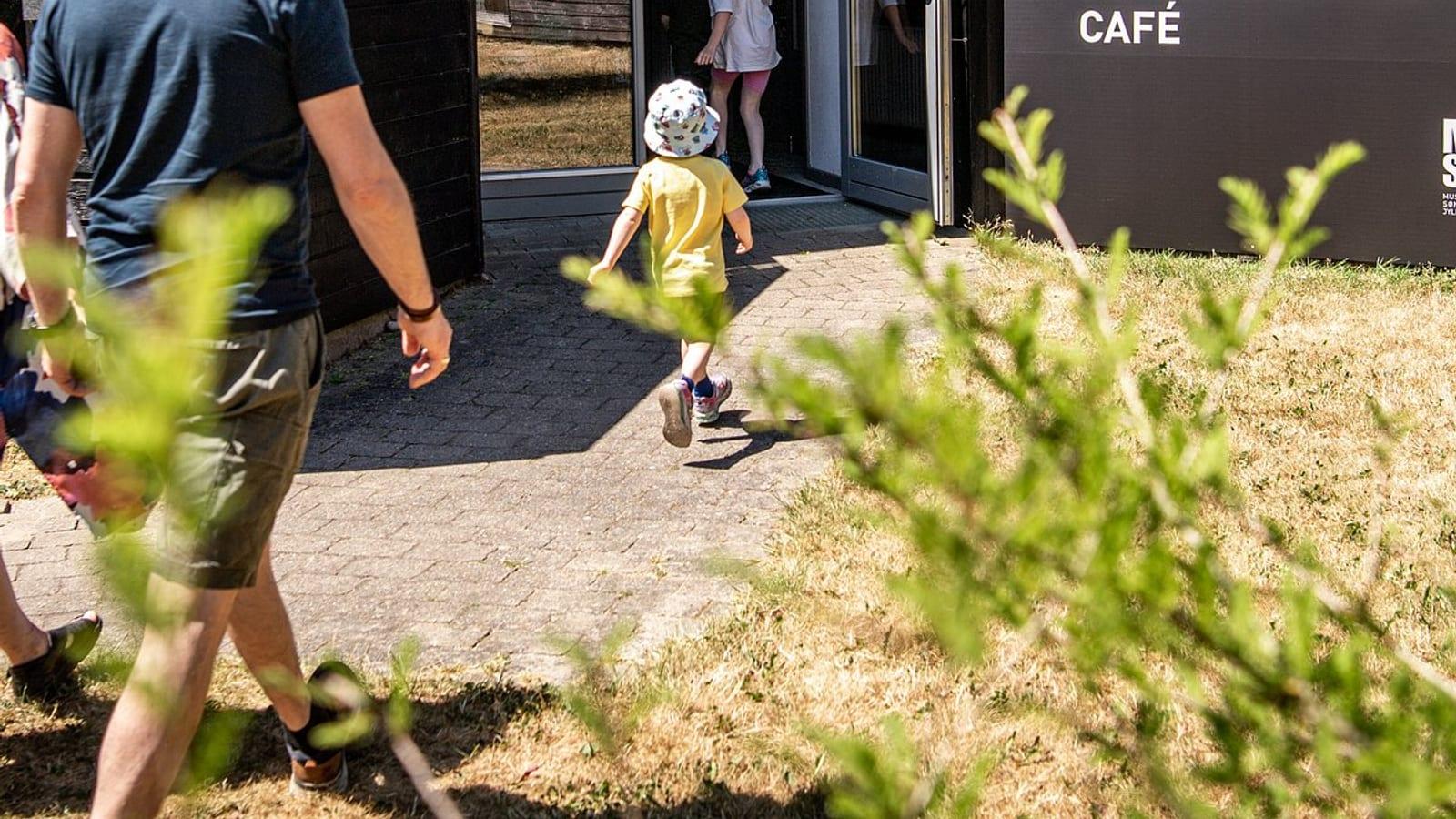
- Cafe, shop, restrooms, and a covered exhibit hall are on site. The shop sells small specimens and identification books if you want to compare your finds.
- Photography for personal use is fine throughout the site.
Safety
The clay is the hazard. Gram's walls are soft, wet, and steep, and blocks slump off them without warning, most often after rain or a freeze. Stay well back from the base of any face and do not undercut one to reach a layer. The museum marks the working area for a reason, and the marked ground is where you should be.
The pit floor is slick. Wet Miocene clay is close to frictionless, which is why the museum lends wellington boots rather than expecting ordinary walking shoes to hold. Take a pair even if you think you will not need them, and pack a change of clothes and a bag for the car seats.
Children need supervision throughout. The surface is uneven, the puddles are deeper than they look, and the walls are tempting to climb.
A hand spade in wet clay still slips even though the museum controls what tools go into the pit. Keep your free hand clear of the blade and keep some distance between diggers.
The site is at sea level in southern Jutland and the weather is Danish. Wind and rain arrive quickly and there is no shelter in the pit itself. Check the museum's opening hours before you travel, since the pit is open in daylight but the building that holds the tools, the tickets, and the toilets is not.
Sources
- Museum Sønderjylland. "Gram Lergrav Palæontologi." https://msj.dk/
- Gram Lergrav. "Visit information and fossil rules." Museum Sønderjylland, current visitor guide.
- Rasmussen, E.S., Dybkjær, K., and Piasecki, S. "Lithostratigraphy of the Upper Oligocene to Miocene succession of Denmark." Geological Survey of Denmark and Greenland Bulletin, 2010.
- Roth, F. "The Gram Clay megafauna." Bulletin of the Geological Society of Denmark, various.
- Hampe, O. and others on Dagonodum mojnum and Gram cetaceans, 2017 onwards.
- Geological Survey of Denmark and Greenland (GEUS). "The Miocene of Jutland." https://www.geus.dk/