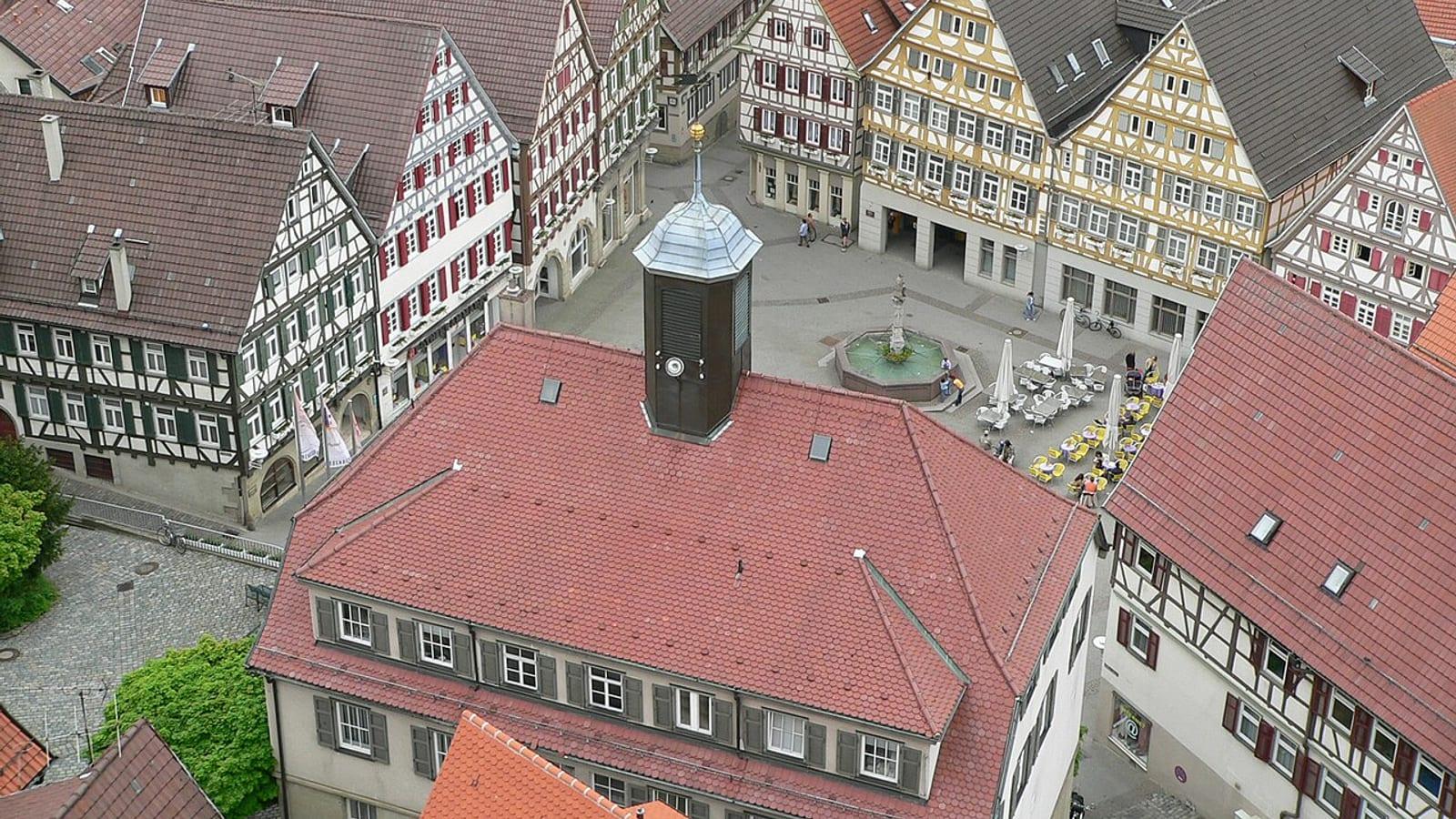
Herrenberg Mine Bundenbach Underground Fossil Hunting Guide
Image: Marcel Zimmer (CC0)
Guided underground tours of Herrenberg Mine, Bundenbach split Devonian Hunsrück Slate 100m below ground. Keep the starfish, crinoids, and trilobites you find.
By Edward Chen · Updated 31 July 2026
Introduction
One hundred metres underground in the Hunsrück hills of Rhineland-Palatinate, the same slate seams that once supplied roofing tiles across Germany now yield Devonian marine fossils of exceptional quality. The Herrenberg Mine at Bundenbach operated as a commercial slate quarry from 1822 until 1964, and since the 1970s portions of the original workings have been open to visitors. During guided underground tours, you split fresh Hunsrück Slate with simple tools in the same tunnels where nineteenth-century miners worked, and any fossil you uncover is yours to keep.
The Hunsrück Slate is one of the world's most scientifically significant fossil deposits. Dating to the Emsian Stage of the Early Devonian, approximately 407 million years ago, the formation preserves soft tissues and internal structures with a fidelity that was only fully revealed when Wilhelm Stürmer applied medical X-ray techniques to unopened slate blocks in the 1970s. Starfish, crinoids, trilobites, brachiopods, and primitive fish are all found at Bundenbach. This guide covers how to book a tour, what the experience involves, the geology of the Hunsrück Slate, and practical preparation for your visit.
Location and Directions
Address
Besucherbergwerk Herrenberg, Altlay Straße, 55568 Bundenbach, Rhineland-Palatinate, Germany.
Directions
From Frankfurt, take the A66 west to Wiesbaden, then the A61 south to the Rhein-Hunsrück-Kreis. Exit at Emmelshausen and follow the B50 west through Simmern toward Bundenbach. Total distance is approximately 100 km. Allow around 90 minutes.
From Koblenz, take the B327 southwest into the Hunsrück highlands. After roughly 55 km follow signs toward Bundenbach village. Allow approximately 65 minutes.
From Trier, take the B407 northeast for approximately 70 km through Birkenfeld and on to Bundenbach. Allow around 75 minutes.
Parking is available at the mine facility. The village of Bundenbach itself is small. The mine visitor centre is the most prominent structure and is signposted from the main road through the village. The nearest train station is Kirn, roughly 10 km to the south-east on the Nahe Valley line. From Kirn, a taxi covers the remaining distance to Bundenbach.
What Fossils You'll Find
The Hunsrück Slate at Bundenbach has produced one of the most diverse Early Devonian marine faunas known from Europe. During your underground tour you will be splitting fresh slate in the active collecting area, and the fossils you encounter reflect the full range of the formation.
Crinoids (sea lilies) are among the most commonly recovered fossils during visitor tours. Disarticulated calyx plates, stem segments, and occasionally complete specimens with arm preservation appear on freshly split surfaces. The slate preserves the calcite skeleton in silvery pyritised form against the dark grey matrix, making identification straightforward even for beginners.
Brachiopods are the most abundant fossils in terms of raw numbers. Both articulated valves and individual shells occur throughout the productive horizons. They are useful orientation fossils for identifying fossil-bearing beds before looking for rarer material.
Trilobites are present but less common than in some other Hunsrück localities. Enrolled specimens, partial cephala, and pygidium fragments are the typical finds. Complete articulated trilobites are exceptional and predominantly documented from professional excavations rather than visitor collecting, but partial material is a real possibility.
Fish remains, including scales, fin spines, and bone fragments of early jawless and jawed forms, occur in the slate. Complete fish are rare but have been recovered from the formation. The X-ray studies by Stürmer revealed preserved soft tissues including digestive systems and gill arches in museum-quality specimens that were otherwise unrecognizable on the surface.
Geologic History
The Ancient Environment
During the Emsian Stage of the Early Devonian, approximately 407 million years ago, the area now occupied by the Rhenish Massif and Hunsrück highlands lay near the southern margin of the Old Red Continent at a paleolatitude of roughly 30° south. The region was submerged beneath a warm epicontinental sea that spread across what is now central Europe.
The Hunsrück Slate records deposition in relatively deep, quiet water below storm wave base. The seafloor was periodically oxygen-depleted, which is the key factor behind the formation's exceptional preservation. Low dissolved oxygen at the sediment-water interface prevented the scavenging and microbial decomposition that destroys soft tissues in most fossil deposits. Organisms that sank to this anoxic zone were rapidly buried in fine siliciclastic muds and preserved in fine anatomical detail.
The fauna included a fully marine community: crinoids and starfish on the seafloor, trilobites and brachiopods in the benthic zone, and fish in the water column above. The diversity of the assemblage shows that the bottom conditions, while lethal to organisms that settled there, did not reflect the character of the overlying water column, which supported active life.
After deposition, the sediments were buried to considerable depth, then uplifted during the Variscan orogeny that assembled the Rhenish Massif. The resulting cleavage that makes the rock split into thin sheets useful for roofing tiles is a tectonic feature imposed long after deposition, not a sedimentary structure. Subsequent erosion brought the slate close to the present land surface in the Hunsrück hills.
How Herrenberg Mine Became a Fossil Collecting Site
Slate quarrying at Bundenbach began in 1822, when the Herrenberg Mine was established to supply the roofing tile industry. Operations continued through the full nineteenth century and into the twentieth, employing local miners who regularly encountered fossils in the production seams. Workers informally collected and traded specimens, and the Bundenbach fauna began to attract scientific attention in the 1860s when Ferdinand von Roemer described the first specimens in the literature.
Commercial quarrying ceased in 1964 as cheaper imported roofing materials displaced German slate from the market. In 1973, Wilhelm Stürmer and Johan Bergström published their landmark X-ray study of Hunsrück fossils in the journal Lethaia, revealing that even unremarkable-looking slate blocks could contain exquisitely preserved internal anatomy invisible to the naked eye. This work transformed scientific understanding of the formation and secured its reputation as a lagerstätte.
Portions of the Herrenberg Mine were converted to a public visitor attraction during the 1970s and have operated continuously since. The site combines an on-site museum displaying prepared specimens with guided underground tours in original nineteenth-century workings, giving visitors access to fresh slate for splitting and keeping whatever they find.
 Photo: James St. John, CC BY 2.0 via Wikimedia Commons
_with_current_aligned_arms_from_the_Hunsr%C3%BCck_Lagerst%C3%A4tte_(Lower_Devonian)_of_western_Germany._(8474368510).jpg)
Collecting Rules and Regulations
Is Fossil Collecting Allowed?
Fossil collecting at Herrenberg Mine is permitted exclusively through guided underground tours. No independent access to the mine workings is available. Advance reservations are required and can be made by telephone or through the mine website.
The visitor mine is closed until further notice. The Rheinland-Pfalz museum register lists it as "Bis auf Weiteres geschlossen" with no reopening date given. Check before travelling, because the closure has not been announced as permanent.
Tour details, for when the mine reopens: tours run seasonally rather than year round, and the published admission is €4.50 for adults and €3.50 for children. Tour duration is 90 minutes including fossil splitting time. Basic splitting tools are provided. Visitors keep all specimens they recover. Significant scientific specimens may be requested for temporary study by the mine's research contacts, but everyday crinoids, brachiopods, and starfish fragments are yours without restriction.
Contact: Ringstraße 1, 55626 Bundenbach, phone 06544 286. Current status is published on the Rheinland-Pfalz museum register.
Recommended Tools
All necessary splitting tools are provided during your tour, so you do not need to bring your own. What you should bring: a warm jacket or fleece, as the underground temperature is consistently 10°C (50°F) year-round regardless of surface conditions. Closed-toe shoes or boots with ankle support are required. Sandals and trainers with insufficient grip are not suitable for mine floors. Bring a small bag or container for your specimens and newspaper or soft cloth for wrapping them. A camera is useful (check the current photography policy when booking). Gloves are optional but helpful as slate edges can be sharp.
Safety
Hard hats are provided and must be worn throughout the underground tour. Low ceilings, uneven rock floors, and confined passages are standard features of nineteenth-century mine workings. Follow the tour guide's instructions at all times and stay with the group. Do not enter any passage or chamber that is not part of the tour route. The temperature underground is consistently cold regardless of the season. Hypothermia risk increases rapidly if you are inadequately dressed. Children must be held by the hand in narrow sections. The mine is not wheelchair accessible.
 Photo: James St. John, CC BY 2.0 via Wikimedia Commons
_2_(15160354959).jpg)
Sources
- https://www.museumsportal-rlp.de/museen/besucherbergwerk-grube-herrenberg
- https://doi.org/10.1111/j.1502-3931.1973.tb00570.x (Stürmer & Bergström, 1973, X-ray study of Hunsrück fossils)
- https://www.cambridge.org/core (Bartels, Briggs & Wuttke, 1998, The Fossils of the Hunsrück Slate)
- https://en.wikipedia.org/wiki/Hunsrück\_Slate (general context. Cross-referenced with Bartels et al. 1998)
- https://www.naturpark-soonwald-nahe.de/
Nearby sites
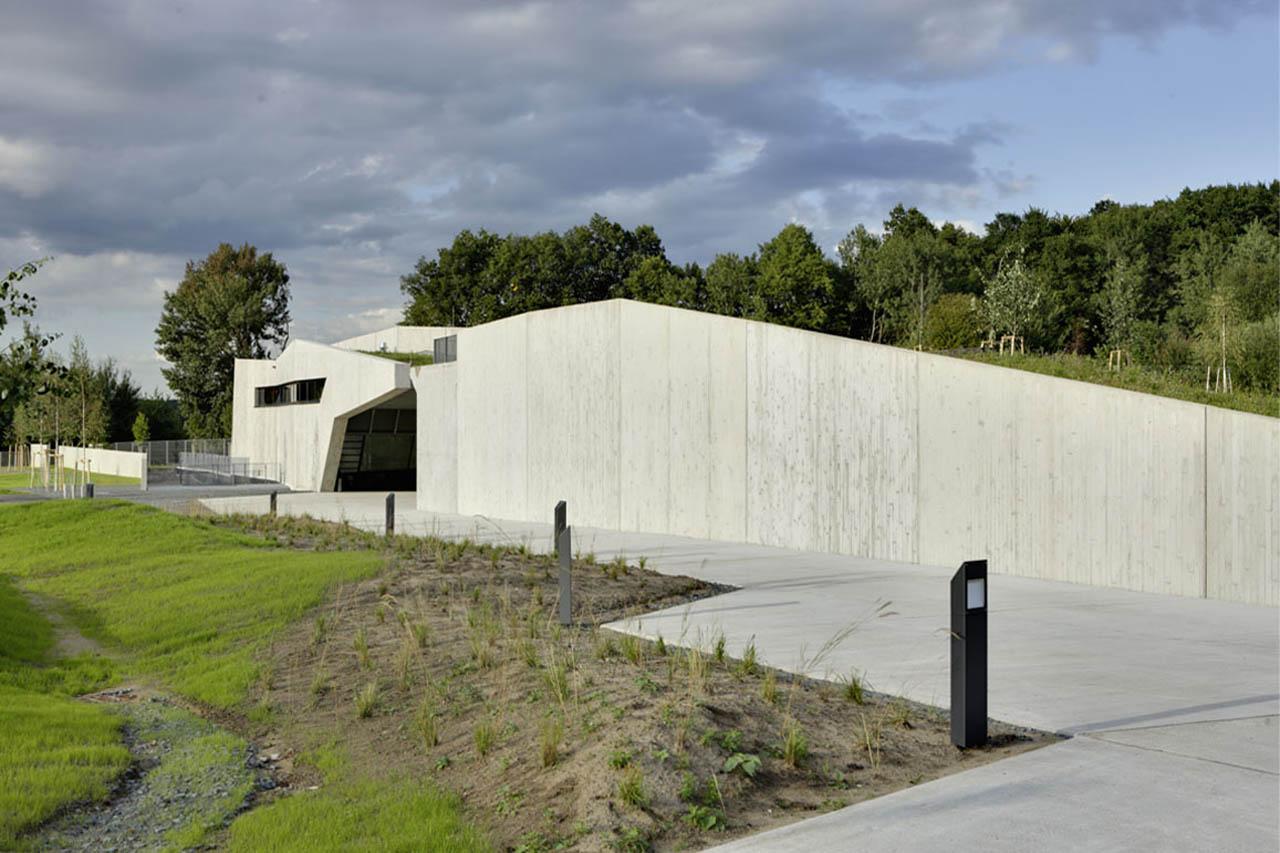 Messel Pit Fossil Site GuideEarly mammals, Early horses
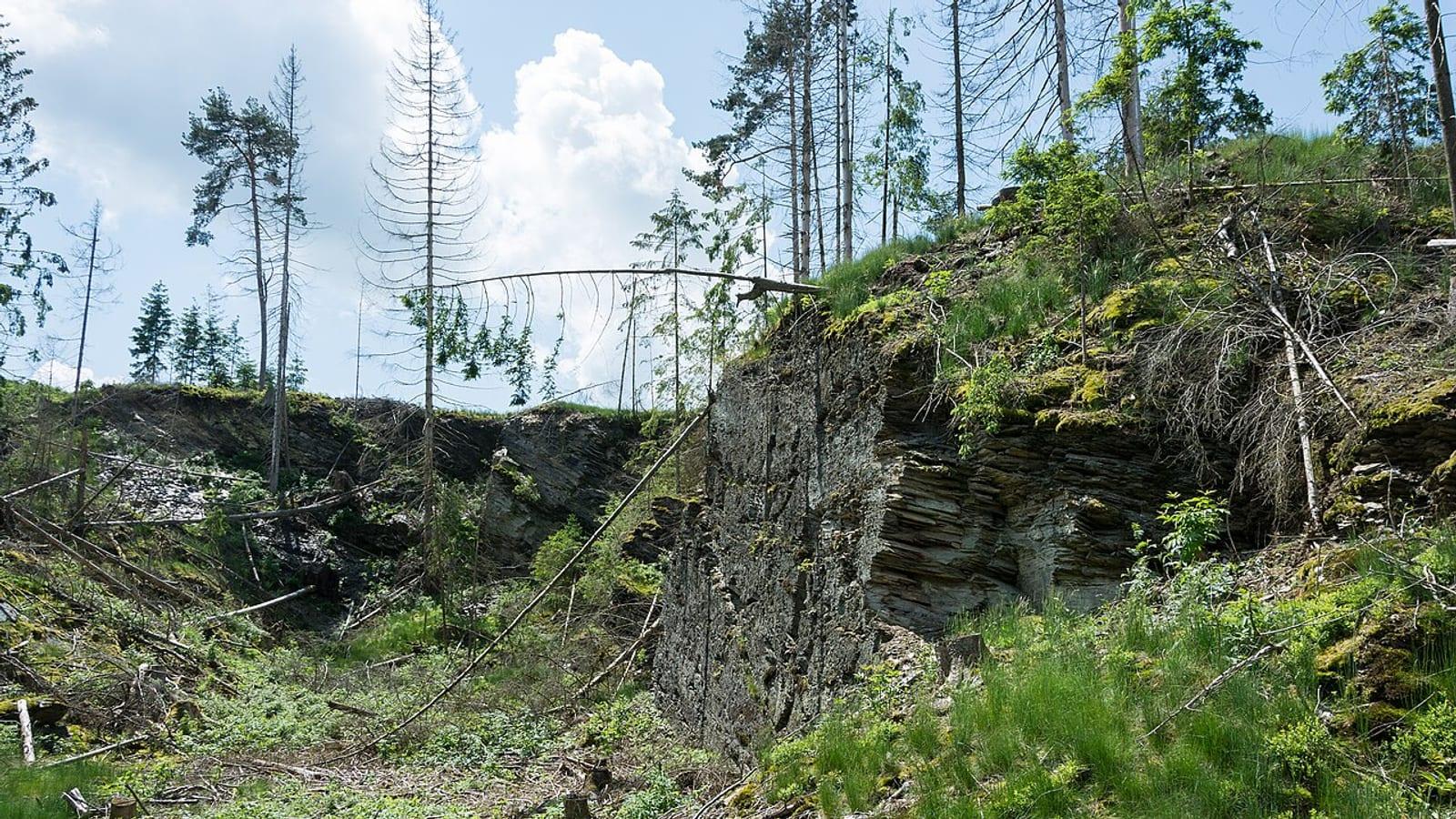 Schieferbruch Kromer Ohmden Posidonia Shale Fossil Hunting GuideAmmonites, Belemnites
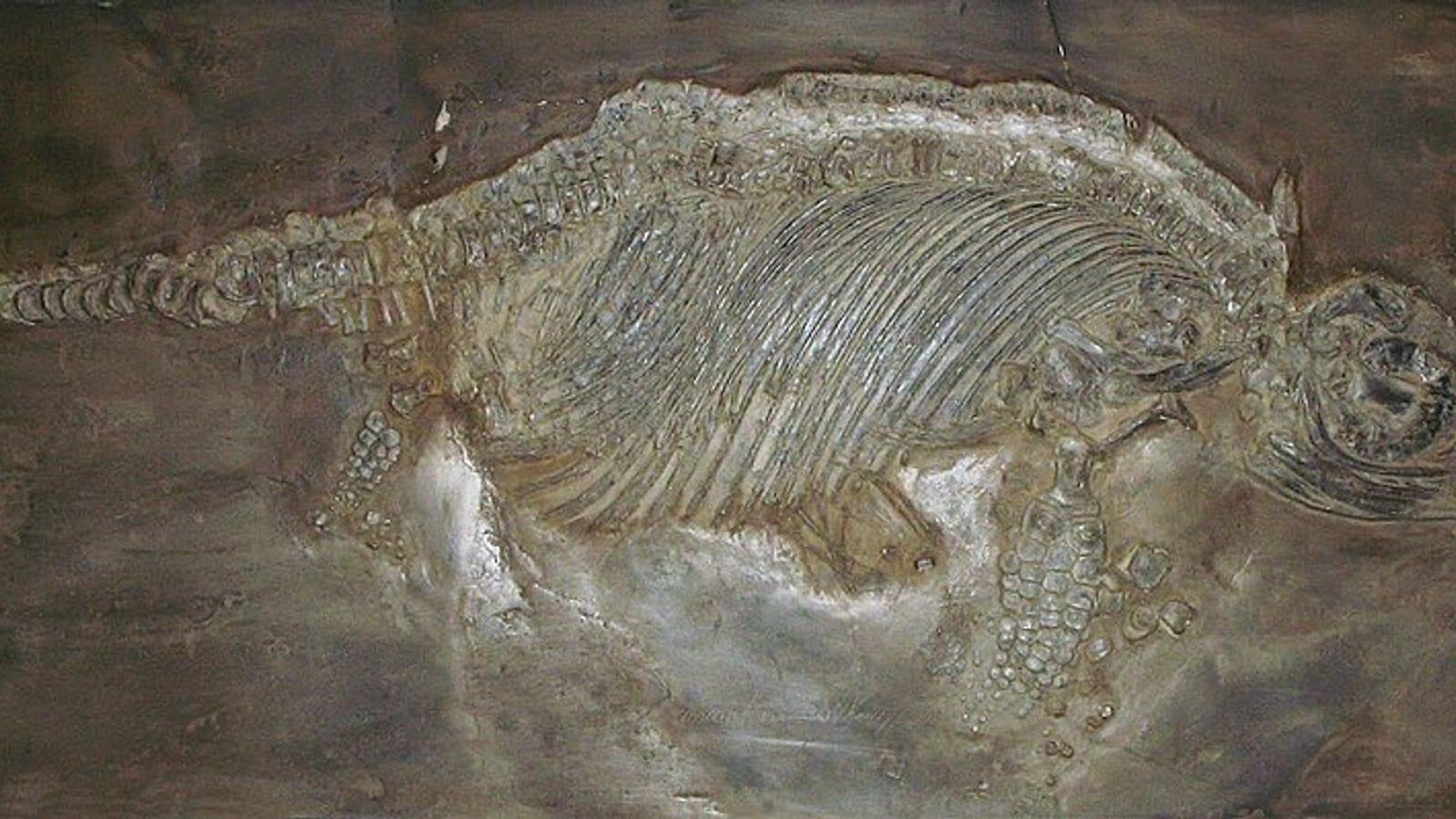
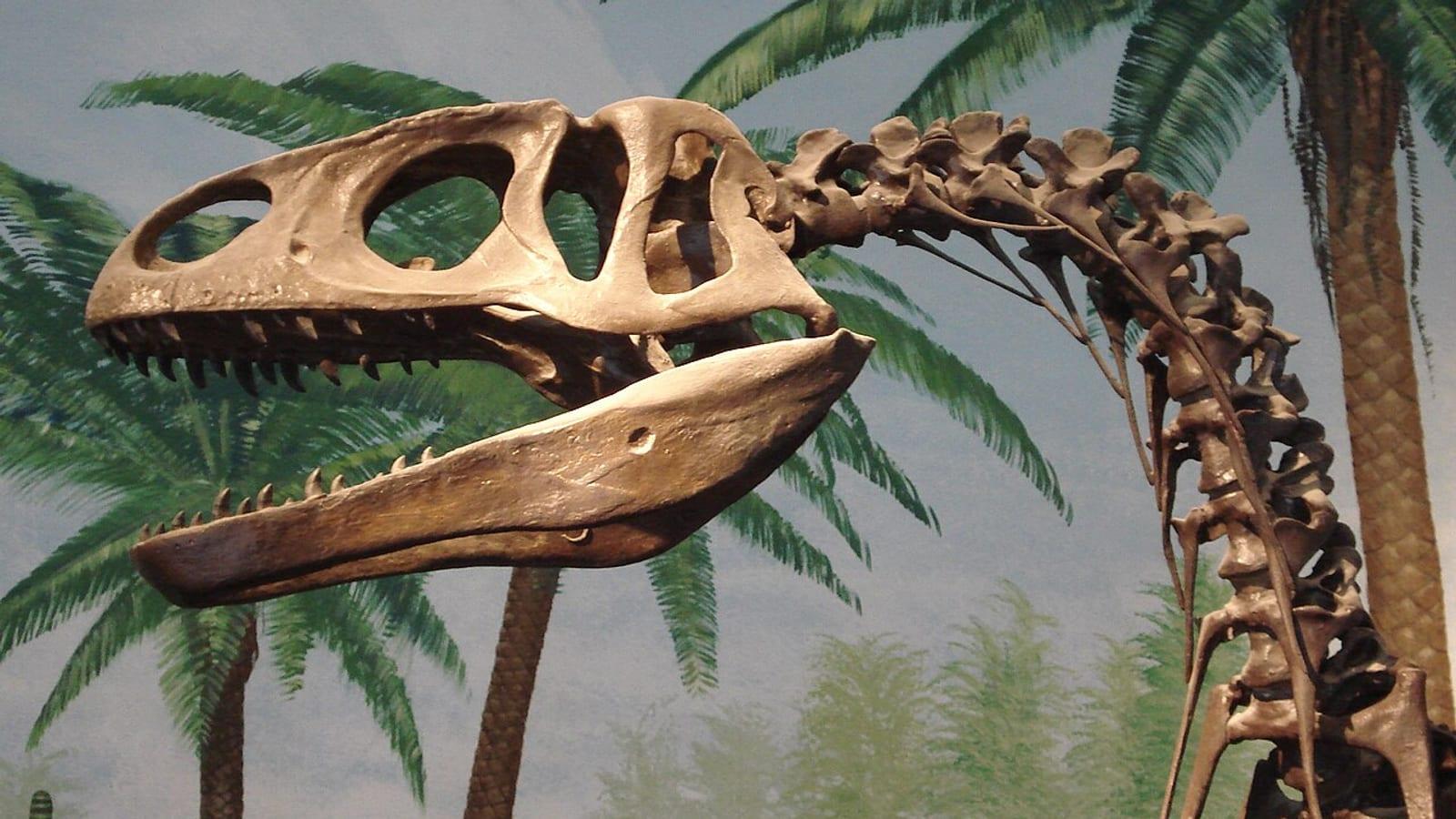 Urweltsteinbruch Holzmaden Posidonia Shale Fossil Hunting GuideAmmonites, Ichthyosaur
 Schiefererlebnis Dormettingen Fossil Klopfplatz Fossil Hunting GuideAmmonites