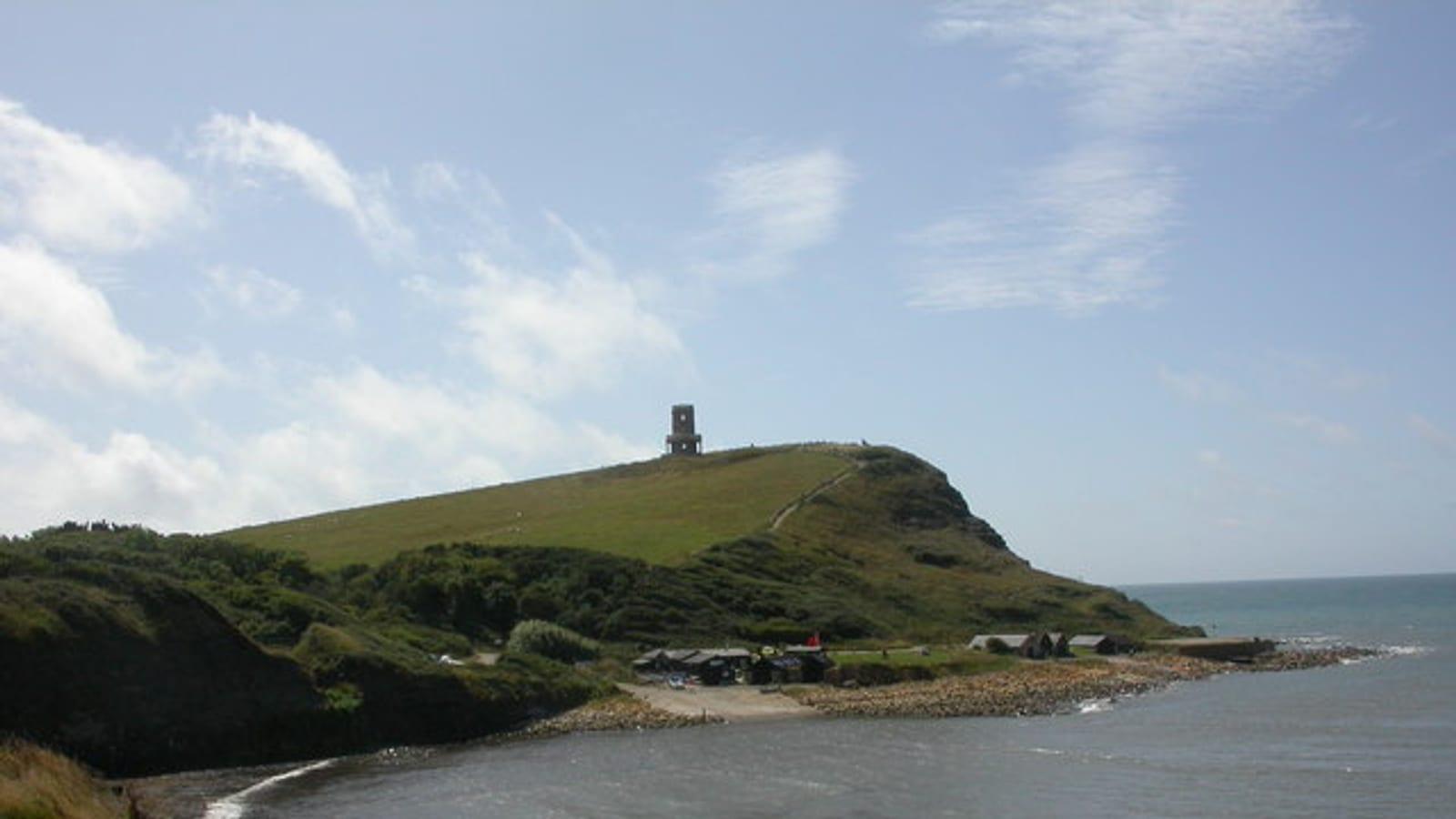
Kimmeridge Bay Fossil Hunting Guide
Image: Mike Faherty via Wikimedia Commons (CC BY-SA 2.0)
Kimmeridge Bay cuts through the type section of the Kimmeridgian Stage, yielding diverse ammonites, fish, and occasional marine reptile remains on the Dorset coast.
By Edward Chen · Updated 2 August 2026
Introduction
Kimmeridge Bay sits within a sheltered arc of Dorset coastline owned by the Smedmore Estate, about 10 kilometres southeast of Wareham. The bay cuts through the Kimmeridge Clay Formation, the type locality for both the formation name and the Kimmeridgian Stage of the Upper Jurassic, used in global geological nomenclature to define a time interval between roughly 157 and 152 million years ago. The clay here preserves one of the most complete records of Late Jurassic marine life in Britain: ammonites in multiple genera, belemnites, bivalves, fish, and marine reptiles including ichthyosaurs, plesiosaurs, and the giant pliosaur Pliosaurus macromerus. The collection built by local resident Steve Etches over decades is now housed in the purpose-built Etches Collection Museum in Kimmeridge village, which provides a useful introduction to what the formation yields. This guide covers the bay itself, the foreshore collecting rules, and the practical information you need to plan a visit.
Kimmeridge is also one of Dorset's finest marine wildlife sites. The Purbeck Marine Wildlife Reserve and the Fine Foundation Wild Seas Centre at the bay's slipway make it a rewarding destination regardless of fossil productivity on any given day.
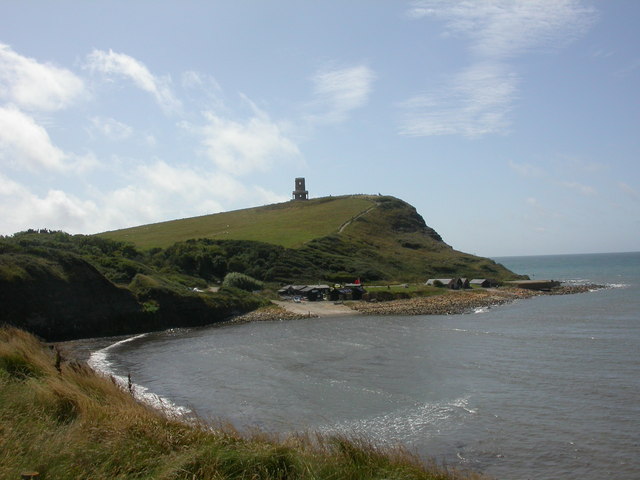 Photo: Mike Faherty, CC BY-SA 2.0, via Wikimedia Commons

Location and Directions
Address
Kimmeridge Bay, Kimmeridge, Wareham, Dorset BH20 5PF, England. GPS: 50.609°N, 2.128°W.
Directions and Parking
From Wareham, take the A351 south towards Swanage. Kimmeridge is signposted from the A351. Follow signs through Corfe Castle village, turn right at Church Knowle, and continue through Kimmeridge village to the toll booth. Note that Kimmeridge is close to the Lulworth Army Firing Ranges, and road diversions via Corfe Castle or Blue Pool occasionally apply. Check the Lulworth Range website before visiting if you are travelling from the east.
A private toll road (Smedmore Estate) leads from the village to the car park at the bay. The toll is charged per vehicle: cars pay approximately £6 (2024 price), motorcycles £1, minibuses and motorhomes £10, vehicles with trailers £15, and coaches £20. Foot and bicycle access is free. The toll booth operates from 8am to dusk and the gate is locked overnight, so if you plan a long visit confirm the closing time on arrival. Two car parks are available: the main car park overlooks the bay and is closest to the beach, and a second car park near Clavell Tower gives access to the west side of the bay. Public toilets, including an accessible facility, are located at the slipway car park. There is no on-site café. Cold drinks and snacks are available from seasonal vendors. In the village, Clavell's Café and Restaurant is directly opposite the Etches Collection Museum and is open for lunch and evening meals.
If you want to visit the Etches Collection Museum (BH20 5PE), it has its own small car park of 45 spaces. If full, use the quarry car park before the village and walk to the museum. The museum is well worth visiting before going to the beach, as it provides direct context for the fossils you are likely to encounter.
 Photo: Kimmeridge Bay by Oast House Archive, CC BY-SA 2.0, via Wikimedia Commons

What Fossils You'll Find
Ammonites are the most diverse fossil group at Kimmeridge. Multiple genera are present in the Kimmeridgian sequence: Aulacostephanus autissiodorensis is very common, along with Pectinatites, Subdichotomoceras websteri, Rasenia, and Gravesia. These occur at different levels in the clay and are useful as biostratigraphic zone fossils. Ammonites are typically found as pyritised moulds in the clay, sometimes beautifully preserved with surface ornament intact. Some are found in the foreshore mudstone blocks that weather out of the cliff base.
 Photo: Ghedoghedo, CC BY-SA 4.0, via Wikimedia Commons

Belemnites are common throughout the formation. The bullet-shaped guards are robust and preserve well in both the clay and the harder mudstone bands. Look for them in loose clay blocks on the foreshore.
Bivalves including oysters and several other genera occur throughout the sequence. The bivalve Deltoideum delta is found near the base of the formation in shallower-water facies. Brachiopods are present in the better-oxygenated intervals of the clay. Fish remains, including scales, teeth, and occasional articulated specimens, are found in the fine-grained mudstone layers, particularly where anoxic conditions were most pronounced.
Marine reptile material is occasionally found at Kimmeridge, though significant specimens are rare for the general collector. Ichthyosaur and plesiosaur bones and teeth have been recovered from the clay and from concretions. The Steve Etches collection includes more than 2,000 specimens from this beach, demonstrating the long-term productivity of the site when worked systematically over many years.
Dinosaur material appears occasionally in the Kimmeridge Clay, washed in from land. Sauropod, ankylosaur, and stegosaur elements have been found, along with driftwood fragments that confirm the proximity of a landmass.
The foreshore also rewards those interested in sedimentary geology: the Kimmeridgian bituminous shales, which are the primary petroleum source rock for North Sea oil fields, are visible here as dark, oil-bearing layers in the cliff faces. The 'nodding donkey' oil pump west of the village, operating since 1959, pumps from Middle Jurassic strata 350 metres below ground and is the UK's longest-operating onshore oil well.
"The first instance of ammonite eggs was found at Kimmeridge Bay.". British Geological Survey
Geologic History
The Ancient Environment
The Kimmeridge Clay Formation was deposited during the Kimmeridgian stage of the Late Jurassic, approximately 157 to 152 million years ago. Britain at this time lay at around 35 to 40 degrees north paleolatitude in a warm, greenhouse world with no polar ice caps. A shallow epicontinental sea, less than 100 to 200 metres deep, covered much of western Europe. This sea was stratified: the surface waters were warm, well-oxygenated, and biologically productive, supporting a rich marine ecosystem, while the bottom waters were frequently oxygen-depleted.
The anoxic bottom conditions are directly responsible for the exceptional preservation at Kimmeridge. When marine organisms died and sank to the seafloor, the absence of scavenging organisms and the slow rate of organic decay in low-oxygen water allowed soft tissues and delicate skeletal structures to be preserved. The same conditions that created exceptional fossils also generated the oil-source rock: the organic-rich black shales accumulated algal and plankton material that was later transformed into petroleum under heat and pressure during burial. This is the source of the North Sea oil that makes the Kimmeridge Clay Formation economically significant beyond its palaeontological importance.
Rhythmic alternation between bituminous (organic-rich) and non-bituminous layers in the cliff face reflects seasonal or longer-term climatic variations in marine productivity and bottom water oxygenation. Driftwood found in the clay confirms that land was nearby, and occasional dinosaur bones washed into the sea from coastal areas confirm the existence of a terrestrial ecosystem within reach of the marine basin.
How Kimmeridge Bay Became a Fossil Collecting Site
The Kimmeridge Clay is a soft, rapidly eroding formation. Wave action at the cliff base and storm scouring of the foreshore continuously break down the clay, releasing fossil material onto the beach. Loose blocks of mudstone and clay accumulate at the base of the cliff and on the rocky foreshore ledges, where they break down further to expose the fossils within. New material is available after every significant storm or high-tide period. The bay's sheltered position relative to the open Dorset coast means the cliffs are eroded primarily by wave action rather than by the most violent Atlantic swell, but erosion is still rapid and continuous.
 Photo: Cliff at Kimmeridge Bay by Oast House Archive, CC BY-SA 2.0, via Wikimedia Commons

Collecting Rules and Regulations
Is Fossil Collecting Allowed?
Kimmeridge Bay is designated as a Site of Special Scientific Interest (SSSI) and forms part of the UNESCO Jurassic Coast World Heritage Site. These designations have specific implications for collecting. You are permitted to collect loose material from the foreshore, specifically fossils that have already eroded out of the cliff and are lying free on the beach or in loose clay blocks on the foreshore. You must not hammer the cliff faces, chip material from in-situ rock exposures, or disturb the in-situ SSSI beds. Surface collecting from loose foreshore material does not require a permit. Collecting is for personal, non-commercial use only. Commercial collecting requires a licence from Natural England. If you find significant vertebrate material such as ichthyosaur or plesiosaur bones, contact the Dorset Museum or the Etches Collection, as significant finds may warrant proper documentation and excavation.
Recommended Tools
Bring a small trowel to turn loose clay and examine material around fallen blocks. A hand lens at 10x magnification helps with ammonite identification. Bring sealable bags and small padded containers for fragile specimens. The foreshore includes slippery clay, loose boulders, and irregular rock ledges. Waterproof footwear with ankle support is essential.
Safety
The cliffs at Kimmeridge Bay are extremely dangerous and experience a high frequency of falls. Fossil-bearing material appears directly under the cliff base, which creates a serious temptation to approach the cliff face. This is a risk that has resulted in injuries at this site. Stay well away from the cliff base at all times. Do not stand beneath overhanging sections or shelter under the cliff during rain. Check tide times: the foreshore narrows at high tide and some sections become inaccessible. The toll road gate closes at dusk. If you plan to stay late, confirm the closing time on arrival to avoid being locked in. There are no lifeguards at the bay. The Fine Foundation Wild Seas Centre is open April to October and staff can provide current site safety information.
Sources
Nearby sites
 Dinosaur Footprints at Worth Matravers, Dorset: Dinosaur Trackwaysnot permitted, Sauropod footprints
 Black Head Osmington Fossil Hunting GuideAmmonites, Belemnites
 Isle of Portland: Dinosaur TrackwaysAmmonites, Bivalves
 Find Fossils at Tidmoor Point Fossil Hunting GuidePyritised and limonitised ammonites, Belemnites