Colorado Fossil Hunting Guide
5 Best Fossil Hunting Sites in Colorado
Colorado is a looking state rather than a collecting state, and a trip here works much better once you accept that. Four of the five sites below are viewing only, because the National Park Service, the Bureau of Land Management and the nonprofit at Dinosaur Ridge all protect what is in the ground. Three of them, Dinosaur Ridge, Garden Park and Fruita, sit in the Late Jurassic Morrison Formation and trace back to the 1877 bone rush that named Stegosaurus and Allosaurus. The fifth, the Florissant Fossil Quarry, is private ground a mile from a national monument, and it is the one place on this list where a visitor keeps what they split out of the shale.

5 fossil sites
Updated 4 August 2026
What makes Colorado productive
The Morrison Formation does most of the work. It was deposited across the Western Interior in the Late Jurassic, between roughly 155 and 148 million years ago, on a low-relief plain of rivers, ponds and floodplain swamps east of the rising western Cordillera. The climate swung between wet and dry seasons, and carcasses on the floodplain were swept into channel sandbars during flood pulses and buried under fresh sand. That is why bone at Dinosaur Ridge sits in a thin lens on a former point bar rather than spread through the section, and why the hard bone-bearing sandstone at Garden Park still stands out above the softer mudstone badlands. Fruita records the quieter corners of the same landscape. Its small-vertebrate material comes from fine-grained overbank and pond deposits, where the delicate bones of frogs, lizards and mammals could be buried without being destroyed, which is rare in a formation better known for sauropods. The Laramide Orogeny later tilted all of it, steeply enough at Morrison to stand the trackway surface on edge beside the road.
The second record is volcanic and much younger. About 34 million years ago, lahars and pyroclastic flows from the Guffey volcanic centre, some 15 miles southwest of Florissant, dammed a stream and created a lake. Volcanic ash fell repeatedly into the water and diatoms bloomed in it, and the two settled together as an extremely fine mud on a still, oxygen-poor lake floor. A leaf or an insect that drifted onto the surface was buried gently and completely, which is why wing venation and leaf veins survive in the paper shale. Sanidine crystals in the upper ash layer date the lake interval to roughly 34.07 million years. The same mudflows buried the bases of redwoods growing around the shore and snapped the trunks above the mudline, and silica leached from the surrounding tuff replaced the wood inside intact stump shapes. The monument protects those stumps and the shale. The quarry a mile north works the lake beds themselves, which is why it produces leaves and insects rather than petrified trunks.
- 1
Dinosaur Ridge: Dinosaur Trackways
Colorado, United States
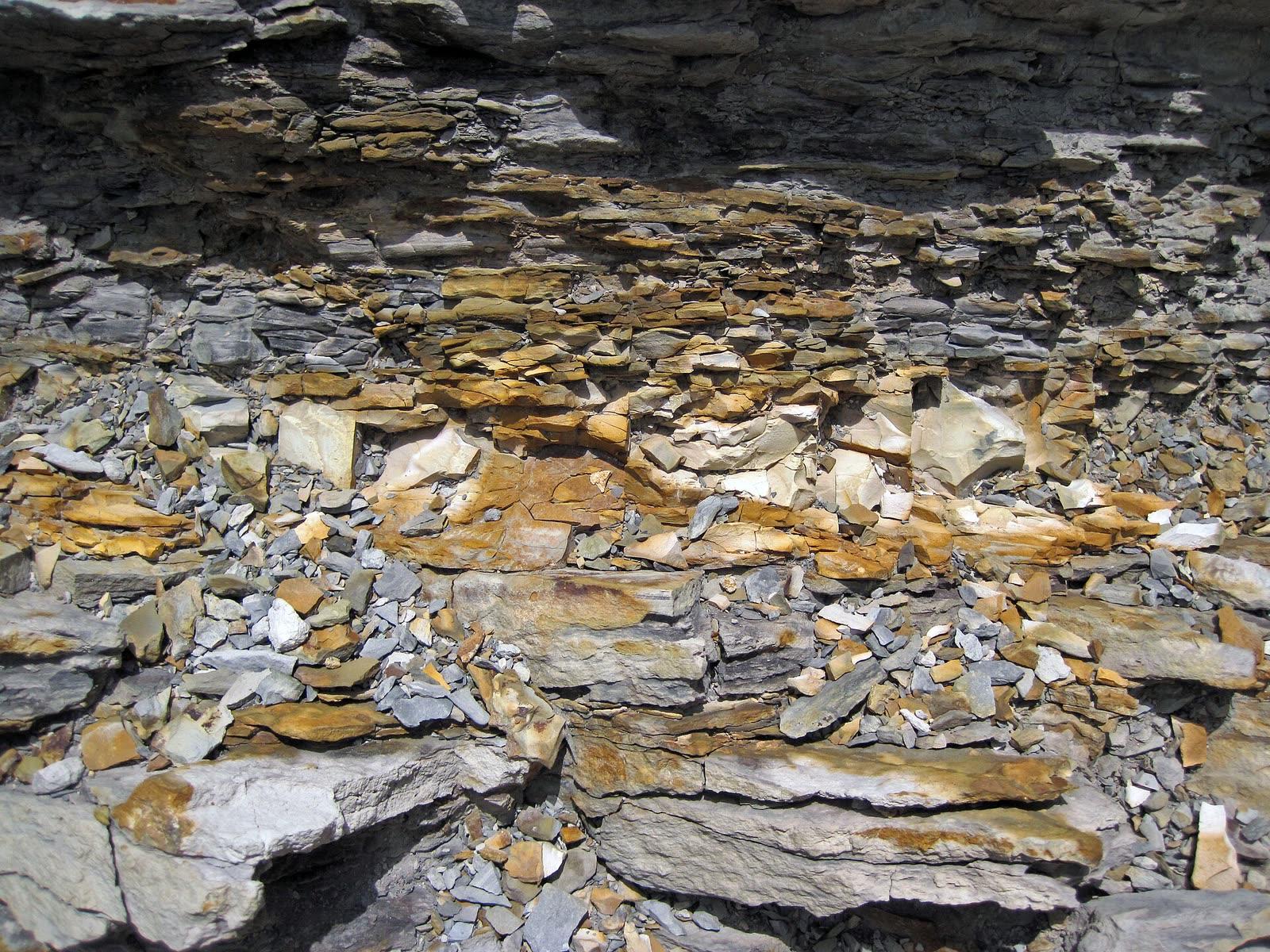
Viewing onlyDinosaur TracksDinosaur BonesTrace FossilsDinosaur Ridge puts two fossil horizons 50 million years apart on either side of one walkable road, 15 miles west of Denver. The west side exposes the Morrison Formation bone bed that Arthur Lakes quarried in 1877, the source of the bones Marsh used to name Stegosaurus, Apatosaurus and Allosaurus. The east side carries more than 300 dinosaur tracks on a single steeply tilted Dakota Group bedding plane, along with ripple marks, fossilised microbial mat textures and sauropod footprint casts bulging from the undersides of overhanging beds. Everything is in place and protected, so this is viewing only, and walking or cycling the two-mile route is free during open hours. Friends of Dinosaur Ridge run the visitor centre, a paid Exhibit Hall and a paid bus tour for anyone who would rather not climb the 300 feet of elevation.
Read the full guide → - 2
Florissant Fossil Beds National Monument Fossil Hunting Guide
Colorado, United States
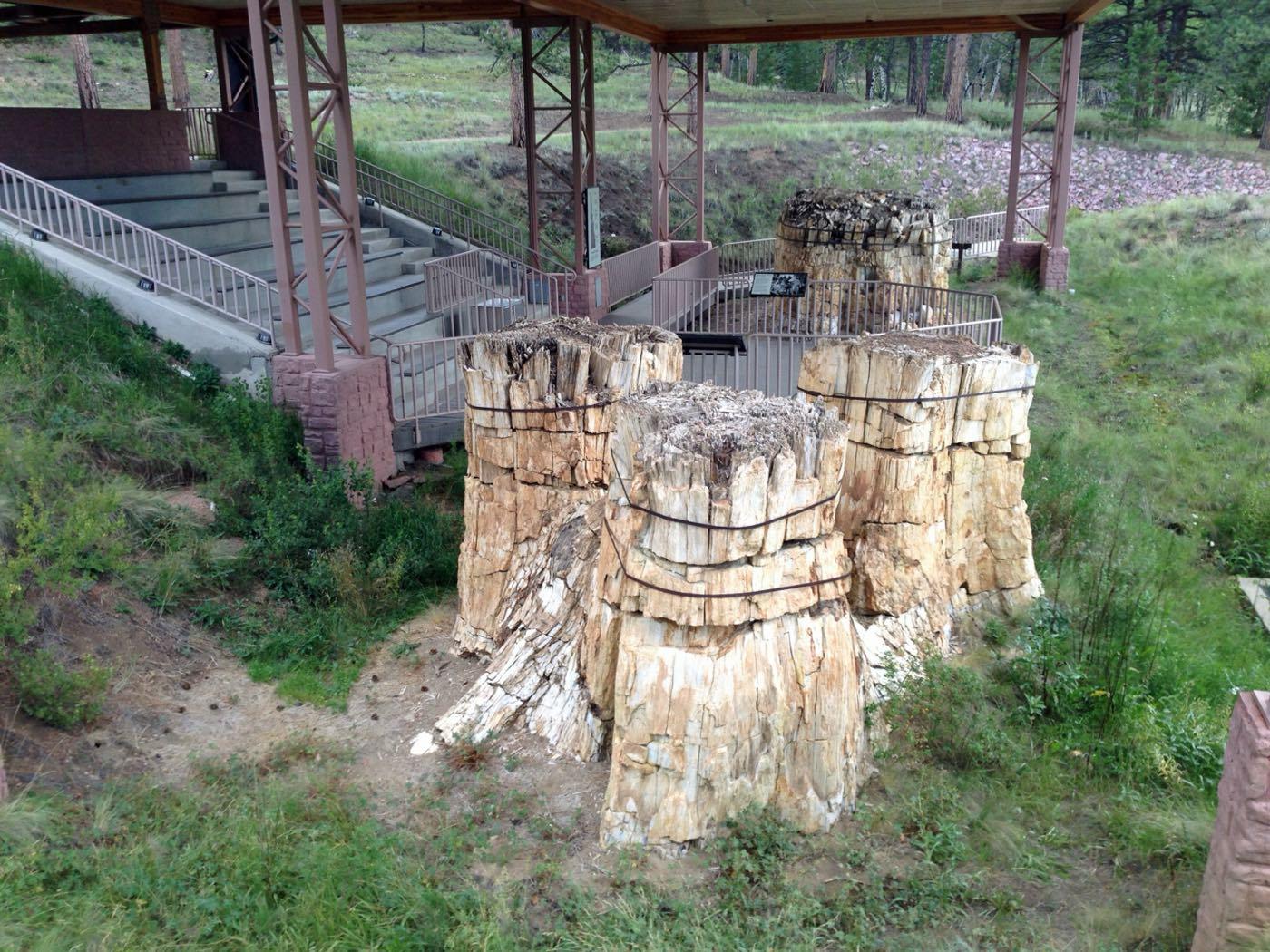
Viewing onlyInsectsPlant leavesPetrified redwood stumpsFlorissant protects a 34-million-year-old lake bed in paper-thin shale that has yielded more than 1,700 described insect species and over 150 plant species, one of the largest late Eocene assemblages catalogued in North America. Above the shale stands a grove of petrified redwood stumps, the largest of them about 12 feet across, buried to the base by a volcanic mudflow and then replaced by silica. Fourteen miles of trails loop past the stumps, the Hornbek homestead and the meadow where the lake once sat, and the visitor centre gallery holds many of the type specimens. Collecting is federally prohibited, which covers shale fragments with insect impressions and chips of petrified wood on the trail. Entry has been 10 US dollars per person, with America the Beautiful passes accepted, and the monument is open year-round at 8,400 feet.
Read the full guide → - 3
Florissant Fossil Quarry Fossil Hunting Guide
Colorado, United States
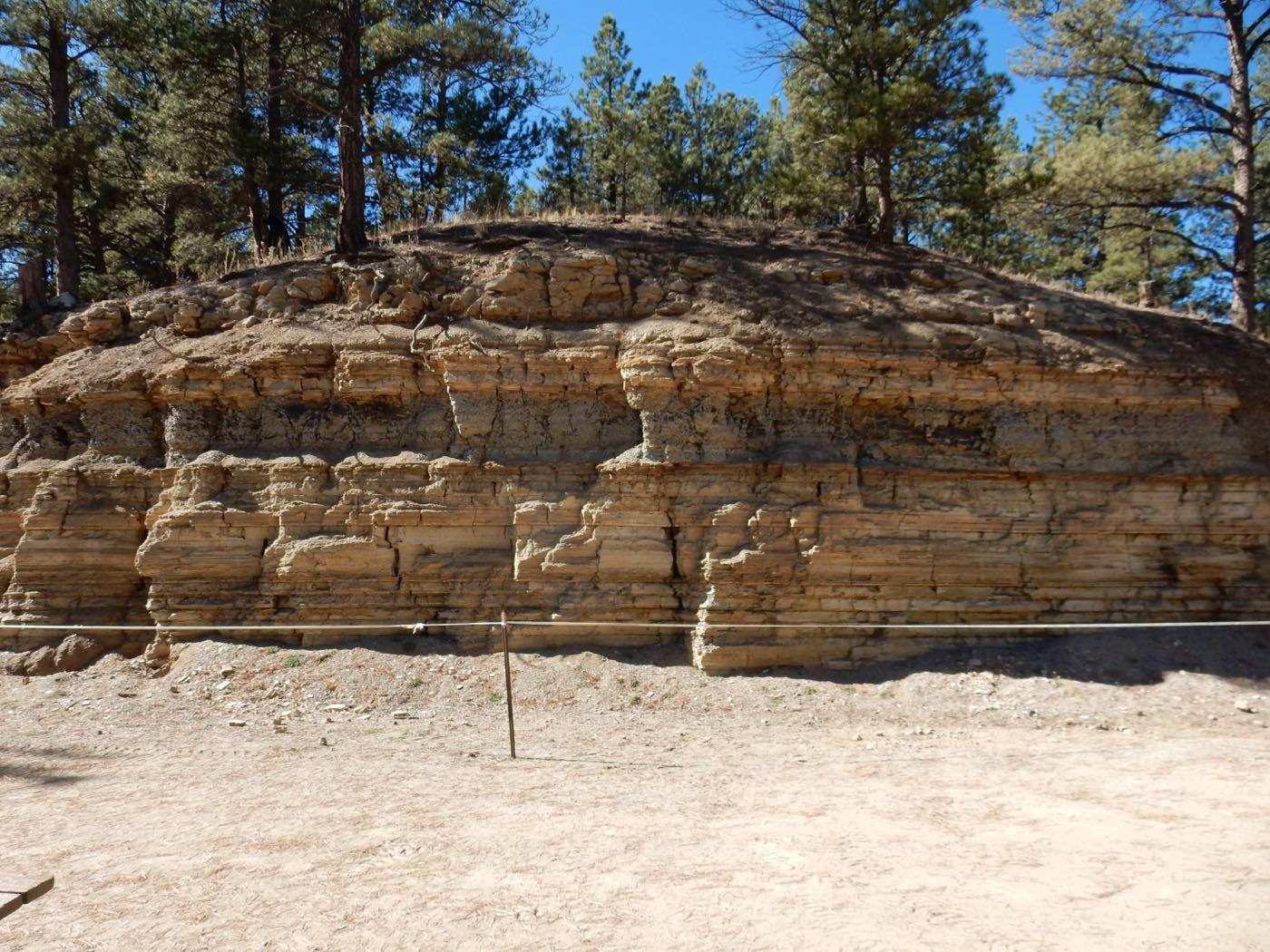
Pay to digPlantsInsectsFishThe Florissant Fossil Quarry is the one place in this guide where a visitor keeps what they split out of the rock. It is a private, family-run pay-to-dig operation on County Road 1, roughly a mile north of the national monument, working the same Late Eocene lake shale that the monument protects. Leaves are the mainstay and the most reliable find, often complete with vein structure clear enough to identify the tree, while insects turn up less often and show wing venation down to the individual cell. Fish and petrified wood are in the mix as well. The rate has been 20 US dollars per collector per hour, cash only, with tools, brushes, magnifiers, eye protection and instruction included, which makes this the best Colorado site for a first attempt at splitting shale.
Read the full guide → - 4
Fruita Paleontological Area Fossil Hunting Guide
Colorado, United States
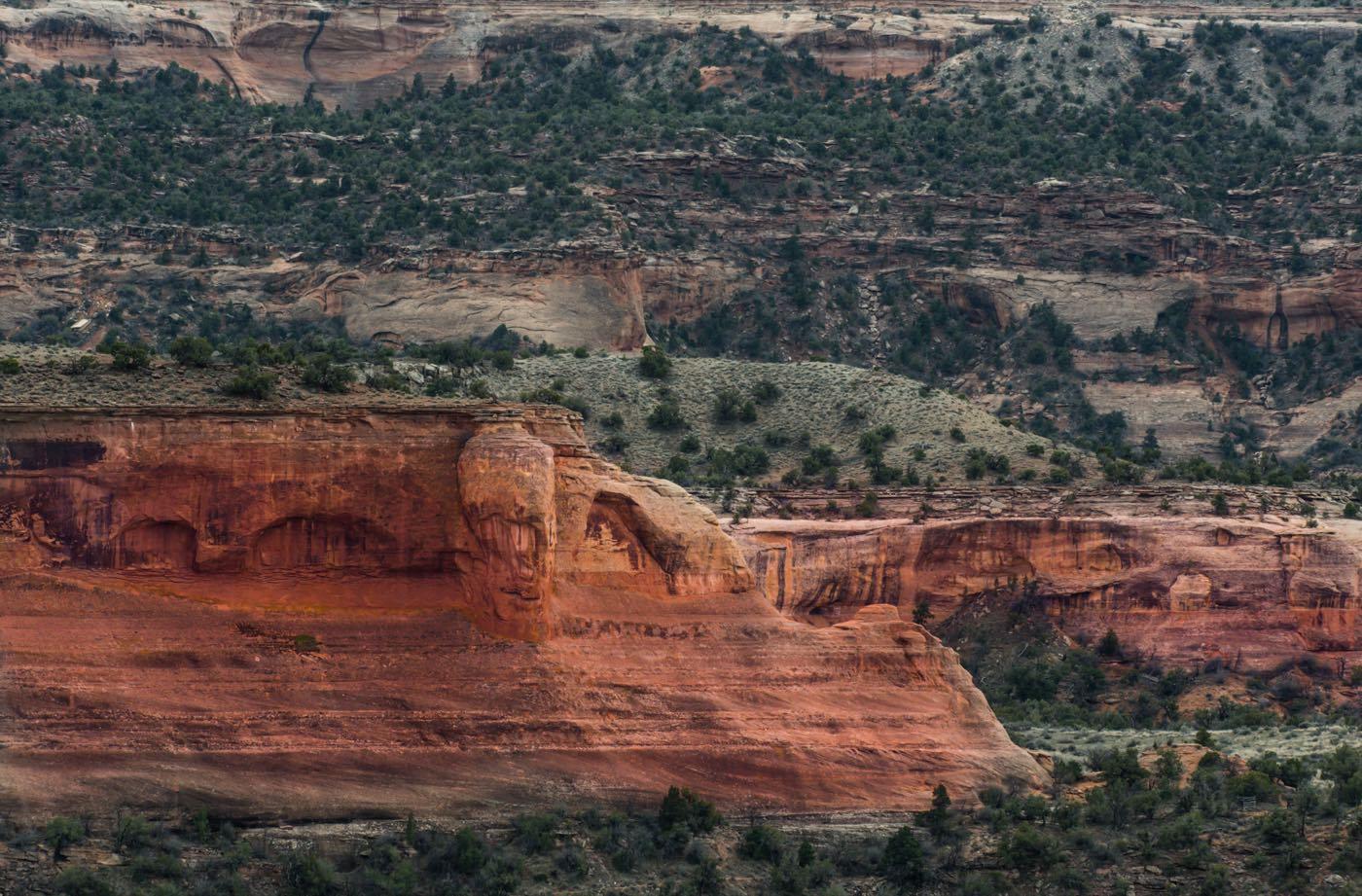
Viewing onlyDinosaur bonesMammal remainsReptile remainsFruita was the first parcel the Bureau of Land Management set aside specifically for its fossils rather than for scenery or recreation, and it is in this guide for what the Morrison Formation produced here rather than for what remains on the ground. The fine-grained overbank and pond beds preserved the small animals of the Late Jurassic, including Fruitadens, one of the smallest ornithischian dinosaurs known at roughly two feet long, the burrowing mammal Fruitafossor and the small crocodile relative Fruitachampsa. A well-preserved Ceratosaurus cranium came out in 1976 and now greets visitors at the Dinosaur Journey Museum three miles away. Be clear about the trade before driving out, because the quarries the Paleo Loop crosses are worked out and roughly a third of the interpretive panels are no longer readable. Day use is free, the trail is foot traffic only, and the first graded section near the trailhead takes wheelchairs.
Read the full guide → - 5
Garden Park Fossil Area Fossil Hunting Guide
Colorado, United States
Viewing onlyAllosaurus fragilis (type)Stegosaurus stenops (type)Diplodocus longusGarden Park is the other half of the 1877 bone rush, where Oramel Lucas dug for Cope on the east side of Four Mile Creek while Marshall Felch dug for Marsh on the west. Between them the two quarries produced the type specimens of Stegosaurus stenops, Camarasaurus supremus and Ceratosaurus nasicornis, plus the first complete Allosaurus skeleton, and the Denver Museum of Nature and Science recovered a near-complete juvenile Stegosaurus from the Small Quarry in the late 1990s. The BLM manages 4,800 acres here as an Area of Critical Environmental Concern, so collecting is prohibited and two marked overlooks with weather-proof panels do the interpretation. The Marsh-Felch stop has a gravel pullout and a short path to the quarry scarp, and the Cope-Lucas stop is a half-mile gravel walk. Finish in Cañon City at the Royal Gorge Regional Museum and History Center, the federal repository for Fremont County public-land fossils since 2014.
Read the full guide →
Planning your visit
When to visit
Late spring through early autumn opens the most ground, with mornings strongly preferred. Thunderstorms build over the Front Range almost daily between mid-June and early September and bring hail and lightning to exposed meadows, ridges and open quarries. Snow can fall at Florissant in any month, winter trail surfaces there are often icy, and the quarry is seasonal and weather-dependent at altitude. Summer temperatures at Garden Park regularly pass 90 degrees Fahrenheit with little shade at the overlooks, and Fruita is high desert with the same problem. Dinosaur Ridge is open daily from an hour before sunrise to an hour after sunset, though the Exhibit Hall and shuttle run reduced winter hours.
What to bring
Water, sun protection and layers, at every one of these sites. There is no potable water at the Fruita trailhead and none at the Garden Park overlooks, and the Dinosaur Ridge road has one portable toilet and almost no shade. Take closed shoes with good traction for packed sand, loose badland slopes and uneven quarry spoil, and traction devices for Florissant from late October through April. Bring cash for the Florissant Fossil Quarry, which has been cash only, and leave the tools at home, because the quarry supplies them and the other four sites prohibit hammering altogether. An America the Beautiful pass covers monument entry.
Rules and access
Four different managers, one broadly similar answer. At Florissant Fossil Beds the National Park Service prohibits removing, damaging or disturbing any paleontological resource under the Paleontological Resources Preservation Act of 2009 and 36 CFR 2.1, which covers shale fragments with impressions and chips of petrified wood, and drones are not allowed. The Bureau of Land Management protects Fruita and Garden Park as Areas of Critical Environmental Concern under the same Act, so stay on the marked trails and overlook paths, do not dig or hammer, and report newly exposed bone to the Grand Junction Field Office on (970) 244-3000 rather than touching it. At Dinosaur Ridge, Friends of Dinosaur Ridge, Jefferson County Open Space and the City of Lakewood protect the fossils under local ordinance and Colorado state law, and marking or removing any of them is a citable offence. Only the Florissant Fossil Quarry sets its own terms, as private land, where you pay per collector per hour and follow staff direction on which faces to work.
Getting there
Denver covers the first stop. Dinosaur Ridge is 15 miles west of downtown, by Interstate 70 to Exit 259 and then south on West Alameda Parkway for about two miles to the Main Visitor Center, where parking is free. For Florissant, take US-24 west from Colorado Springs through Woodland Park, then County Road 1 south for two miles to the monument, with the quarry a mile further north on the same road. Colorado Springs Airport is about an hour away and Denver International about two and a quarter. Garden Park is 6 miles north of Cañon City on Fremont County Road 9, off US-50, roughly 45 miles southwest of Colorado Springs. Fruita is the long haul, on Interstate 70 in the Grand Valley, with the trailhead 1.5 miles south on Colorado 340 and then 2.2 miles along Kingsview and Horsethief Canyon Road.
Want every documented location, not just the curated top sites? Browse the full index of Colorado fossil sites for the complete list, including locations beyond this guide. This guide is part of our national roundup of the best places to fossil hunt in the United States.
Frequently asked questions
- Can you collect fossils in Colorado?
- At the sites in this guide, almost never, and the one exception is private land. Florissant Fossil Beds is a National Park Service unit where collecting is a federal offence under the Paleontological Resources Preservation Act of 2009 and 36 CFR 2.1. Fruita Paleontological Area and Garden Park Fossil Area are Bureau of Land Management Areas of Critical Environmental Concern, where removing, casting or disturbing any fossil is prohibited and vertebrate material may only be collected by permitted researchers. Dinosaur Ridge is managed by Friends of Dinosaur Ridge with Jefferson County Open Space and the City of Lakewood, and its fossils are protected under local ordinance and Colorado state law. The Florissant Fossil Quarry is private ground where you pay by the hour and keep what you find.
- Where can you keep what you dig in Colorado?
- The Florissant Fossil Quarry, about a mile north of the national monument on County Road 1. The rate has been 20 US dollars per collector per hour, cash only, and children who collect count as collectors. Splitting tools, brushes, magnifying glasses and eye protection all come with the fee, along with a lesson in how to part the shale, so there is no need to bring equipment. There is no size limit and no reporting requirement, this being private land. Hours have run Monday to Saturday, roughly ten to five, with the last group starting an hour before closing.
- Can you visit both Florissant sites in one day?
- Yes, and that is the better plan. The monument has the standing petrified stumps, the interpretive trails and the gallery of type specimens, which makes the shale you split afterwards far more meaningful. The quarry is a mile up the road and is where the collecting happens. Allow for the altitude in your timings, because the valley sits above 8,000 feet and visitors arriving from lower elevations feel it on the longer loop trails.
- What is there to see at Dinosaur Ridge?
- The signature feature is the Main Trackway on the east side, where more than 300 dinosaur tracks are exposed on one bedding plane of Dakota Group sandstone. Most are large four-toed ornithopod prints, and one sequence of a smaller print beside a larger one has been read as evidence of group or parental behaviour. Smaller three-toed theropod tracks and shorter crocodyliform prints occur on adjacent surfaces. The same sandstone preserves wave ripples, mud cracks and wrinkled microbial mat textures, and a thin white volcanic ash bed in the section was dated by MIT in 2009 to about 104.6 million years. On the west side, the 1877 quarry layer shows as a band of rusty bone fragments in greenish-grey Morrison mudstone.
- Where can you dig for dinosaur bones in Colorado?
- The Mygatt-Moore Quarry, which the Museums of Western Colorado manage and open to the public as a half-day or full-day booking. It is the nearest legal digging to the Fruita Paleontological Area, just inside the Colorado border on the way to Grand Junction. Every fossil recovered stays with the museum, which is the trade for joining a working excavation rather than collecting for yourself. The trails around Fruita and across the Utah border are largely BLM land, and the dinosaur bone visible in place on several of them is protected.
- What should you plan around at Colorado fossil sites?
- Elevation and afternoon weather. Florissant lies at 8,400 feet, Dinosaur Ridge sits at around 6,000 feet with a steady climb and almost no shade, and snow can fall at Florissant in any month. Thunderstorms build over the Front Range almost daily between mid-June and early September and bring hail, so take ridge and meadow trails in the morning and be ready to turn back. Rattlesnakes are present on the Dinosaur Ridge hogback, in the Garden Park badlands and at Fruita in warm weather. Carry more water than you expect to need, since there is none at the Fruita trailhead or the Garden Park overlooks.
Recommended resources
- Friends of Dinosaur Ridge · The nonprofit that interprets the ridge. Current Exhibit Hall prices, bus tour times and seasonal shuttle hours live here, and all three change through the year, so check before driving out.
- National Park Service: Florissant Fossil Beds National Monument · Opening hours, the entry fee, trail conditions and the monument's own pages on the Eocene lake and its fauna. It is also the authority on what collecting at an NPS unit costs you.
- Bureau of Land Management: Garden Park Fossil Area · The land manager's page for the Marsh-Felch and Cope-Lucas quarry overlooks. The Royal Gorge BLM Field Office in Cañon City advises on current conditions and on the signed boundary of the protected area.
- Florissant Fossil Quarry · Hours, directions and rates for the pay-to-dig quarry north of the monument. The season is weather-dependent at this altitude and payment has been cash only, both worth confirming by phone first.