Florissant Fossil Beds National Monument Fossil Hunting Guide
Image: Fredlyfish4 (CC BY-SA 3.0)
Florissant Fossil Beds National Monument protects a 34-million-year-old lake bed in the Colorado Front Range that preserves insects, leaves, fish, and petrified redwood stumps in the Florissant Formation. The NPS unit is viewing-only. Adjacent private quarries handle pay-to-dig collecting.
By Edward Chen · Updated 2 August 2026
Introduction
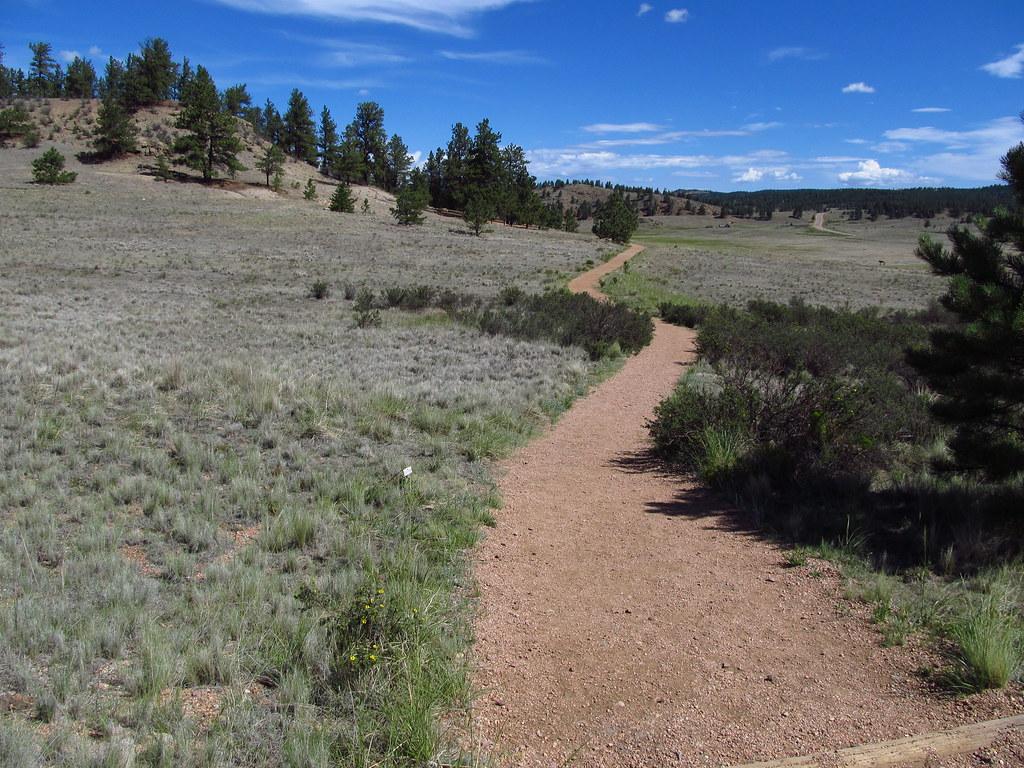
Florissant Fossil Beds National Monument lies in a high valley at 8,400 feet elevation on the west flank of Pikes Peak in central Colorado. The monument was established in 1969 to protect a 34-million-year-old lake bed of paper-thin shale that preserves one of the largest catalogued late Eocene insect and plant assemblages in North America, with more than 1,700 insect species and 150 plant species described to date, along with a grove of large standing petrified redwood stumps that have weathered out of the surrounding tuff. The monument is administered by the National Park Service and collecting is federally prohibited. Visitors view fossils on the exhibit galleries inside the visitor center and along about 14 miles of trails that loop past the standing petrified stumps, the historic Hornbek homestead, and the open mountain meadow that now sits where the Eocene lake once stood. Adjacent private quarries handle pay-to-dig commercial collecting outside the monument boundary, including the Florissant Fossil Quarry off County Road 1, which is covered in its own page on this site. This guide deals with the NPS unit.
Location and Directions
The monument lies in Teller County, Colorado, about 35 miles west of Colorado Springs and 60 miles south of Denver. From Colorado Springs, take US-24 west through Woodland Park to the small town of Florissant, then turn south on Teller County Road 1 for about 2 miles to the visitor center.
The visitor center is at 15807 Teller County Road 1, Florissant, Colorado 80816. GPS is 38.9123 degrees north, 105.2839 degrees west. Parking is paved and accessible. The visitor center holds the main fossil gallery, restrooms, water, and the trailhead for the Petrified Forest Loop.
The monument is open year round. The visitor center keeps regular hours throughout the year, with reduced hours in winter. Trails are accessible during daylight hours unless closed for snow or wet conditions. The standard entry fee is 10 US dollars per person at the time of writing. America the Beautiful annual passes are accepted.
The closest commercial airports are Colorado Springs Airport (about an hour) and Denver International Airport (about two and a quarter hours). Fuel and basic groceries are available in Florissant and Woodland Park. There is no lodging or camping in the monument itself.
 Photo: Fredlyfish4, CC BY-SA 3.0, via Wikimedia Commons

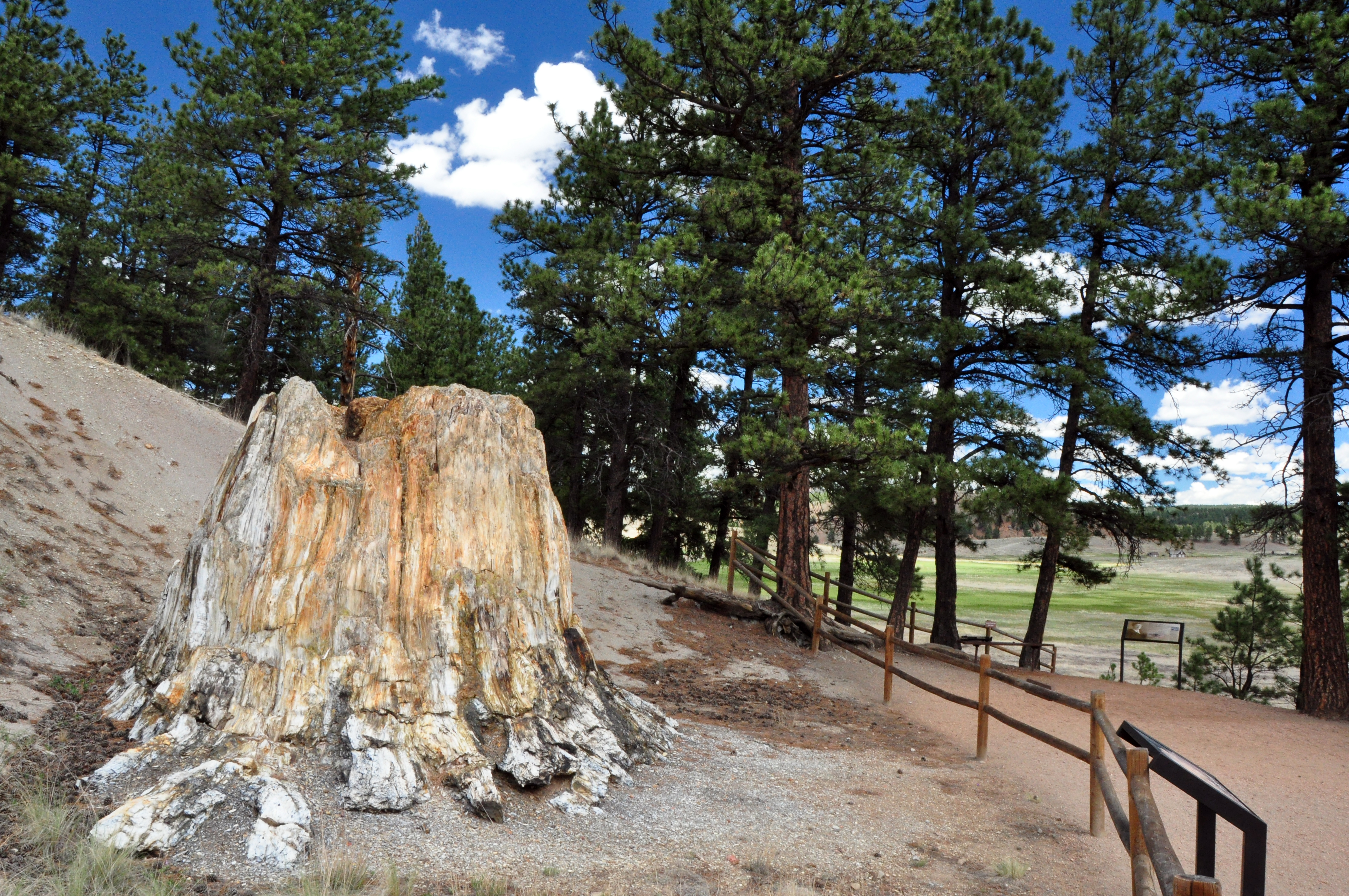 Photo: NPS Photo, public domain, via National Park Service
What Fossils You'll Find
You will not collect at Florissant Fossil Beds. What you can do is see roughly 1,700 catalogued insect species, more than 150 plant species, and one of the densest concentrations of standing petrified redwood stumps anywhere in the world. Identifications below are drawn from the NPS resource pages and from the UCMP Berkeley summary of the monument.
- Sequoia affinis. A close relative of the modern coast redwood. The standing stumps along the Petrified Forest Loop are the most prominent feature of the monument. The largest stump, the Big Stump, measures about 12 feet across.
- Florissantia quilchenensis. A wind-pollinated flower described from compressed remains in the lake shale. Florissant is the type locality.
- Tsetse fly (Glossina oligocenus). A late Eocene tsetse fly described from the lake shale. The species links the Florissant flora and fauna to a warmer subtropical climate than central Colorado supports today.
- Butterflies, beetles, lacewings, and dragonflies. Compressed insect bodies with wing veins, antennae, and gut contents are preserved in the finely laminated paper shale. Many holotypes are on display in the visitor center gallery.
- Trichophanes hians. A small fossil fish of the percopsiform family, recovered from finely laminated shale beds.
- Vertebrate trace fossils. Bird feathers and rare small-mammal bones occur in the same shale beds as the insects.
The Carnegie Museum, the Smithsonian, the University of Colorado Museum of Natural History, and the Denver Museum of Nature and Science hold large historic collections of Florissant material. Many type specimens are illustrated on display panels along the trails.
 Photo: James St. John, CC BY 2.0, via Wikimedia Commons
_(Florissant_Formation,_Upper_Eocene;_Florissant_area,_Colorado,_USA)_1_-_54145282764.jpg)
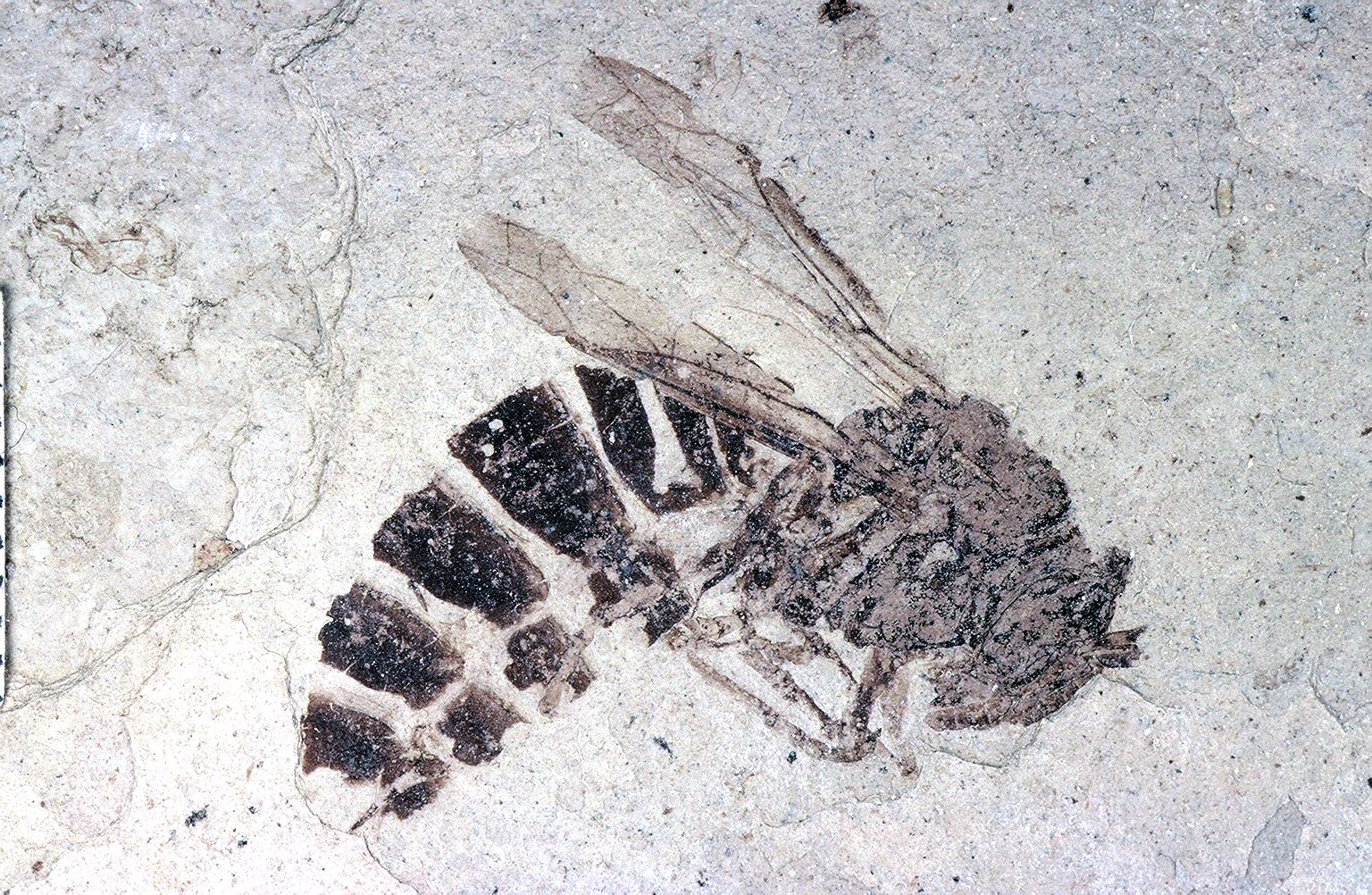 Photo: NPS Photo, public domain, via National Park Service
Geologic History
The fossils come from the Florissant Formation, a sequence of paper shale, diatomite, and reworked volcanic ash that filled an ancient lake 34.07 million years ago, at the very end of the Eocene Epoch. The lake formed when lahars and pyroclastic flows from the Guffey volcanic centre, about 15 miles to the southwest, dammed an ancestral stream draining toward Florissant Valley. Subsequent ash falls into the standing lake created the fine laminations that preserved insect bodies and leaf venation.
Radiometric ages on sanidine crystals in the upper ash layer constrain the lake interval to roughly 34.07 million years ago. The age sits within the Priabonian stage of the late Eocene and coincides with the start of major Eocene-Oligocene cooling.
The petrified redwood stumps in the lower valley grew on a forested floodplain. A lahar from the Guffey volcano flowed across the forest, buried the bases of mature trees in volcanic mud, and snapped off the trunks above the mudline. Silica leached from the surrounding tuff replaced the wood, preserving cellular structure inside intact stump shapes. Several stumps along the Petrified Forest Loop retain external bark texture.
The surrounding rocks of the Pikes Peak Granite and the Wall Mountain Tuff form the valley walls, and the monument sits in a structural basin within the larger Front Range uplift.
 Photo: Fredlyfish4, CC BY-SA 3.0, via Wikimedia Commons

How Florissant Became a Fossil Site
The fossils were known to Ute and to homesteaders in the Florissant valley by the 1860s. Theodore L. Mead, a nineteen-year-old Cornell student on a butterfly-collecting trip, gathered about twenty fossil insects at Florissant in 1871 and passed them to W. H. Edwards, who forwarded them to Samuel Scudder. Mead is credited with making Florissant material available for scientific study for the first time. Samuel H. Scudder of Harvard described many of the type insects in a series of monographs in the 1880s and 1890s. Princeton, the Carnegie Museum, and the American Museum of Natural History all ran field parties in the basin between 1900 and 1920.
In the 1960s, plans to subdivide and develop the fossil-bearing meadow drew national attention from paleontologists. The Defenders of Florissant lawsuit, brought by a coalition of scientists led by Estella Leopold and Bettie Willard, won an injunction against bulldozers in 1969. Congress established the national monument later that year. Research collection has continued under federal permit, and the NPS maintains the active research program in partnership with the Smithsonian and the Denver Museum of Nature and Science.
Collecting Rules and Regulations
Collecting is federally prohibited. Florissant Fossil Beds National Monument is administered by the National Park Service, and removing, damaging, defacing, or disturbing any paleontological resource on NPS land is a federal offense under the Paleontological Resources Preservation Act of 2009 and 36 CFR 2.1. This includes shale fragments containing insect or plant impressions, petrified wood chips, and float on the trails. Penalties include fines and possible imprisonment.
Practical rules:
- Stay on marked trails. Off-trail travel in the meadow damages the soft Florissant shale at shallow depth.
- Touching the standing petrified stumps and the metal protective fencing is not permitted.
- Photography for personal use is welcomed throughout the monument.
- Drones are not allowed under standard NPS regulations.
- Pets must be leashed and are not allowed on most fossil trails.
- Research permits are issued only to qualified scientists working with an institutional affiliation.
If you want to dig your own insect-bearing shale, the adjacent Florissant Fossil Quarry on County Road 1 sits outside the monument boundary on private land and operates as a pay-to-dig site under separate rules.
Safety
The monument lies at 8,400 feet elevation. Visitors from sea level often feel mild altitude effects, including headache and shortness of breath, on the longer loop trails. Drink water steadily and pace climbs.
Summer thunderstorms build over the Front Range almost daily between mid-June and early September. Plan ridge and meadow trails for the morning, and watch for lightning. Hail is common in afternoon storms.
Snow can fall any month of the year. Winter trail surfaces are often icy. Carry traction devices from late October through April.
Rattlesnakes are uncommon at this elevation but possible on south-facing slopes. Watch for foot placement in rocky outcrops.
Sources
- National Park Service, "Florissant Fossil Beds National Monument." https://www.nps.gov/flfo/index.htm
- National Park Service, "Eocene Florissant." https://www.nps.gov/flfo/learn/nature/eocene-florissant.htm
- National Park Service, "Geodiversity Atlas: Florissant Fossil Beds NM." https://www.nps.gov/articles/nps-geodiversity-atlas-florissant-fossil-beds-national-monument-colorado.htm
- University of California Museum of Paleontology, "Florissant Fossil Beds National Monument." https://ucmp.berkeley.edu/science/parks/florissant.php
- Meyer, H.W., 2003. "The Fossils of Florissant." Smithsonian Books.
Nearby sites
 Florissant Fossil Quarry Fossil Hunting GuidePlants, Insects
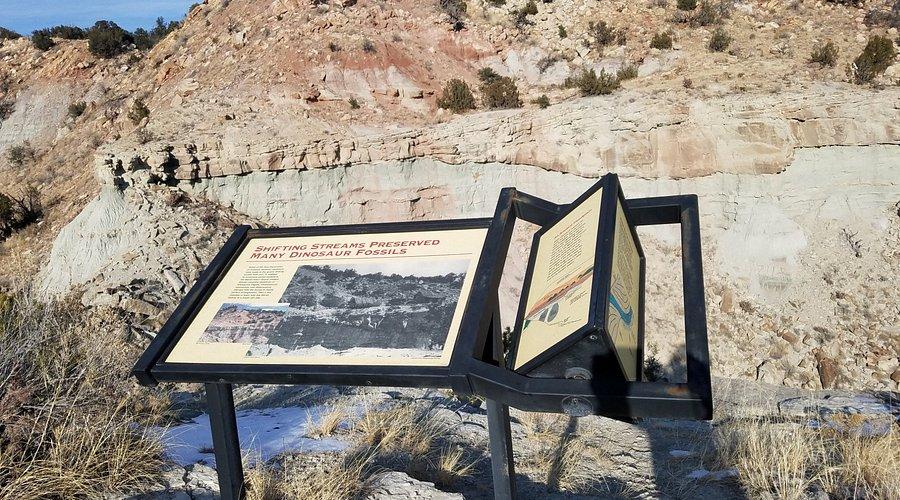 Garden Park Fossil Area Fossil Hunting GuideAllosaurus fragilis (type), Stegosaurus stenops (type)
 Dinosaur Ridge: Dinosaur TrackwaysDinosaur Tracks, Dinosaur Bones
 Fruita Paleontological Area Fossil Hunting GuideDinosaur bones, Mammal remains