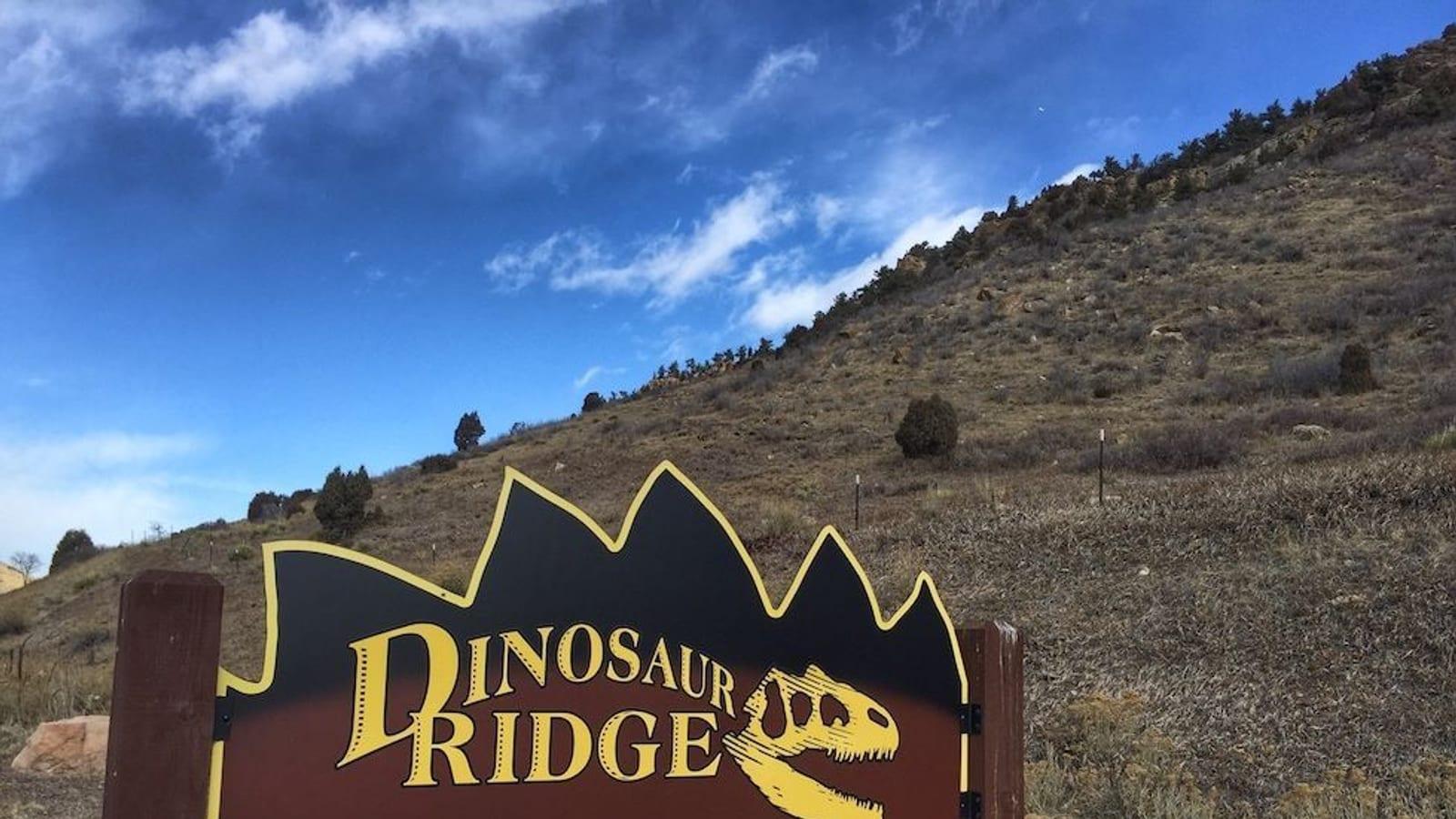
Dinosaur Ridge: Dinosaur Trackways
Dinosaur Ridge is a narrow hogback of tilted Mesozoic sedimentary rock about 15 miles west of Denver, with two fossil-bearing horizons exposed by a 1937 road cut.
By Edward Chen · Updated 4 August 2026
 Photo: James St. John, CC BY 2.0 via Wikimedia Commons
Introduction
Dinosaur Ridge is a narrow, north-south hogback of tilted Mesozoic sedimentary rock about 15 miles west of downtown Denver, where West Alameda Parkway slices through the back of the ridge at a steep angle. The road cut, made for the Works Progress Administration in 1937, exposed two separate fossil-bearing horizons that bracket the dinosaur world by some 50 million years. On the west side, the Late Jurassic Morrison Formation produced the original 1877 bones of Stegosaurus, Apatosaurus, and Allosaurus described by Othniel Charles Marsh from Arthur Lakes's quarries. On the east side, the Early Cretaceous Dakota Group sandstone preserves more than 300 dinosaur tracks made along the shore of the rising Western Interior Seaway. A nonprofit, Friends of Dinosaur Ridge, manages interpretation along the two-mile road, runs the Main Visitor Center, and operates shuttle buses up the hill. Everything you see at the ridge is in place and protected. This guide covers how to walk or ride the road, what to look for at the main interpretive stops, how the two rock units record very different environments, and the rules that keep the site viewing-only.
"See more than 250 fossil tracks at the paleontologist-rated #1 Dinosaur Tracksite in the nation, and see the site of the first-named Stegosaurus bone fossils!". Friends of Dinosaur Ridge
Location and Directions
The Main Visitor Center is at 16831 West Alameda Parkway, Morrison, Colorado 80465, on the east flank of the hogback.
From Denver, take Interstate 70 west to Exit 259 (Morrison / Golden) and follow signs south on West Alameda Parkway for about two miles to the Main Visitor Center on the right. Free parking is available at the visitor center. An additional lot on the west side of the ridge serves the Discovery Center near Red Rocks. The Triceratops Trail, which is a separate trace-fossil site within the same Friends of Dinosaur Ridge operation, is on the north side of the Town of Morrison off South Rooney Road.
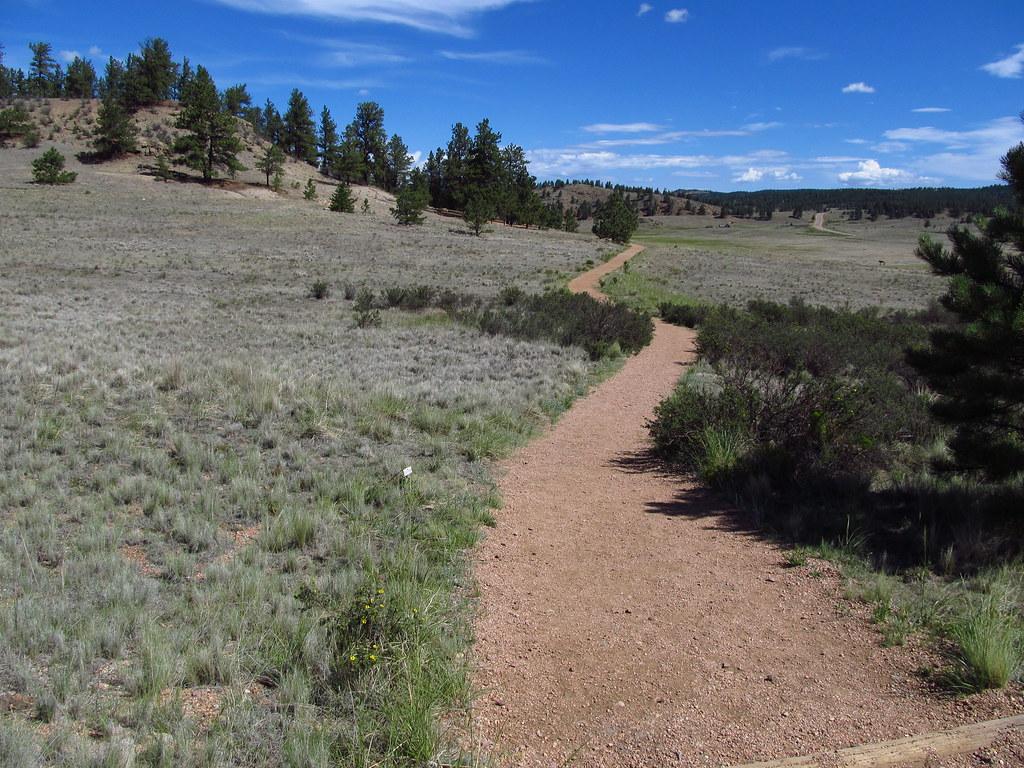
The road across the ridge is open daily from one hour before sunrise to one hour after sunset. You can walk or bicycle the route at any time during those hours, and the route is about 2 miles round trip with roughly 300 feet of elevation gain. Strollers, wagons, and leashed dogs are allowed, but watch for hot asphalt in summer. Shade is limited and the only restroom on the road is a single port-a-let.
Two paid options speed up the visit. The Bus Tour is a roughly one-hour guided trip across the ridge with on-board interpretation by Friends of Dinosaur Ridge staff. The Exhibit Hall at the visitor center has a small museum entry fee (historically about $4 to $5 per adult) and is the easiest stop for visitors with limited mobility. Confirm current pricing on the dinoridge.org site before driving out.
When walking the road, stay on the inside (mountain side) of the lane and leave the outside lane open for cyclists.
What Fossils You'll Find
 Photo: James St. John, CC BY 2.0 via Wikimedia Commons
You will not collect anything at Dinosaur Ridge. Everything visible is in place, protected, and interpreted by signed stops. The main features along the road, from the east (Dakota) side toward the crest:
- Main Trackway (Dakota Group, east side). The signature feature of the ridge. More than 300 dinosaur tracks are exposed on a single bedding plane tilted steeply against the road. Most are large four-toed prints attributed to ornithopod dinosaurs, traditionally identified as Iguanodon-like and sometimes referred to Eolambia. The tracks show both bipedal and quadrupedal locomotion, and one well-known sequence of a smaller print walking beside a larger one has been interpreted as evidence of group or parental behavior.
- Crocodylian and small theropod tracks. Smaller three-toed prints on adjacent surfaces include slender theropod tracks and shorter prints attributed to crocodyliforms.
- Ripple marks and microbial mat textures. The same Dakota sandstone surface preserves wave ripples, mud cracks, and the wrinkled textures of fossilized microbial mats that grew on the tidal flats between dinosaur passes.
- Bulges (natural casts of footprints). On the underside of overhanging Dakota beds, you see rounded bumps that are sediment fills of footprints from the layer above. Some of these natural casts represent large sauropods.
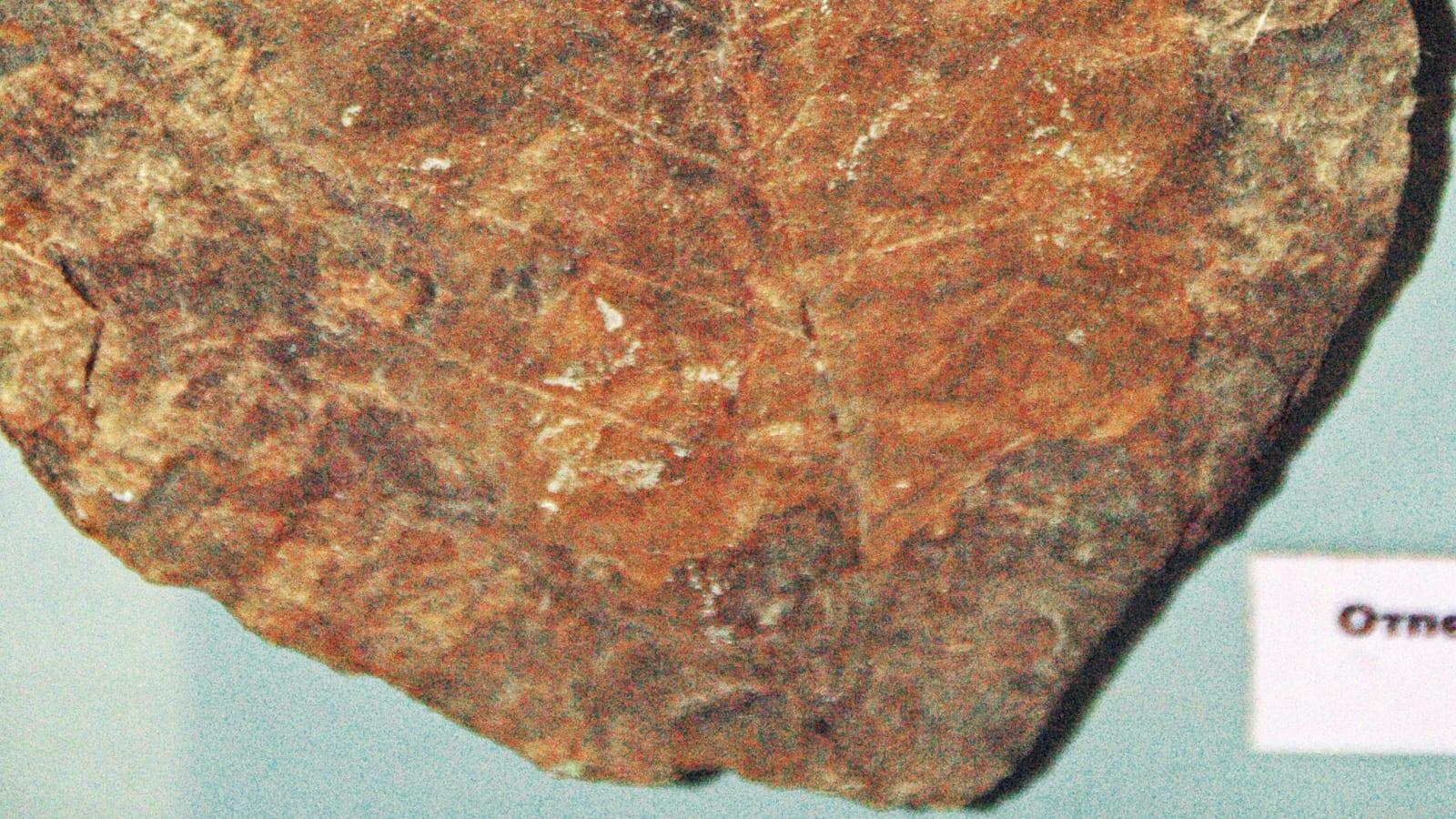
- Morrison Formation bone bed (west side). The classic 1877 quarry layer is a thin band of rusty, smooth-textured bone fragments in the greenish-gray Morrison mudstone. Ribs, vertebrae, limb bones, and teeth of Stegosaurus, Apatosaurus, Diplodocus, Camarasaurus, and Allosaurus came from this horizon, with the first scientifically described Stegosaurus specimens taken from the Lakes Quarry on the back side of the ridge.
- Volcanic ash bed. A thin white horizon interlayered with the sandstone was dated by MIT in 2009 to about 104.6 million years, calibrating part of the Cretaceous section.
- Concretions. Large rounded ball-shaped sandstone concretions that have weathered out of the bedrock. Their internal structure is still under study.
Geologic History
Two formations carry almost all of the paleontology at the ridge, and they were deposited under very different conditions.
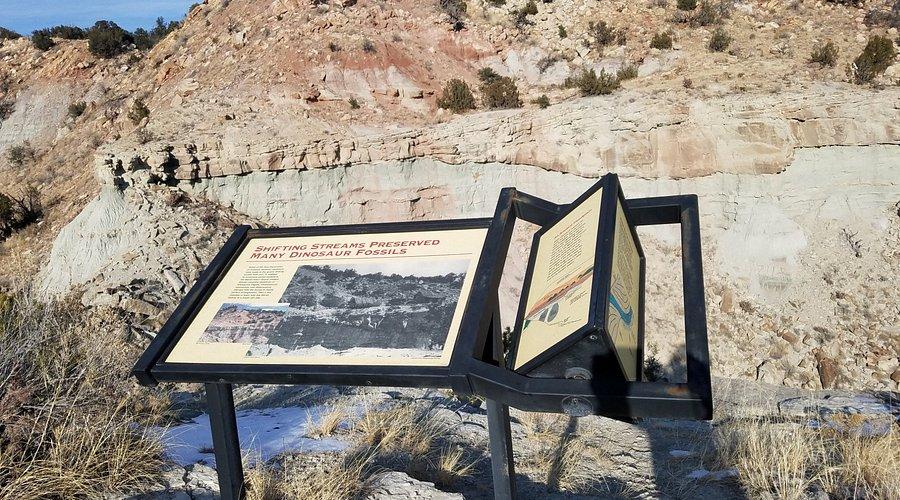
The Morrison Formation is Late Jurassic, roughly 155 to 148 million years old, and it records a broad alluvial plain that stretched east from the rising ancestral Rockies across what is now the western interior of North America. Rivers flowing east across the plain dropped sand and mud in shallow ponds, ephemeral lakes, and floodplain swamps. The climate was warm and seasonal, with long dry intervals broken by monsoonal floods. Dinosaur carcasses settled into channel sands and floodplain muds, where their bones were partially buried, scavenged, and reburied. At Dinosaur Ridge, the bone-bearing horizon sits on a former point-bar deposit at the inside bend of an ancient river, which is why bones are concentrated in a thin lens of sand rather than spread evenly through the section.
The Dakota Group lies above the Morrison and records the Early Cretaceous, roughly 105 to 100 million years old, when the Western Interior Seaway was beginning to flood the continent from north and south. The lower Dakota at Dinosaur Ridge is a quartz-rich shoreface and tidal-flat sandstone, deposited where rivers met the encroaching sea. Dinosaurs walked across exposed tidal flats and back-barrier mudflats, leaving footprints in soft sediment that was quickly buried by the next high tide. The microbial mats grew between tide cycles and helped preserve the prints by stabilizing the mud.
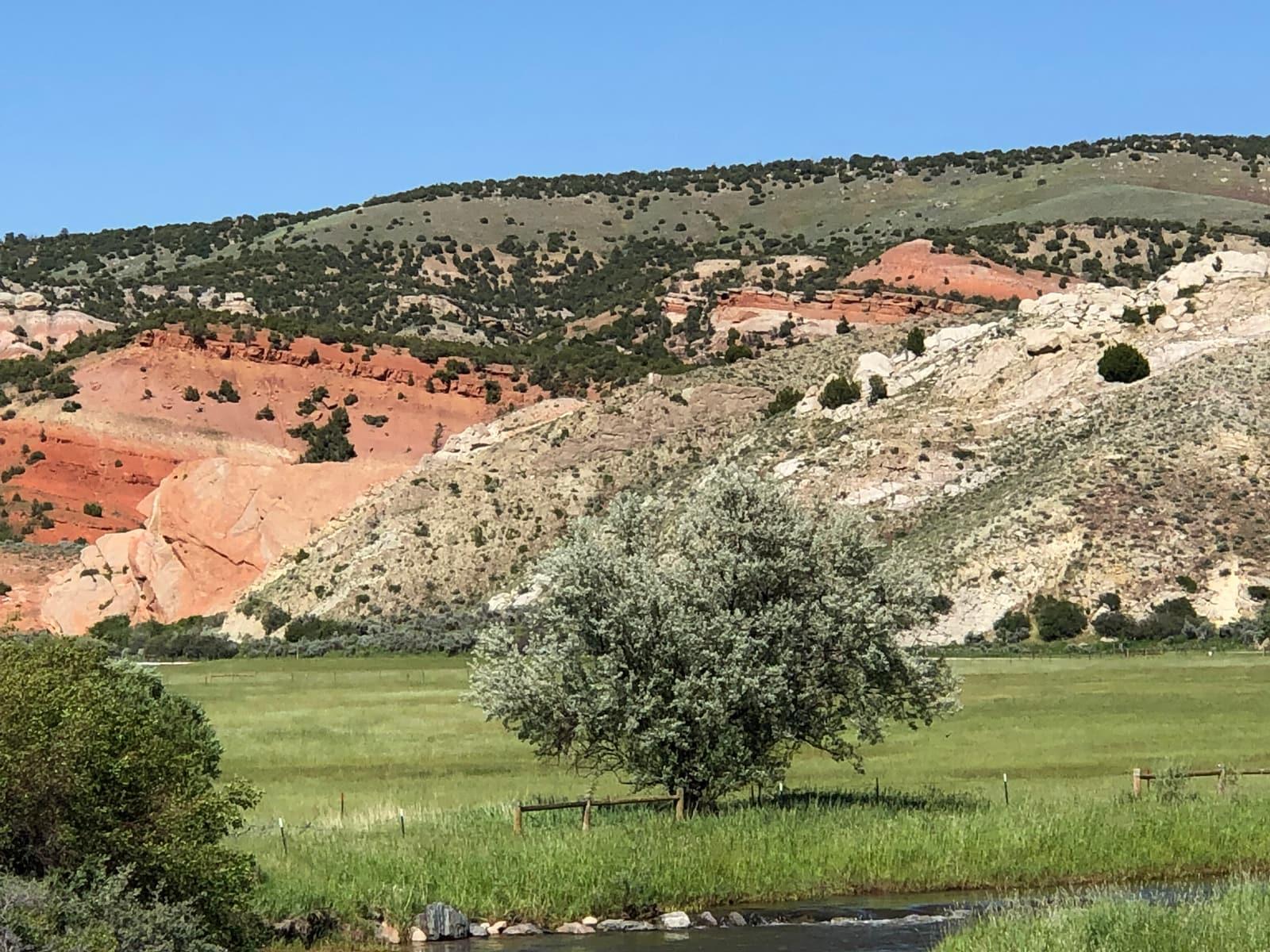
Around 70 to 40 million years ago, the Laramide Orogeny pushed the Front Range up and tipped the Mesozoic section eastward into the steeply dipping hogback visible today. The Dakota sandstone, harder than the units above and below, holds the ridge while softer shales above and below have eroded into the valleys on either side. When the WPA cut the road through the hogback in 1937, they unintentionally exposed the bedding-plane trackway in the Dakota and the bone-bearing point-bar horizon in the Morrison at unusually good viewing angles.
 Photo: James St. John, CC BY 2.0, via Wikimedia Commons
How Dinosaur Ridge Became a Fossil Collecting Site
This site is the cradle of North American dinosaur paleontology, but it was never an industrial quarry. In March 1877 the schoolteacher and amateur geologist Arthur Lakes found large bones weathering out of the Morrison Formation on the back side of what is now Dinosaur Ridge. He shipped specimens to Othniel Charles Marsh at Yale, sparking the "Bone Wars" and yielding the type specimens of Stegosaurus armatus, Apatosaurus ajax, and several other Jurassic dinosaurs. Marsh's crews and others worked the ridge through the late 1870s and 1880s, then activity tapered off.
The Cretaceous trackways on the east side of the ridge were uncovered in 1937 when WPA crews cut Alameda Parkway through the hogback. Their geological significance was recognized at the time, but the site remained a roadside curiosity until Martin Lockley and colleagues at the University of Colorado at Denver began systematic study in the 1970s. The National Park Service designated Dinosaur Ridge a National Natural Landmark in 1973, and the State of Colorado added a Colorado Natural Area designation. The nonprofit Friends of Dinosaur Ridge, founded in 1989, took over interpretation, built the visitor center, opened the Exhibit Hall, and now operates the shuttle bus and education programs. The site receives roughly a quarter of a million visitors a year.
Collecting Rules and Regulations
Collecting is prohibited. Dinosaur Ridge is managed cooperatively by the Friends of Dinosaur Ridge, Jefferson County Open Space, and the City of Lakewood, and all fossils on the ridge are protected under local ordinance and Colorado state law. Removing, damaging, or marking any fossil, footprint, or bone-bearing rock is a citable offense.
Practical rules:
- Stay on the paved road and the marked interpretive overlooks. Do not climb on the trackway surfaces or hammer on the bone-bearing Morrison layer.
- Photography for personal use is welcomed at every stop.
- Walking and bicycling on the road are free during open hours. The Exhibit Hall and the Bus Tour are paid. Check current prices at dinoridge.org.
- Triceratops Trail, on the north side of Morrison, is a separate trace-fossil site managed by the same nonprofit and is also viewing-only.
- Bring water, sun protection, and layered clothing. Summer afternoons on the asphalt road are hot and exposed. Mountain weather changes quickly.
- Leashed dogs are allowed on the road but should be kept off the trackway interpretive surfaces.
- The shuttle and Exhibit Hall hours are seasonal and reduced in winter. Confirm before driving out.
Safety
The main hazard at Dinosaur Ridge is not the geology. It is that the fossil exposures line a public road.
West Alameda Parkway carries traffic, cyclists, and shuttle buses. The trackways and bone exposures sit directly beside the carriageway, so walk on the correct side, keep well in, and supervise children constantly, because the interesting rock is at the roadside and that is exactly where people stop paying attention. On days when the road is closed to cars it is far more relaxed, and those are the better days to visit on foot.
The walk is longer and steeper than it looks. The road climbs steadily over the ridge and back, at around 6,000 feet, with no shade for most of it. Visitors arriving from lower elevations feel the altitude. Carry water, wear a hat and sun protection, and allow more time than the distance suggests.
Colorado weather turns fast. Afternoon thunderstorms build over the Front Range through the summer, and a hogback ridge with a road along it is an exposed place to be caught in lightning. Watch the sky and be prepared to turn back.
Rattlesnakes are present on the hogback in the warmer months, so stay on the road and the marked paths rather than pushing into scrub.
Everything here is protected, so the trackways are to be looked at and photographed rather than touched. Do not climb the cut faces, which are steep and shed rock onto the road below.
Sources
- Friends of Dinosaur Ridge, official site. https://dinoridge.org/
- Friends of Dinosaur Ridge, "Self-Guided Walking Tours." https://dinoridge.org/visit-dinosaur-ridge/public-tours/self-guided-walking-tours/
- Friends of Dinosaur Ridge, "Exhibit Hall." https://dinoridge.org/visit-dinosaur-ridge/exhibit-hall/
- Lockley, M.G, 1991. Tracking Dinosaurs: A New Look at an ancient environment. Cambridge University Press.
- U.S. Geological Survey, "Dakota Sandstone and Morrison Formation, Denver Basin." https://www.usgs.gov/
- Colorado Geological Survey, "Front Range Geology." https://coloradogeologicalsurvey.org/
%202.jpg)
%204%20(48724236508).jpg)
_42.jpg)