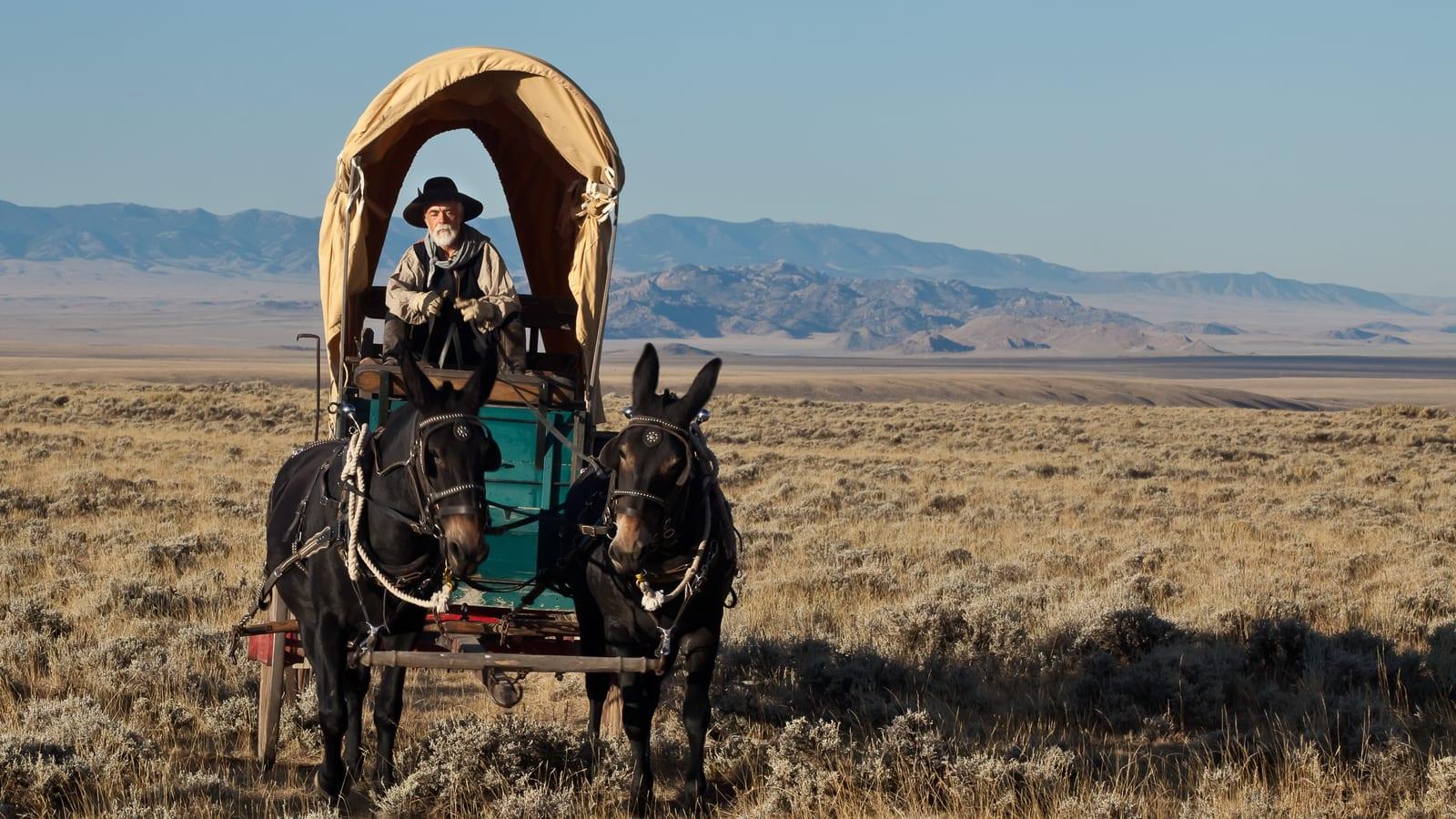
American Fossil Quarry Fossil Hunting Guide
Image: Bureau of Land Management (Public domain)
A pay-to-dig quarry in the Green River Formation near Kemmerer, Wyoming. Visitors split laminated limestone from the Eocene Fossil Lake deposits, dating to 53.5 to 48.5 mya. The most common find is Knightia eocaena, Wyoming’s state fossil. All fossils found are yours to keep.
By Edward Chen · Updated 31 July 2026
Introduction
American Fossil Quarry is a pay-to-dig site in the Green River Formation near Kemmerer, Lincoln County, Wyoming. The quarry exposes laminated Eocene lake sediments packed with fossil fish, plants, insects, and stingrays dating to roughly 50 million years ago. Visitors split the thin limestone layers themselves and keep every fossil they find.
The quarry sits on private land within the Fossil Lake basin, about 40 minutes north of Kemmerer by a combination of paved highway and dirt roads. Two other commercial quarries, Fossil Lake Safari (formerly Warfield) and Ulrich’s Fossil Gallery, operate nearby in the same formation.
Photo: Smithsonian National Museum of Natural History, CC0, via Smithsonian Open Access
Location and Directions
American Fossil Quarry is about 8 miles north of Highway 233 on Dempsey Road, a dirt county road. The turnoff is roughly 3 miles past the town of Frontier, where a county sign marks Dempsey Road. Follow the dirt road for about 8 miles, crossing four cattle guards onto a plateau. After the last cattle guard, continue about 3 miles until a large white sign marks the left turn to the quarry.
From I-80, take Exit 18 onto Highway 189 north for 36 miles through Diamondville to Kemmerer. Past the center of town, turn right at the Highway 30 junction to stay on Highway 189. After crossing Hamm’s Fork River, turn left at the Highway 233 junction toward Lake Viva Naughton, then follow the Dempsey Road directions above.
The quarry does not have cell service. Download directions before leaving Kemmerer and bring your own water, sunscreen, and food.
 Photo: NPS photo, Public domain, via Wikimedia Commons
.jpg)
What Fossils You’ll Find
The quarry exposes the "split fish layer," a zone of laminated lime muds about 1.8 m (6 ft) thick that formed over roughly 4,000 years of lake-bottom deposition. Fossils split cleanly along the varve layers, which is why the technique works for visitors with no prior experience.
Knightia eocaena is the most common fish at the site. It is a small herring-like species, typically 7 to 10 cm long, that schooled in the upper waters of Fossil Lake. Knightia is so common in these beds that it is described as the most frequently found complete vertebrate fossil in the world, and it is the Wyoming state fossil. A typical afternoon of digging can produce 20 to 35 whole or partial Knightia skeletons.
Diplomystus dentatus is the second most common fish. It is a larger predator, up to 65 cm long, with an upturned jaw that suggests it fed near the surface on schooling Knightia. Diplomystus specimens are less frequent but turn up regularly.
Cockerellites liops (formerly Priscacara liops) is a deep-bodied schooling fish. Mass-mortality layers of Cockerellites suggest whole schools died simultaneously, probably from sudden changes in water chemistry or temperature.
Other fish found at the quarry include Mioplosus labracoides, a predatory perch-like fish that occasionally preserves smaller fish inside its gut, and Phareodus, a large predator with fang-like teeth. Freshwater stingrays of the genus Heliobatis also occur, though they are uncommon.
Plant fossils are found throughout the layer, mainly palm fronds, fern leaves, and leaves from sycamores, willows, and oaks that grew along the lake margin. Insect fossils preserved in the fine-grained limestone sometimes retain wing membrane detail.
On rare occasions the quarries around Kemmerer have produced complete bat skeletons (Icaronycteris), early primates, and even a three-toed horse skeleton. American Fossil’s quarry produced one of only two three-toed horse specimens ever recovered from the formation.
 Photo: James St. John, CC BY 2.0, via Wikimedia Commons

Geologic History
The Green River Formation records the sedimentation of three large intermountain lakes that covered parts of Wyoming, Colorado, and Utah during the early Eocene, roughly 53.5 to 48.5 million years ago. American Fossil Quarry sits in the Fossil Lake basin, the smallest of the three. At its maximum, Fossil Lake was about 50 miles long and 20 miles wide.
The lakes formed in basins created by the Laramide orogeny, the same mountain-building event that raised much of the Rocky Mountains. Sediment washed in from the surrounding highlands, including the Uinta Mountains to the south and the Wind River Range to the north.
The climate in this part of Wyoming during the Eocene was subtropical. Crocodiles, which cannot tolerate frost, lived in the lake. Palms, figs, and cypress grew around the shore, with sycamores, beeches, and oaks on higher ground. Water temperatures supported stingrays, 25 species of fish, and dense stands of aquatic plants.
Fish and other organisms that died near the lake bottom sank into fine calcium carbonate mud. The mud lacked oxygen, which slowed decomposition and kept scavengers away. Layer after layer of carbonate settled over the remains, building up the varved limestone that fossil hunters split today. Each pair of light and dark layers (one varve) records a single year of deposition. The mean thickness of a varve in the Green River Formation is 0.18 mm.
The paleontologist Edward Drinker Cope was one of the first scientists to excavate at Fossil Butte in the 1870s. Commercial quarrying of fossil fish has continued in the area for well over a century. American Fossil operates on private land with exclusive access to its section of the split fish layer.
 Photo: James St. John, CC BY 2.0, via Wikimedia Commons
_(48932076751).jpg)
Collecting Rules and Regulations
American Fossil is a private, fee-based quarry. Collecting is open to anyone who books a session. Visitors keep every fossil they find with no limits.
Dig sessions come in three lengths: 2-hour, 4-hour, and 8-hour blocks. Adult prices (ages 15 and up) range from $89 for a 2-hour dig to $169 for a full 8-hour day. Children ages 6 to 14 pay reduced rates ($59 to $89). Children under 6 are free with a paying adult. A private dig for up to 10 people costs $750. Book through the operator’s website or by phone at (801) 836-7269.
The quarry provides all digging tools. Staff walk visitors through safety, splitting technique, and fossil identification. No prior experience is needed.
The quarry is open seven days a week from 8:00 AM to 5:00 PM (Wednesday hours start at 9:00 AM). Reservations are recommended, especially during the summer season from June through August.
No collecting is allowed on the surrounding BLM land, because vertebrate fossils on federal land are protected under the Paleontological Resources Preservation Act.
Photo: Smithsonian National Museum of Natural History, CC0, via Smithsonian Open Access
Nearby: Fossil Butte National Monument
Fossil Butte National Monument is 9 miles west of Kemmerer on US Highway 30. The visitor center has an extensive display of Green River Formation fossils, including complete fish, birds, bats, and crocodilians. Admission is free. The monument protects an exposure of the same formation but does not allow fossil collecting. Plan to spend an hour or two at the visitor center before or after your quarry dig.
What to Bring
The quarry is remote and has no services. Bring at least 2 liters of water per person, food, and sunscreen. Temperatures on the plateau can exceed 35 C (95 F) in summer with no shade. Wear closed-toe shoes with good traction, a hat, and eye protection.
For packing fossils to take home, bring a Rubbermaid-style bin, thin bubble wrap or foam sheets, and cardboard dividers. Stand the fossil plates on edge, separated by padding. The shale is fragile and breaks easily in transit if plates are stacked flat.
Safety
This is a managed commercial quarry with staff on site, which removes a good deal of the risk that comes with digging unsupervised. What remains is the combination of splitting rock and high desert.
Splitting limestone sends chips flying. Wear the eye protection provided and keep it on rather than pushing it up between slabs. Gloves are worth having, since the plates have sharp edges and the work is repetitive enough to blister. Keep other people out of the arc of your swing, and watch where children are standing before you strike anything.
The slabs are heavy and the quarry floor is uneven. Lift with care, work from a stable stance, and wear boots with a firm sole rather than trainers. Loose spoil shifts underfoot.
Altitude and sun. The quarry sits well above 6,000 feet, where ultraviolet exposure is considerably stronger than at sea level and dehydration comes on faster than people expect. There is little or no shade at the working face. Carry more water than you think you need, use strong sun protection, and take the pace slowly if you have arrived from lower ground.
Wyoming weather changes quickly. Mornings are cold, afternoons can be hot, and summer thunderstorms build fast over open country, so bring layers and expect a session to be cut short if lightning moves in. Kemmerer is a small town in remote country, so arrive with fuel and supplies rather than counting on services nearby. Follow the operator's directions about which faces are open.
Sources
Nearby sites
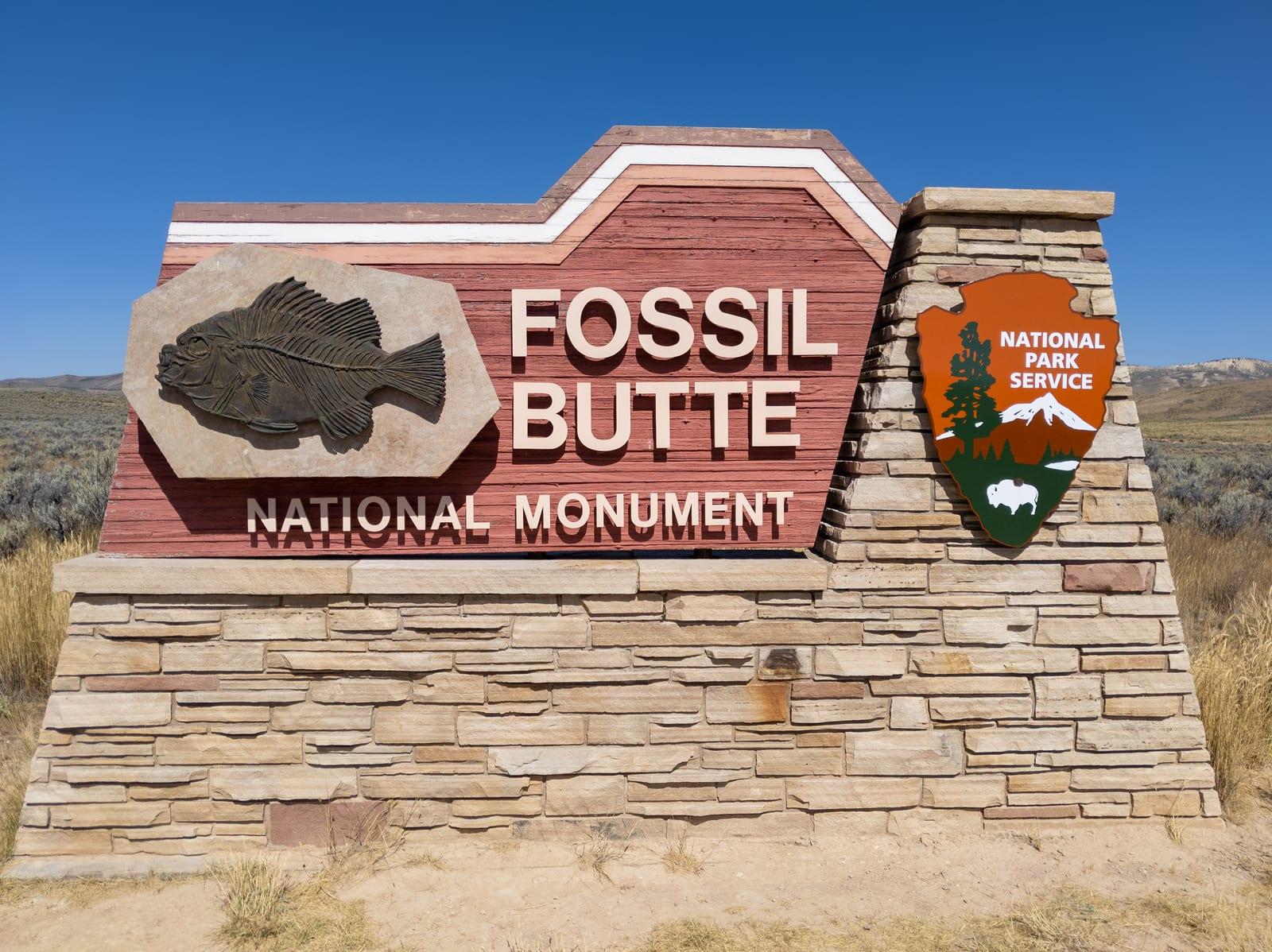 Fossil Butte National Monument Fossil Hunting GuideFossil fish (Knightia), Fossil fish (Diplomystus)
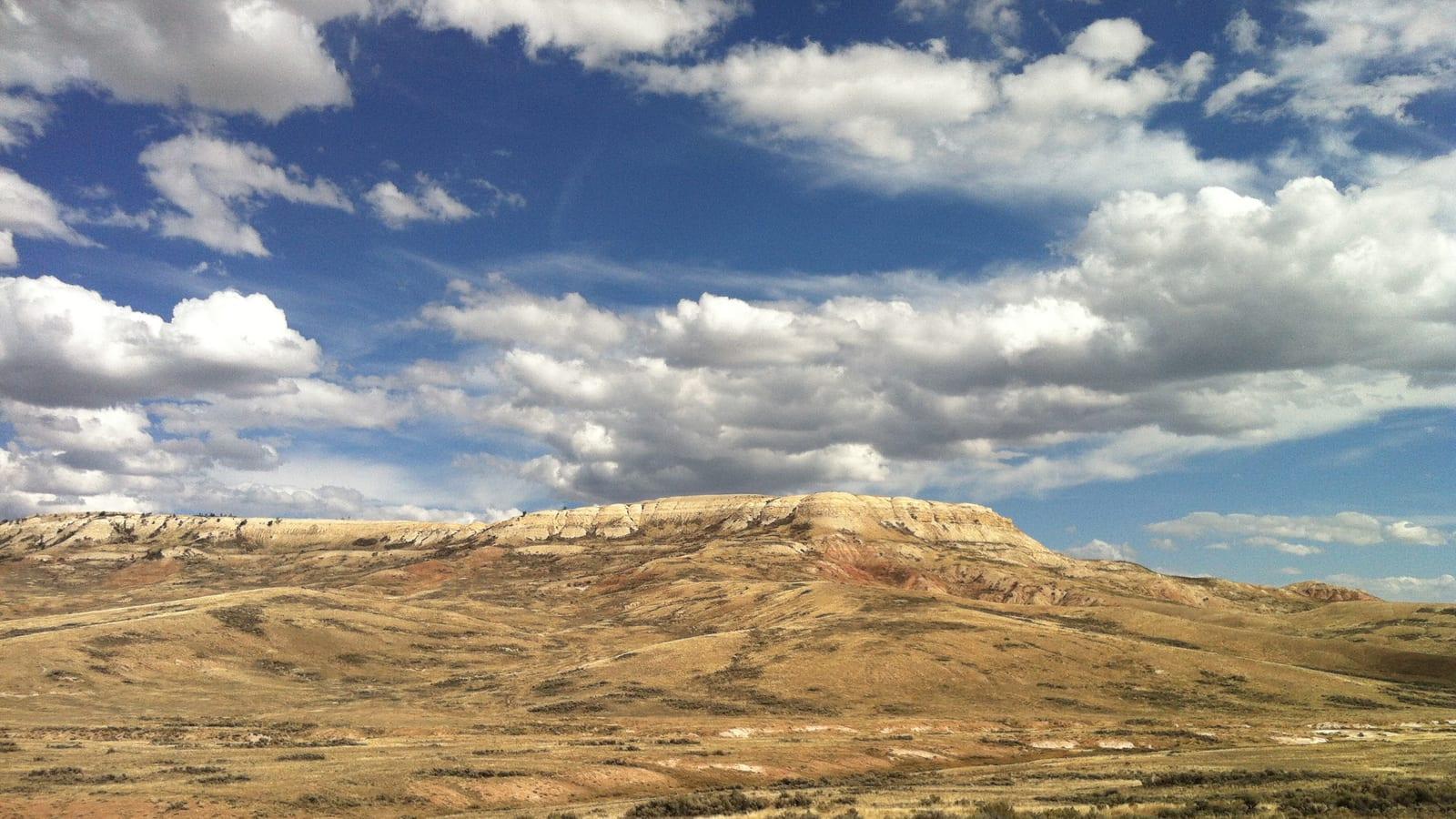 Ulrich's Fossil Gallery Fossil Hunting GuideFish, Plants
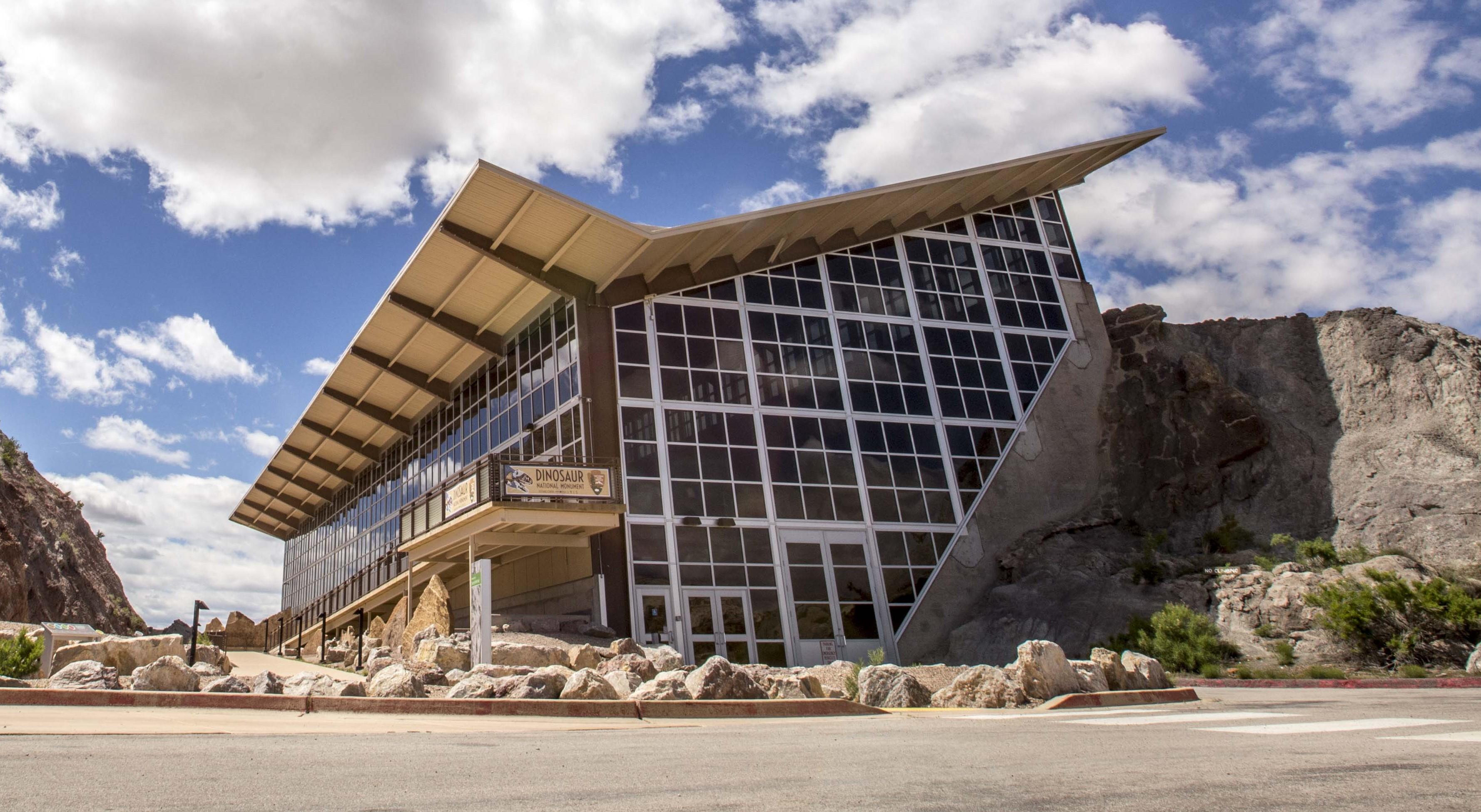 Dinosaur National Monument Quarry Exhibit Hall Fossil Hunting GuideAllosaurus fragilis, Apatosaurus louisae
 Cleveland-Lloyd Dinosaur Quarry Fossil Hunting GuideAllosaurus fragilis, Camarasaurus