Dinosaur Museum Altmuehltal Fossil Park Fossil Hunting Guide
Image: Chris Olszewski (CC BY-SA 4.0)
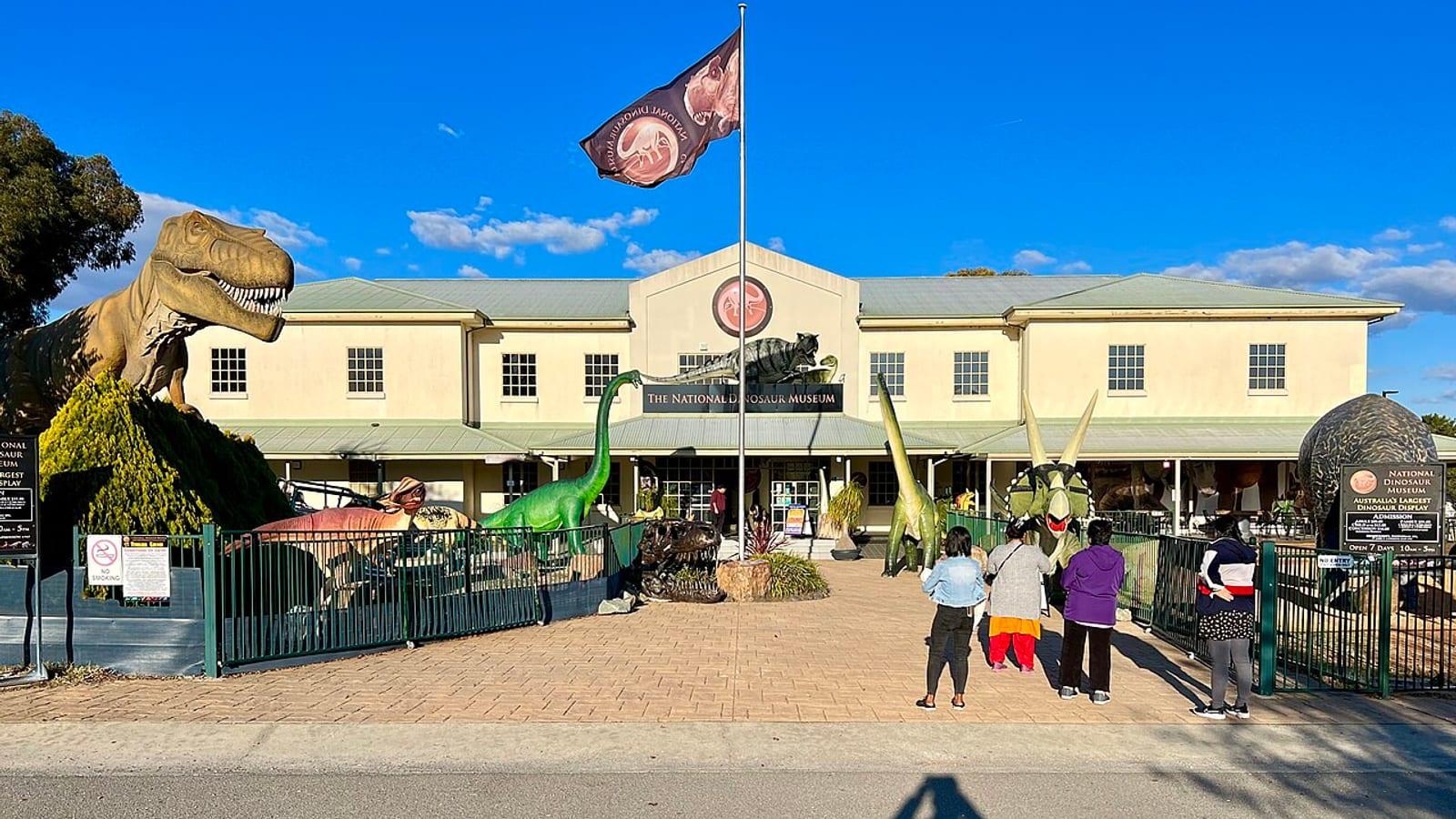
The Dinosaurier-Park Altmühltal at Denkendorf combines 70 life-size dinosaur models with fossil collecting in Jurassic limestone and the 12th Archaeopteryx on display.
By Edward Chen · Published 27 April 2026
Introduction
The Dinosaur Museum Altmühltal at Denkendorf occupies a unique position in German paleontological tourism: it is simultaneously an entertainment venue with 70 life-size dinosaur models along a 1.5 km forest trail and the permanent home of the 12th Archaeopteryx specimen, one of the most significant bird-evolution fossils discovered in the twenty-first century. The museum opened in 2016 in Kelheim district, Bavaria, at the heart of the Altmühltal Nature Park, a region whose Late Jurassic limestone formations have produced fossils for two centuries.
Alongside its exhibits, the museum operates a fossil collecting area using Painten Formation limestone from local sources, giving visitors of all ages the chance to split real Jurassic rock and take home genuine fossils. The collecting area is integrated into the museum experience rather than a separate commercial operation, making it one of the most accessible entry points into fossil hunting in Bavaria. This guide covers the collecting experience, the geology of the Painten Formation, and the practical logistics of visiting the Dinosaurier-Park Altmühltal.
Location and Directions
Address
Dinosaurier-Park Altmühltal, Dinopark 1, 93326 Denkendorf, Landkreis Kelheim, Bavaria, Germany.
Directions
From Regensburg, take the B16 southwest toward Kelheim. At Kelheim, follow signs east toward Denkendorf. The museum is approximately 6 km east of Kelheim on the north side of the Altmühl Valley. Total distance from Regensburg is approximately 35 km. Allow around 30 minutes. The museum is clearly signposted from the B16 and from Kelheim town centre.
From Nuremberg, take the A9 south toward Munich, exit at Ingolstadt-Nord, then follow the B16 east through Kelheim toward Denkendorf. Total distance is approximately 110 km. Allow around 80 minutes.
From Munich, take the A9 north toward Nuremberg, exit at Ingolstadt-Nord, then follow the B16 east through Kelheim toward Denkendorf. Total distance is approximately 120 km. Allow around 90 minutes.
A large free parking area is available at the museum. For public transport, the nearest train station is Kelheim, served by regional services from Regensburg. From Kelheim station a taxi or local bus covers the remaining distance to Denkendorf.
What Fossils You'll Find
The fossil collecting area at the Dinosaurier-Park uses Painten Formation limestone sourced from the Altmühltal region. The formation is a fine-grained plattenkalk of Kimmeridgian age, the same geological unit in which the 12th Archaeopteryx was found at nearby Schamhaupten in 2010.
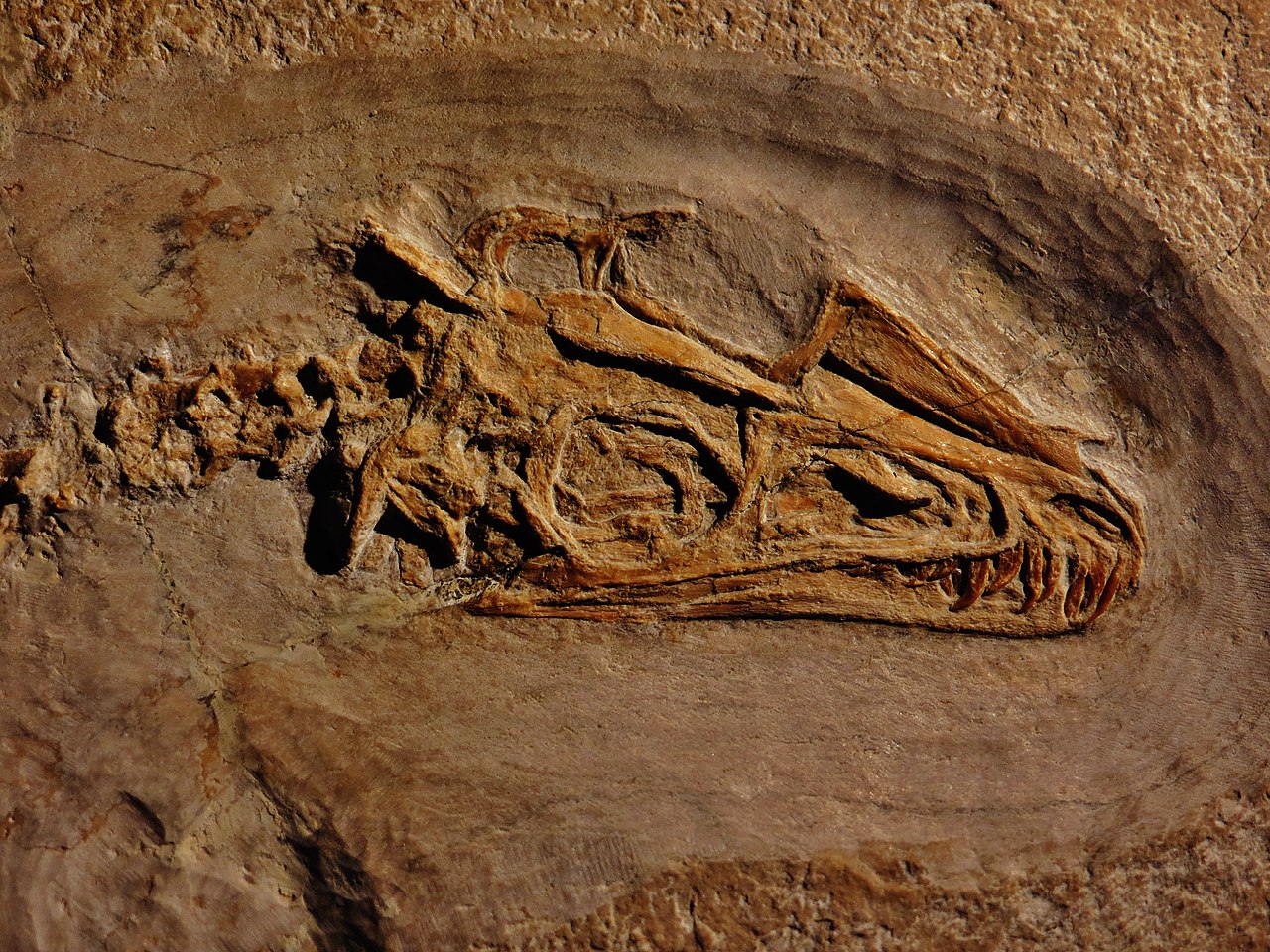 Photo: Ghedoghedo, CC BY-SA 4.0, via Wikimedia Commons

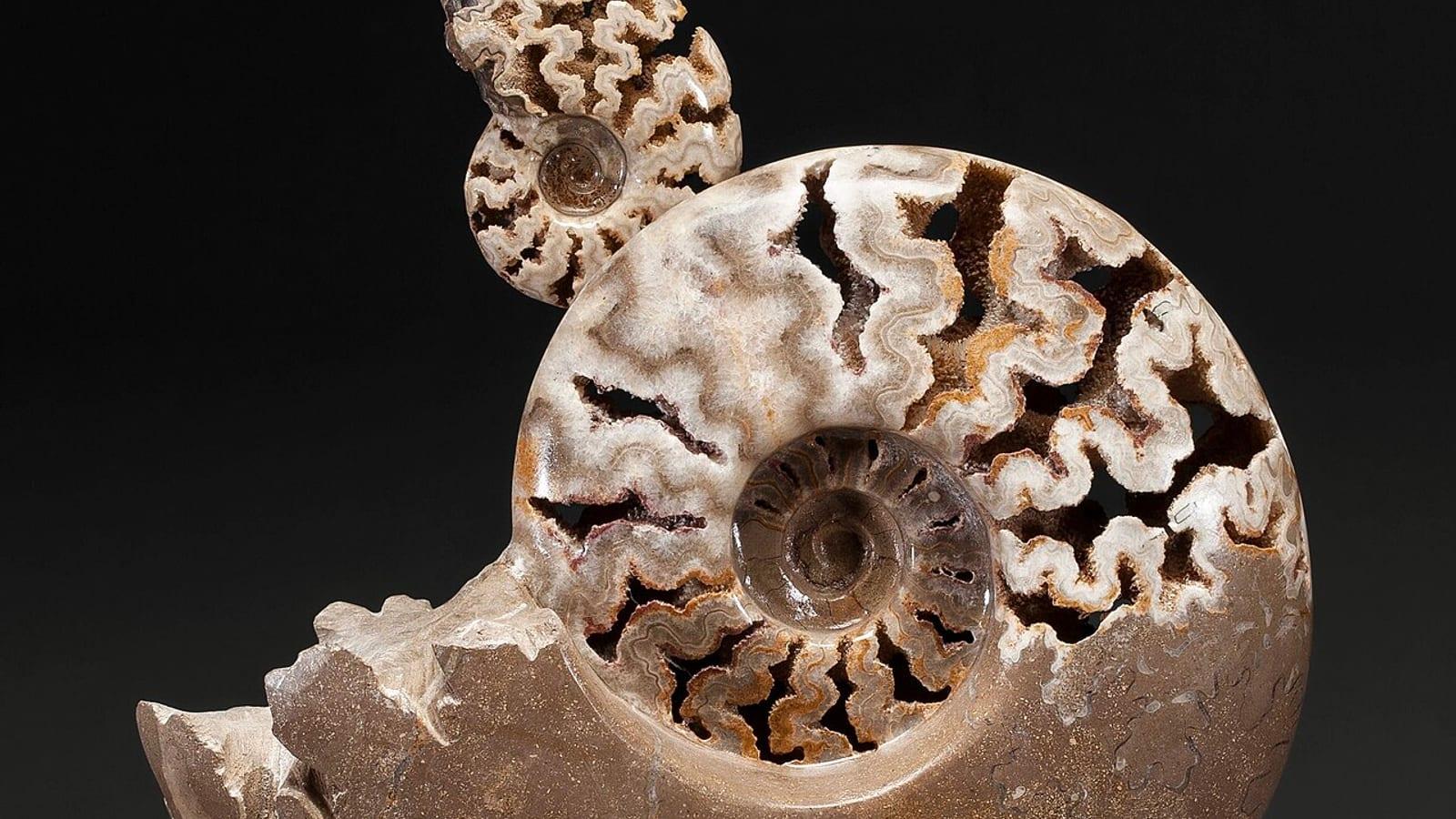
Ammonites are the most commonly encountered fossils in the collecting material. They occur as internal moulds and, in some specimens, with partial shell preservation. Characteristic Kimmeridgian genera appear, and sizes range from a few centimetres to around 10 cm for adult specimens. The round or slightly oval cross-section and visible ribbing make them straightforward to identify even for first-time collectors.
Crinoid fragments are the second most frequently found material. Stem columnals, individual plates, and occasionally partial calyces appear on split surfaces. They are often visible as small circular or star-shaped cross-sections in freshly opened limestone.
Small invertebrate fossils, including bivalve impressions, gastropod moulds, and echinoderm fragments, occur throughout the collecting material and reward careful examination of split surfaces. The fine-grained matrix preserves detail well, and even small specimens a centimetre or less in size can show clear morphological structure.
The collecting area is deliberately suited to beginners and families. The limestone splits along clear bedding planes with modest hammer blows, and productive surfaces reveal themselves quickly. Children can use the standard tools safely under supervision, and the low cost of failure (each piece of limestone contains something of interest) makes it a good introduction to fossil hunting technique.
Geologic History
The Ancient Environment
During the Kimmeridgian Stage of the Late Jurassic, approximately 152 million years ago, the Altmühltal region was submerged under the warm, shallow waters of the Tethys epeiric sea. The climate was tropical, with no polar ice caps and consistent warm temperatures year-round. The landscape was an archipelago of low carbonate platforms built by sponge-algae reefs, with sheltered lagoon areas between the reef structures.
The Painten Formation records deposition in one of those sheltered back-reef lagoons, east of the main Solnhofen depositional belt. Fine carbonate muds accumulated in calm, periodically oxygen-restricted water. The occasional influx of storm material from the reef platforms and adjacent land areas introduced a variety of organisms into the lagoon, some of which were preserved in the fine sediment with excellent detail. The Painten Formation is closely related to the classic Solnhofen plattenkalk but occupies a slightly different position in the lagoon system and yields a partly overlapping but distinct fauna.
After 152 million years of burial, uplift, and erosion, the Painten Formation is now exposed at the surface in quarries throughout the Kelheim and Eichstätt districts. The exceptional preservation potential of the formation is demonstrated most dramatically by the 2010 Archaeopteryx discovery, whose feather impressions and skeletal detail are preserved in the same type of fine limestone now available at the museum's collecting area.
How the Dinosaurier-Park Altmühltal Became a Fossil Site
The Dinosaurier-Park Altmühltal opened in 2016 as a commercially developed family attraction designed to make the paleontological heritage of the Altmühl Valley accessible to a wide audience. The park's developers chose Denkendorf in Kelheim district specifically for its proximity to the fossil-rich Jurassic limestone formations of the Franconian Alb.
A significant early acquisition was the 12th Archaeopteryx specimen, discovered at the Schamhaupten quarry near Altmannstein in 2010 and described as Archaeopteryx albersdoerferi in 2018. This specimen, among the best-preserved of all known Archaeopteryx examples, is displayed in the museum and represents the continued scientific productivity of the Altmühltal region. The fossil collecting area was developed as part of the original park concept, supplying Painten Formation limestone from local quarries to provide visitors with a hands-on experience of Jurassic fossil hunting.
The 1.5 km outdoor dinosaur trail through the forest setting at Denkendorf was also part of the original development and features over 70 life-size models representing species from the Triassic through to the Late Cretaceous. The combination of the outdoor trail, the museum with its Archaeopteryx display, and the fossil collecting area makes the park the most complete paleontological family destination in the Kelheim district.
Collecting Rules and Regulations
Is Fossil Collecting Allowed?
Fossil collecting at the Dinosaurier-Park Altmühltal is included as part of the general museum admission. You do not pay a separate collecting fee on top of your entrance ticket. All fossils found in the collecting area may be taken home.
Current admission prices and opening hours are confirmed on the museum website or by telephone. The park is open seasonally. Confirm dates before travelling. Contact: +49 9466 90 50 80, www.dinosaurier-park.de
The collecting area uses limestone supplied to collecting benches rather than an exposed natural quarry face, so there are no quarry-specific hazards such as unstable walls. Basic collecting tools are available at the site or can be hired. Confirm availability when booking or on arrival.
Recommended Tools
The museum provides or makes available basic collecting tools for the Klopfplatz. If you prefer to bring your own: a small rock hammer (250–350 g), a flat chisel, and safety glasses cover everything you need. The plattenkalk splits cleanly with modest force. You do not need heavy equipment. A small bag or container for specimens and newspaper or cloth for wrapping fragile finds completes the kit. Comfortable walking shoes suitable for a 1.5 km outdoor trail are advisable for the full park experience.
Safety
The collecting area is a managed, family-oriented space. Safety glasses should be worn when splitting limestone. Supervise children at all times in the collecting area. The outdoor dinosaur trail covers 1.5 km of woodland path. Wear appropriate footwear and carry water, particularly during summer months when temperatures in the sheltered valley can be warm. Follow all posted site rules and the instructions of park staff.
Sources
- https://www.dinosaurier-park.de
- https://doi.org/10.7717/peerj.4159 (Rauhut et al, 2018, Archaeopteryx albersdoerferi description)
- https://www.naturpark-altmuehltal.de
- https://en.wikipedia.org/wiki/Archaeopteryx (general context. Cross-referenced with Rauhut et al. 2018)
Nearby sites
 Altmannstein Schamhaupten Archaeopteryx Fossil Hunting GuideArchaeopteryx, Ammonites
 Fossiliensteinbruch Schamhaupten Fossil Hunting GuideAmmonites, Crinoids
 Fossiliensammelstelle Titting Free Fossil Hunting GuideAmmonites, Crinoid fragments
 Fossiliensteinbruch Blumenberg Eichstatt Fossil Hunting GuideAmmonites, Fish fossils