Fossiliensteinbruch Blumenberg Eichstatt Fossil Hunting Guide
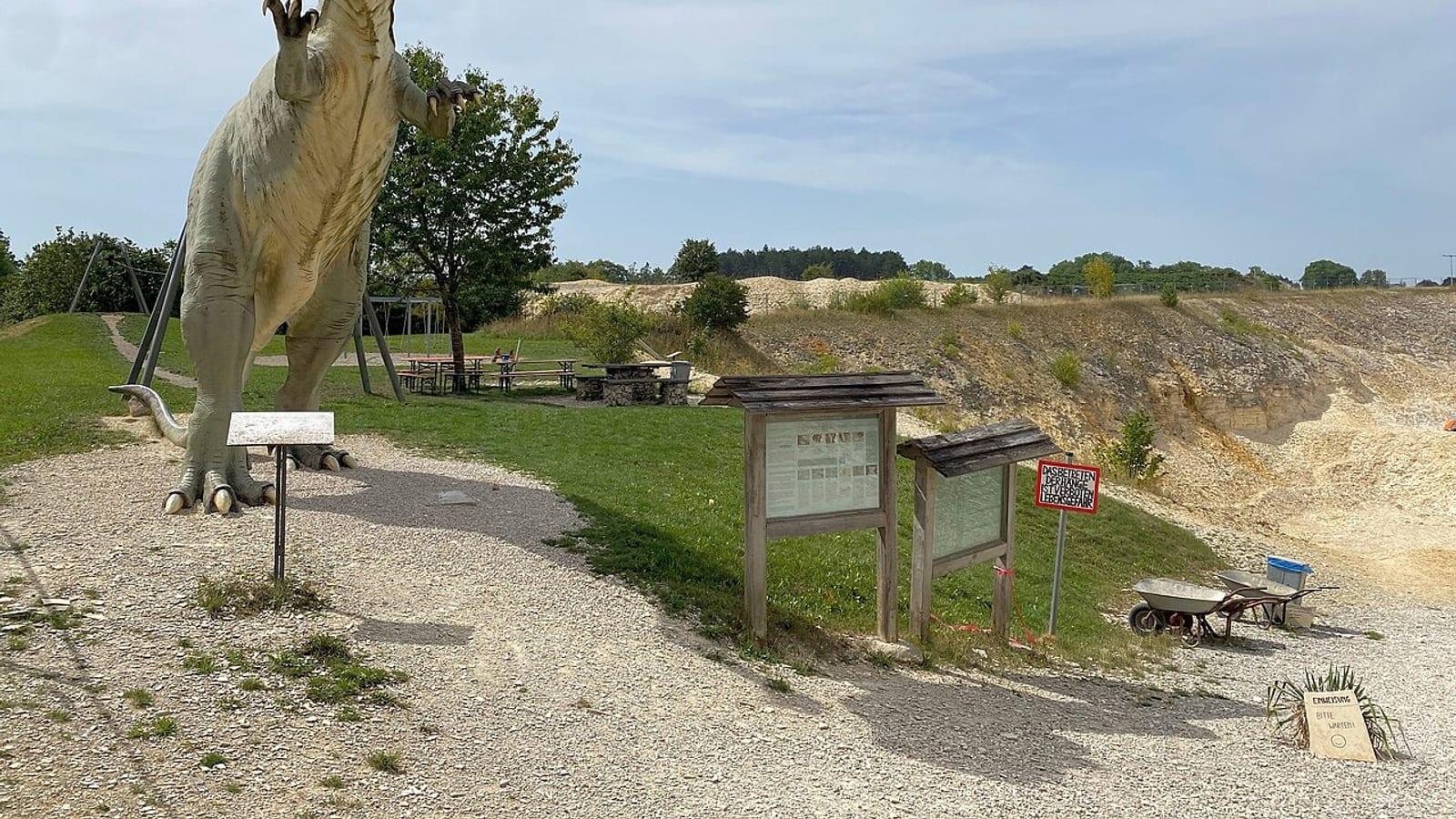
Image: -wuppertaler (CC BY 4.0)
Collect Jurassic ammonites and fish at Fossiliensteinbruch Blumenberg, Eichstätt, Bavaria, fee-based quarry beside Museum Bergér and the Berlin Archaeopteryx site.
By Edward Chen · Updated 30 July 2026
Introduction
The limestone quarries around Eichstätt have contributed more Archaeopteryx specimens to science than anywhere else on Earth, and Fossiliensteinbruch Blumenberg is the site directly associated with one of them. In 1874 or 1875 the farmer Jakob Niemeyer found a specimen in the plattenkalk at Blumenberg that is now held at the Museum für Naturkunde in Berlin, one of the most complete early birds ever found. Werner von Siemens funded its purchase for the museum in 1881, and the species name siemensii records the fact. The quarry continued operating commercially, and today a section of it is open to the public as a fee-based Besuchersteinbruch (visitor quarry) run in conjunction with the adjacent Museum Bergér.
For visiting collectors, Blumenberg offers access to authentic Solnhofen limestone from the Altmühltal Formation, Tithonian Stage, approximately 150 million years old. Ammonites and fish are the most common finds. Shrimp, crinoids, and belemnites occur with regularity. Tools are provided, combination tickets with the museum are available, and no advance booking is needed for individual visitors. This guide covers everything required to plan a collecting visit: directions, fossil types, geology, site history, and current rules and fees.
 Photo: -wuppertaler, CC BY 4.0, via Wikimedia Commons

Location and Directions
Address
Fossiliensteinbruch Blumenberg, adjacent to Museum Bergér, Blumenberg district, Eichstätt, Bavaria, Germany. Eichstätt postal code: 85072.
Directions
From Ingolstadt, take the B13 south for approximately 35 km directly to Eichstätt. In Eichstätt, follow signs to Blumenberg and Museum Bergér on the western outskirts of the city. The quarry and museum are well signposted from the main road through town.
From Munich, take the A9 north to the Lenting/Kösching exit (junction 60), then follow local roads east to Eichstätt. Total distance is approximately 100 km, taking around 1 hour 15 minutes.
From Nuremberg, take the A9 south to the Greding exit (junction 54), then the B13 south to Eichstätt. Total distance is approximately 80 km, taking around 1 hour.
Parking is available at the Museum Bergér facility adjacent to the collecting quarry. No parking fee applies. Eichstätt is accessible by regional train from Ingolstadt on the Ingolstadt to Treuchtlingen line. The station is in the town centre roughly 2 km from Blumenberg, walkable or accessible by local bus.
What Fossils You'll Find
Ammonites are the most abundant find at Fossiliensteinbruch Blumenberg. Multiple Tithonian species occur in the limestone, and well-preserved specimens with intact suture patterns appear regularly in freshly split slabs. Wetting the slab surface with water makes the finer structures visible before the surface dries.
Fish fossils appear throughout the collecting area and are among the most rewarding finds for visitors. Small actinopterygians are preserved in lateral view in the finer laminated beds, sometimes with scale impressions and fin ray counts visible. The fish-bearing layers tend to be lighter grey and more finely grained than the ammonite-rich beds.
Shrimp occur with moderate frequency at Blumenberg. They are small and require careful examination of slab surfaces. Splitting thin slabs slowly and examining each face under good light gives the best results. Wetting the surface greatly improves visibility of the delicate appendages.
Crinoids and belemnites are regular incidental finds when working through the general limestone. Crinoid columnals appear in most sessions. Complete crowns are uncommon but possible. Belemnite guards survive the splitting process intact and are easily identified.
Bivalves occur at the site and add variety to a day's collecting. Most appear as external moulds in the limestone surface. Look for paired curved impressions in the rock face.
The quarry is historically associated with the Berlin Archaeopteryx found in the adjacent commercial workings in the 1870s, but complete vertebrate material in the public collecting area is extremely rare. Any unusual bone fragment should be shown to site staff before leaving.
Geologic History
The Ancient Environment
The limestone at Fossiliensteinbruch Blumenberg belongs to the Altmühltal Formation (also referred to as Solnhofen Limestone), deposited during the Tithonian Stage of the Late Jurassic, approximately 150 million years ago. The rock is classic plattenkalk: fine-grained, pale grey, thinly laminated carbonate limestone that splits cleanly along bedding planes.
During the Tithonian, the Eichstätt region lay within the tropical Solnhofen Archipelago, a complex of low-lying islands and shallow lagoons at the northern margin of the Tethys Sea. Evaporation kept lagoon waters warm and hypersaline in restricted basins. In the deepest parts of these basins, bottom waters became anoxic, starved of oxygen, which inhibited decomposition and allowed organisms to be preserved in fine detail. Pterosaurs flew overhead. Archaeopteryx lived on the vegetated islands and occasionally fell or was washed into the lagoons. The carbonate muds that accumulated on those lagoon floors are the limestone visitors split today.
The exceptional preservation conditions at Blumenberg and the surrounding Eichstätt quarries have made the Solnhofen Limestone one of the most studied Lagerstätten in palaeontology, yielding not only birds and pterosaurs but also soft tissue preservation in fish, shrimp, and crustaceans.
How Fossiliensteinbruch Blumenberg Became a Fossil Collecting Site
Commercial limestone quarrying in the Blumenberg area dates to the late 19th century, driven initially by demand for lithographic limestone: the fine-grained plattenkalk was prized by the printing industry for its smooth surface and its ability to hold ink reliably. As lithography declined commercially after the Second World War, quarrying continued for construction and decorative stone.
The discovery of an exceptionally complete Archaeopteryx in the commercial workings in the 1870s, the specimen now in Berlin, brought international scientific attention to the site. Museum Bergér was later established to display fossils from the local quarries and to provide educational context for visitors to the area. The public collecting quarry adjacent to the museum was opened in the early 2000s, allowing amateur paleontologists to access freshly prepared limestone under staff supervision while commercial operations and scientific collecting continue in separate sections. The combination of museum and collecting quarry makes Blumenberg one of the more complete visitor experiences in the Altmühltal.
Collecting Rules and Regulations
Is Fossil Collecting Allowed?
Yes. Fossiliensteinbruch Blumenberg is a fee-based public collecting site. You pay an admission fee on arrival, collect within the designated quarry area, and keep everything you find except exceptional vertebrate specimens.
- Open: Tuesday to Sunday, 1 April–7 November, closed Mondays (except public holidays)
- Hours: 10:00–16:00 (extended to 17:00 in summer months)
- Adults: €6.00, Children (6–18): €3.00, Family ticket (2 adults + up to 4 children): €10.00
- Tool rental: €2.00 plus refundable deposit
- Tools (hammers, chisels) are provided. Bring safety glasses
- Combination tickets with Museum Bergér available at reception
- No advance reservation required for individuals
- All invertebrate fossils may be kept. Exceptional vertebrate finds must be reported to staff
- Contact: +49 8421 4730, email: fosseb@gmx.de, website: www.fosseb.de
Bavarian state heritage law requires reporting of scientifically significant finds. Site staff will assess any unusual find on request.
Recommended Tools
Hammers and chisels are available for rental at the site, so you can arrive without equipment. That said, experienced collectors often prefer tools they know well: a 1–1.5 kg rock hammer and a set of flat and pointed chisels cover all plattenkalk work. Safety glasses are non-negotiable and should be your own rather than rented. Bring a spray bottle, a stiff brush, and packaging material for specimens. Sturdy boots with ankle support are appropriate. The quarry surface is uneven with loose limestone fragments.
Safety
Eye protection must be worn throughout your time in the splitting area. Limestone chips travel unpredictably and at speed. Supervise children actively and keep them clear of neighbouring collectors. The limestone can be sharp along fresh-split edges. Handle slabs carefully. Summer temperatures in the open quarry can be high. Dress for the conditions, apply sun protection, and bring adequate water. Follow all posted instructions and ask Museum Bergér staff if you are uncertain about any aspect of site safety.
Sources
Nearby sites
 Steinbruch Schernfeld Jurassic Fossil Quarry Fossil Hunting GuideN/A
 Fossiliensammelstelle Titting Free Fossil Hunting GuideAmmonites, Crinoid fragments
 Hobbysteinbruch Solnhofen Fossil Hunting GuideAmmonites, Fish fossils
 Dinosaur Museum Altmuehltal Fossil Park Fossil Hunting GuideAmmonites, Crinoid fragments