Fossiliensteinbruch Schamhaupten Fossil Hunting Guide
Image: -wuppertaler (CC BY 4.0)
Free fossil collecting at Schamhaupten, Bavaria, Painten Formation quarry where the 12th Archaeopteryx was found in 2010. Bring your own tools.
By Edward Chen · Updated 31 July 2026
Introduction
Fossiliensteinbruch Schamhaupten is one of the most productive Jurassic fossil collecting sites in the Altmühltal, and it holds a distinction shared by only a handful of places on Earth: it is the source of a named Archaeopteryx specimen. In 2010, amateur collectors working the quarry's Painten Formation limestone recovered the twelfth known skeleton of this feathered dinosaur. Rauhut, Foth and Tischlinger described it in 2018 and showed it to be the geologically oldest Archaeopteryx found so far.
For the visiting collector, however, the everyday appeal lies in the abundance of ammonites, crinoids, fish, belemnites, and shrimp preserved in the site's fine plattenkalk limestone. The Gerstner family has operated the quarry for multiple generations and maintains a designated public collecting area within it. Access is free of charge, which makes Schamhaupten one of very few Altmühltal quarries where you pay nothing to collect. You must bring your own tools. This guide covers the directions, fossils, geology, history, and collecting rules at Fossiliensteinbruch Schamhaupten.
Location and Directions
Address
Fossiliensteinbruch Schamhaupten, Schamhaupten village, Altmannstein municipality, Eichstätt district, Bavaria, Germany. The quarry sits on the southern edge of Schamhaupten. Nearest postal code: 93336 Altmannstein.
Directions
From Nuremberg, take the A9 motorway south for roughly 75 km to the Altmühltal exit near Denkendorf, then local roads east for about 15 km via Altmannstein to Schamhaupten village. The quarry is clearly signposted on the village's southern edge. Total driving time from Nuremberg is approximately 1 hour.
From Munich, take the A9 north past Ingolstadt to the Altmühltal exit near Denkendorf, then local roads east for about 15 km via Altmannstein to Schamhaupten. The total distance is approximately 115 km, taking around 1.5 hours.
Parking is available at the quarry entrance. No parking charge applies. There are no public transport connections to Schamhaupten. A car is necessary. Altmannstein and Riedenburg offer the nearest fuel and food services.
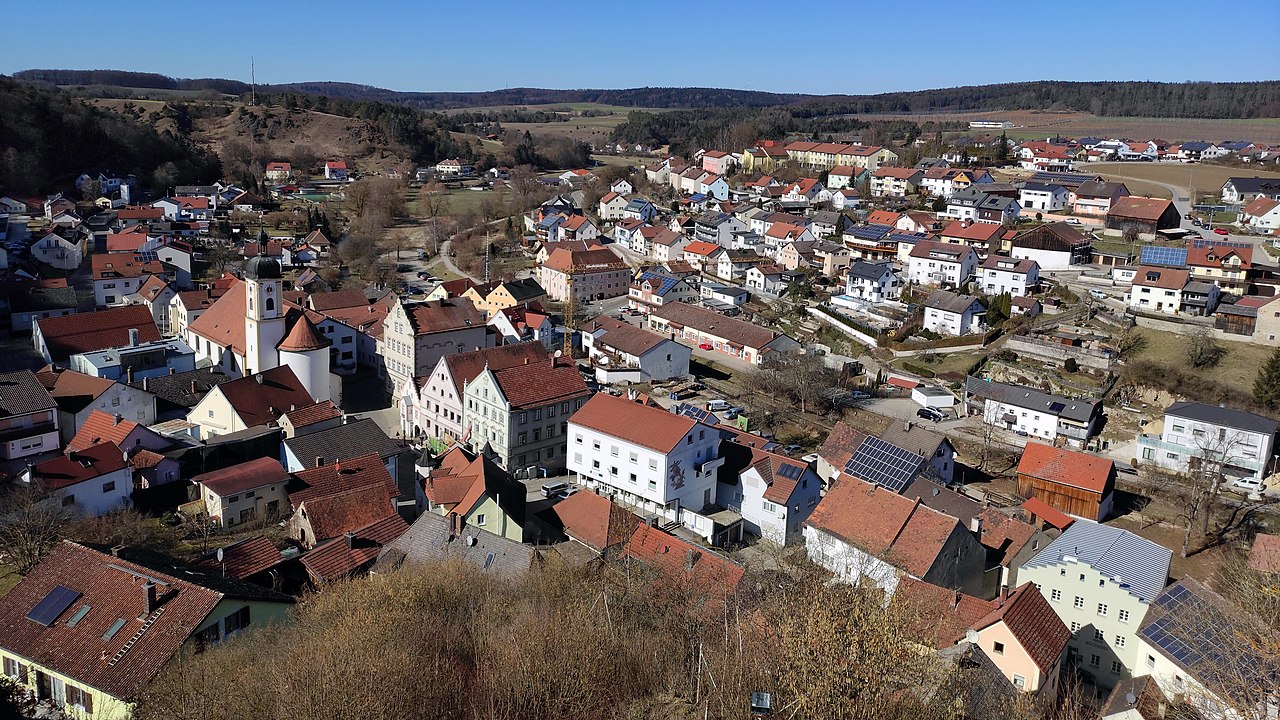 Photo: H.Helmlechner, CC BY-SA 4.0, via Wikimedia Commons
What Fossils You'll Find
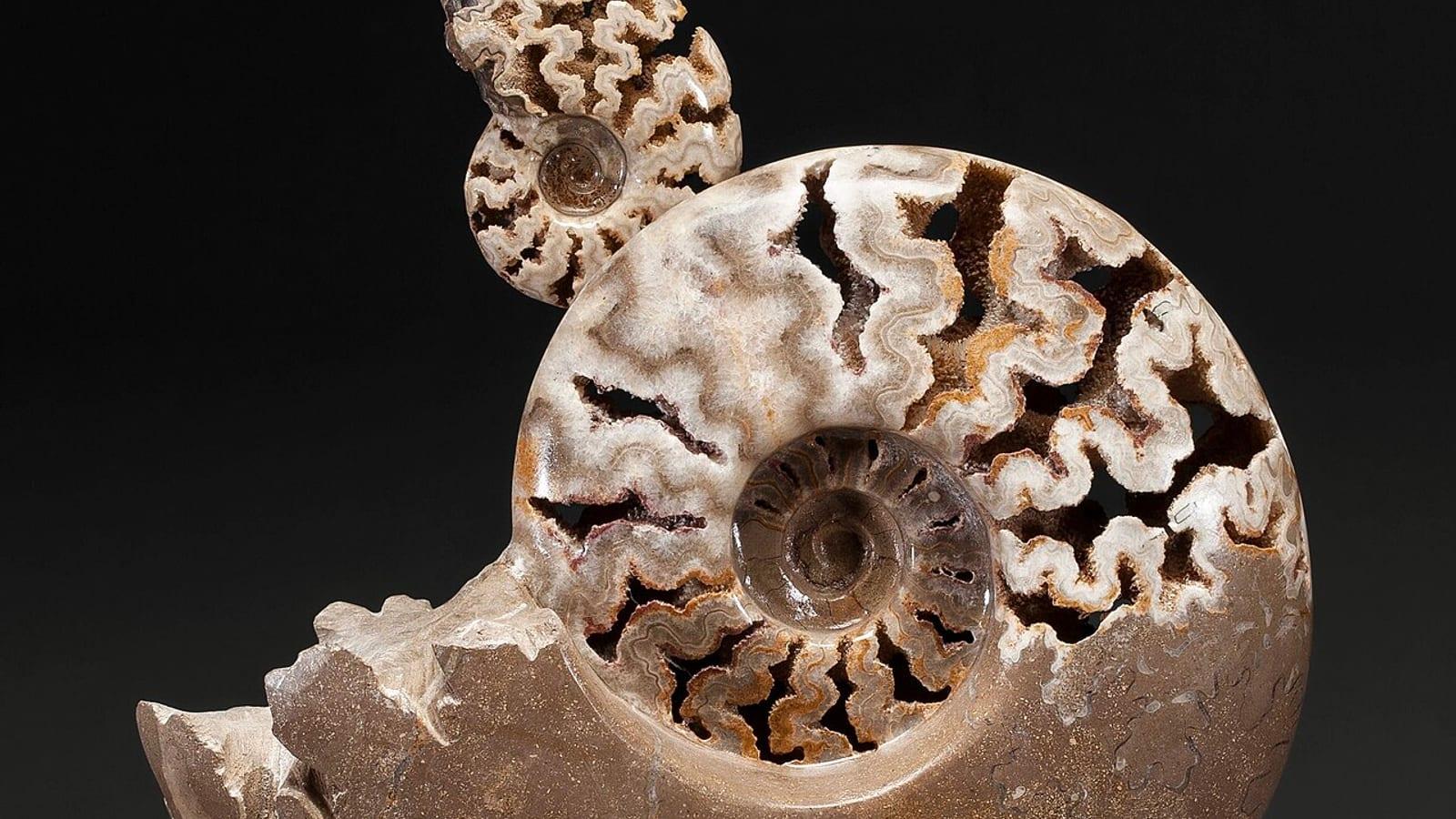
Ammonites are the primary and most common fossil group at Fossiliensteinbruch Schamhaupten. The Painten Formation yields multiple ammonite genera from the Kimmeridgian Stage, and well-preserved specimens with intact shell material and visible suture lines occur regularly. Freshly split limestone faces give the clearest results. Wetting the surface with water before examining it helps you distinguish fossil texture from mineral patterns in the rock.
Crinoids are abundant throughout the collecting area. Individual columnals appear frequently in most slabs, and partial crowns with arm segments preserved are found with reasonable regularity. Complete crinoid specimens are less common but have been recovered from the site.
Fish fossils occur in the finer-grained limestone beds. Lateral views of small actinopterygians, sometimes showing scale rows, appear when splitting thin-laminated slabs. The fish layers tend to be slightly darker in colour and finer in grain than the ammonite-bearing beds.
Shrimp and belemnites are recorded from the site and occur with moderate frequency. Belemnite guards are robust and survive splitting intact. Shrimp require more careful examination of slab surfaces and are easily missed if you are moving quickly through material.
The quarry's international reputation rests on the 2010 discovery of the twelfth Archaeopteryx skeleton, a reminder that exceptional vertebrate material does come out of public collecting areas, though such finds are genuinely rare. Any unusual bone material should be shown to the quarry owners immediately.
 Photo: Dean Falk Schnabel, CC0, via Wikimedia Commons
Geologic History
The Ancient Environment
The limestone at Fossiliensteinbruch Schamhaupten belongs to the Painten Formation, deposited at the Kimmeridgian/Tithonian boundary of the Late Jurassic, approximately 150 million years ago. The formation is part of the broader Solnhofen-type plattenkalk sequence that extends across the Altmühltal district of Bavaria.
At the close of the Kimmeridgian, southern Germany lay within a shallow tropical sea at a palaeolatitude of approximately 25–28°N. Reef barriers separated a network of calm, restricted lagoons from the open Tethys. The lagoon floors experienced periodic oxygen depletion, which suppressed the bacterial breakdown and scavenging that would otherwise destroy soft tissues and articulated skeletons. Fine carbonate muds settled continuously from the water column, entombing organisms that drifted or sank to the bottom. Ammonites, crinoids, fish, and crustaceans that inhabited the lagoon margins and water column were preserved with a degree of detail unusual in the global fossil record. Flying vertebrates, pterosaurs and early birds, occasionally entered the lagoons and were similarly buried.
Gradual burial and compaction over millions of years converted these muds into the thinly laminated plattenkalk limestone that gives the site its character today.
How Fossiliensteinbruch Schamhaupten Became a Fossil Collecting Site
Limestone quarrying in the Schamhaupten area has a long history tied to local construction and the regional lime trade, with documented operations dating back to at least the early modern period. Commercial quarrying removed overburden and exposed successive fossil-bearing beds, making the Painten Formation accessible at the surface.
The Gerstner family, which has run the quarry across several generations, recognized the site's educational and tourism potential and designated a section of the working quarry as a public fossil collecting area in the 1980s. The free-access model reflects a long-standing family decision to make the site broadly accessible rather than charging entry fees. The quarry gained wider scientific attention after the 2010 Archaeopteryx discovery, which drew international coverage and confirmed that amateur collecting at family-run Altmühltal quarries can still yield globally significant specimens.
Collecting Rules and Regulations
Is Fossil Collecting Allowed?
Yes, and uniquely among the better-known Altmühltal quarries, access at Fossiliensteinbruch Schamhaupten is free of charge. There is no entrance fee. The collecting area is open from 1 April to 31 October, daily 09:00–18:00. No advance reservation is needed for individual visitors or families.
- Free admission
- Open: 1 April–31 October, daily 09:00–18:00
- Collectors are limited to a 5 square metre working area per person, to a maximum depth of 40 cm
- You must bring your own tools. No rental is available on-site
- Normal invertebrate fossils (ammonites, crinoids, fish, belemnites) may be kept by the finder
- Exceptional vertebrate specimens, any complete or near-complete bones of fish, reptiles, or birds, must be reported to the quarry owners
- No facilities (toilets, water, shop) are available on-site
- Contact: +49 9446 1330 or +49 9446 90210
Under Bavarian state law (Bayerisches Denkmalschutzgesetz), scientifically significant fossils are subject to official reporting requirements regardless of the land ownership. The quarry owners enforce this requirement for any find that appears to be a vertebrate skeleton.
Recommended Tools
You must bring all tools from home. A rock hammer in the 1–1.5 kg range and a selection of chisels (flat and pointed) are the core collecting kit for plattenkalk. Safety glasses are essential. A stiff brush, a spray bottle of water, and newspaper or bubble wrap for wrapping specimens complete a practical kit. The rule at this site limits chisels to 50 cm in length. Gloves help with extended sessions, as limestone edges are sharp. Wear closed-toe shoes or boots. The quarry terrain includes uneven surfaces and loose blocks.
Safety
Safety glasses must be worn whenever you are striking limestone. Chips travel fast and far. Keep children away from the working area of other collectors. The quarry floor is uneven. Boots with ankle support are strongly preferred over trainers. Sun exposure on open quarry faces in summer is significant: bring and apply sun protection, and carry more water than you think you need. If you notice any areas of unstable rock face, move away and do not attempt to work beneath them.
Sources
- https://www.altmannstein.de/fossilien/
- https://www.altmannstein.de
- https://peerj.com/articles/6013/, Rauhut, O.W.M. et al. (2018). The oldest Archaeopteryx (Theropoda: Avialiae): a new specimen from the Kimmeridgian/Tithonian boundary of Schamhaupten, Bavaria. PeerJ 6:e6013
- https://www.naturpark-altmuehltal.de
- https://www.jura-museum.de
Nearby sites
 Altmannstein Schamhaupten Archaeopteryx Fossil Hunting GuideArchaeopteryx, Ammonites
 Dinosaur Museum Altmuehltal Fossil Park Fossil Hunting GuideAmmonites, Crinoid fragments
 Fossiliensammelstelle Titting Free Fossil Hunting GuideAmmonites, Crinoid fragments
 Fossiliensteinbruch Blumenberg Eichstatt Fossil Hunting GuideAmmonites, Fish fossils