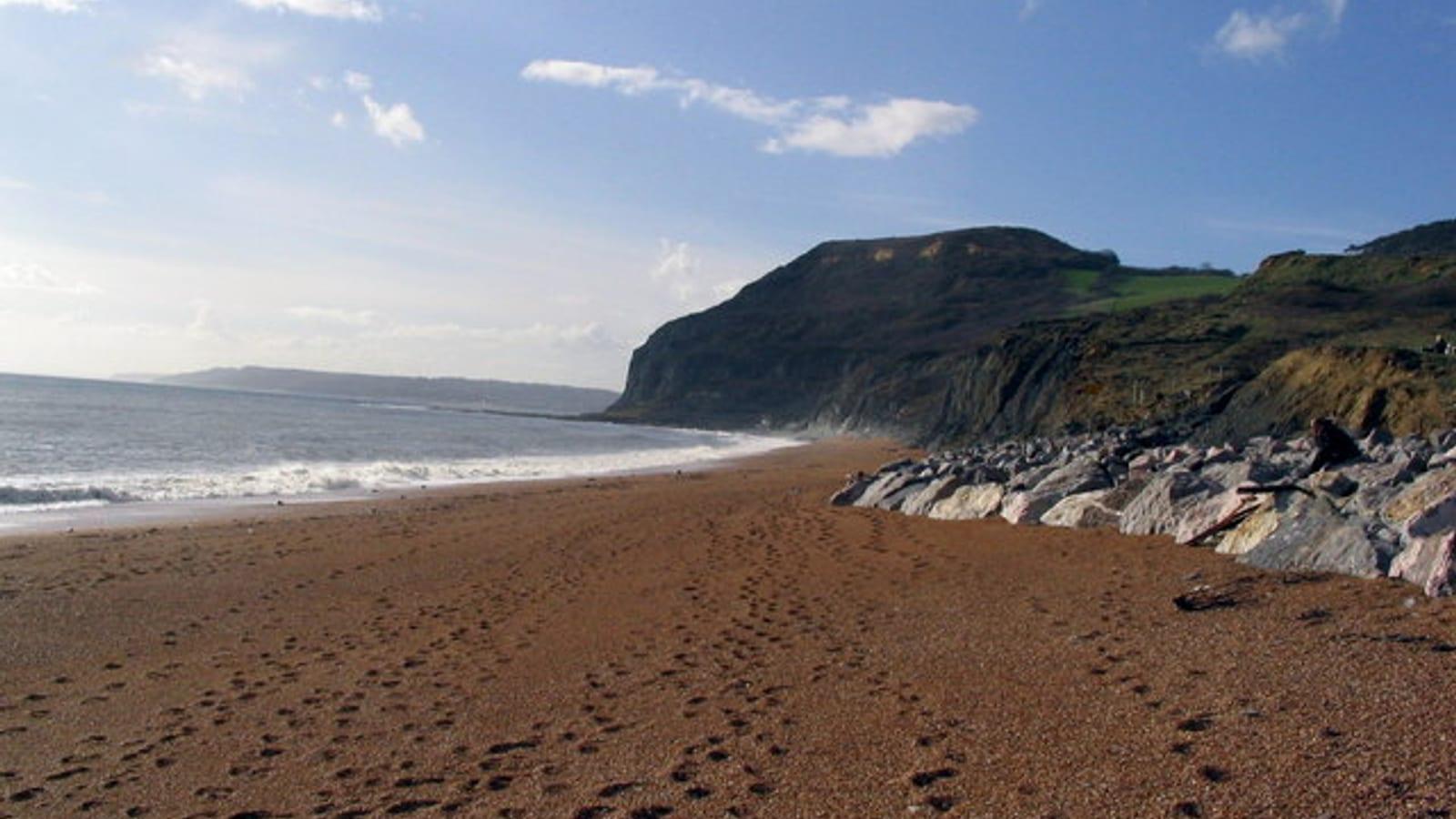
Seatown and Golden Cap Fossil Hunting Guide
Image: Stephen Williams (CC BY-SA 2.0)
Seatown beneath Golden Cap in Dorset offers excellent Early Jurassic ammonite collecting on the UNESCO Jurassic Coast. Free to collect loose finds; SSSI rules apply.
By Edward Chen · Updated 1 August 2026
 Photo: Chris Downer, CC BY-SA 2.0 via Wikimedia Commons
Introduction
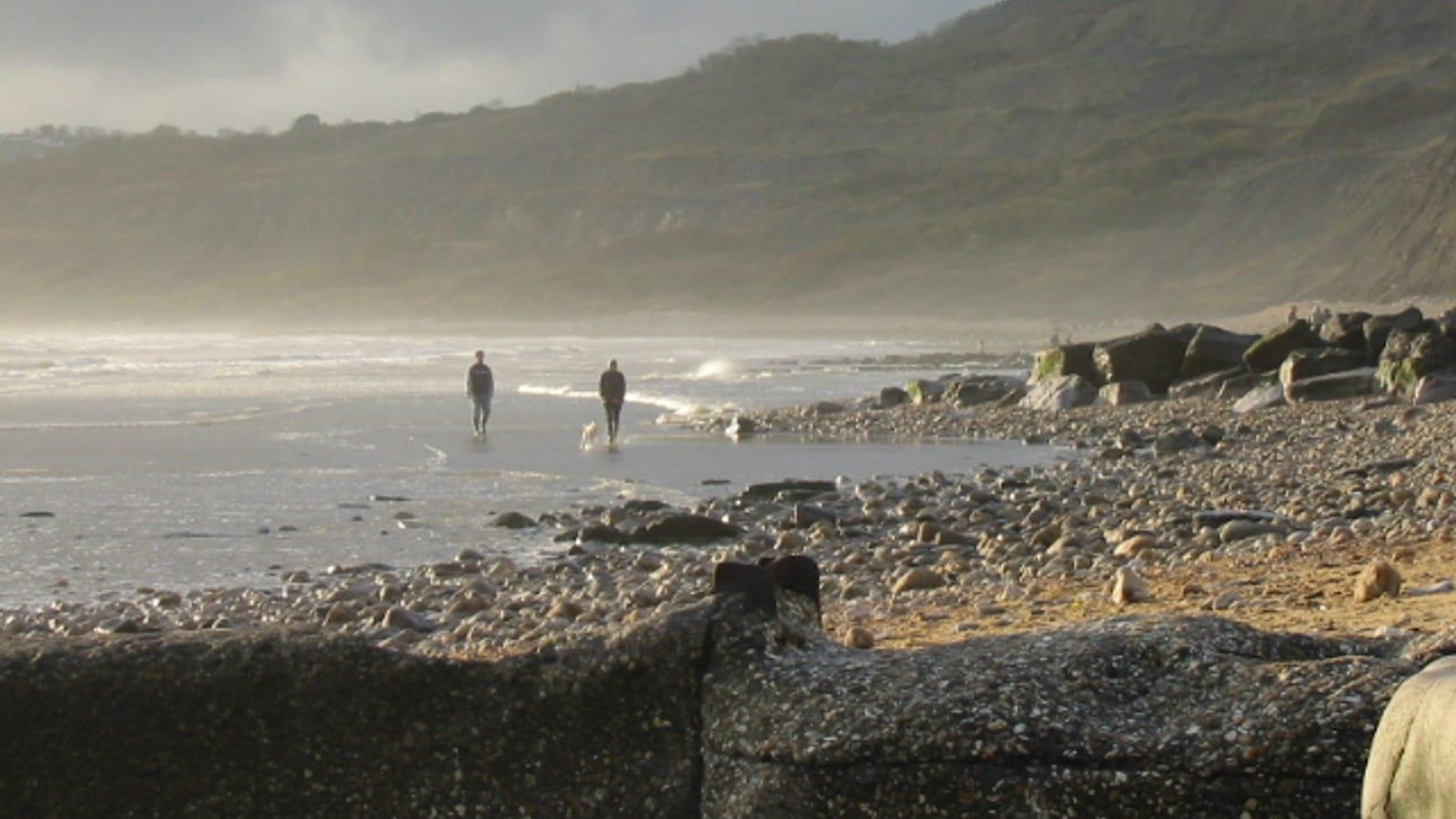
Seatown sits at the foot of Golden Cap, the highest point on England's south coast at 191 metres, and the beach here offers some of the most productive Early Jurassic collecting on the Dorset coast. The lower cliffs expose the Charmouth Mudstone Formation, laid down roughly 190 to 180 million years ago in a warm, shallow tropical sea. Ammonites are the signature fossil, but the site also yields belemnites, bivalves, brachiopods, crinoid fragments, and occasional marine reptile material including ichthyosaur bones. The upper portion of Golden Cap itself is capped by Cretaceous Upper Greensand, creating a dramatic two-period cliff sequence visible from the beach.
Seatown sits between Charmouth to the west and West Bay to the east, and though it sees fewer visitors than those more famous neighbours, it produces comparable finds. The site is part of the UNESCO World Heritage Jurassic Coast and is designated as a SSSI. This guide covers parking, beach access, the fossil types you can expect, the geological story of the site, and the collecting rules that apply.
 Photo: Stephen Williams, CC BY-SA 2.0, via Wikimedia Commons
Location and Directions
Address
Seatown Beach, near Chideock, Bridport, Dorset, DT6 6JU. GPS: 50.72°N, 2.84°W.
Directions and Parking
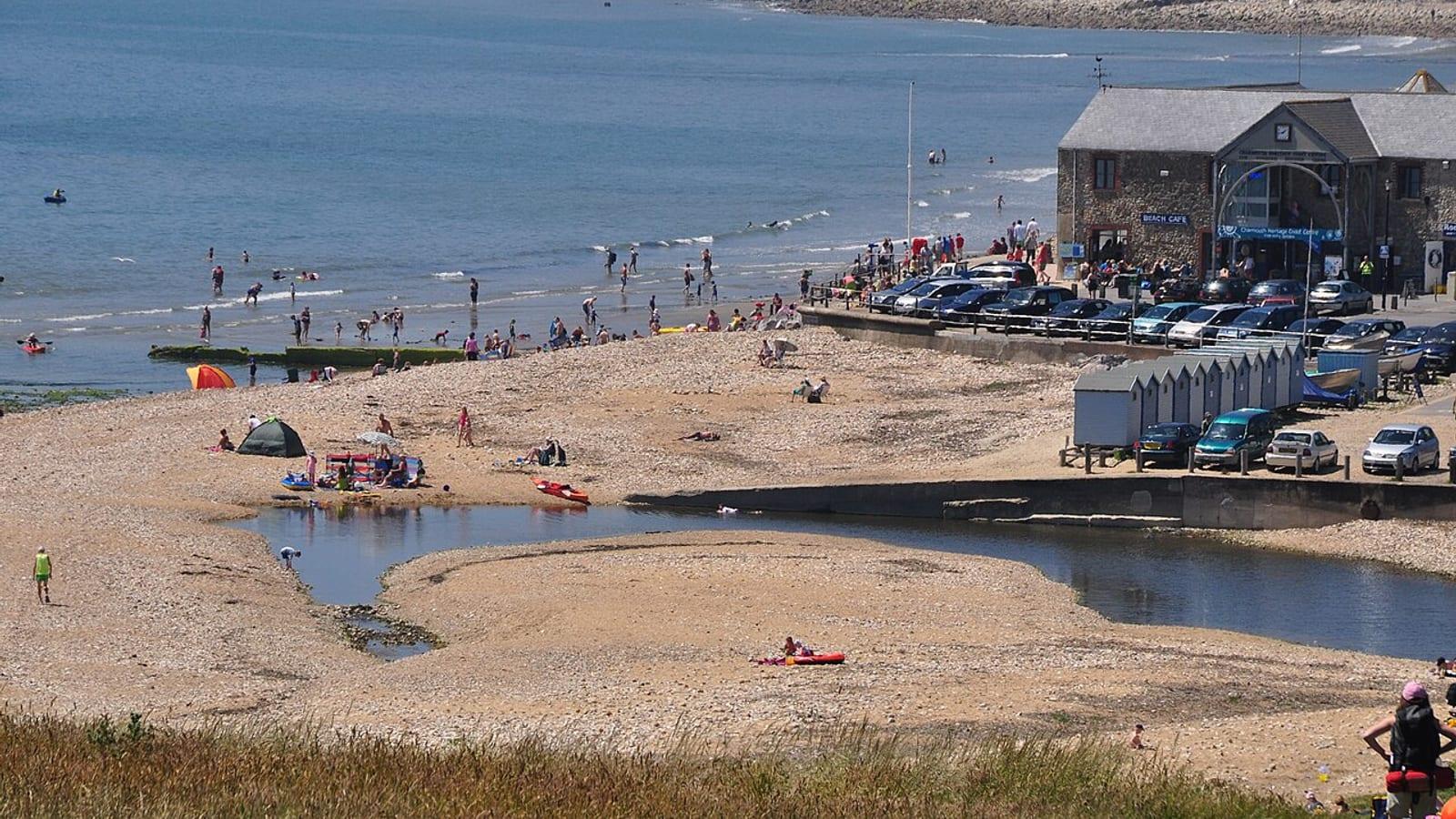
From Bridport, take the A35 west towards Charmouth. At Chideock village, turn south onto Sea Hill Lane, signposted to Seatown. The road is narrow and not suitable for coaches or large vehicles. Two speed cameras operate on the A35 through Chideock, so watch your speed approaching the turn. Sea Hill Lane descends steeply to the hamlet of Seatown, ending at the beach. The car park is operated by the Anchor Inn (postcode DT6 6JU) and charges approximately £8 per day, which typically includes a voucher redeemable at the pub. Arrive early at weekends in summer as the car park is small and fills quickly. There is very limited alternative parking elsewhere in the hamlet. Public toilets are available near the car park. The Anchor Inn serves food and the Seatown Slice kiosk operates seasonally on the beach.
Golden Cap Holiday Park is within half a mile of the beach and provides accommodation for those wanting to base themselves here. The South West Coast Path passes through Seatown, providing walking access from Lyme Regis to the west or West Bay to the east, though the climb over Golden Cap itself is steep and challenging.
Collecting from the beach is best at low tide when the foreshore is fully exposed. Check tide tables before visiting. The cliffs are actively eroding and landslides occur regularly. A major rockslide east of Seatown took place in July 2023. Do not approach or stand beneath the cliff faces.
What Fossils You'll Find
 Photo: Anne Burgess, CC BY-SA 2.0 via Wikimedia Commons
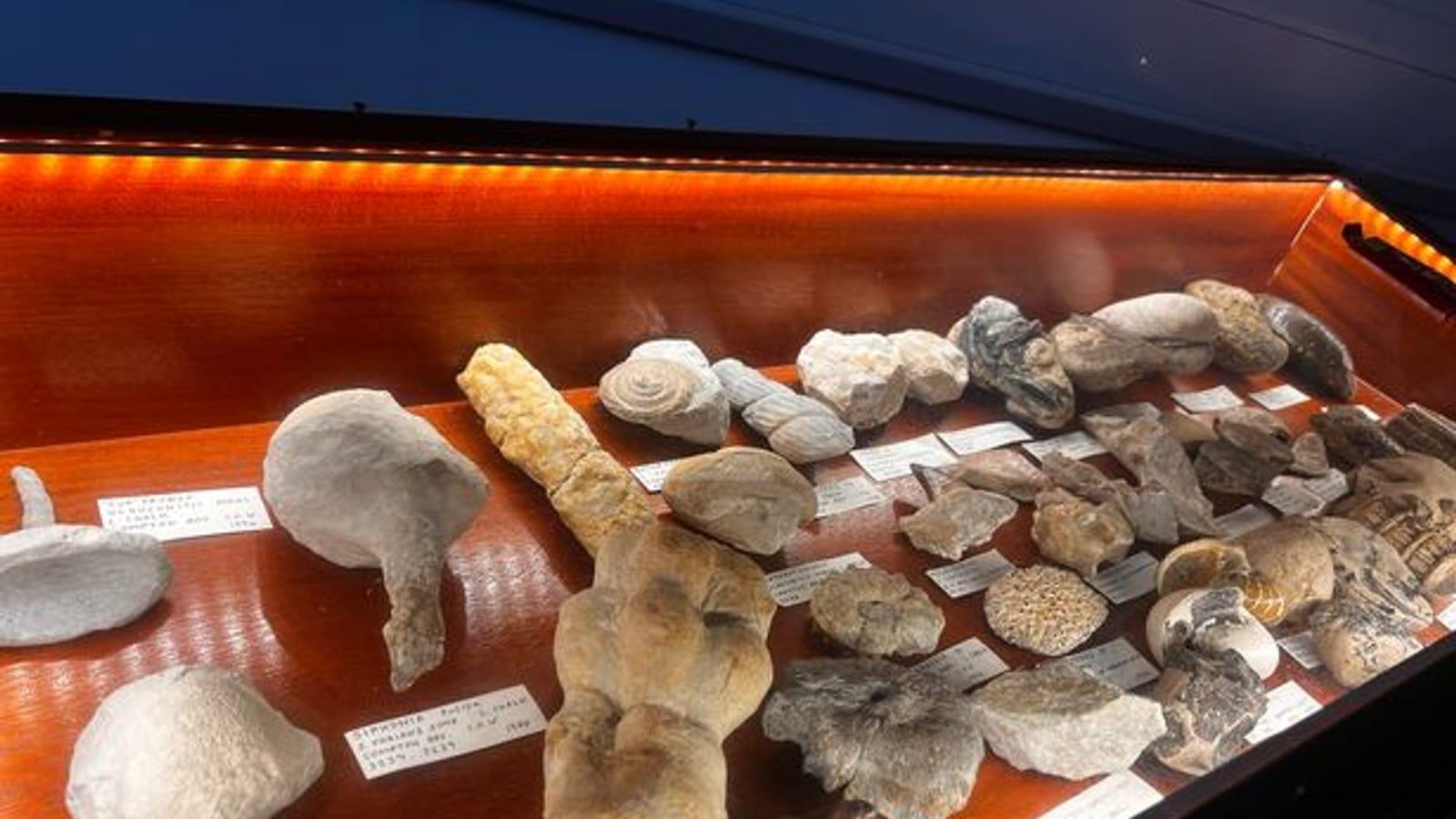
Ammonites are the most abundant fossils at Seatown and the beach is justifiably known among collectors as excellent ammonite territory. Multiple biostratigraphic zones of the Sinemurian and Pliensbachian stages are represented in the cliff sequence, and different genera characterise different beds. Androgynoceras ammonites are very common and often found green-stained, a colouration that gives the informal name "Green Ammonite Beds" to part of the sequence. Amaltheus species, with their distinctive keeled whorl profile, occur higher in the sequence. Tropideroceras and Protogrammoceras appear in other horizons.
The best strategy is to work the loose material on the foreshore rather than the cliffs. Nodules weathering out of the mudstone are often the most productive, as they can preserve ammonites in three dimensions. After winter storms, scouring tides expose fresh nodule layers and produce what local collectors call the "ammonite kingdom" conditions. The same nodules can yield belemnite guards, which are common throughout. The Belemnite Marl horizon produces guards in dense concentrations.
Bivalves, brachiopods, and crinoid ossicles occur throughout the beds and are straightforward to find. Fish remains, including scales and teeth, turn up occasionally. Marine reptile material, including ichthyosaur bone fragments and vertebrae, is rarer but has been recorded from Seatown. Any significant vertebrate find should be reported to the local museum.
Geologic History
The Ancient Environment
The lower cliffs at Seatown expose the Charmouth Mudstone Formation, deposited during the Early Jurassic period, primarily the Sinemurian and Pliensbachian stages, between approximately 193 and 184 million years ago. At this time Britain lay at a paleolatitude roughly equivalent to modern North Africa, positioned within a warm, shallow epicontinental sea during the early breakup of Pangaea. Sea surface temperatures were significantly higher than today, and the marine ecosystem was rich and diverse.
The dark mudstones and shales accumulated in low-energy offshore conditions. Periodic episodes of bottom-water oxygen depletion created anoxic conditions that slowed the decomposition of organic material settling to the seabed, resulting in the excellent preservation characteristic of the Charmouth Mudstone Formation. These anoxic episodes are particularly associated with the Belemnite Marl horizon, where dense concentrations of belemnite guards indicate mass mortality events in oxygen-depleted waters.
The upper cliff of Golden Cap tells a very different story. The golden-coloured sandstone capping the summit belongs to the Upper Greensand Formation, deposited approximately 100 million years ago during the mid-Cretaceous, representing a warm, shallow marine shelf environment during a period of global greenhouse conditions. The contact between the Jurassic mudstone and the Cretaceous sandstone represents roughly 90 million years of missing geological record, eroded away before the Greensand was deposited.
How Seatown Became a Fossil Collecting Site
Natural coastal erosion by the English Channel has been cutting into the cliffs at Seatown for thousands of years, continuously exposing fresh sections of the Jurassic sequence. The combination of soft mudstone and hard calcareous nodules means that each winter storm strips away weathered surface material and exposes new fossil-bearing layers. The cliffs here are among the most actively eroding on the Dorset coast, with rates measured in centimetres per year. This ongoing erosion is both the reason the site is so productive and the reason the cliffs are dangerous to approach directly. The major landslide of July 2023 in the Ridge Cliff area east of the beach was one of the largest coastal rockfalls seen in the region in decades, and it illustrates that the geological processes shaping this site are very much ongoing.
Collecting Rules and Regulations
Is Fossil Collecting Allowed?
Seatown beach is part of the UNESCO Jurassic Coast World Heritage Site and is designated as an SSSI. Collecting loose material from the foreshore and beach, including ammonites and other invertebrate fossils, is permitted for personal, non-commercial use. You must not hammer or chisel the bedrock cliff faces. Vertebrate fossils, including any marine reptile material, should be reported to the Charmouth Heritage Coast Centre or the local county museum. Commercial collecting requires a licence. The National Trust owns Golden Cap Estate and manages the surrounding land and coastal path.
Recommended Tools
A geological hammer for splitting nodules, a cold chisel, and a brush for cleaning finds are the standard kit. Bring wrapping material for fragile ammonites. Wellingtons or waterproof boots are useful as the foreshore can be wet and the rock surfaces slippery. A tide table is essential.
Safety
The cliffs at Seatown and Golden Cap are actively eroding and genuinely dangerous. Stay well away from the cliff base and do not attempt to collect directly from the cliff face. Work the beach and foreshore only. Rockfalls occur without warning, as the 2023 landslide demonstrated. Keep an eye on the tide, as the beach narrows significantly at high water and can leave you cut off in places.
Sources
Frequently asked questions
- What fossils can you find at Seatown and Golden Cap?
- The Early Jurassic Charmouth Mudstone Formation, roughly 190 million years old, yields ammonites such as Amaltheus and Androgynoceras along with belemnites on this stretch of the Dorset Jurassic Coast.
- Is fossil collecting allowed at Seatown?
- Yes. Collecting loose fossils from the foreshore is open and free under the Jurassic Coast collecting code. Do not dig into the unstable cliffs.
- Are the cliffs at Golden Cap dangerous?
- Yes. Golden Cap is the highest point on the south coast and its cliffs erode actively and are prone to rockfall and mudflows. Stay off and away from the cliff base, and collect only from the beach on a falling tide.