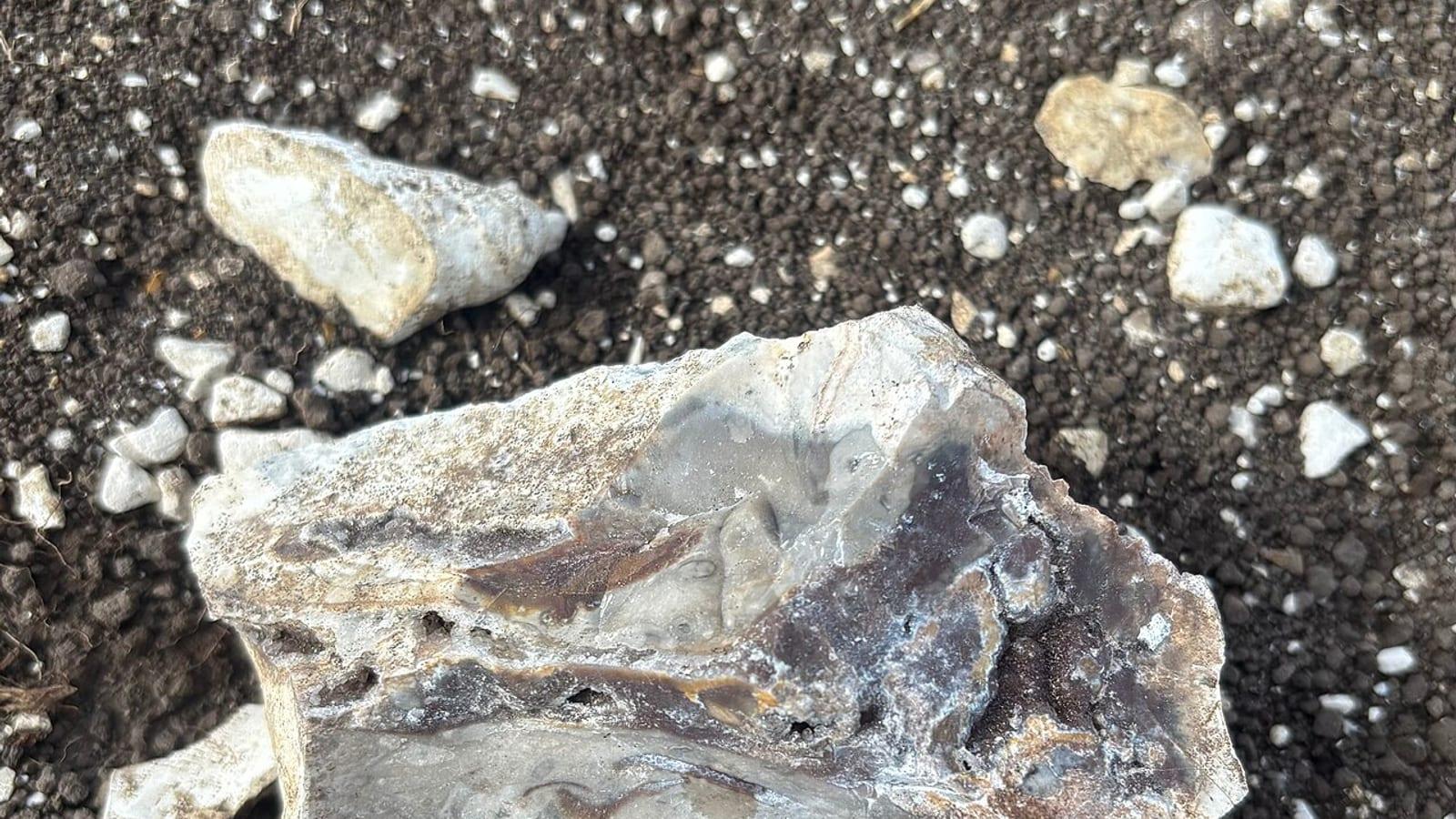
Seven Sisters Fossil Hunting Guide
Image: Ameliatalkspaleo (CC BY 4.0)
Seven Sisters in East Sussex exposes Cretaceous chalk with echinoids, brachiopods, and bivalves below 162-metre chalk cliffs. Free surface collecting in the South Downs National Park.
By Edward Chen · Updated 1 August 2026
 Photo: Diliff, CC BY-SA 3.0 via Wikimedia Commons

Introduction
The Seven Sisters chalk cliffs in East Sussex tower up to 162 metres above sea level and expose a Late Cretaceous marine sequence that is among the most fossiliferous chalk sections in Britain. The Seaford Chalk Formation here contains echinoids, brachiopods, bivalves, sponges, crinoid fragments, and shark teeth in a white matrix that contrasts sharply with the dark flint nodules running through the beds. The site is part of the South Downs National Park and Seven Sisters Country Park, covering 280 hectares, yet the foreshore below the cliffs remains open for surface collecting year-round.
This guide covers the two main access routes, what to look for in the chalk and flint, the geological story of the Cretaceous sea that deposited these beds, and the rules and safety information for visiting one of England's most dramatic coastlines.
 Photo: Ameliatalkspaleo, CC BY 4.0, via Wikimedia Commons

Location and Directions
Address
Seven Sisters Country Park Visitor Centre, Exceat, Seaford, East Sussex BN25 4AD. Birling Gap car park, Birling Gap, East Dean, East Sussex BN20 0AB provides the alternative eastern access.
Directions and Parking
From the A259 coast road between Seaford and Eastbourne, turn into the village of Exceat and follow the signs to Seven Sisters Country Park. The visitor centre car park at Exceat is a large, well-surfaced facility with seasonal parking charges. From the car park, a footpath leads to the beach at Cuckmere Haven, approximately one kilometre on flat ground. The beach here is at the western end of the Seven Sisters cliff sequence. For access to the cliff base and the best fossil-bearing foreshore, walk east from Cuckmere Haven along the beach toward the cliff sections. Alternatively, access the eastern end of the sequence from the National Trust car park at Birling Gap, which sits directly on the cliff edge with steps down to the beach.
What Fossils You'll Find
Brachiopods appear in large numbers in some Seaford Chalk beds, with Terebratulina and Gibbithyris among the most common genera. These small bivalved shells can be found loose on the foreshore surface or in freshly fallen chalk. Bivalves including Inoceramus, recognisable by its distinctive prism-structured shell texture, are also present and can be found as complete valves or fragmentary sections in the chalk.
Sponge bodies, preserved as silicified or chalk-matrix forms, occur regularly. The Seven Sisters Flint Band, a prominent sheet flint marker visible as a dark continuous layer in the cliff face, represents a period of intense silicification and is often associated with sponge material. Shark teeth, though uncommon, have been found here, as have the occasional fish vertebra from the Cretaceous chalk sea fish fauna.
 Photo: User:Dlloyd, CC BY-SA 3.0, via Wikimedia Commons

Geologic History
The Ancient Environment
The chalk at Seven Sisters belongs primarily to the Seaford Chalk Formation, with Newhaven Chalk Formation visible at cliff-top level. These sediments date to the Coniacian and Santonian stages of the Late Cretaceous, approximately 87 to 84 million years ago. The pure white colour of the chalk is significant: it indicates that the seafloor was far from any land during deposition, so no terrigenous sand or mud was being introduced. The entire thickness of chalk was built up from the tiny skeletal plates (coccoliths) of microscopic algae that lived in the surface waters and fell to the seafloor as a slow carbonate ooze after death.
Britain lay at approximately 40 degrees north latitude during the Coniacian, equivalent to the position of present-day southern France. Sea levels were considerably higher than today, covering most of lowland Britain and much of Europe in a shallow, warm chalk sea. The benthic community on the seafloor included abundant echinoids, sponges, bivalves, and brachiopods, all feeding in the calcium carbonate-saturated water. The Seven Sisters Flint Band formed when silica released from decomposing sponges and other organisms was redistributed by groundwater into sheet-like bodies running parallel to the bedding.
The chalk was later uplifted by 30 to 25 million years ago as the European-African plate collision that built the Alps also deformed the sedimentary layers of southern England. Post-glacial sea level rise then flooded the lowland, bringing the sea to the foot of the uplifted chalk and initiating the rapid coastal erosion that cuts the vertical cliff faces visible today. The cliffs erode at approximately 30 to 40 centimetres per year, constantly supplying fresh chalk material to the foreshore.
How Seven Sisters Became a Fossil Collecting Site
The Seven Sisters cliff sequence is entirely the product of natural coastal erosion. No quarrying, engineering, or human disturbance has exposed the fossil-bearing layers here: the chalk cliffs are eroding because post-glacial sea levels are too high for the existing coastal geometry, and wave action at the cliff base has been undermining the chalk ever since. Each cliff fall deposits several cubic metres of fossil-bearing material onto the beach below, which is then worked by wave action over subsequent weeks and months. The undulating chalk cliff profile, with its famous eight peaks, results from headland retreat at varying rates depending on the thickness and hardness of the chalk in each section.
Collecting Rules and Regulations
Is Fossil Collecting Allowed?
Surface collecting from the beach and foreshore at Seven Sisters is permitted and free. Personal, non-commercial collection of loose material from the beach is legal under UK law. The cliffs and foreshore are within Seven Sisters Country Park and the South Downs National Park. The chalk cliffs are SSSI designated for their geological and biological importance. Under SSSI regulations, you must not hammer or chisel in-situ cliff or bedrock. Picking up loose material from fallen chalk blocks on the beach and collecting from the foreshore surface is the accepted method.
Recommended Tools
A geological hammer and chisel for splitting loose chalk blocks on the beach are useful. Do not use them on the standing cliff face. A hand lens for examining small fossils in the fine chalk matrix, a stiff brush for clearing debris, and padded containers for transporting chalk specimens (which can be fragile) are all worth bringing. Chalk fossils may need consolidation with a dilute adhesive if the matrix is crumbly.
Safety
The Seven Sisters cliffs are among the most actively eroding in England. Cliff falls occur without warning at any time of year and can involve large volumes of chalk. Never stand directly at the cliff base or below any overhanging material. The safest approach is to collect from chalk blocks that have already fallen and moved clear of the cliff by wave action. Incoming tides can cut off the beach below the cliffs. Check tide times before committing to a long walk along the cliff base and plan your return before the sea reaches the foot of the chalk.
Sources
Nearby sites
 Beachy Head Fossil Hunting GuideEchinoids (sea urchins), Flint sponges
 Eastbourne Sussex Fossil Hunting GuideEchinoids, Chalk ammonites
 Cooden Beach Bexhill Fossil Hunting GuideDinosaur bones and teeth, Crocodilian material
 Hastings East Sussex Fossil Hunting GuideDinosaur bones and teeth, Dinosaur footprints