Beachy Head Fossil Hunting Guide
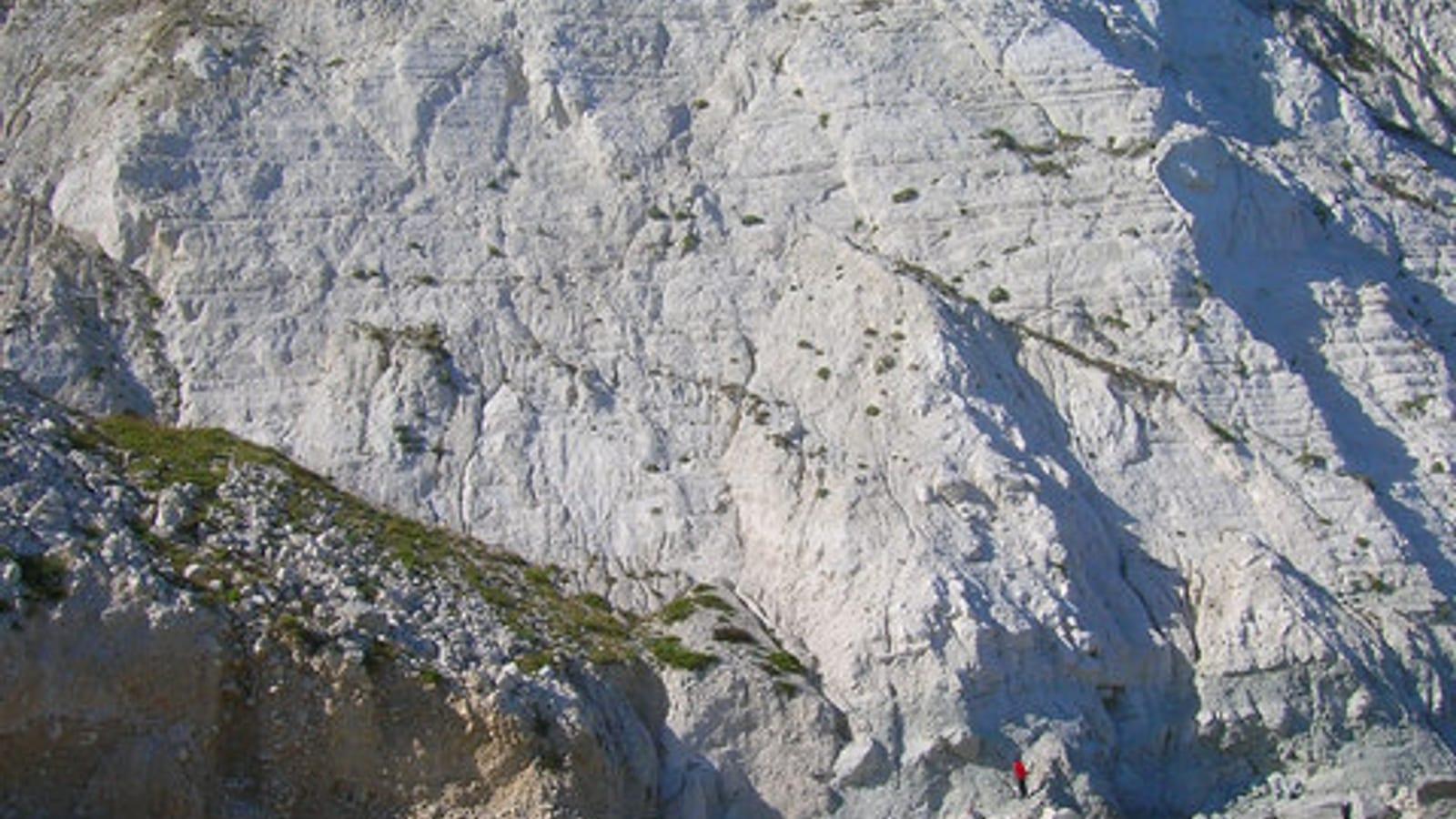
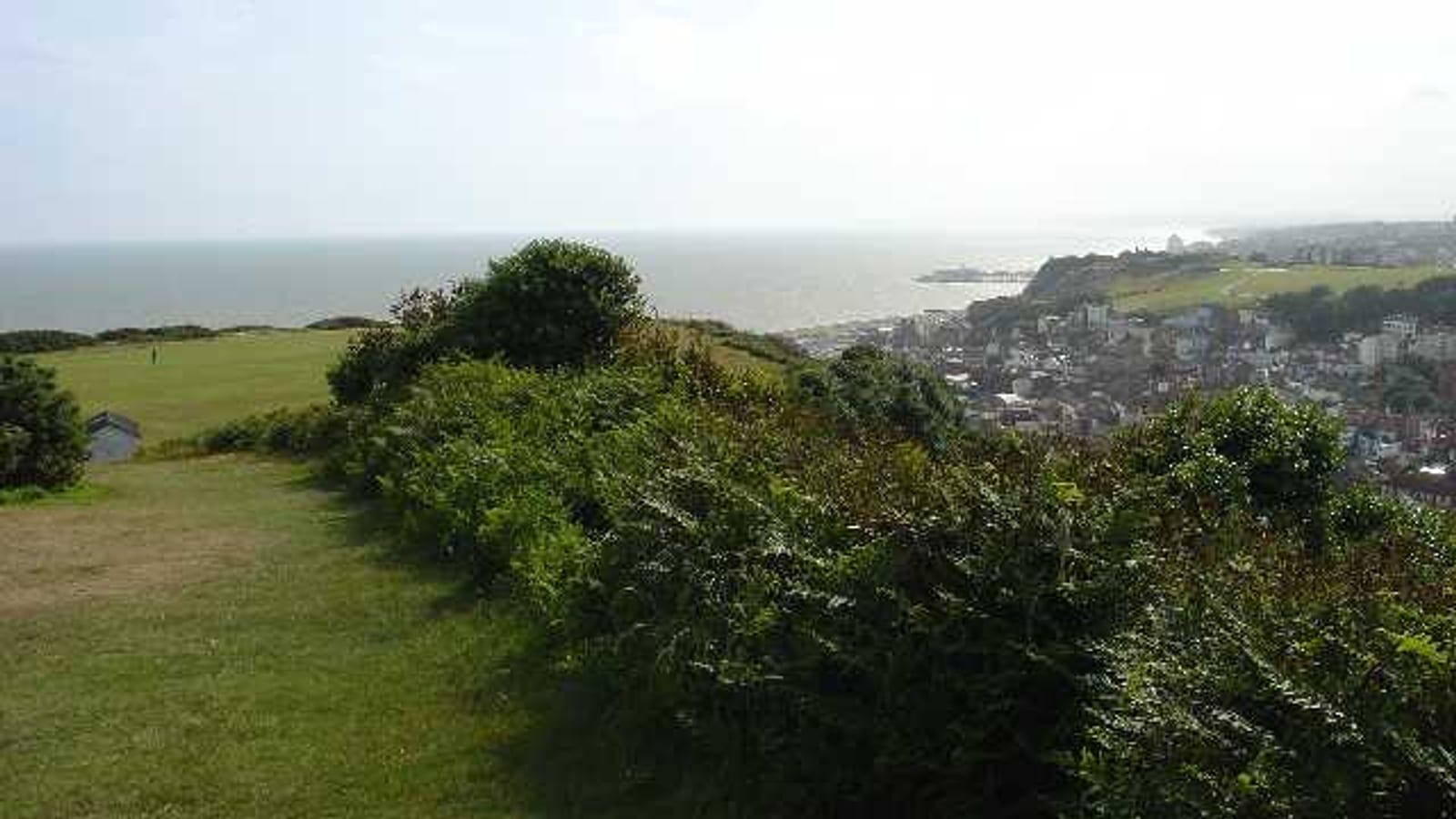
Image: Simon Carey (CC BY-SA 2.0)
Beachy Head's chalk cliffs expose Upper Cretaceous formations yielding flint echinoids, sponges, bivalves, and brachiopods on the East Sussex coast near Eastbourne.
By Edward Chen · Updated 1 August 2026
 Photo: Diliff , Papa Lima Whiskey (edit), CC BY-SA 3.0 via Wikimedia Commons
Introduction
Beachy Head is the highest chalk sea cliff in Britain at 162 metres, and its white faces expose an almost unbroken succession of Upper Cretaceous Chalk Group formations laid down in a warm tropical sea between 103 and 84 million years ago. The chalk itself is a fine-grained limestone built almost entirely from the skeletal plates of microscopic algae called coccolithophores, and it accumulated at a rate of roughly a centimetre every thousand years on the floor of an open, oxygen-rich sea. For fossil collectors, the most productive areas are not the towering cliffs themselves but the beach and the gentler slopes at Cow Gap and around the lighthouse, where fallen chalk blocks and eroded flints yield echinoids, sponges, bivalves, brachiopods, and occasional ammonite fragments. The flint nodules that occur in regular bands through the chalk are themselves geologically interesting and sometimes contain the moulds of sponges and echinoids. This guide explains where to collect safely, what to look for, and how this landscape came to be.
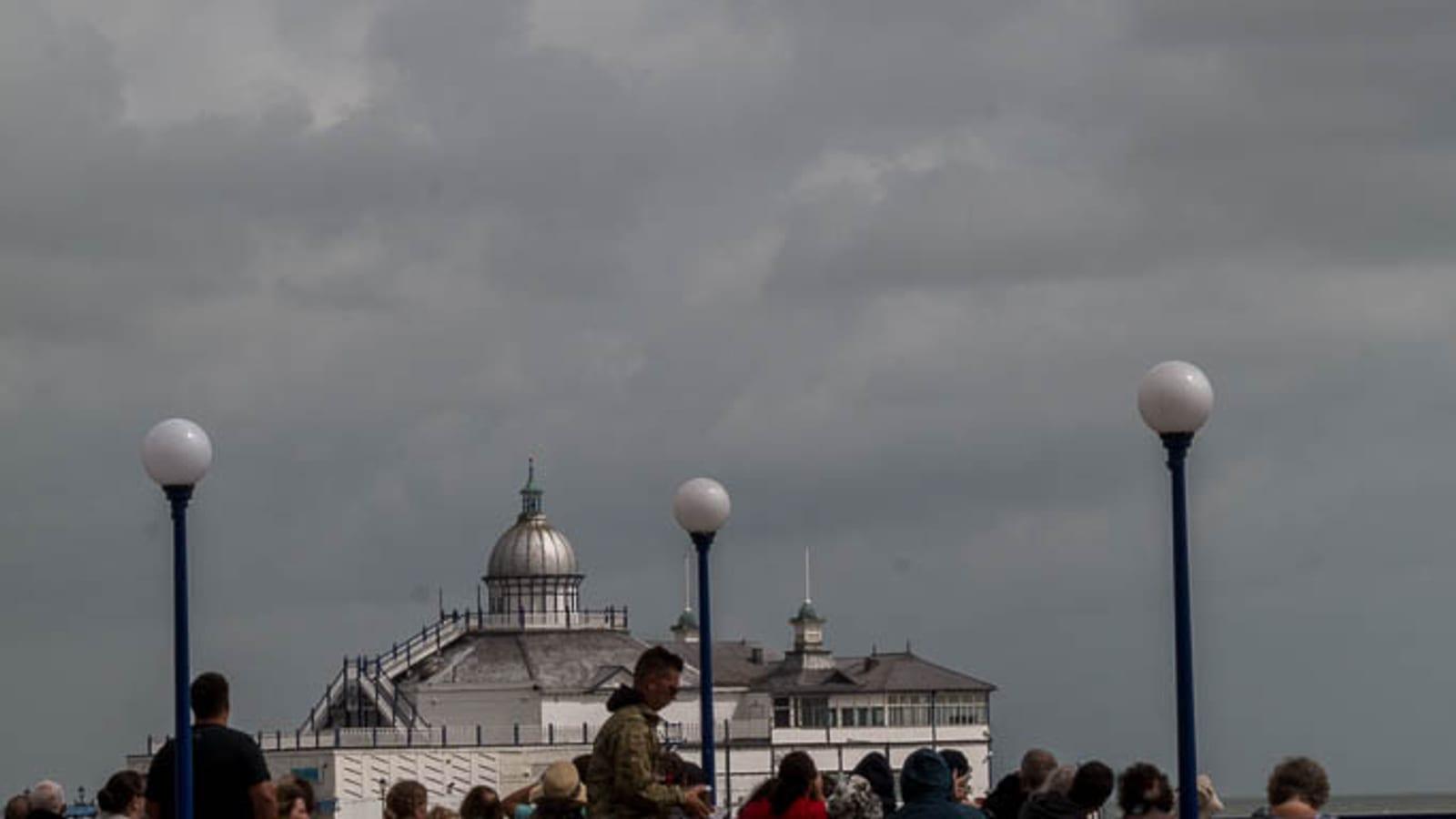
 Photo: Simon Carey, CC BY-SA 2.0, via Wikimedia Commons
Location and Directions
Address
Beachy Head, near Eastbourne, East Sussex BN20 7YA, England. The most accessible collecting area is at Cow Gap, approximately 1.5 km west of the lighthouse, and the area around the lighthouse base accessible via the clifftop path.
Directions and Parking
From Eastbourne town centre, follow King Edward's Parade westward along the seafront. The road curves right and becomes Beachy Head Road (B2103), climbing steeply toward the headland. There are several parking areas along this road. The main car park at the Beachy Head pub provides the best central access (pay-and-display, seasonal charges, capacity approximately 100 vehicles). For Cow Gap specifically, drive further west along Beachy Head Road toward Birling Gap and look for the smaller car park at Cow Gap itself, or park at Birling Gap (National Trust car park, charges apply) and walk east along the beach via the metal steps. The National Trust steps at Birling Gap are the safest beach access point along this section. They are maintained and adjusted as the cliff erodes. From Birling Gap, walk east along the foreshore for approximately 1.5 km to reach the Cow Gap area. For the lighthouse area, walk east from Cow Gap or access from Holywell at the Eastbourne end of the cliffs via steep concrete steps. Note that beach access from the main Beachy Head viewpoint is not possible due to the sheer cliff face. You must use Birling Gap or Holywell as entry and exit points.
What Fossils You'll Find
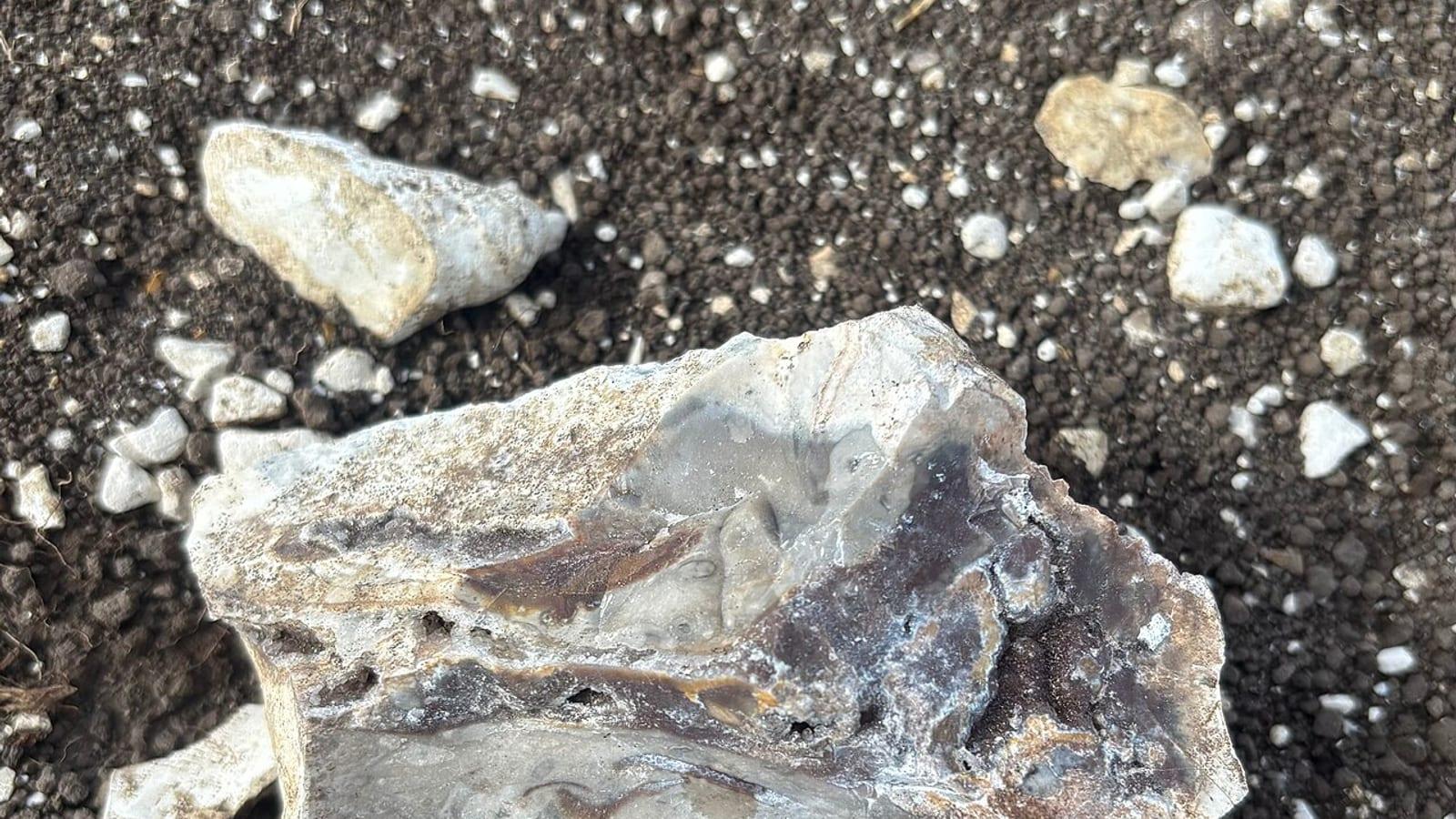
 Photo: Lincolnshire County Council, Adam Daubney, 2013-03-21 16:38:14, CC BY-SA 4.0 via Wikimedia Commons
Echinoids (sea urchins) are the most commonly found fossils at Beachy Head. The regular echinoid Micraster is the classic Chalk fossil and occurs in several distinct evolutionary forms through the succession, making it a useful guide fossil for identifying which chalk formation you are searching. Look for them in fallen chalk blocks on the beach, where they weather out as smooth grey spheres with a characteristic five-petalled pattern on the upper surface. The irregular echinoid Conulus also occurs as a flint replacement, preserved as a white silica cast inside a flint nodule. Flint sponges are found throughout the chalk and are particularly common at Beachy Head. The siliceous sponge Ventriculites and related genera are preserved as flint replacement casts. Break open a flint nodule with a hammer and you may find the internal canal structure of a sponge preserved in the silica. Whole sponge-bearing flints sometimes weather out of the cliff complete, with the sponge form visible on the exterior. Bivalves including Inoceramus, a large, flat oyster-like shell, occur in the chalk as fragments or occasionally near-complete valves. They are recognisable by their fibrous shell structure, which produces a distinctive surface sheen. Inoceramus fragments are often abundant in localised horizons. Brachiopods such as Terebratulina and Gibbithyris occur in the Lewes Nodular Chalk and lower Seaford Chalk, typically as small, smooth, oval shells, sometimes found in clusters in nodular chalk horizons. They are less common than echinoids but distinctive when found. Ammonite fragments are present but uncommon in the Upper Chalk. By the Cenomanian and Turonian stages, ammonites were becoming rarer. Scaphites and Lewesiceras are the genera most likely to be encountered, usually as fragments of the outer whorl rather than complete specimens.
Geologic History
The Ancient Environment
The chalk exposed at Beachy Head spans the Cenomanian to Santonian stages of the Upper Cretaceous, from approximately 103 to 84 million years ago. The Lewes Nodular Chalk Formation forms the lower part of the cliff section, giving way upward through the Seaford Chalk Formation to the Newhaven Chalk Formation at the top. During this time, southern Britain lay at approximately 35 to 40 degrees north paleolatitude, submerged beneath a warm, shallow epicontinental sea. Water depths over the chalk sea floor ranged from 100 to perhaps 600 metres in the deeper parts of the basin. The sea surface temperatures were 20 to 25 degrees Celsius, and the Earth was in the grip of a Cretaceous greenhouse maximum with no polar ice caps and global sea levels 100 to 200 metres higher than today. The absence of land-derived sediment in the chalk records the flooding of nearby continents: there was simply no significant source of mud or sand close enough to contaminate the pure carbonate ooze. The chalk accumulated as a fine calcareous ooze formed from the skeletal plates of coccolithophore algae drifting down from surface waters, supplemented by planktonic foraminifera and the shells of bottom-dwelling organisms. This ooze lithified over millions of years into the white limestone visible today. The flint bands formed from the siliceous remains of sponges and radiolaria, which dissolved after burial and reprecipitated as silica nodules along permeable horizons.
How Beachy Head Became a Fossil Collecting Site
The English Channel formed during the Pleistocene as ice sheet meltwater carved through the chalk ridge connecting Britain to France, exposing these beds to coastal erosion. Wave action at the base of the cliff undercuts the chalk, causing the cliff face to collapse periodically. Beachy Head loses approximately one metre of cliff per year on average, though individual falls can remove much larger sections at once. Each collapse brings fresh chalk blocks onto the beach, where weathering by rain and sea spray dissolves the calcium carbonate matrix and releases the silica-replaced fossils, particularly flint echinoids and sponges. The lighthouse was relocated from Belle Tout to its current position in 1902 precisely because the cliff was retreating so rapidly.
Collecting Rules and Regulations
Is Fossil Collecting Allowed?
Beachy Head and the Seven Sisters cliffs are part of the South Downs National Park and much of the cliff and foreshore is designated SSSI. The same rules that apply throughout the SSSI-protected Jurassic and Cretaceous coast sections apply here: collecting loose, surface-detached material from the beach using hand tools only is legal and generally accepted. Hammering directly into the chalk cliff face is illegal under SSSI legislation without a Natural England research licence. The Birling Gap area is managed by the National Trust. Their guidance supports responsible fossil collecting of loose material from the beach. Do not interfere with cliff face exposures or remove in-situ sections of chalk. Any scientifically significant find, such as a well-preserved ammonite or an unusual echinoid variant, is worth photographing and reporting to the South Downs National Park geology team.
Recommended Tools
A geological hammer, a couple of chisels, and a hand lens are sufficient for Beachy Head. The chalk is soft and splits easily. Padding for your rucksack is important because chalk specimens are fragile. A stiff brush helps clean specimens on site. Safety goggles are worth wearing when splitting flints, as they shatter unpredictably. Waterproof boots are recommended. The beach can be wet and rocky in the areas near the cliff base.
Safety
The chalk cliffs at Beachy Head are among the most dangerous in England from a rockfall perspective. Chalk is porous and weakens significantly after prolonged rain or frost, and falls are sudden and unpredictable. Never stand beneath the cliff face or under an overhang. Keep your distance from the base of the cliff at all times and work only on fallen material that has already landed on the beach well away from the cliff foot. The tide rises quickly along the base of the cliffs and there are few exit points between Birling Gap and Holywell. Check tide times before setting out. The clifftop path is unfenced in many places and the headland is known for extreme wind. Keep well back from the edge.
Sources
- http://www.discoveringfossils.co.uk/beachy-head-east-sussex/
- https://ukfossils.co.uk/beachy-head/
- https://www.sevensisters.org.uk/plan-your-visit/car-parking/
- https://www.nationaltrust.org.uk/visit/sussex/birling-gap-and-the-seven-sisters
- https://en.wikipedia.org/wiki/Beachy\_Head
- https://webapps.bgs.ac.uk/lexicon/lexicon.cfm?pub=CK
- https://www.southdowns.gov.uk/discover/geology/


.jpg)