Beltinge Herne Bay Fossil Hunting Guide
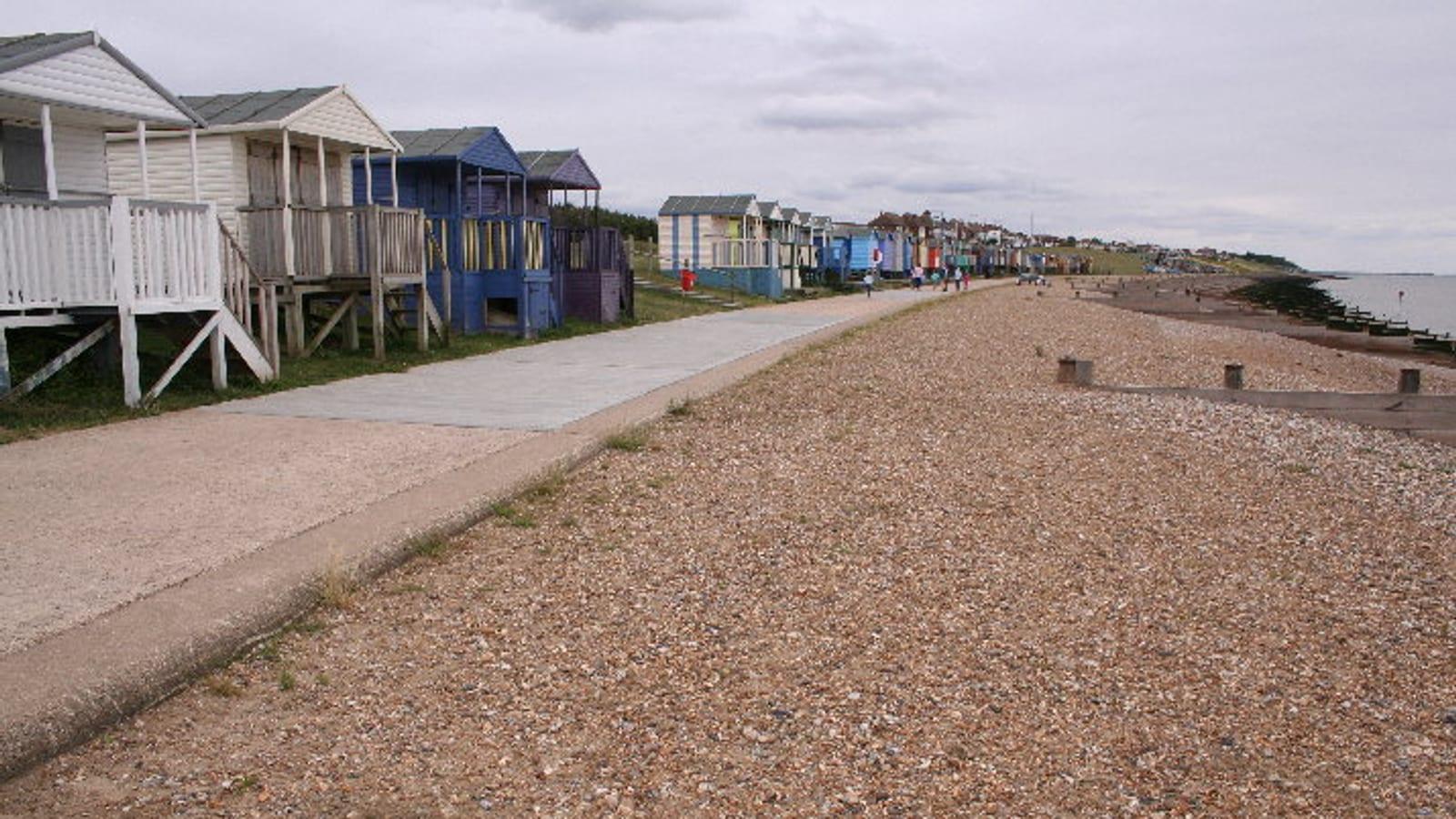
Image: David Anstiss via Wikimedia Commons (CC BY-SA 2.0)
Beltinge near Herne Bay in Kent exposes the Eocene Beltinge Fish Bed at beach level, producing teeth from 24 shark species and diverse Palaeocene-Eocene fish material.
By Edward Chen · Updated 2 August 2026
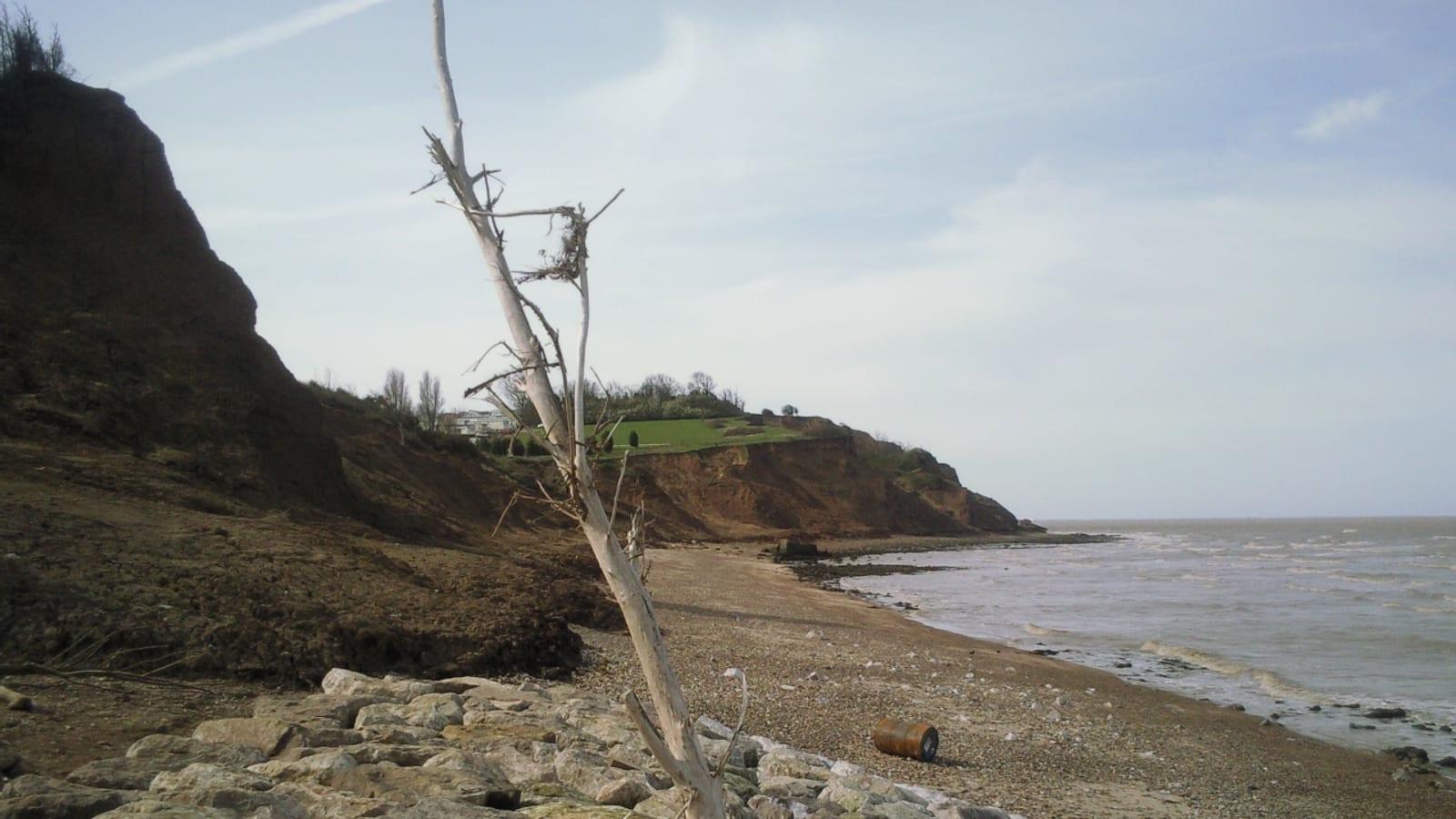
 Photo: pam fray, CC BY-SA 2.0 via Wikimedia Commons
Introduction
Beltinge, on the Kent coast just east of Herne Bay, is one of the most productive sites in Britain for Eocene shark teeth, and the reason is specific: the Beltinge Fish Bed, an exceptionally fossiliferous layer within the Upnor Formation, outcrops at beach level directly opposite the car park access. During spring tides with extreme low water, collectors from across Britain and continental Europe come to this foreshore to work through material exposed on the sandy flats. Twenty-four different shark species have been documented from this single site.
This guide covers the access point, what the tides expose and when, the specific fossils to look for, the Palaeocene-Eocene geology of the beds, and the rules that apply to collecting here.
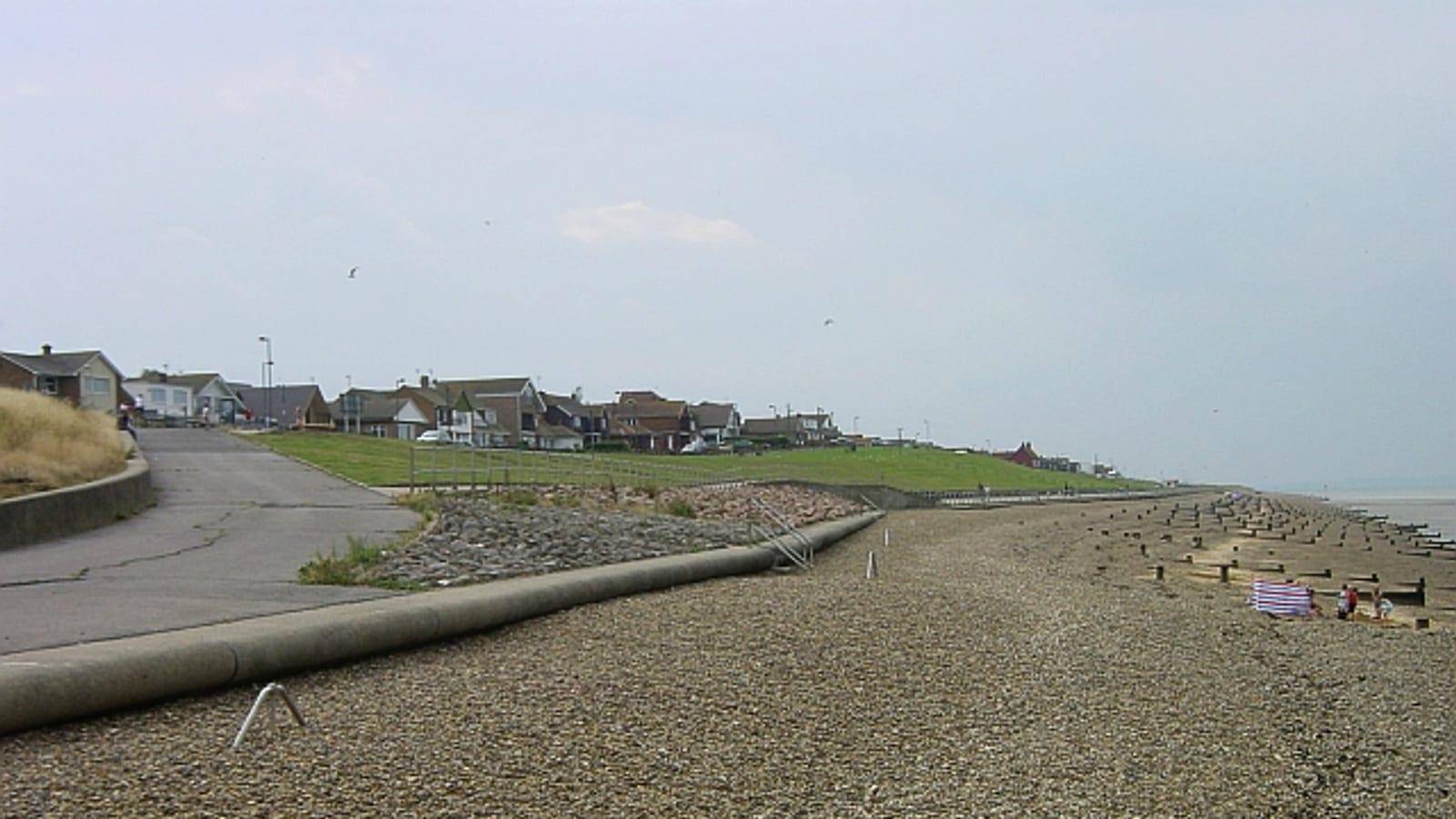
 Photo: David Anstiss, CC BY-SA 2.0, via Wikimedia Commons
Location and Directions
Address
Reculver Drive, Beltinge, Herne Bay, Kent CT6 6QE. The car park at the end of Reculver Drive gives direct access via a concrete beach path.
Directions and Parking
From the A299 Thanet Way, take the exit for Herne Bay and follow the B2205 into Herne Bay. From the seafront, head east along the coast road toward Beltinge and Reculver. Turn north onto Reculver Drive, which leads to a car park adjacent to the beach. A concrete path provides direct beach access from the car park. The Reculver Towers, twin 12th-century church ruins within a Roman fort, are visible to the east from the foreshore and serve as a useful navigation landmark. The most productive collecting occurs during spring tides at very low water, when the Beltinge Fish Bed is fully exposed. Check a tide table before visiting and aim to be on the beach as the tide continues to fall.
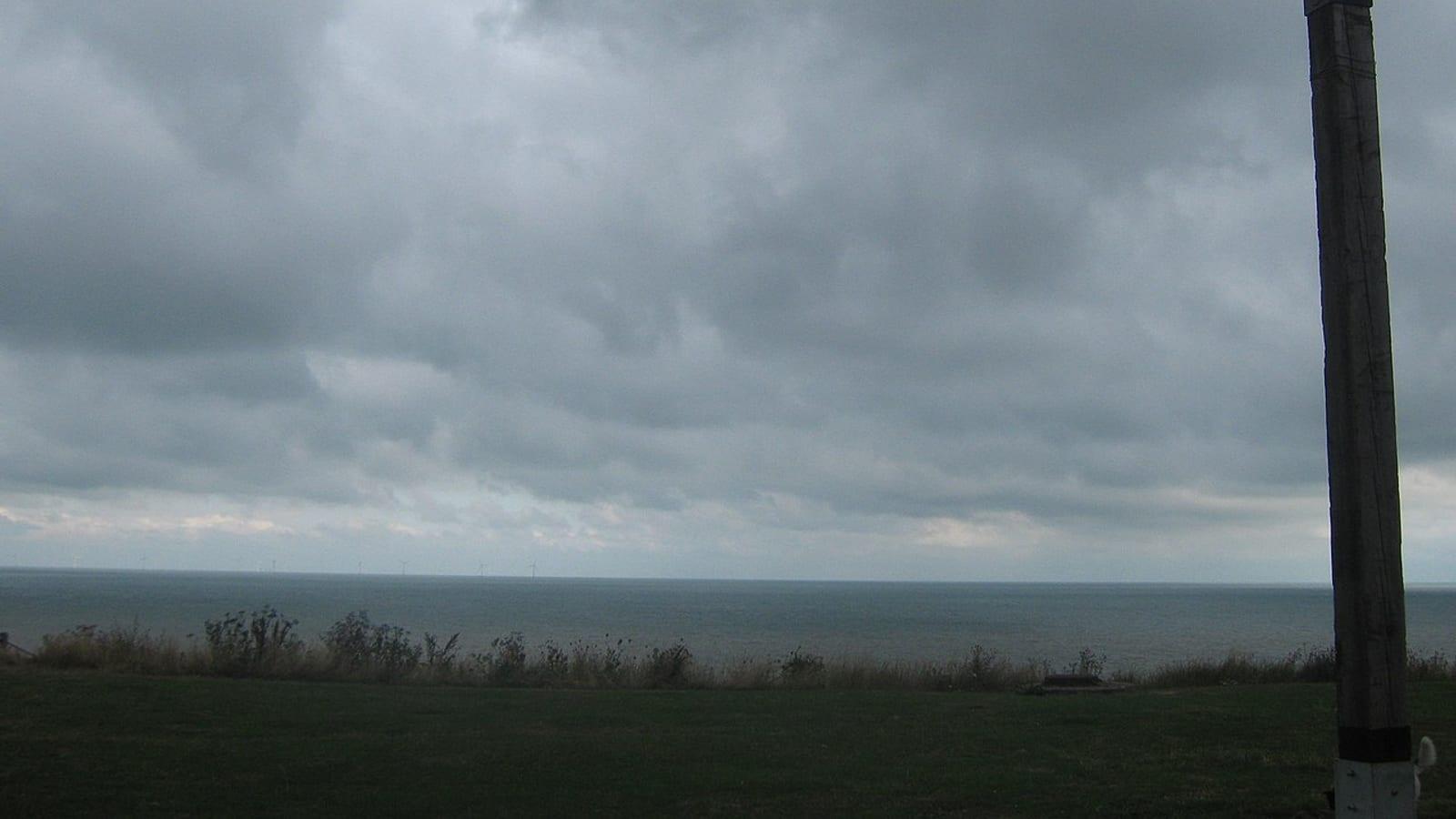
 Photo: View down from cliff top, Herne Bay by JThomas, CC BY-SA 2.0, via Wikimedia Commons
What Fossils You'll Find
Shark teeth are the primary find at Beltinge. The site has produced teeth from 24 documented shark species, ranging from the slender multi-cusped teeth of small carpet sharks to the stouter cutting teeth of larger predatory species. Teeth from Otodus obliquus, an ancestor of the megalodon lineage, appear here and are among the most sought-after finds. Most teeth are dark brown or black, ranging from a few millimetres to several centimetres in length. On productive low tides, they can be found scattered across the surface of exposed sand and clay.
Fish material beyond shark teeth includes vertebrae, scales, and jaw elements from the diverse Eocene and Palaeocene fish fauna. The Beltinge Fish Bed takes its name from the exceptional concentration of fish remains within it, and even a single visit during favourable conditions can produce multiple fish bones alongside the teeth. Lobster claws and carapace fragments appear occasionally, as do crab material and mollusc fragments. The London Clay above the Fish Bed contributes plant seeds, sometimes pyritised, which wash onto the foreshore during scouring conditions. Preserved plant material derived from the adjacent tropical forest also turns up here, carried into the sea from the nearby ancient land by tidal currents and rivers.
Geologic History
The Ancient Environment
The sediments at Beltinge record two adjacent time intervals. The lower beds belong to the Thanet Formation and the Upnor Formation, dating to the late Palaeocene (Thanetian stage, approximately 56 million years ago). The Beltinge Fish Bed sits within the Upnor Formation at beach level. Above this, the London Clay Formation, early Eocene in age (Ypresian stage, approximately 54 million years ago), forms the cliff sequence. The strata dip gently westward at about three degrees, which brings progressively older beds to beach level as you move east toward Reculver.
At the time of deposition, southern England lay at approximately 40 degrees north latitude, roughly equivalent to the position of northern Spain today. The sea was warm, averaging around 23 degrees Celsius. The nearest substantial landmass lay 20 to 30 miles away. Fine sediment settled slowly onto the seafloor in calm conditions, preserving delicate fish material in detail. Evidence of the adjacent tropical land includes pyritised plant material, seeds, and rare insects transported into the sea by tidal currents and rivers.
How Beltinge Became a Fossil Collecting Site
The Beltinge Fish Bed outcrops at beach level because the coastal cliffs in this area have been eroding steadily since the last ice age, gradually lowering the ground surface to a point where this particular horizon now sits in the tidal zone. The soft London Clay above it erodes quickly, and each tidal cycle scours the surface of the exposed beds, releasing fresh teeth and bones. The site is self-renewing: the same wave action that removes already-collected material also works the surface of the productive layer and loosens new specimens. Spring tides are most productive because they expose a greater area of the Fish Bed and apply more energetic scouring.
 Photo: The beach at Beltinge by Marathon, CC BY-SA 2.0, via Wikimedia Commons
Collecting Rules and Regulations
Is Fossil Collecting Allowed?
Surface collecting from the beach and foreshore at Beltinge is permitted and free. Personal, non-commercial collection of loose material from the beach surface is legal under UK law. The cliffs here have SSSI designation. Hammering or chiselling in-situ cliff or bedrock is prohibited. Working the loose surface of the exposed Fish Bed at low tide, and picking up material from the sandy foreshore, is the standard and accepted method.
Recommended Tools
A flat-bladed trowel or putty knife for scraping the surface of exposed clay, a shallow tray for sifting wet material, a hand lens for tooth identification, and small labelled bags for your finds are all you need. A head lamp or torch is useful when examining the surface of darker clay closely. Waterproof footwear is essential as you will be working in the tidal zone.
Safety
The cliffs above Beltinge beach are soft London Clay and are actively eroding. Keep away from the cliff base. The foreshore is safe at low tide but the tide returns at pace. Always check tide times before arriving and set a clear departure time. The concrete beach access path can be slippery when wet. On very low spring tides, the productive foreshore can be extensive. Keep track of how far you have walked from the access point and allow adequate time to return.