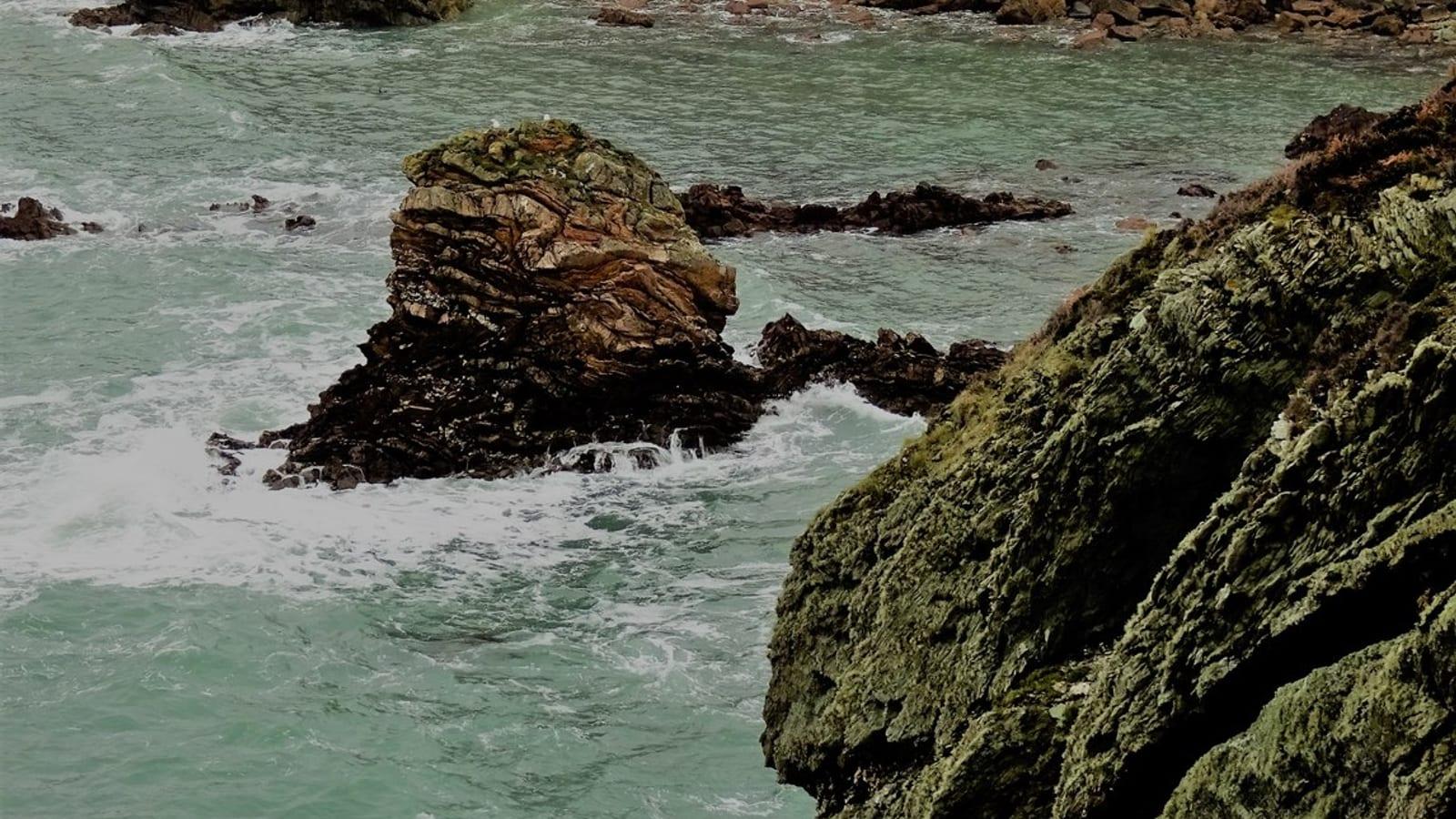
Caim Anglesey Carboniferous Corals Fossil Hunting Guide
Image: Andrea (CC BY-SA 2.0)
Caim on northeast Anglesey exposes Carboniferous limestone with corals weathered proud of the rock face and brachiopods on a remote Welsh coast, free to visit.
By Edward Chen · Updated 1 August 2026
Introduction
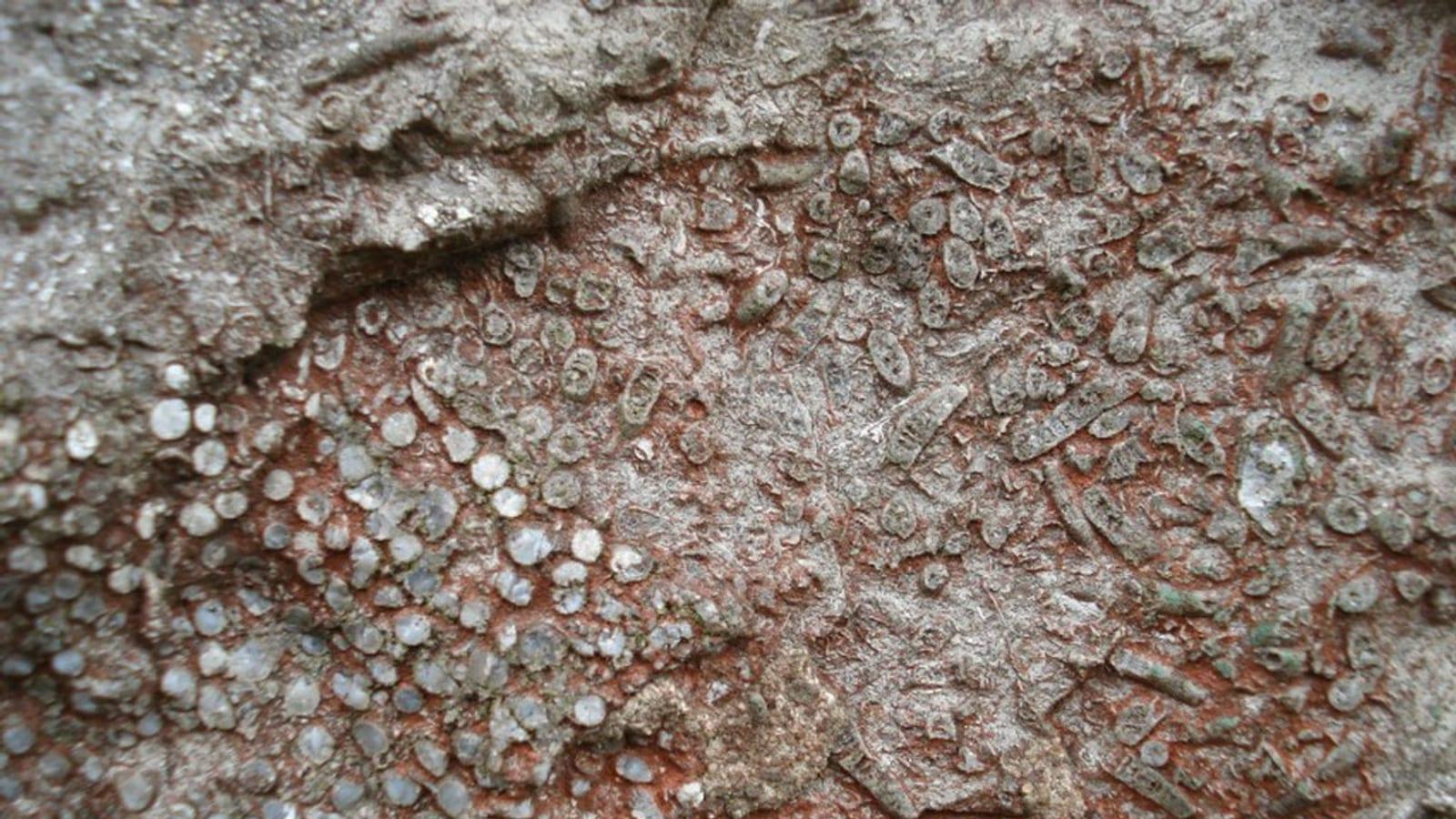
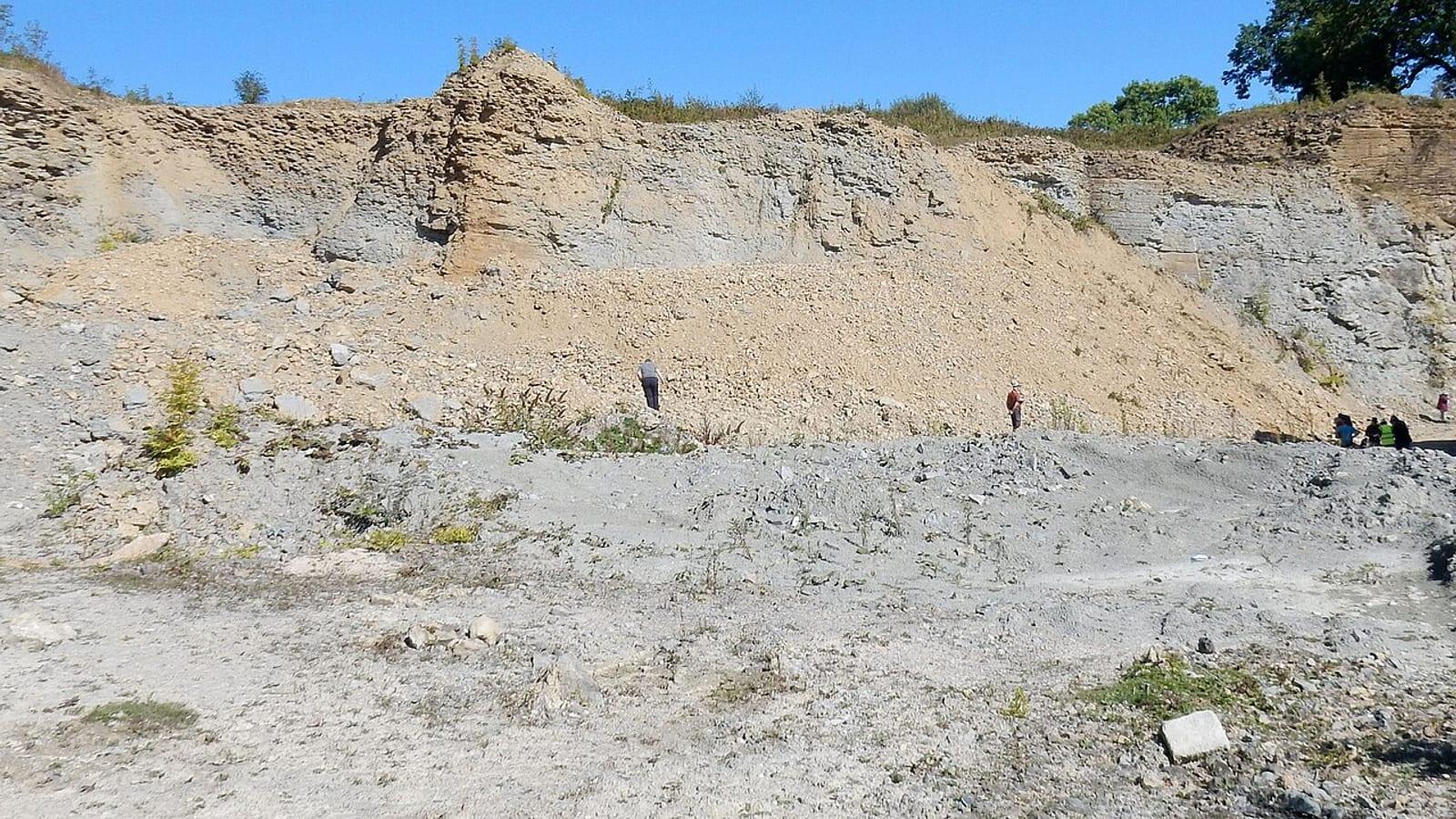
The coastal exposures at Caim on the northeast coast of Anglesey bring the visitor to one of the more remote Carboniferous limestone outcrops in Wales, where well-preserved corals can be observed directly in the rock face and collected as wave-rounded pebbles on the beach. The limestone here belongs to the Carboniferous (Visean Stage, approximately 340 to 330 million years ago), deposited in warm, clear tropical seas when this part of Wales lay close to the equator. Certain horizons are so densely packed with coral fossils that the organisms are weathered proud of the surrounding matrix, their internal structures exposed in three dimensions by the action of salt spray and wave action. Brachiopods are especially abundant throughout the sequence, and rounded limestone pebbles on the foreshore frequently contain coral cross-sections visible on their polished wave-worn surfaces.
The remote character of this site is both its appeal and its limitation. Fewer collectors visit than at more accessible Carboniferous limestone sites, which means the foreshore retains more material. However, the approach requires careful navigation, and you should check local conditions and ideally confirm directions before setting out. This guide covers the site's location, what you are likely to find, the geology, and the practical matters of access and safety.
 Photo: Andrea, CC BY-SA 2.0, via Wikimedia Commons
Location and Directions
Address
Caim coastal area, northeast Anglesey, North Wales. The nearest settlement is the village of Caim (or Caim), Isle of Anglesey, LL72.
Directions and Parking
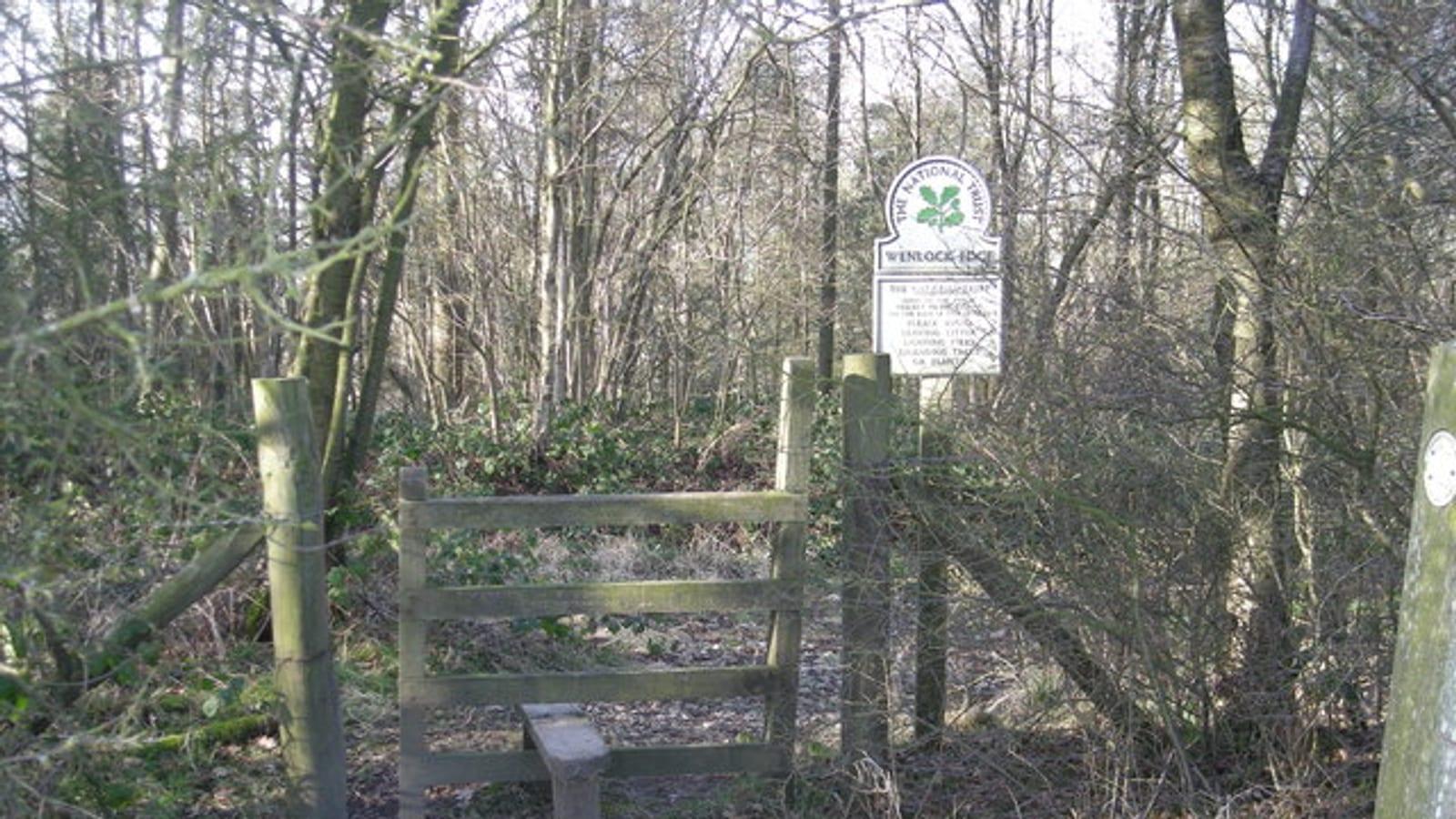
From the A5025 that circuits the northern coast of Anglesey, look for the minor road leading toward the Caim area on the northeastern coast. The coastal path network on Anglesey (part of the Isle of Anglesey Coastal Path) passes through this section of coast and provides the most reliable navigation route to the foreshore. Parking on Anglesey's minor roads is limited. Use a designated passing place or small lay-by and do not block field access gates. Local information from Amgueddfa Cymru (National Museum Wales) or the North Wales Wildlife Trust can assist with confirming the precise route to the fossil-bearing foreshore. This is a remote site: visiting with someone who has been before, or contacting a North Wales geology group for current directions, is strongly advisable for a first visit. The Wales Coast Path information at walescoastpath.gov.uk includes route details for this section of Anglesey.
 Photo: The headland at Parc Pentir by David Purchase, CC BY-SA 2.0, via Wikimedia Commons
What Fossils You'll Find
Corals are the feature find at Caim. The Carboniferous limestone here contains both solitary rugose corals and colonial tabulate forms, and certain beds are dense enough with coral material that the fossils weather proud of the limestone matrix as the softer carbonate between them erodes away. This produces in-situ exposures where coral structures are visible in three dimensions without any need for tools. Rounded pebbles on the foreshore frequently show coral cross-sections on their wave-polished surfaces, and these can be collected without any preparation work.
 Photo: Paul Morris https://www.flickr.com/people/aa3sd/, CC BY-SA 2.0, via Wikimedia Commons
Brachiopods are especially abundant throughout the sequence and are often found in clusters or shell-rich horizons within the limestone. Productid brachiopods with their characteristic ribbing and occasional spine bases are common. Spiriferid and rhynchonellid forms also occur.
Bivalves are present in certain horizons, typically in finer-grained limestone or in mudstone partings within the sequence. They are less common than the brachiopods but add to the overall diversity of the fossil assemblage.
Geologic History
The Ancient Environment
The Carboniferous limestone exposed at Caim belongs to the Visean Stage, approximately 340 to 330 million years ago. At this time, Anglesey lay at tropical latitudes close to the equator, in a shallow, warm, and well-oxygenated sea that extended across much of what is now northwest Europe. Carboniferous limestones of this age and setting are characteristic of clear carbonate seas analogous to the modern Bahamas platform: low in terrestrial sediment input, rich in carbonate-secreting organisms, and subject to periodic fluctuations in water depth that produced alternating reef and lagoonal facies. The coral-rich horizons at Caim represent intervals of particularly favourable conditions for reef-building organisms. Rugose corals constructed solitary or colonial structures on the seafloor, and in shallow enough water with adequate light penetration, these could develop into substantial bioherms. The brachiopods and bivalves lived on and between the coral structures, filter-feeding from the clear, productive water column. The dense packing of fossils in certain horizons reflects periods of high biological productivity and relatively slow sedimentation, allowing shells and coral skeletons to accumulate without dilution by terrigenous mud.
How Caim Became a Fossil Collecting Site
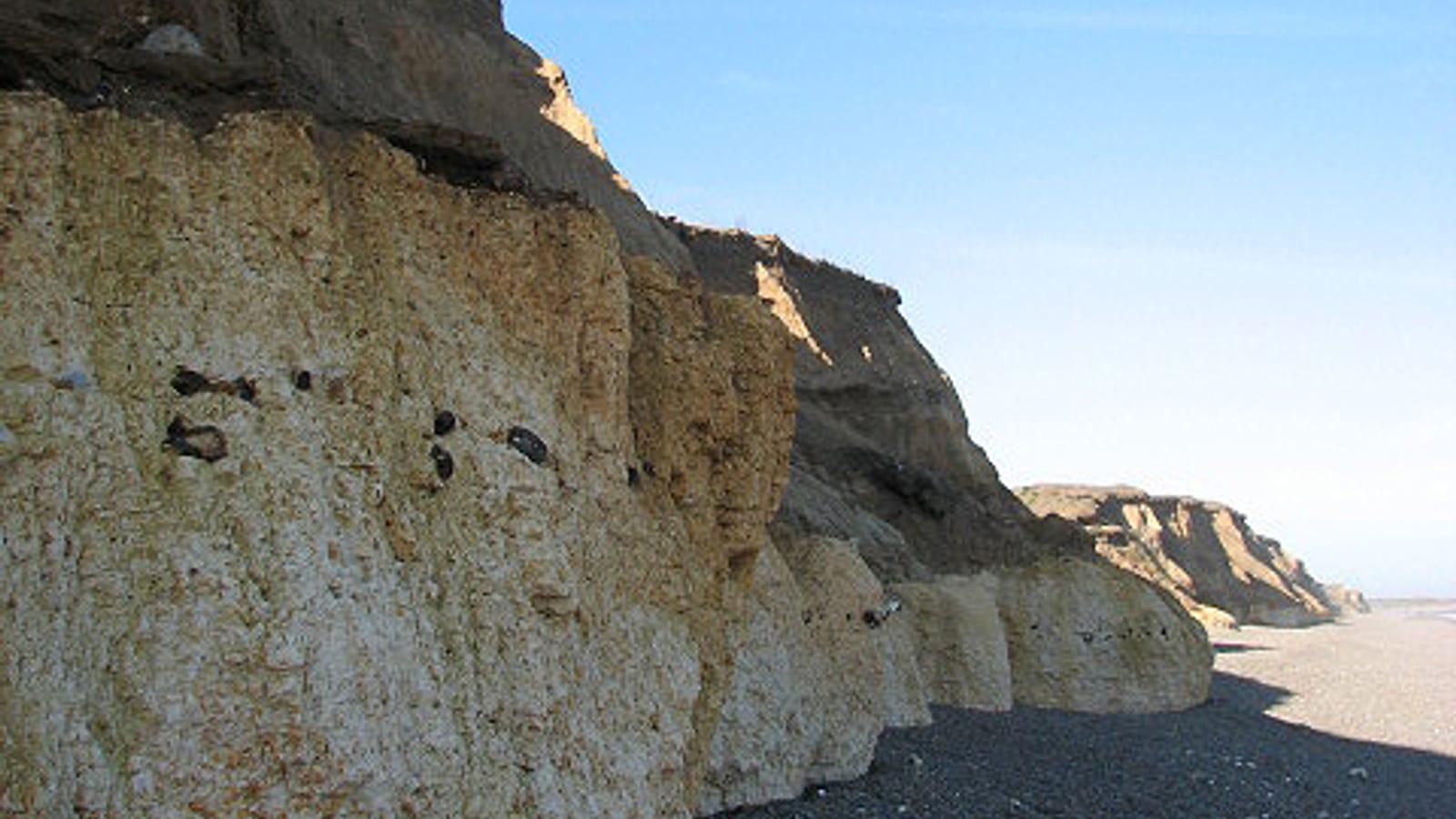
The Carboniferous limestone of northeast Anglesey was brought to the surface through a combination of tectonic uplift and the removal of overlying rock by glacial and post-glacial erosion. The coastline at Caim has been cut into the limestone by wave action since sea level stabilised after the last glaciation approximately 10,000 years ago, and continued erosion by Atlantic waves maintains the fresh cliff faces and the supply of rounded pebbles on the foreshore. The wave-rounded pebbles on the beach are produced as cliff material falls, is broken up by wave action, and is rolled along the foreshore until the surfaces are polished smooth, often revealing coral cross-sections in the process. The in-situ coral weathering on exposed cliff and foreshore surfaces results from differential erosion: the coral skeletons are slightly more resistant than the surrounding matrix, allowing them to stand proud as the softer carbonate weathers away.
 Photo: Coast at Parc Pentir by Chris Andrews, CC BY-SA 2.0, via Wikimedia Commons
Collecting Rules and Regulations
Is Fossil Collecting Allowed?
The foreshore at Caim is publicly accessible under standard foreshore rights in Wales. Surface collection of naturally fallen loose material and rounded pebbles from the beach is permitted. You must not hammer or damage in-situ cliff faces. Parts of the northeast Anglesey coast are within Sites of Special Scientific Interest notified by Natural Resources Wales. If you are at or adjacent to an SSSI, the Wildlife and Countryside Act 1981 prohibition on damaging geological features applies. Check the Natural Resources Wales SSSI search tool before visiting to confirm the designation status of the specific area you intend to visit. In Wales, Amgueddfa Cymru can provide guidance on reporting significant fossil finds.
Recommended Tools
Because many of the best fossils at Caim can be found as rounded pebbles or as in-situ weathered exposures, tools are less essential here than at many other sites. A hand lens (10x) is useful for examining coral microstructure and brachiopod shell detail. If you intend to work loose slab material, a geological hammer and cold chisels are appropriate, used only on detached blocks and never on in-situ cliff faces. Waterproof boots with good ankle support are important for the foreshore rocks. The remoteness of the site means you should carry more equipment than usual: a first aid kit, adequate food and water, and navigation tools.
Safety
This is a remote coastal site with no facilities and limited mobile phone coverage. Visit with at least one other person and make sure someone knows your route and expected return time. The foreshore is tidal: confirm tide times for Holyhead (the nearest reference point for Anglesey tides) before setting out. Do not work beneath cliff faces. The coastal path approach may involve rough or overgrown sections. Wear appropriate clothing for variable weather, which on the exposed north Anglesey coast can change rapidly.