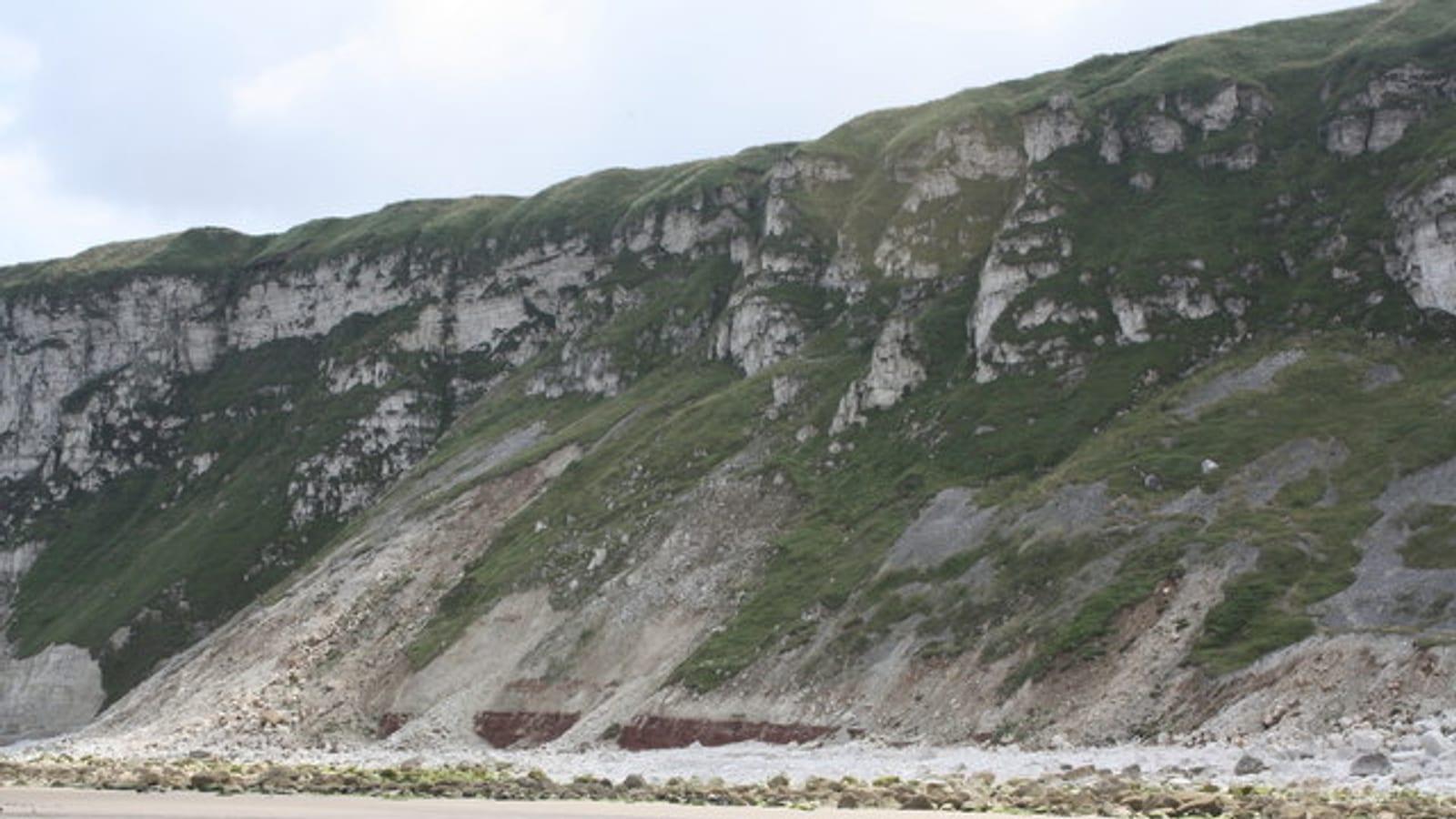
Speeton Cliffs Yorkshire Fossil Hunting Guide
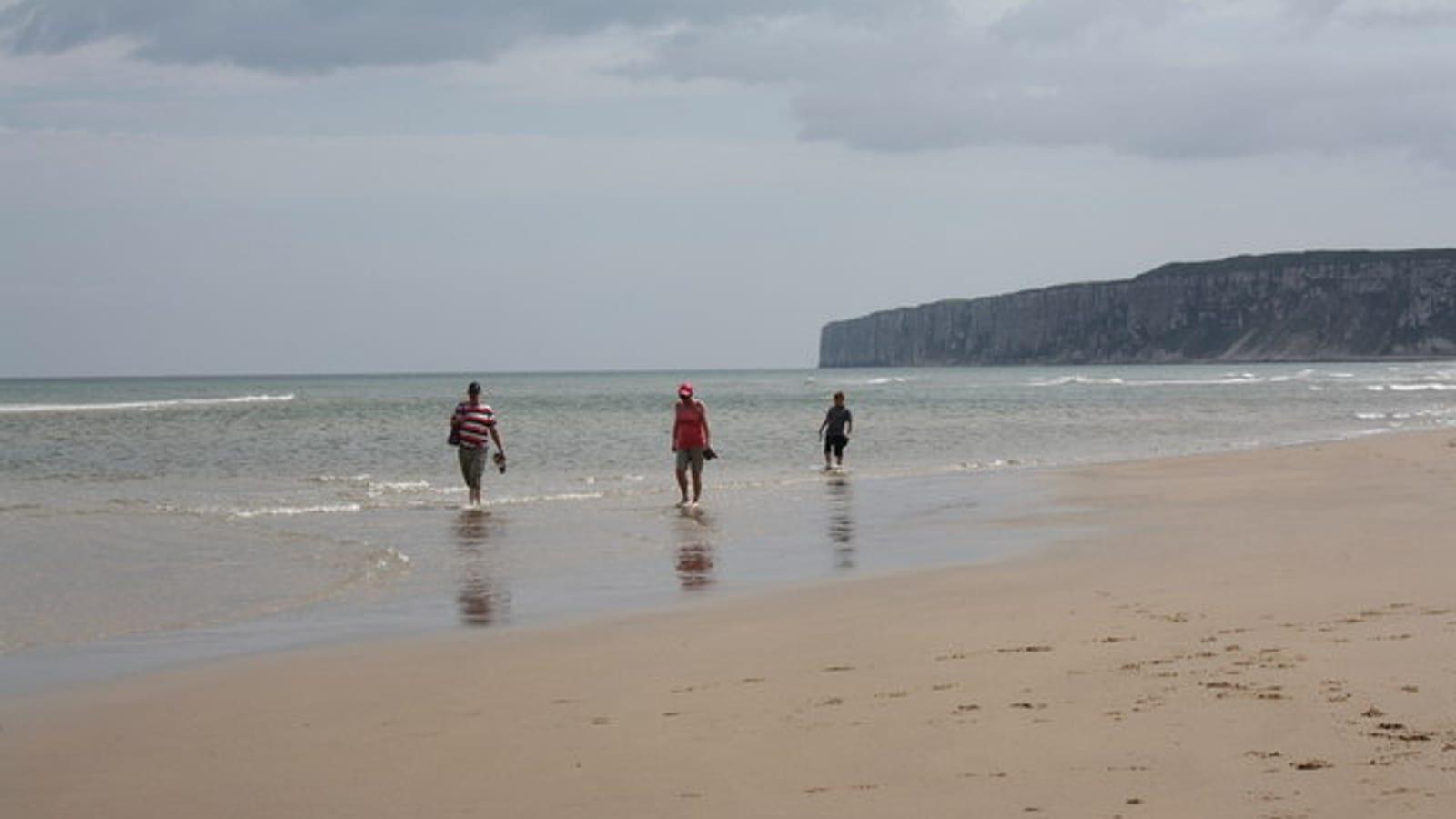
Image: JThomas (CC BY-SA 2.0)
Speeton Cliffs on the Yorkshire coast exposes Lower Cretaceous Speeton Clay yielding ammonites, the Speeton Shrimp, belemnites, and marine reptile fragments.
By Edward Chen · Updated 1 August 2026
Introduction
Speeton Cliffs, on the Yorkshire coast between Filey and Bridlington, exposes one of the most complete Lower Cretaceous marine successions in Britain. The Speeton Clay Formation, a thick sequence of blue-grey mudstones laid down in an offshore shelf sea between roughly 140 and 100 million years ago, is divided by geologists into four units, Beds A through D from top to base, each representing a distinct interval of the Berriasian to Albian stages. The section has international stratigraphic importance as a reference point for Early Cretaceous ammonite zones used to correlate rocks across Europe.
For collectors, Speeton offers ammonites, belemnites, the celebrated Speeton Shrimp, echinoids, fish remains, and occasional marine reptile vertebrae from the clay. The site is tidal and accessible only for a few hours around low water, and the walk along the foreshore from Reighton Gap is genuinely rough. The effort is worthwhile: this is one of the most productive Cretaceous fossil sites in northern England, and the diversity of ammonite genera across the different clay beds is unmatched in Yorkshire. This guide covers the approach, the fossil assemblages by bed, the geological history, and the practical rules.
 Photo: JThomas, CC BY-SA 2.0, via Wikimedia Commons
Location and Directions
Address
Speeton Cliffs, accessed via Reighton Gap, between Filey and Bridlington, North Yorkshire YO14, England. The cliffs lie approximately 5 km north of Bridlington and 8 km south of Filey along the coast.
Directions and Parking
From the A165 between Filey and Bridlington, turn east following signs to Reighton Sands Holiday Village north of Reighton village. Pass through the holiday village and continue to Reighton Gap at the end of the road. A gravel car park is available at grid reference TA 140 763 (no charge in most seasons. Check notices). The descent to the beach is via a concrete slipway that is badly worn and cracked in places, with some steep and slippery sections particularly near the bottom. Take care, especially in wet conditions.
Once on the beach, walk southeast along the foreshore. The boulder clay cliffs here are not the Speeton Clay. The Speeton Clay exposures begin approximately 500 metres southeast of Reighton Gap and continue for about 1 kilometre further southeast. Allow at least 90 minutes on site for useful collecting once you have walked in. The total return walk from Reighton Gap is 3 to 4 kilometres across mixed boulder, clay, and shingle foreshore.
Access from the village of Speeton itself by descending the cliff directly is possible in theory but the cliff path is unreliable and often unstable. Reighton Gap is strongly preferred. The site is accessible for approximately three to four hours either side of low tide. Plan your visit around the tidal window and do not get caught by a rising tide on the foreshore.
 Photo: Headland Way at Speeton by Oliver Dixon, CC BY-SA 2.0, via Wikimedia Commons
What Fossils You'll Find
Ammonites are the primary draw at Speeton. Different ammonite genera characterise the different clay beds. The lower beds (D and C, Berriasian to Hauterivian) yield Hauterivian ammonites including Endemoceras, Aegocrioceras, and Simbirskites. The upper beds (B and A, Barremian to Albian) produce Deshayesites and Leymeriella among others. Many specimens are found in calcareous cement-stone nodules that weather out of the clay. These should be split carefully as the nodule interior often preserves the original shell surface and suture lines in excellent condition.
 Photo: Harshit SR, CC BY-SA 4.0, via Wikimedia Commons
Belemnites are extremely common throughout all beds and occur as solid calcite guards of varying sizes. The Speeton Clay belemnite fauna is diverse and has been extensively studied.
The Speeton Shrimp (Meyeria ornata) is unique to Speeton in Britain and is found exclusively in phosphatic nodules within specific horizons of the Speeton Clay. These small crustaceans are preserved in three dimensions within the nodules and represent the best-known occurrence of this species in the UK. Finding a shrimp-bearing nodule requires patience and some knowledge of the productive horizons, but they do turn up on the beach after erosion.
Echinoids occur in the upper, younger beds of the Speeton Clay and the overlying Hunstanton (Red Chalk) and Ferriby Chalk formations, where they appear as flint or phosphate replacements.
Fish remains including sharks' teeth and ray teeth weather from the clay and are found loose on the foreshore. Vertebrae of various fish species also occur.
Marine reptile material, including ichthyosaur vertebrae, has been recovered from Speeton, washed from the cliffs after erosion. These are rare finds and should be reported to the Yorkshire Museum in York if well-preserved.
Geologic History
The Ancient Environment
The Speeton Clay Formation was deposited during the late Berriasian to middle Albian stages of the Early Cretaceous, from approximately 140 to 100 million years ago. The Cleveland Basin, a structural depression in what is now northeast England, accumulated a thick sequence of offshore marine mudstones during this period. While terrestrial Wealden rivers and lakes were being deposited further south in the Weald of Kent and Sussex, the Yorkshire coast area lay in open marine water connected to the proto-North Sea basin.
The blue-grey mudstones record a quiet, relatively deep offshore shelf environment, probably 50 to 200 metres deep. The calcareous cement stones that characterise the formation precipitated early in the burial history of the sediment, sealing fossil material before compaction could destroy it. Bentonite layers (altered volcanic ash falls) are present in the Speeton Clay and represent distant explosive volcanic events, possibly related to the early opening of the North Atlantic.
Sea bottom conditions were well-oxygenated, supporting a diverse benthic and nektonic fauna. Periodic changes in sea level and oceanography through the Aptian and Albian are recorded in the fauna shifts between the different bed divisions. The overlying Hunstanton Red Chalk and Ferriby Chalk record the transition into the full Cretaceous chalk sea conditions that dominated in the Late Cretaceous.
How Speeton Cliffs Became a Fossil Collecting Site
The boulder clay till deposited by Pleistocene ice sheets draped over the Yorkshire coast and buried the Speeton Clay beneath tens of metres of glacial material for most of its postglacial history. Coastal erosion by the North Sea has stripped back this till cover along specific stretches, including Speeton, exposing the underlying Cretaceous clays. The soft clay erodes rapidly once exposed, releasing fossils onto the foreshore. Storms and wave action clean the beach periodically, concentrating cement stones and loose specimens. The pace of erosion is sufficient to renew the collecting surface after heavy use.
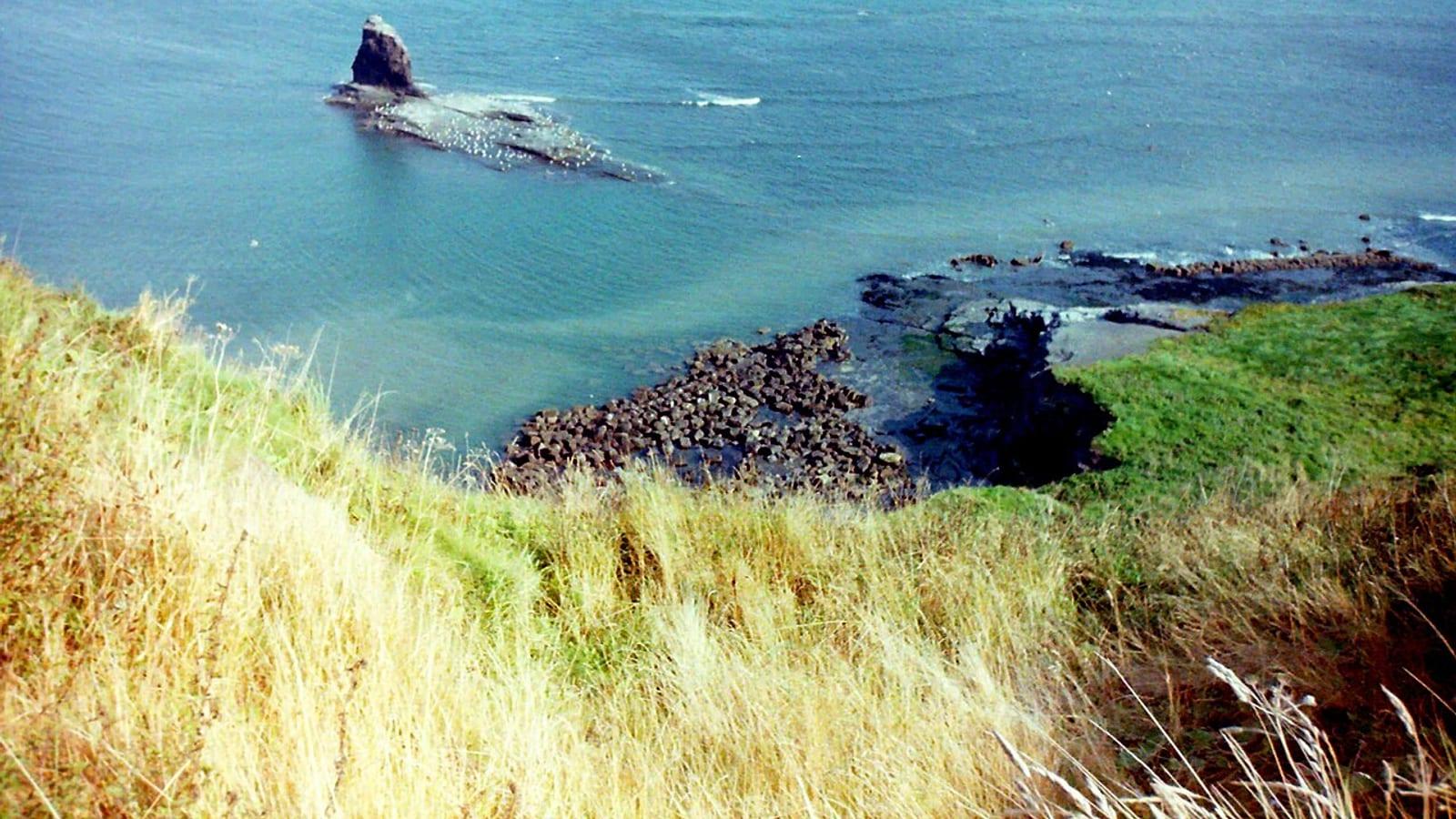
 Photo: England Coast Path at Speeton Cliffs by Oliver Dixon, CC BY-SA 2.0, via Wikimedia Commons
Collecting Rules and Regulations
Is Fossil Collecting Allowed?
The Speeton Clay section has SSSI protection as a site of national geological importance, specifically for its role as a reference section for Lower Cretaceous stratigraphy and ammonite biozonation. Under SSSI rules, collecting loose, detached material from the foreshore with hand tools is legal and is the accepted mode of access for hobby collectors. Hammering into the cliff face or cutting into in-situ exposures is prohibited without a Natural England research licence.
The fossil hunting community treats Speeton with appropriate respect given its stratigraphic importance. Remove only what you can realistically prepare and study. Leave cement stones with multiple specimens in place if you are only interested in one, so that other collectors and researchers can benefit. The Yorkshire Naturalists' Union and the Scarborough geological community have a long history of working this site responsibly.
Recommended Tools
A geological hammer, chisels of varying sizes, and a hand lens are essential. The cement stones can be tough and require a good-quality geological hammer to split cleanly. Bring plenty of newspaper for wrapping specimens. Nodule fossils can be fragile once freed. Knee pads are useful as much of the work involves kneeling on the foreshore. Waterproof trousers are strongly recommended. The clay is very sticky and you will kneel and sit on wet surfaces throughout the visit.
Safety
The boulder clay cliffs at Speeton are unstable and prone to slumping, particularly in wet weather. Keep away from the cliff base at all times. The foreshore is a mix of clay, boulders, and loose material that is very uneven and slippery. Ankle injuries are common on this type of terrain. Wear good ankle-support boots. The tidal window here is critical: the foreshore narrows significantly as the tide rises and there is no easy escape route between Reighton Gap and Flamborough Head. Plan your return walk to begin well before the tide turns. Check the RNLI or Admiralty tide tables for Bridlington, which is the nearest reference port.
Sources
- https://ukfossils.co.uk/2010/03/18/speeton/
- https://earthwise.bgs.ac.uk/index.php/Jurassic,\_Cretaceous\_and\_Quaternary\_rocks\_of\_Filey\_Bay\_and\_Speeton\_-\_an\_excursion
- https://depositsmag.com/2017/01/12/a-fossil-hunters-guide-to-the-southeast-yorkshire-coast/
- https://en.wikipedia.org/wiki/Speeton\_Clay\_Formation
- https://webapps.bgs.ac.uk/lexicon/lexicon.cfm?pub=SPC