Watchet Somerset Fossil Hunting Guide
Image: Ken Grainger (CC BY-SA 2.0)
Watchet in Somerset exposes the Triassic-Jurassic boundary in accessible cliff sections, with Blue Lias ammonites, Gryphaea, and ichthyosaur fragments on a Somerset foreshore.
By Edward Chen · Updated 1 August 2026
Introduction
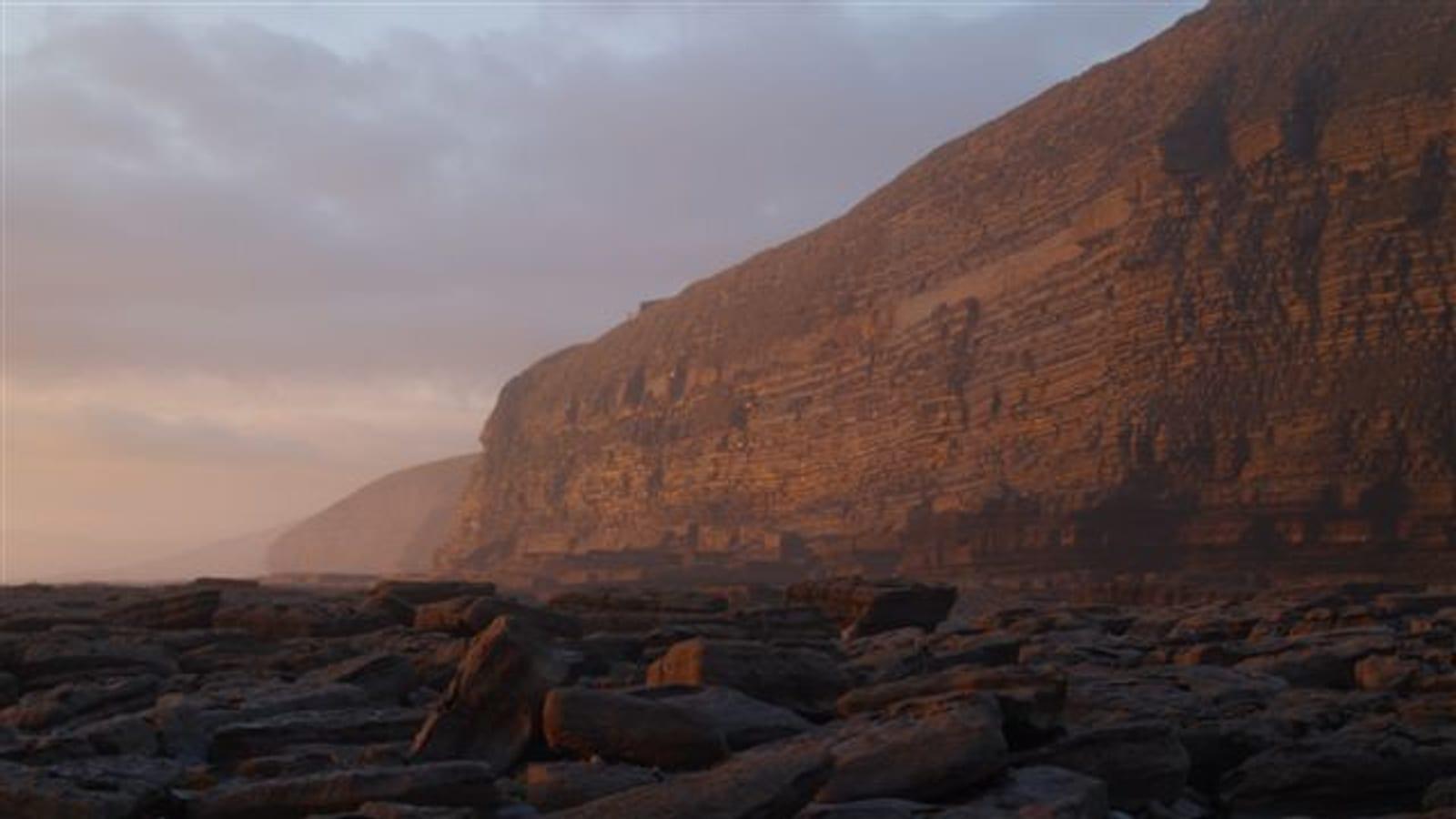
Watchet on the Somerset coast offers something genuinely rare: a continuous cliff section that records the boundary between the Triassic and Jurassic periods, exposed at beach level and accessible on a low tide. The Blue Lias Formation here preserves ammonites, the bivalve Gryphaea, and fragments of ichthyosaur bone, while giant ammonite casts are visible in the foreshore rock itself. The geological boundary between two great eras of Earth history is literally underfoot as you walk the beach west from the town towards Warren Bay.
This guide covers access from Watchet harbour and from Warren Bay, the fossils to look for, the geological transition recorded in the cliffs, and the safety and collecting rules that apply here.
 Photo: Colin Park, CC BY-SA 2.0, via Wikimedia Commons
Location and Directions
Address
Harbour Road, Watchet, Somerset TA23 0AQ. The harbour car park on Harbour Road (postcode TA23 0ET) provides the main town-side access point.
Directions and Parking
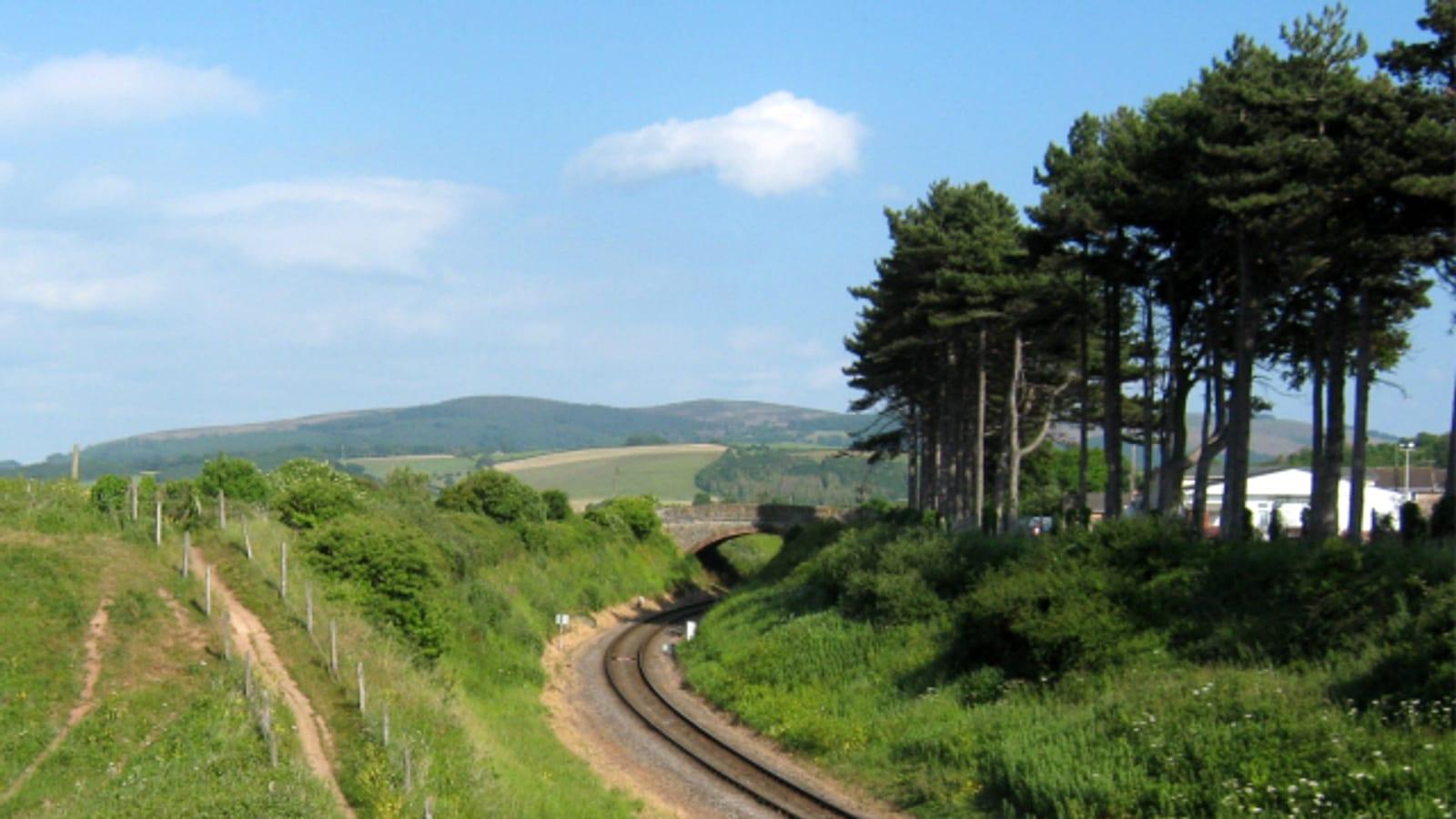
From the A39 between Bridgwater and Minehead, follow the B3191 into Watchet town centre. The harbour car park is signposted from the town centre on Harbour Road. From the car park, walk to the footpath running beside the West Somerset Steam Railway line. This path leads to the clifftop, with a long flight of steps descending approximately 0.5 kilometres to the beach below. An alternative access point is Warren Bay Holiday Camp, west of Watchet on the B3191. Park at the campsite and walk down the slope directly onto the beach. From Warren Bay, head west along the beach for the best Blue Lias exposures and ammonite material. The walk between Warren Bay and Watchet town along the foreshore is possible at low tide, though the terrain is uneven and requires care over the wave-cut rock platform.
 Photo: Brassknocker, CC BY-SA 4.0, via Wikimedia Commons
What Fossils You'll Find
Gryphaea arcuata, the thick-shelled curved oyster known as the Devil's Toenail, is extremely common in the Blue Lias at Watchet and is a good beginner's find. The distinctive curved shape and ribbed exterior make it immediately recognisable even in worn condition.
Ichthyosaur vertebrae, ribs, and occasional paddle elements appear in the shale layers of the Blue Lias. These are less common than ammonites but are actively looked for. The Watchet Museum holds a locally found ichthyosaur skeleton, which gives a useful reference for the sort of bone material that can turn up as isolated pieces on the beach. The underlying Blue Anchor Formation, which represents the very latest Triassic, contains a bone bed with fish and marine reptile fragments that is visible in the cliff section.
Geologic History
The Ancient Environment
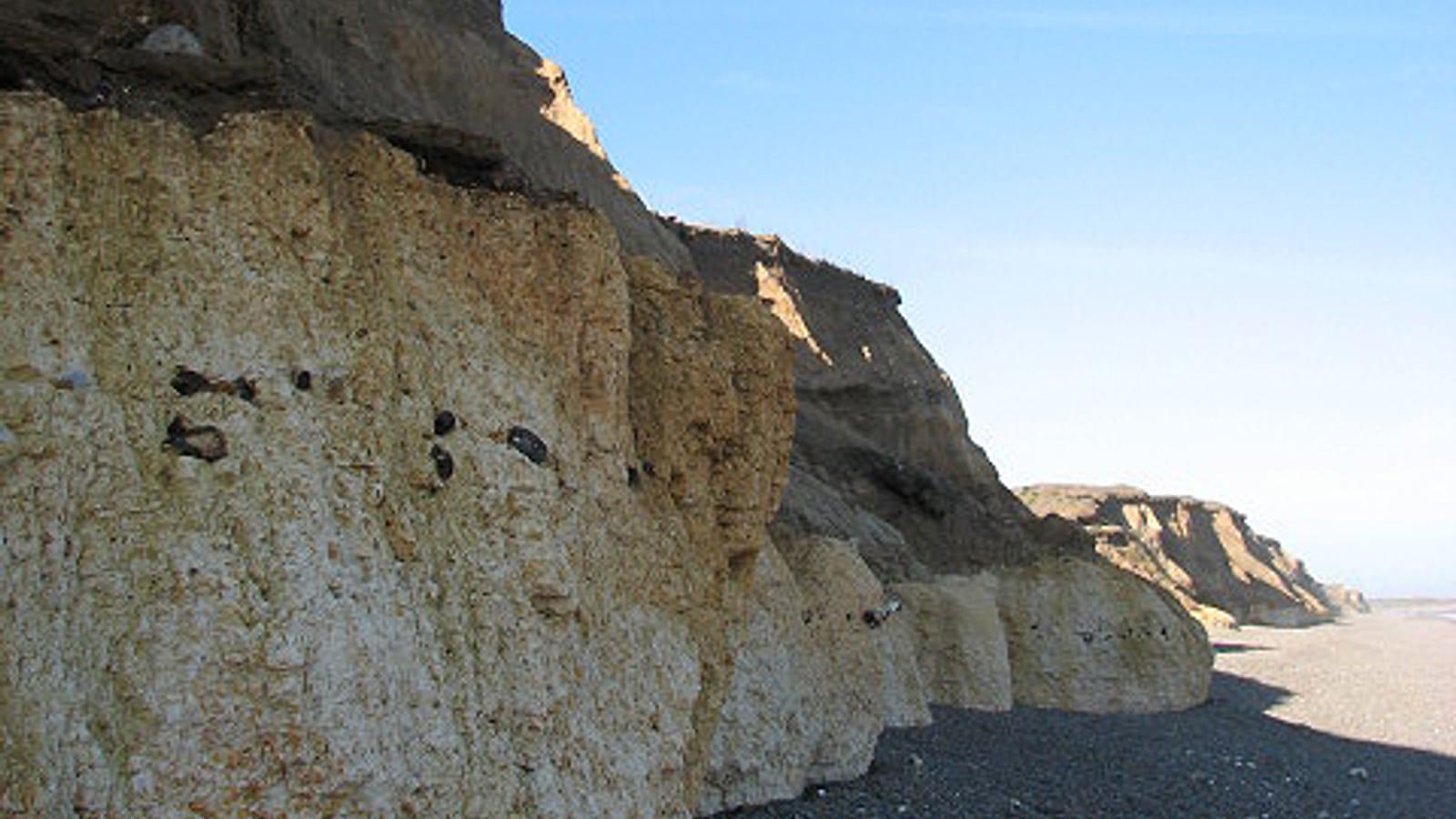
The cliffs between Watchet and Warren Bay expose a sequence spanning the Triassic-Jurassic boundary, dated to approximately 215 to 195 million years ago. The lowest visible beds are the Keuper Marl, red terrestrial sediments deposited in an arid continental environment during the Late Triassic. Above them, the Blue Anchor Formation records the transition to marginal marine conditions, and then the Blue Lias Formation begins with the Psiloceras planorbis ammonite zone, marking the precise start of the Jurassic period.
The Blue Lias was deposited in a warm, shallow marine sea during the Hettangian and Sinemurian stages of the Early Jurassic, approximately 200 to 195 million years ago. The characteristic alternation of pale limestone and dark shale beds records repeated cycles of sea level change and variation in ocean-bottom oxygen levels. Low-oxygen conditions during black shale deposition concentrated organic material and aided the preservation of soft-bodied organisms including marine reptiles. A major fault brings the Lower Lias directly against the older Triassic Keuper Marl in the cliff section at Watchet, creating a striking juxtaposition of the red Triassic rocks and the grey-blue Jurassic sequence visible from the beach. Alabaster (gypsum) seams in the red marl were historically quarried and carved by local craftsmen.
How Watchet Became a Fossil Collecting Site
The Bristol Channel has one of the highest tidal ranges in the world, and the powerful tidal currents continuously erode the soft Blue Lias and marl cliffs. Each tidal cycle removes material from the foreshore, breaks up fallen blocks, and sorts specimens along the beach. The soft limestone and shale of the Blue Lias decomposes relatively quickly once exposed, which means fresh material is always being released from the cliff base and from wave-cut platforms. The site requires no excavation. Tidal action and natural erosion provide a constant supply of loose specimens.
 Photo: Brassknocker, CC BY-SA 4.0, via Wikimedia Commons
Collecting Rules and Regulations
Is Fossil Collecting Allowed?
Surface collecting from the beach and foreshore at Watchet is permitted and free. Personal, non-commercial collection of loose material is legal under UK law. The cliff sections at Watchet have SSSI designation for their geological importance. You must not hammer or chisel material from the standing cliff face or from in-situ bedrock. Collecting loose material from the foreshore surface, from wave-cut platforms, and from fallen cliff blocks already on the beach is the accepted method.
Recommended Tools
A geological hammer and chisel for splitting loose nodules on the beach, a hand lens for examining ammonite sutures and bone texture, padded bags or newspaper for wrapping finds, and sturdy waterproof boots for the rock platform are all you need. The foreshore involves significant boulder-hopping and uneven ground, so footwear with ankle support is worth the investment.
Safety
The cliffs between Watchet and Warren Bay are actively eroding and produce cliff falls without warning. Keep well away from the cliff base throughout your visit. The rock platform on the lower foreshore is slippery with algae and requires careful footing. The tidal range here is extreme by UK standards. A beach that is safe at low tide can be cut off rapidly as the tide returns. Always check tide times before setting out, and allow well more time than you think you need to return to the beach access point before the tide rises.