Lavernock Fossil Hunting Guide
Image: Roger Davies (CC BY 2.0)
Discover ammonites, molluscs, fish remains, reptile remains at Lavernock in Lavernock, South Wales. Complete guide with directions and geology.
By Edward Chen · Updated 1 August 2026
Introduction
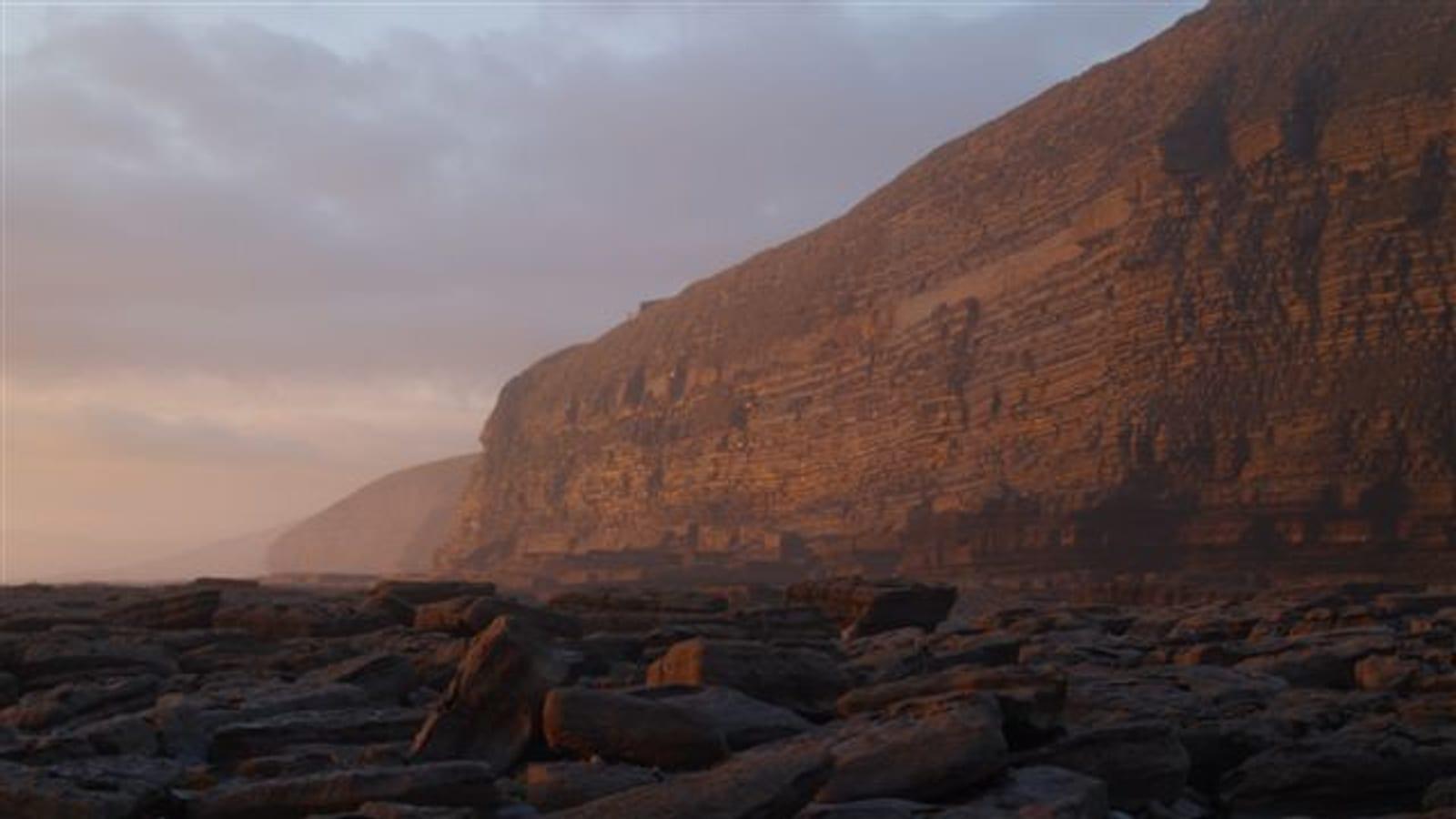
Lavernock Point sits on the Bristol Channel coast in the Vale of Glamorgan, a short drive south of Penarth, and it is the type section of the Penarth Group. The foreshore exposes the boundary between the Late Triassic and the Early Jurassic, with the Westbury Formation bone bed low in the sequence and the Blue Lias above it.
Brachiopods and bivalves are the common finds. Ammonites occur but are usually worn or broken, and the bone bed produces fish and marine reptile material, including ichthyosaur and plesiosaur bone and teeth. The site has been collected since the 1870s, and material from those early collections is held at the National Museum of Wales. In 2014 and 2015 it produced Dracoraptor hanigani, considered the earliest known Jurassic dinosaur.
Lavernock is a Site of Special Scientific Interest, so collecting is limited to loose material on the foreshore and hammering the bedrock is not permitted.
Location and Directions
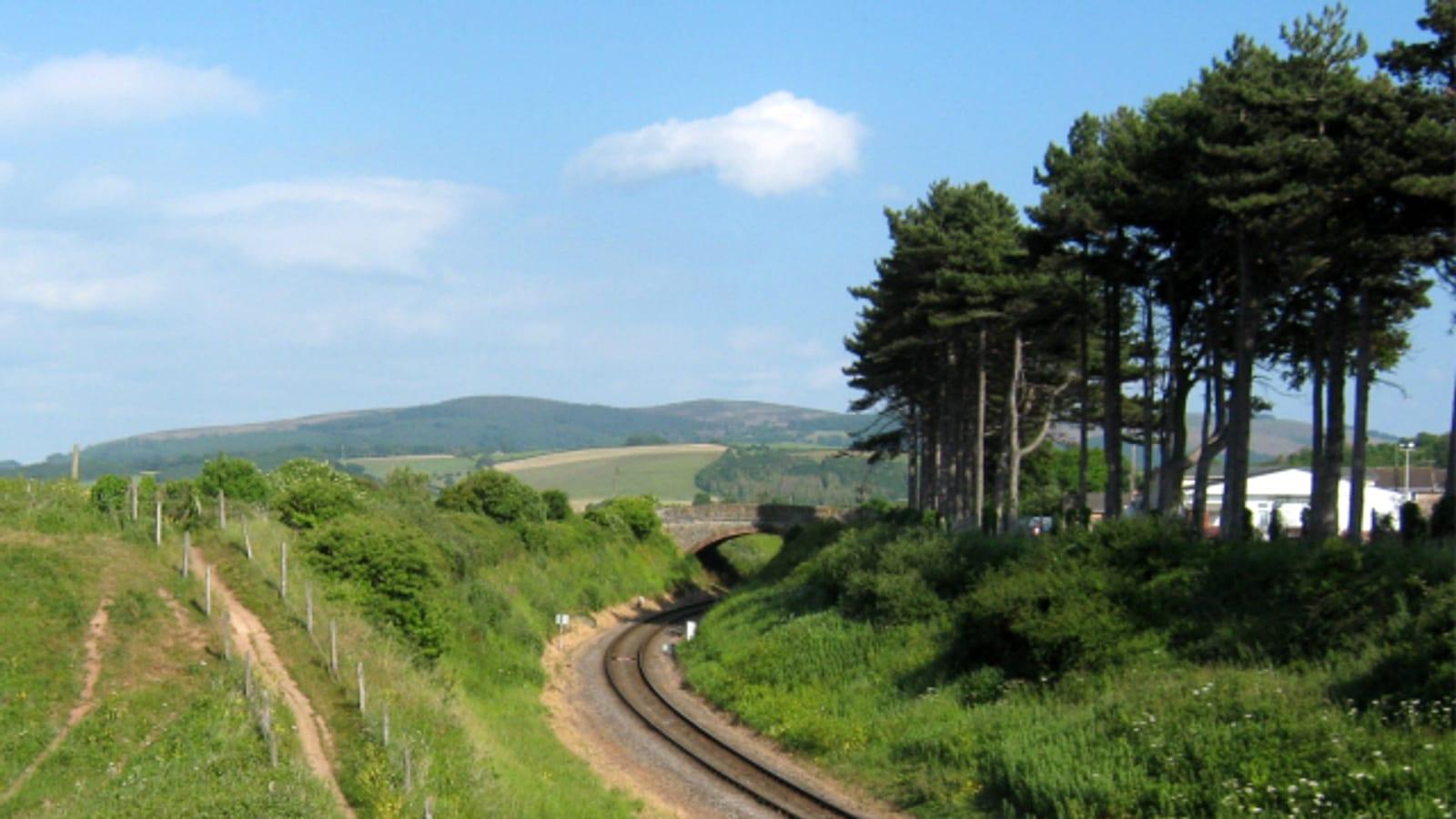
If you’re trying to get to Lavernock Point, it is at Lavernock Road, Penarth, in the Vale of Glamorgan, South Wales CF64. From the B4267, look for the signpost to Lavernock and follow the road right on to Lavernock Point. There’s a little track road you’ll need to turn down. Keep going until you hit a small car park at the end. It’s got room for about 4 cars. The beach is right in front of you from there.
 Photo: Path to the beach: Lavernock Point by Dylan Moore, CC BY-SA 2.0, via Wikimedia Commons
What Fossils You’ll Find
Most commonly, you’ll find brachiopods and bivalves in this fossil bed. There are ammonites too, but they can be a bit worn down or broken. You’ll can also come across fish remains and some reptile fossils, including ichthyosaur and plesiosaur bones and teeth, dating back from the Rhaetian to Hettangian stages, or about 205 to 199 million years ago!
 Photo: Fossilised shells by Alan Hughes, CC BY-SA 2.0, via Wikimedia Commons
Geological Formations
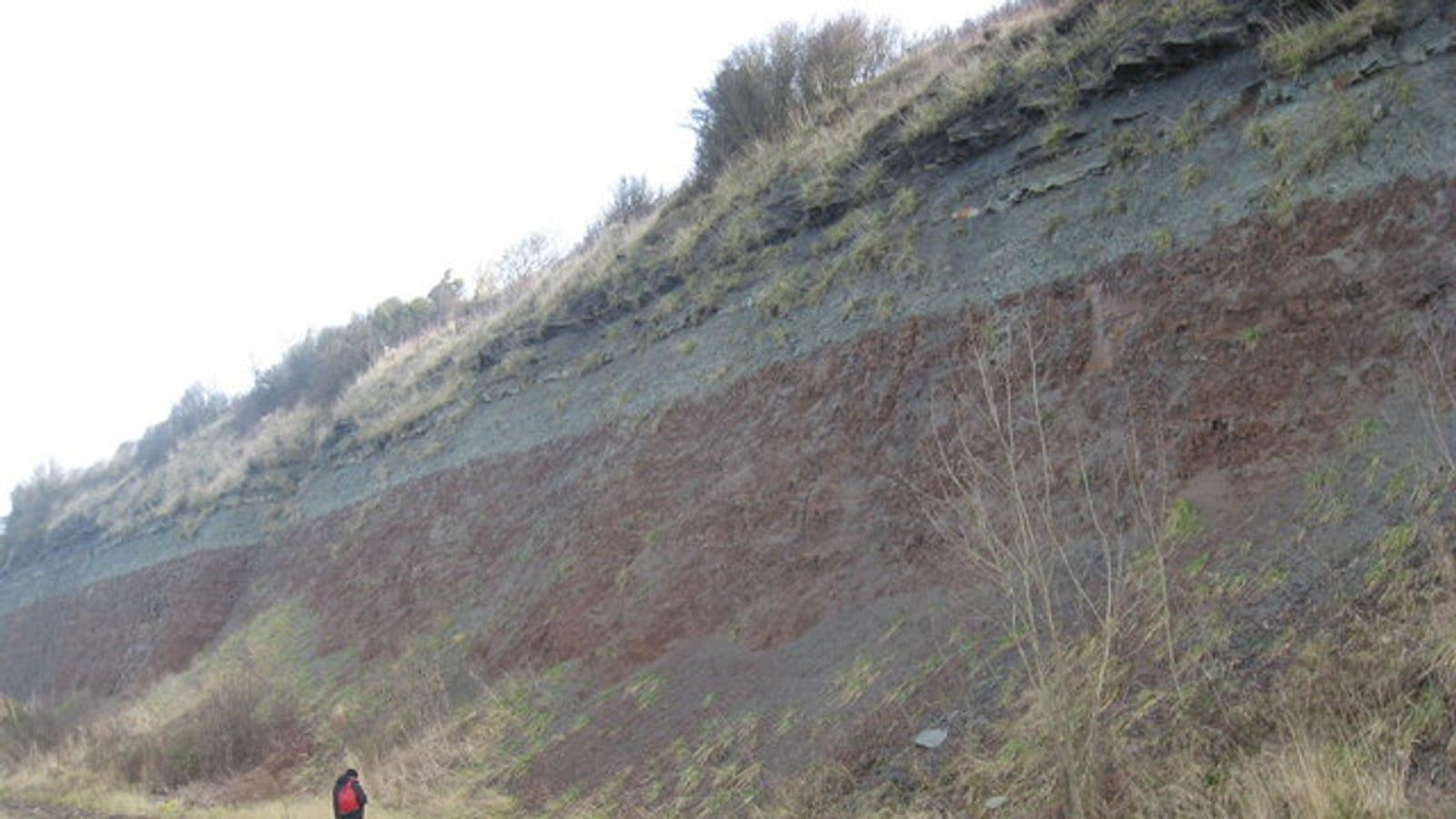
This site is special because it shows off the Penarth Group type section, which represents the Rhaetian stage (late Triassic) and the Lower Jurassic deposits above it. Some key formations to look out for include the Westbury Formation bone bed, the Mercia Mudstone Group (also known as the Blue Anchor Formation), and the Blue Lias Formation, which features interbedded limestone and shale.
Geologic History
The Triassic Westbury Formation bone bed tells a story of storm deposits in a tropical coastal setting. In the Triassic, frequent storms swept materials from land and sea into a tidal zone, creating a rich ecological mix with marine reptiles like ichthyosaurs and plesiosaurs swimming around, while dinosaurs roamed the land.
Then the Blue Lias, dating back to around 201 to 190 million years ago, reflects deeper marine conditions in those warm, shallow tropical seas. It’s a record of how the Triassic-Jurassic transition happened, shifting from marginal marine to fully marine environments. During the Late Triassic Rhaetian (205-201 Ma), South Wales was actually part of the supercontinent Pangaea, near the equator in a hot tropical climate (think Caribbean). In the Early Jurassic, things were still warm and tropical. But as Pangaea started to break apart and the Atlantic Ocean began to take shape, rising sea levels flooded the Triassic deserts, leading to extensive shallow seas.
 Photo: Limestone, mudstone and shale at Lavernock Head by Alan Hughes, CC BY-SA 2.0, via Wikimedia Commons
Site History
Lavernock has a rich history as the type section of the Penarth Group and has been famous for its vertebrate fossils for over 150 years! Collections dating back to the 1870s are now at the National Museum of Wales. The 2014-2015 discovery of Dracoraptor hanigani was significant because since it’s considered the earliest known Jurassic dinosaur and a major find for Wales. They managed to recover about 40% of the skeleton, which is roughly 2 meters long. Interestingly, recent research from 2024 suggests that Lavernock might have yielded more dinosaur bones than any other British Rhaetian bone bed.
Collecting Rules and Regulations
Please note Lavernock is designated as a Site of Special Scientific Interest (SSSI). Visitors are welcome, but hammering the bedrock is a not permitted. Fossils are usually in large boulders and slabs along the foreshore, and those do require a hammer and chisel to split.
Wrap any fossils you find and carry them in a container or a padded bag. Lias slabs chip against each other in a rucksack, and a specimen that survived 200 million years will not survive the walk back to the car loose in a pocket.
Safety
Lavernock is a tidal foreshore below unstable cliffs, and both halves of that matter.
The tide is the first thing to plan around. It is easy to be cut off at Lavernock Point, and the Severn Estuary has one of the largest tidal ranges in the world, so the water comes in faster and further than most visitors expect. Check the tide tables for Cardiff or Barry before you set out, start on a falling tide, and be off the foreshore well before low water has turned. Do not count on scrambling up the cliff if you misjudge it.
The cliffs shed rock. Falls happen at Lavernock, particularly after rain and during freeze and thaw, and the Blue Lias here comes away in slabs. Keep clear of the base of the cliff, do not shelter under an overhang, and wear a hard hat if you are searching close in. Hammering the bedrock is not permitted at an SSSI in any case, so there is no reason to be standing against the face.
Fossils here come out of large boulders and slabs on the foreshore, which means hammer and chisel work on rock that may be wet and unstable. Wear eye protection, make sure a block is settled before you strike it, and keep other people out of the line of flying chips.
The rocks are slippery with algae and the ledges are uneven, so wear boots with a good grip. The car park at the end of the track holds about four cars, there are no facilities at the point, and the beach is quiet out of season.
Sources
- UK Fossils Network
- University of Bristol
- ScienceDirect - Evans et al. (2024). Proceedings of the Geologists’ Association
- National Museum Wales
- Accessed December 13, 2025