Hobbysteinbruch Solnhofen Fossil Hunting Guide
Image: PePeEfe (CC BY-SA 4.0)
Collect Jurassic fossils at Hobbysteinbruch Solnhofen, Bavaria. Fee-based quarry in world-famous Archaeopteryx region. Ammonites, fish, shrimp in plattenkalk.
By Edward Chen · Updated 2 August 2026
Introduction
Solnhofen is where the story of Archaeopteryx begins. In 1860, a single feather preserved in the fine-grained limestone of this Bavarian village became the first physical evidence of a feathered Jurassic animal. The complete skeleton followed in 1861, and eleven more Archaeopteryx specimens have since come out of quarries in and around Solnhofen. The Hobbysteinbruch, the village's designated public fossil collecting quarry, sits in this same geological formation and gives ordinary visitors access to the same plattenkalk limestone that has been yielding fossils for more than 160 years.
The Hobbysteinbruch is operated by the municipality of Solnhofen in cooperation with the Bürgermeister-Müller-Museum, the regional museum devoted to local Jurassic fossils. Visitors pay an entrance fee, collect from prepared limestone slabs during opening hours, and keep everything they find. Ammonites, fish, shrimp, crinoids, and belemnites all occur at the site. Tools are available for rental. Guided tours run on selected Wednesdays. This guide covers the directions, fossils, geology, history, and current regulations at Hobbysteinbruch Solnhofen.
Location and Directions
Address
Hobbysteinbruch Solnhofen, Frauenberger Weg, 91807 Solnhofen, Bavaria, Germany.
Directions
From Nuremberg, take the A9 motorway south approximately 70 km to the Greding exit (junction 54), then follow the B2 south through Weißenburg in Bayern. Continue through Weißenburg and follow signs south to Solnhofen village. The Hobbysteinbruch is located on Frauenberger Weg on the northern edge of the village and is clearly signposted from the village centre. Total distance from Nuremberg is approximately 85 km, taking around 1 hour 15 minutes.
From Munich, take the A9 north to Ingolstadt, then the B13 north-west toward Eichstätt. From Eichstätt, continue west following signs to Solnhofen. Total distance is approximately 125 km, taking around 1 hour 30 minutes.
Parking is available at the quarry entrance at no charge. Public transport to Solnhofen from Treuchtlingen is possible by regional bus. Check current schedules with the Altmühltal transport authority. The Bürgermeister-Müller-Museum is in the village centre and is walkable from the Hobbysteinbruch.
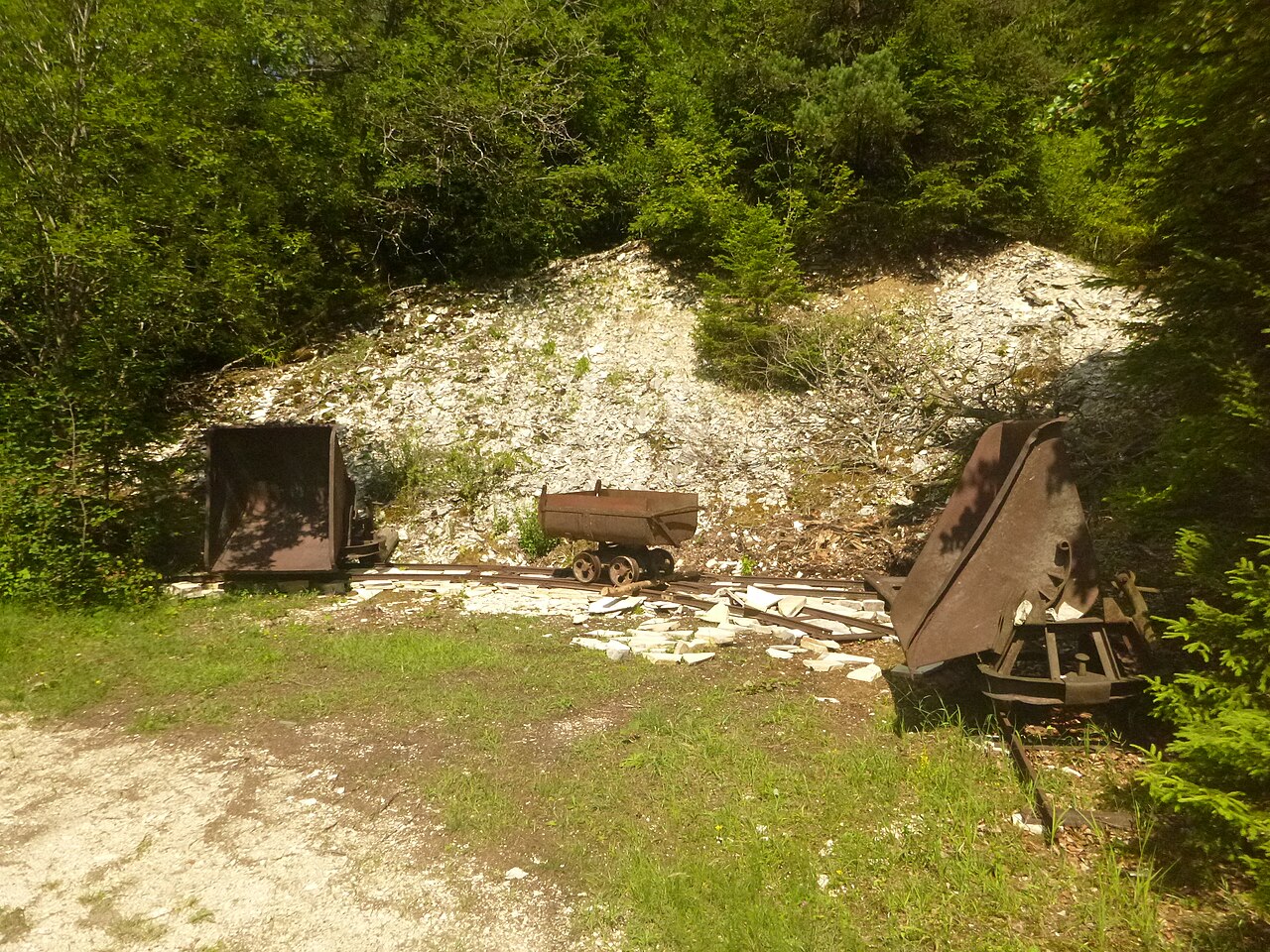 Photo: Calistemon, CC BY-SA 4.0, via Wikimedia Commons

What Fossils You'll Find
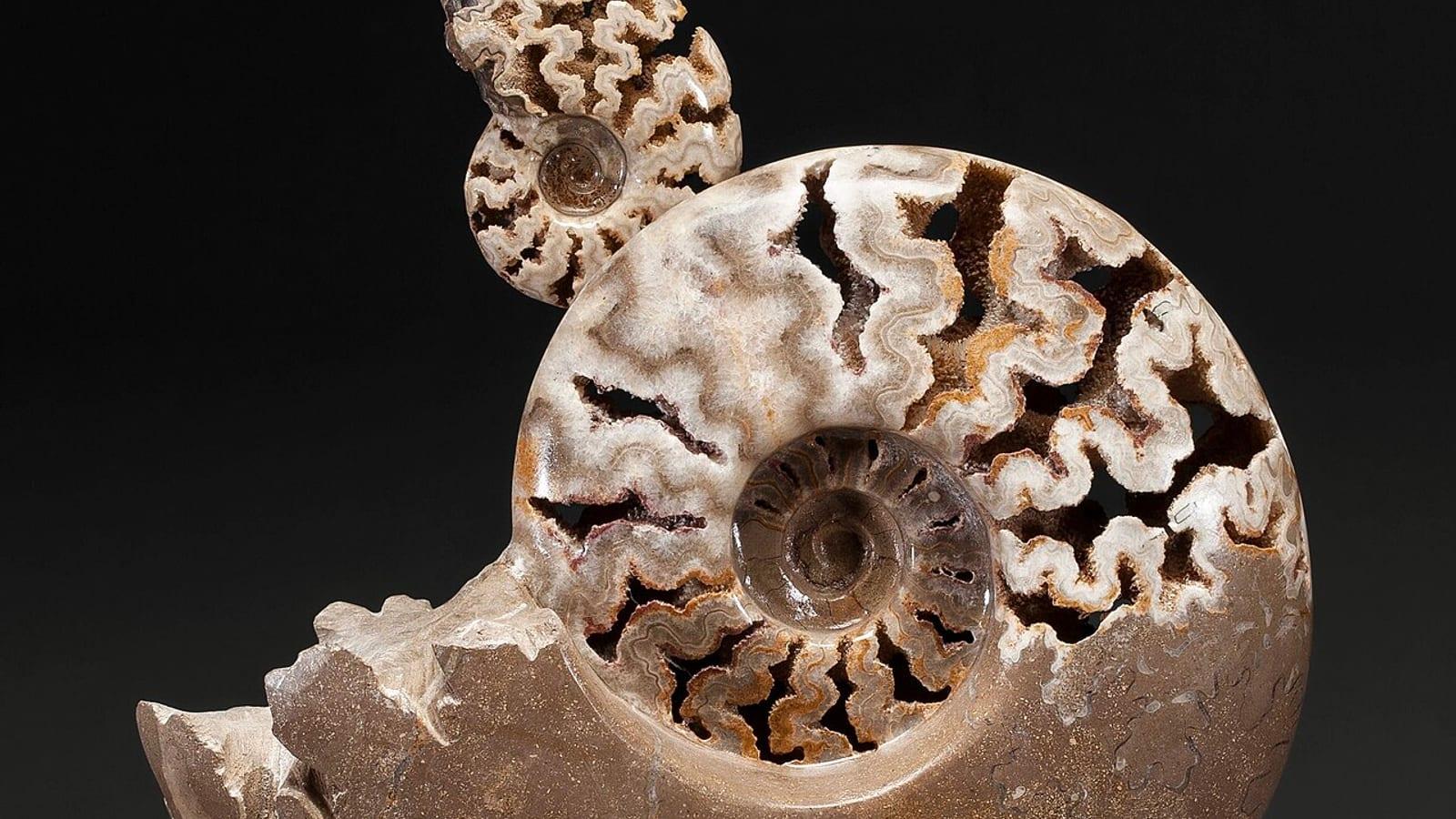
Ammonites are the most common and most varied find at Hobbysteinbruch Solnhofen. Multiple species from the Mörnsheimer Schichten and related Tithonian units occur in the limestone, and specimens with intact shell material and well-defined suture lines are found regularly. Work systematically through the limestone pile, splitting slabs of moderate thickness with firm strikes. Very thin slabs tend to break across specimens rather than along the lamination planes.
Fish fossils appear throughout the collecting area. Small actinopterygians preserved in lateral view are the most frequent type. Look for elongated dark outlines on pale slab faces. The fish-bearing beds tend to be slightly finer-grained than the average slab. Wetting a freshly split face immediately reveals whether a fish outline is present before the moisture evaporates.
Shrimp are regular finds at Solnhofen and the site is particularly known for their occurrence. The Solnhofen shrimp fauna includes several species, and well-preserved specimens with antenna, legs, and tail fan intact have been found at this quarry. Examine thin slabs carefully and use the spray bottle. The details are there if the surface is wet.
Crinoids, belemnites, and bivalves occur through the general limestone and turn up regularly across collecting sessions. Crinoid columnals are ubiquitous. Partial crowns are less common but found at the site. Belemnite guards are robust and easily identified. Bivalves appear as paired curved impressions, most commonly in the finer laminated beds.
Pterosaur fragments and other vertebrate material have been found at the Hobbysteinbruch. Such finds are rare but genuine. The site operates within the same formation and under the same geological conditions that have produced the world's most important pterosaur and early bird specimens. Any bone material should be shown to site staff before leaving.
 Photo: James St. John, CC BY 2.0, via Wikimedia Commons
_1_(36800705542).jpg)
Geologic History
The Ancient Environment
The limestone at Hobbysteinbruch Solnhofen belongs to the Mörnsheimer Schichten, the uppermost member of the Solnhofen Limestone Group, deposited during the Tithonian Stage of the Late Jurassic, approximately 150 million years ago. The rock is the classic plattenkalk that made Solnhofen globally famous: pale grey, fine-grained, densely laminated carbonate limestone that splits cleanly and preserves biological detail with high fidelity.
The Solnhofen region during the Tithonian was an archipelago of low carbonate islands within the tropical Tethys Sea. Evaporating lagoons between the islands developed warm, hypersaline bottom waters with little to no dissolved oxygen. In these anoxic basins, decomposition was suppressed and scavengers could not survive. Organisms that drifted or sank to the bottom were covered rapidly by fine carbonate mud and preserved. The fauna includes open-water ammonites, nautiloids, and fish from the water column, crustaceans from the reef and lagoon margins, and pterosaurs and Archaeopteryx from the forested islands, which occasionally fell or were blown into the calm lagoon waters.
The name Solnhofen Lagerstätte is applied to this entire deposit and its equivalent beds across the region. It represents one of the best-studied and most scientifically productive fossil sites in the world, having been quarried and studied continuously for more than 200 years.
How Hobbysteinbruch Solnhofen Became a Fossil Collecting Site
Limestone quarrying at Solnhofen has a history stretching back to Roman times, but intensive commercial operations began in the late 18th century following Alois Senefelder's 1798 invention of lithography. Solnhofen plattenkalk proved well suited to the process: its fine grain accepted drawn lines with high precision, and the stone was abundant and easily quarried. For roughly a century, Solnhofen and the surrounding villages supplied lithographic stones to print shops across Europe, and it was this industrial-scale quarrying that exposed the fossil beds in quantity.
The first Archaeopteryx feather came out of a Solnhofen quarry in 1860. The first complete skeleton followed in 1861 and was sold to the Natural History Museum London. Subsequent specimens came from quarries scattered around the village over the following 150 years. The Hobbysteinbruch was established by the Solnhofen municipality in the 1990s, in cooperation with the Bürgermeister-Müller-Museum, to provide structured public access to the fossil beds while maintaining oversight of scientifically significant finds. It has since become one of the most visited Besuchersteinbrüche in Bavaria.
Collecting Rules and Regulations
Is Fossil Collecting Allowed?
Yes. Hobbysteinbruch Solnhofen is a fee-based public fossil collecting site run by the municipality. You pay on arrival and collect from prepared limestone within the quarry area during opening hours.
- Open: 1 April–3 November, daily 10:00–17:00
- Adults: €4–5, Children (6–16): €2.50–3.50, combination tickets with the Bürgermeister-Müller-Museum are available
- Tool rental: €1–2 per item plus refundable deposit
- Guided tours: Wednesdays at set times, groups of 10 or more should call ahead
- Groups contact: +49 9145 832020, site supervisor Dieter Kosslitz: +49 176 42942946
- All invertebrate fossils may be kept. Exceptional vertebrate finds must be reported to staff
- No advance booking required for individuals
Bavarian heritage law applies to scientifically significant finds. Staff are present during opening hours to advise on any unusual material found during your visit.
Recommended Tools
Tools are available for rental at the site. If you prefer your own kit, a 1–1.5 kg rock hammer and flat and pointed chisels cover all plattenkalk splitting work. Safety glasses are essential and should always be your own. Bring a spray bottle, a stiff brush, and wrapping material for specimens. Boots or sturdy shoes with ankle support are appropriate for the quarry surface. In summer, the exposed limestone reflects heat considerably. Water and sun protection are important to carry.
Safety
Safety glasses must be worn during all splitting work. Limestone fragments travel at speed and can cause serious eye injury. Keep children actively supervised and away from the working areas of other collectors. Handle freshly split limestone edges with care. The quarry surface involves uneven ground and loose stone. Watch your footing. In warm weather, the open quarry provides little shade and temperatures can be high, so pace yourself and drink water regularly. Ask site staff or Dieter Kosslitz if you have any questions about safety procedures during your visit.
Sources
Frequently asked questions
- Can you dig for fossils at Solnhofen?
- Yes. The hobby quarry at Solnhofen charges a fee for access to split the famous lithographic limestone, and you keep what you find.
- What fossils are found at Solnhofen?
- The Late Jurassic Solnhofen Limestone, about 150 million years old, yields ammonites, fish, shrimp, crinoids, belemnites, bivalves, and occasional pterosaur fragments in exceptional detail.
- How do you split Solnhofen limestone?
- The fine platy limestone splits into thin sheets along bedding with a flat chisel and light taps. Tools may be available on site, but bring safety glasses and something rigid to carry slabs home flat.
Nearby sites
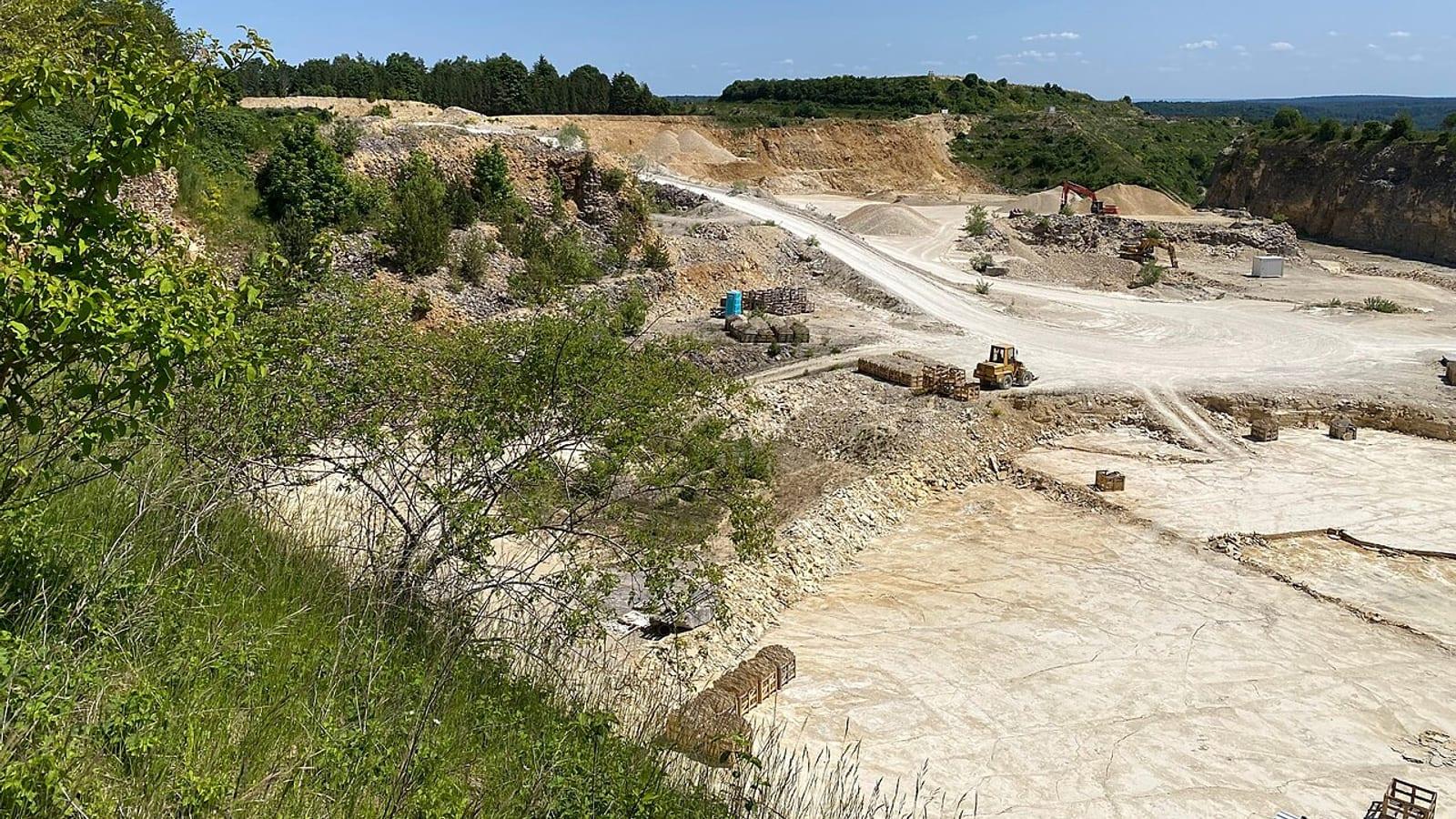 Steinbruch Schernfeld Jurassic Fossil Quarry Fossil Hunting GuideN/A
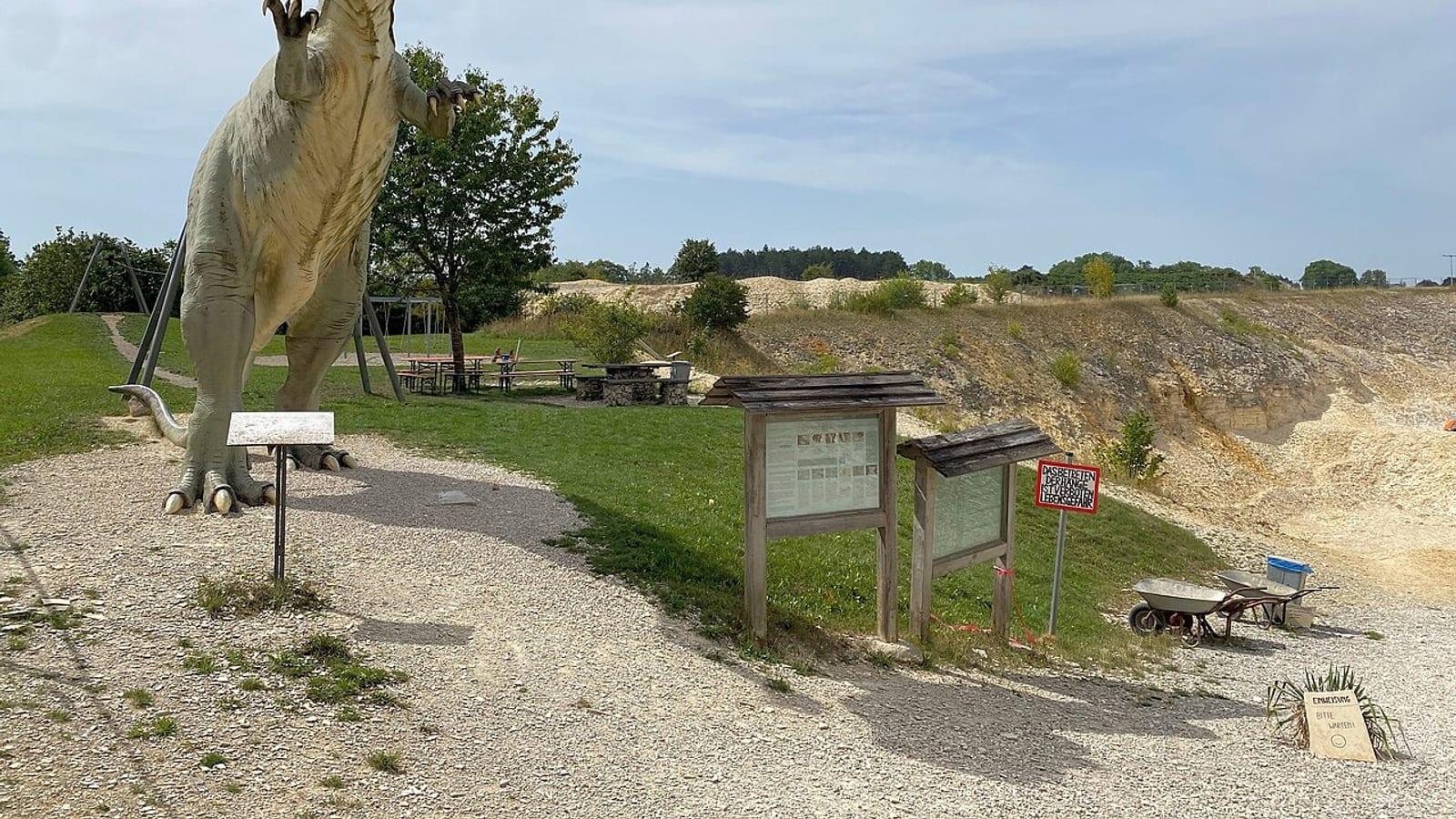 Fossiliensteinbruch Blumenberg Eichstatt Fossil Hunting GuideAmmonites, Fish fossils
 Fossiliensammelstelle Titting Free Fossil Hunting GuideAmmonites, Crinoid fragments
 Ries Crater Nordlingen Meteorite Impact Geopark Fossil Hunting Guidesuevite impact breccia