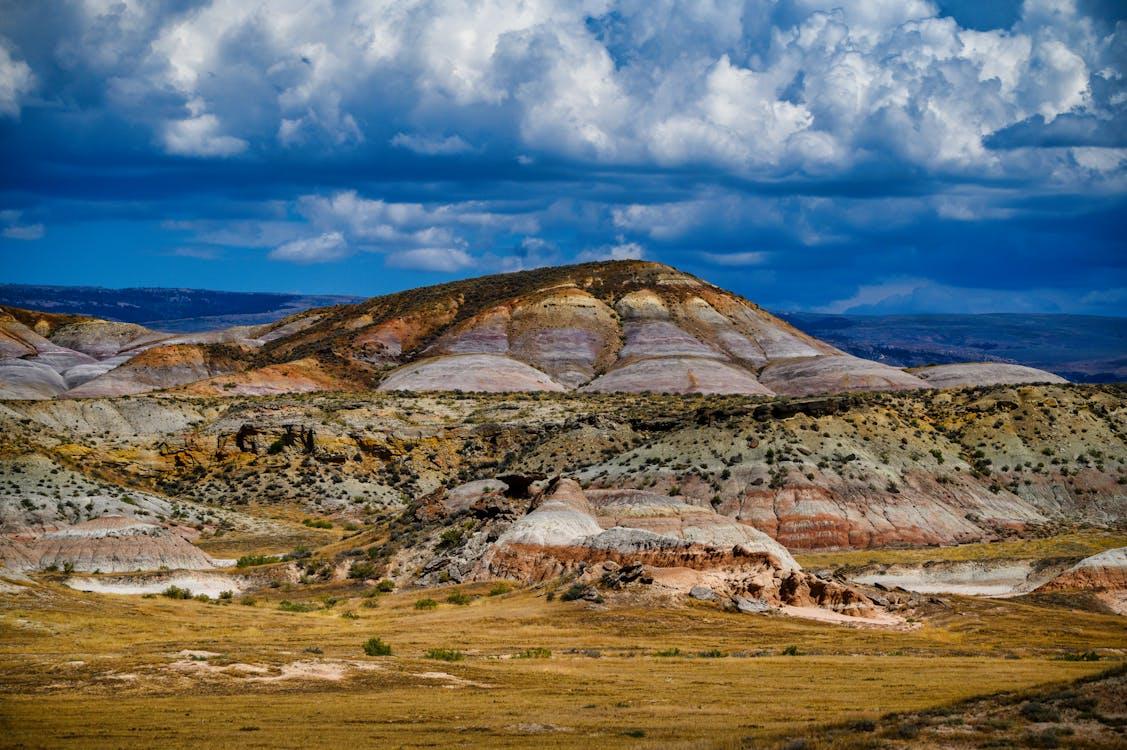
Wheeler High School Fossil Beds Fossil Hunting Guide
Image: M.O. Stevens (CC BY-SA 3.0)
The Wheeler High School Fossil Beds in Fossil, Oregon expose the Oligocene Bridge Creek Flora of the John Day Formation, approximately 33 million years old, preserving fossil leaves, fish, and rare insects in soft shale. The site is open year-round for a small donation fee.
By Edward Chen · Published 28 May 2026
Introduction
The Wheeler High School Fossil Beds sit on a hillside behind the baseball field of Wheeler High School in the small town of Fossil, Oregon, a town that takes its name from these very deposits. The site exposes the Bridge Creek Flora, a well-documented Oligocene plant assemblage within the John Day Formation, laid down approximately 33 million years ago when a shallow temperate lake occupied this part of eastern Oregon. The soft shale splits cleanly along bedding planes, exposing fossil leaves, twigs, and occasional animal remains in good condition.
The fossil bed was uncovered accidentally in 1949 during construction work at the school. Since then, the Wheeler School District has maintained public access to the site and used the small admission fee to support the school. Over 30 plant species have been identified from the deposit, representing what was once a deciduous forest growing along the margins of a moist inland lake in a climate milder and wetter than the semi-arid high desert that exists here today.
The site is managed directly by Wheeler High School. The Oregon Paleo Lands Institute, which previously ran an interpretive centre nearby, has closed, but the fossil beds continue to operate under school management.
Location and Directions
Fossil is in Wheeler County in north-central Oregon, roughly 90 miles southeast of The Dalles and 173 miles southeast of Portland. The town sits at 2,700 feet elevation in the high desert along Highway 19.
From Portland, take I-84 east to exit 104 at Biggs Junction, then follow Highway 206 east for 42 miles to Highway 19. Turn right (south) onto Highway 19 and continue 19 miles to Fossil. In town, follow First Street, turn onto Broadway, then left onto Jay Street to reach the high school.
From Bend, take US-20 east to Bend, then US-26 north to Mitchell, then Highway 19 north approximately 50 miles to Fossil. Allow around two hours from Bend.
Parking is available at the school. The fossil bed is a short walk uphill behind the baseball field. Look for the interpretive signs marking the dig area. Basic digging tools including trowels and chisels are sometimes available on site, but bringing your own rock hammer, trowel, and chisel is recommended.
Accommodation in Fossil is limited to a few local options. The Wheeler County Fairgrounds RV Park in town is convenient for campers. Additional lodging is available in nearby Condon, Spray, and Mitchell.
What Fossils You'll Find
The dominant finds at Wheeler High School are leaf fossils. According to the Oregon Paleo Lands Center, the assemblage includes over 30 species, among them ancestors of modern sycamore, maple, oak, alder, ash, rose, and hawthorn. One of the most abundant and easily identified fossils is Metasequoia, the dawn redwood, which shed its needles each autumn into the lake. The needles preserve well and appear frequently as delicate fan-shaped impressions in the grey shale.
Other plant material includes twigs, seeds, and occasional flower impressions. Most finds are leaf impressions rather than mineralised material. The fossils appear as dark carbonised films against the pale grey rock matrix. The Oregon Discovery site notes that the shale is soft enough to split with a chisel or a durable knife, and almost every rock on the hillside contains some plant impression. Complete leaves in good condition require patience but are not unusual.
Animal fossils are rarer. Oregon Discovery records that fish, salamanders, and insects have been found at the site. The Oregon Paleo Lands Center confirms that aquatic vertebrates appear occasionally. The John Day Formation across the wider region also preserves the bones of Oligocene mammals that browsed along the lake margins, including oreodonts (sheep-like grazers) and entelodonts (large pig-like animals), though these are not found at the Wheeler High School bed specifically.
Geologic History
The John Day Formation records approximately 25 million years of geological and biological history across a wide area of eastern Oregon. The Bridge Creek Member, which is exposed at Fossil, represents an Oligocene warm interval roughly 34 to 30 million years ago when the climate in this part of Oregon was considerably more temperate and humid than today.
According to the Oregon Discovery site, the ancient lake at Fossil was surrounded by dense deciduous forest and received periodic inputs of volcanic ash from eruptions associated with the growing Cascade volcanic arc to the west. Fine ash and organic debris washed into the lake and settled to the bottom in calm, low-oxygen conditions, preserving the leaf litter and aquatic organisms that sank each season.
As the Cascade Mountains rose progressively through the Miocene and Pliocene, they increasingly blocked Pacific moisture from reaching the interior, creating the rain-shadow effect that produced the dry high desert now covering this region. The forests recorded in the fossil beds gradually gave way to the sage and juniper communities visible across Wheeler County today.
The John Day Basin as a whole is one of the most studied Tertiary fossil deposits in North America. The Thomas Condon Paleontology Center at John Day Fossil Beds National Monument, located about one hour east of Fossil near Dayville, provides detailed exhibits on the formation and the ecosystems it records.
Collecting Rules and Regulations
The site is managed by Wheeler High School and operated on a donation or admission basis. Fees as listed by the Oregon Paleo Lands Center are $5 per individual, $15 for a family of four, $3 for each additional child, and $25 for groups of up to 20. Payment supports Wheeler School District science education.
Visitors keep what they find. There are no restrictions on the quantity of leaf fossils that may be collected, though taking large amounts is discouraged. Vertebrate fossils within the John Day National Monument (which covers nearby federal land but not the school property) are protected, but this rule does not apply to the school site itself.
For group visits, contact Wheeler High School directly at (541) 763-0907.
Safety
The site is at an elevation of 2,700 feet. Summer temperatures in eastern Oregon can exceed 40 degrees Celsius. Bring adequate water, sun protection, and weather-appropriate clothing. The terrain is a loose, rocky hillside and sturdy footwear is advisable.
The roads into Fossil from the main highway network are paved but travel through remote terrain with limited services. GPS directions in rural Wheeler County may be unreliable. Download directions before departing and note that cell service is limited or absent in many parts of the county.
Sources
https://www.oregonpaleolandscenter.com/wheeler-high-school-fossil-beds https://oregondiscovery.com/wheeler-high-school-fossil-beds https://en.wikipedia.org/wiki/Wheeler_High_School_(Fossil,_Oregon) https://www.nps.gov/joda/learn/nature/paleontology.htm
Nearby sites
 John Day Fossil Beds National Monument Fossil Hunting GuideOreodonts, Early horses
 Ginkgo Petrified Forest State Park Fossil Hunting GuidePetrified wood (Ginkgo), Petrified wood (50+ species)
 Alki Beach Blakeley Formation Fossil Hunting GuideMarine mollusks, Crab concretions
 Fort Ward Park (Blakeley Formation) Fossil Hunting GuideMarine mollusks, Crab concretions