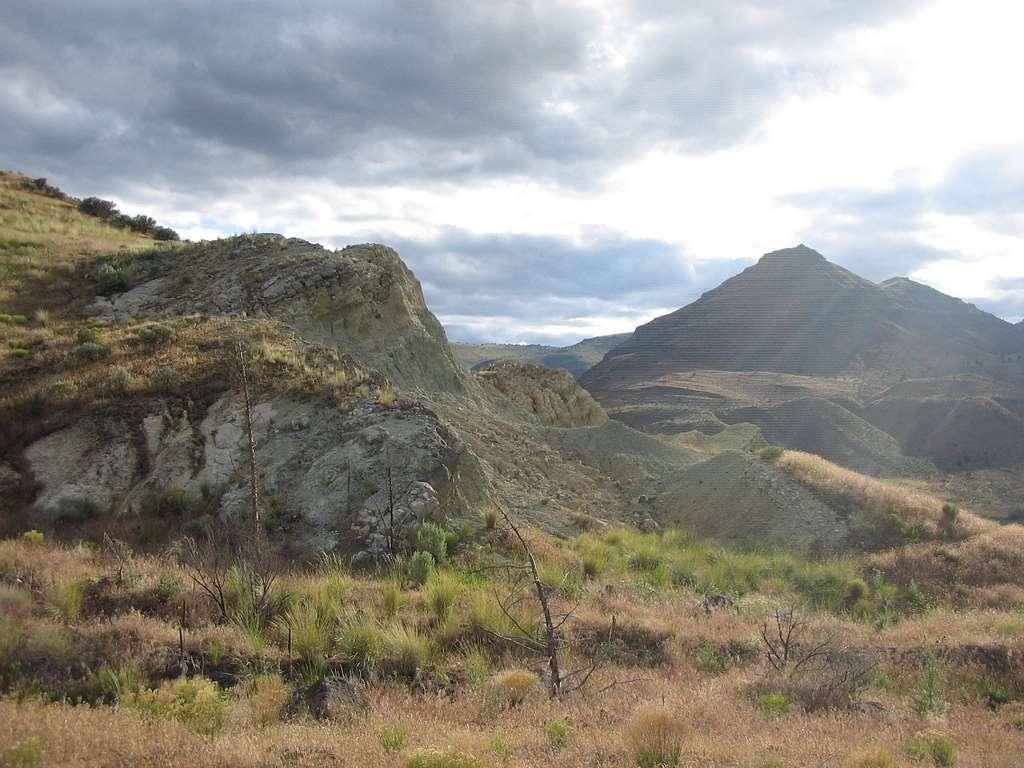
John Day Fossil Beds National Monument Fossil Hunting Guide
Image: National Parks Gallery (Public Domain Mark 1.0)
John Day Fossil Beds National Monument protects three separate units in central Oregon that together preserve 40 million years of Cenozoic plants and mammals across the Clarno, John Day, Mascall, and Rattlesnake formations. Collecting is federally prohibited. Visitors view fossils in place along marked trails and in the Thomas Condon Paleontology Center.
By Edward Chen · Updated 31 July 2026
Introduction
John Day Fossil Beds National Monument covers about 14,000 acres in central Oregon, divided into three separate units that lie within an hour's drive of one another: Sheep Rock, Painted Hills, and Clarno. The monument was established in 1975 and is administered by the National Park Service. Together the three units expose a stacked sequence of late Eocene to late Miocene volcanic ash, lake, and floodplain rocks that preserve more than 40 million years of plant and mammal evolution in a single drainage. The Thomas Condon Paleontology Center at the Sheep Rock unit is the main visitor hub, with a working fossil preparation lab visible through glass, a 500-specimen exhibit hall, and rotating displays drawn from the monument's research collection of more than 60,000 catalogued specimens. Collecting is federally prohibited across all three units, including ash beds, leaf layers, and float on the ground. This guide covers how to plan a multi-unit visit, what to look for at each stop, the geologic story of the John Day basin, and the access rules that apply to NPS paleontological land.
Location and Directions
The three units sit in Wheeler and Grant counties, in the high desert of central Oregon. From Bend, the closest city with a commercial airport, allow about two and a half hours of driving to reach the Painted Hills unit and three hours to Sheep Rock by way of US-26.
The Sheep Rock unit and the Thomas Condon Paleontology Center are at 32651 Highway 19, Kimberly, Oregon 97848, on the west side of Oregon Highway 19 a few miles north of the village of Dayville. GPS for the visitor center is 44.5547 degrees north, 119.6440 degrees west. The unit also contains the Cant Ranch historic homestead, the Blue Basin Overlook and Island in Time trails, and the Mascall and Foree areas.
The Painted Hills unit lies about 75 miles west of Sheep Rock, reached by US-26 to the small town of Mitchell, then 6 miles north on Burnt Ranch Road and Bear Creek Road. The five short trails here include the Painted Hills Overlook, Leaf Hill, Carroll Rim, Painted Cove, and Red Scar Knoll.
The Clarno unit is the northernmost, on Oregon Highway 218 about 18 miles west of Fossil. Its three short trails climb to the Palisades, the Trail of Fossils, and the Geologic Time loop, all of which return to a single trailhead and picnic area.
All three units are open year round during daylight hours. The Thomas Condon Paleontology Center is open most days, with reduced winter hours. There is no entrance fee for any unit. Carry water, sun cover, and a paper map. Cell coverage is intermittent across the entire monument and absent on most trails.
 Photo: Riad Lemhachheche, CC BY 2.5 via Wikimedia Commons

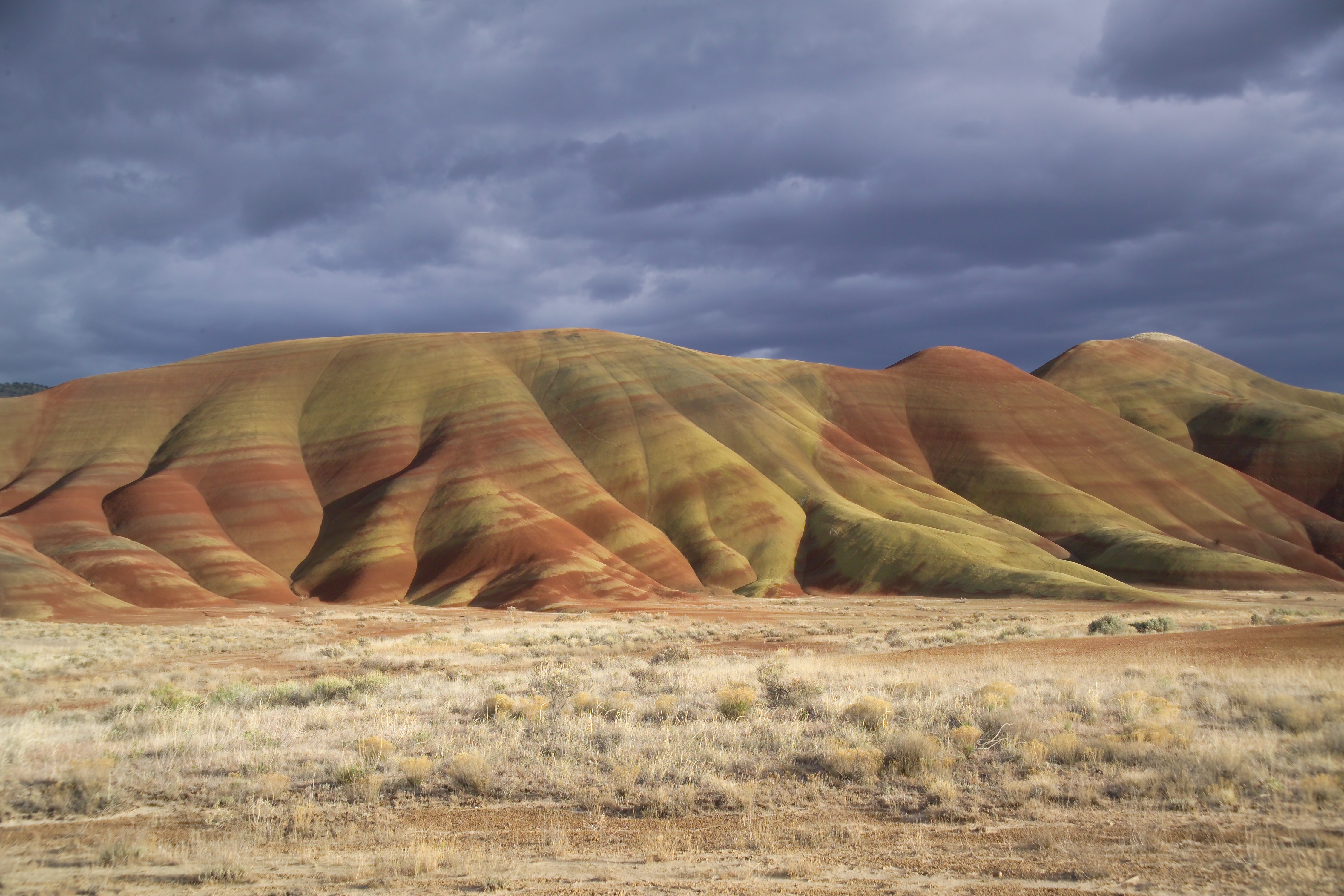 Photo: NPS Photo / Scott Ritner, public domain, via National Park Service
What Fossils You'll Find
You will see fossils in place on every interpretive trail, but you will not collect anything. Identifications below are drawn from the NPS Geodiversity Atlas and the Thomas Condon collection records.
- Metasequoia occidentalis (dawn redwood). Leaf and shoot fossils of this deciduous conifer are abundant in the Bridge Creek flora of the John Day Formation, well displayed on the Leaf Hill trail at Painted Hills.
- Mesohippus and Miohippus. Three-toed early horses are common in the John Day Formation. Articulated skulls and limb bones are on exhibit at the Thomas Condon center.
- Oreodonts (Merycoidodon, Eporeodon). Pig-sized cud-chewing artiodactyls dominate many John Day Formation mammal assemblages.
- Brontotheres. Large rhinoceros-like perissodactyls from the late Eocene Clarno Formation, including Telmatherium material from the Clarno Nut Beds.
- Hyaenodon and entelodonts. Two carnivore guilds well represented in the Turtle Cove member of the John Day Formation.
- Clarno Nut Beds flora. More than 175 plant taxa, including fruits and seeds of Platanus, Magnolia, and various palms, recovered from a single Eocene mudflow horizon at the Clarno unit.
- Mascall Formation horses, camels, and pronghorns. A middle Miocene fauna exposed in the Foree area and along the Mascall overlook road at the Sheep Rock unit.
Mounted casts and prepared specimens in the visitor center provide the clearest identifications. Several trail-side outcrops carry tags pointing out specific bones or leaf impressions in the rock face.
 Photo: National Park Service, Public domain via Wikimedia Commons

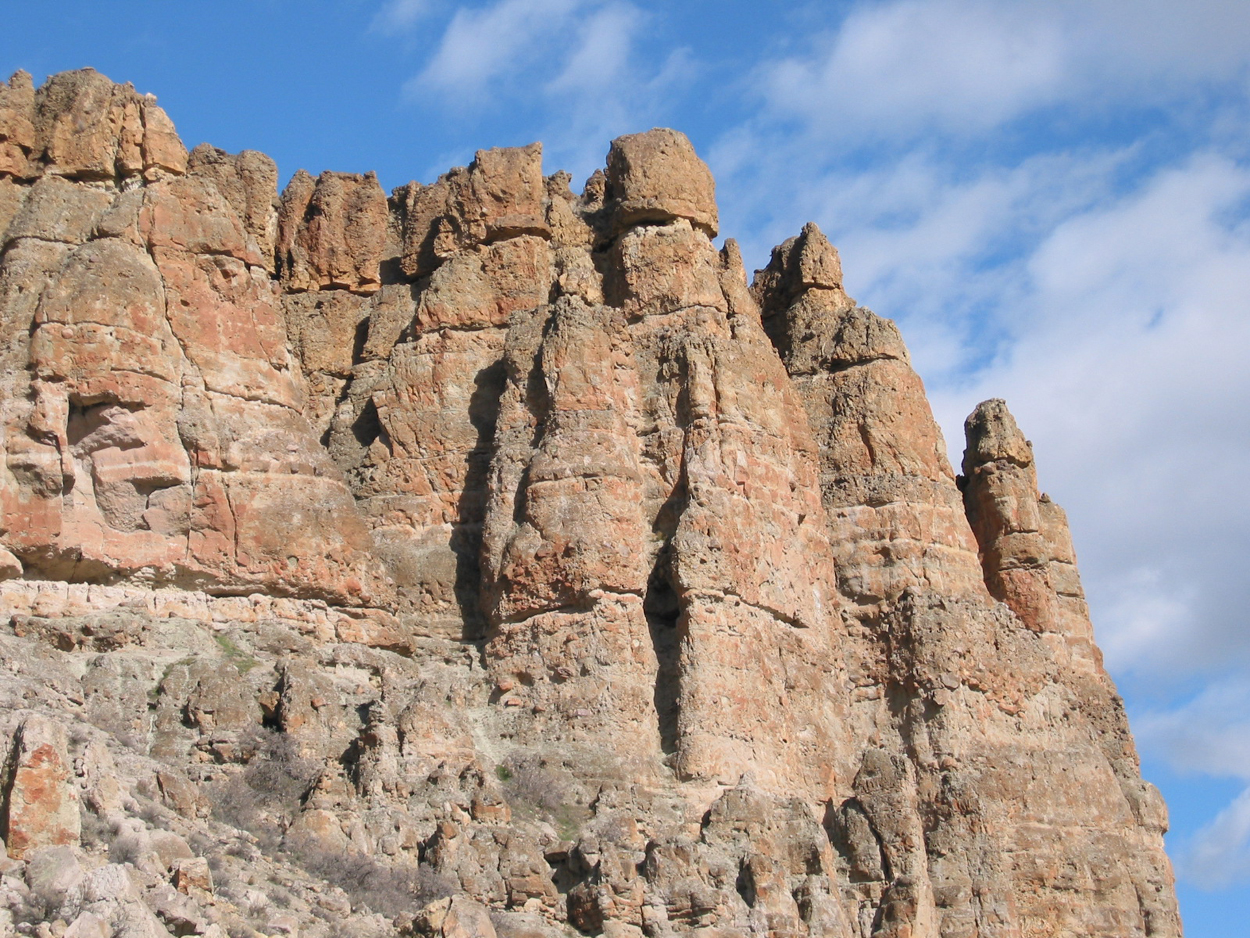 Photo: NPS Photo, public domain, via National Park Service
Geologic History
The monument exposes four named rock units that record nearly continuous deposition between roughly 44 and 7 million years ago. From oldest to youngest:
The Clarno Formation, early to late Eocene in age at roughly 54 to 39 mya, formed in a wet subtropical setting on the flank of an active volcanic arc. The Clarno Nut Beds were buried by a lahar that swept fruits, seeds, leaves, and small vertebrates together into a single horizon.
The John Day Formation, late Eocene to early Miocene at roughly 39 to 18 mya, is a thick succession of altered volcanic ash deposited under a cooler, more open landscape. The blue-green claystone of the Turtle Cove member, the colour for which Blue Basin is named, formed by alteration of ash to celadonite. The Bridge Creek flora at Painted Hills records the cooling step into the Oligocene.
The Mascall Formation, middle Miocene at roughly 16 to 12 mya, contains lake and floodplain sediments deposited after the eruption of the Picture Gorge Basalt. Its mammal fauna captures the spread of open grassland in interior Oregon.
The Rattlesnake Formation, latest Miocene at roughly 8 to 7 mya, includes the welded Rattlesnake Tuff, a regional volcanic ash sheet that caps many ridge tops in the Sheep Rock unit and provides a sharp upper time marker for the local fauna.
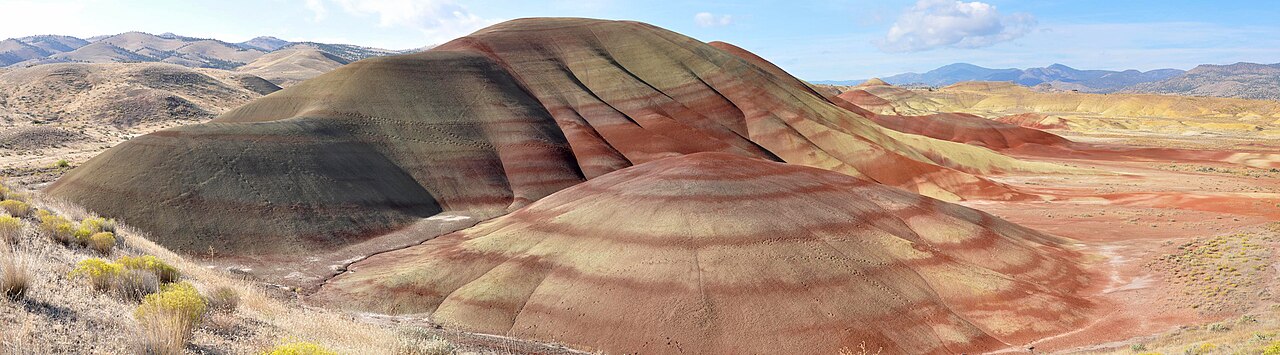 Photo: Finetooth, CC BY-SA 3.0 via Wikimedia Commons

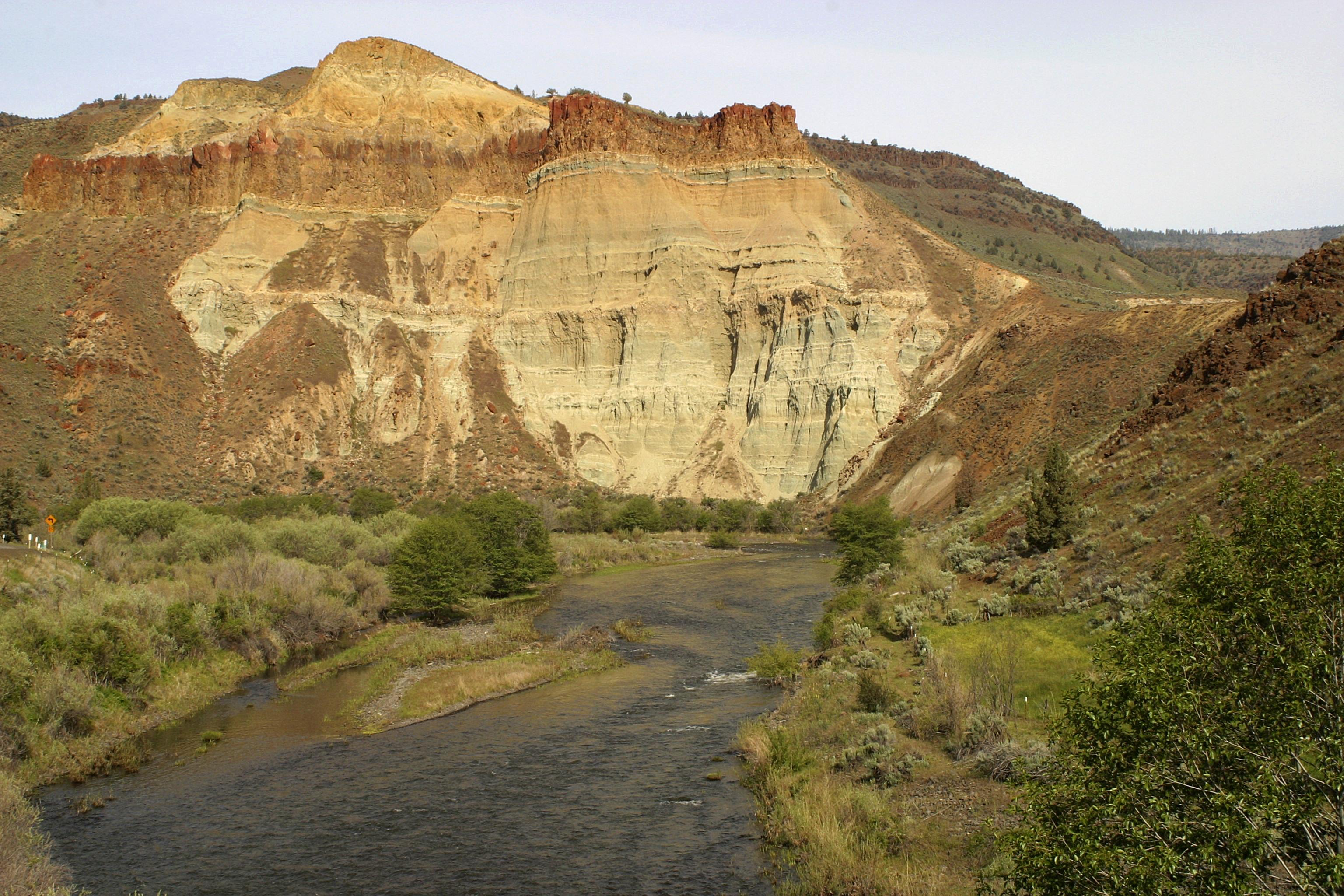 Photo: NPS Photo, public domain, via National Park Service
How John Day Fossil Beds Became a Fossil Site
Thomas Condon, a Congregational minister and self-trained geologist who became the first professor of geology at the University of Oregon, began collecting from the John Day basin in 1865. Material he sent east to Othniel Charles Marsh at Yale established the basin as one of the major early Cenozoic mammal localities in North America. Yale, Princeton, the University of California, and the American Museum of Natural History all ran field parties in the basin in the late 1800s and early 1900s. The state of Oregon protected portions of the area as state parks beginning in 1931, and Congress established the national monument in 1975. The University of California paleontology collection and the Thomas Condon Collection at the University of Oregon still hold large series of John Day specimens.
Collecting Rules and Regulations
Collecting is federally prohibited. John Day Fossil Beds National Monument is administered by the National Park Service, and removing, damaging, defacing, or disturbing any paleontological resource on NPS land is a federal offense under the Paleontological Resources Preservation Act of 2009 and 36 CFR 2.1. This includes vertebrate bones, plant fossils, and float pieces on the ground.
Practical rules across the three units:
- Stay on marked trails. Off-trail travel in the badlands damages soft claystone surfaces and triggers gully erosion.
- Photography for personal use is permitted everywhere.
- There is no entrance fee.
- Drones are not allowed in the monument under standard NPS regulations.
- Pets must be leashed and are not allowed on most fossil trails.
- Permits for research collection are issued only to qualified scientists working with an institutional affiliation.
Safety
Summer temperatures in the John Day basin regularly exceed 95 degrees Fahrenheit, and shade is minimal on most trails. Carry at least two litres of water per person, electrolytes, and a sun hat. Watch for thunderstorms and lightning on exposed ridges in late spring and summer.
Rattlesnakes are present across all three units. Stay on hard-packed trail tread, watch foot placement near rocks and burrows, and do not reach into cracks. The Painted Hills claystone becomes slick within minutes of rain. Trails close in wet conditions to protect the surface.
The Clarno Palisades and parts of the Blue Basin trail traverse steep, eroding badlands. Stay back from cliff edges, especially after rain.
Sources
- National Park Service, "John Day Fossil Beds National Monument." https://www.nps.gov/joda/index.htm
- National Park Service, "John Day Formation." https://www.nps.gov/joda/learn/nature/john-day-frm.htm
- National Park Service, "Geodiversity Atlas: John Day Fossil Beds National Monument." https://www.nps.gov/articles/nps-geodiversity-atlas-john-day-fossil-beds-national-monument-oregon.htm
- National Park Service, "Laws and Policies, John Day Fossil Beds." https://www.nps.gov/joda/learn/management/lawsandpolicies.htm
- National Park Service, "Scope of Collection Statement, John Day Fossil Beds NM." https://www.nps.gov/joda/learn/nature/scope-of-collection-statement.htm
Nearby sites
 Wheeler High School Fossil Beds Fossil Hunting GuideFossil Leaves, Fish
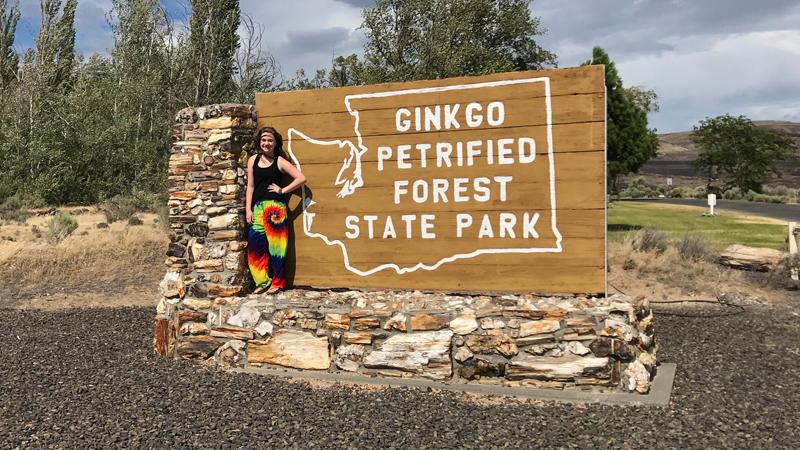 Ginkgo Petrified Forest State Park Fossil Hunting GuidePetrified wood (Ginkgo), Petrified wood (50+ species)
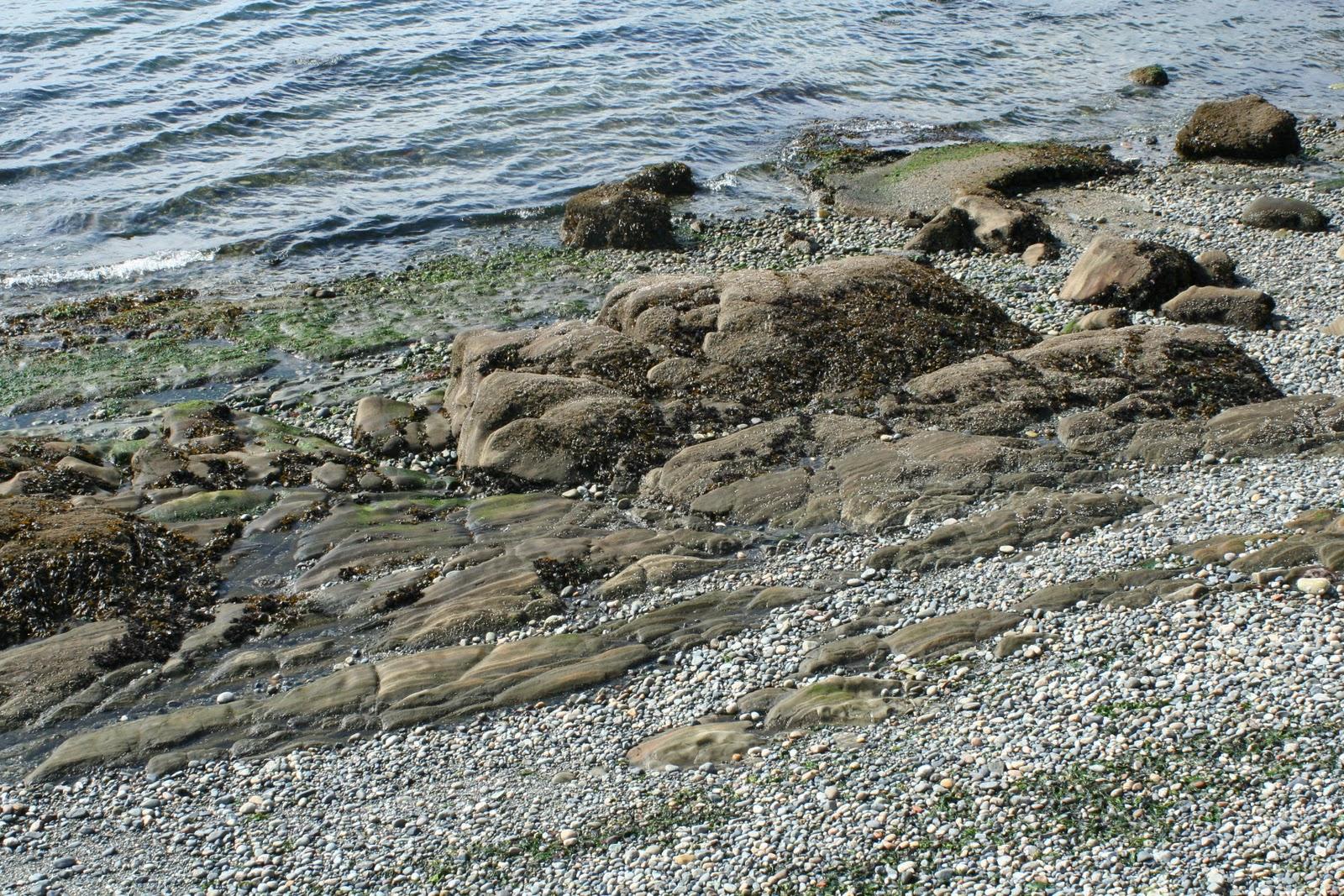 Alki Beach Blakeley Formation Fossil Hunting GuideMarine mollusks, Crab concretions
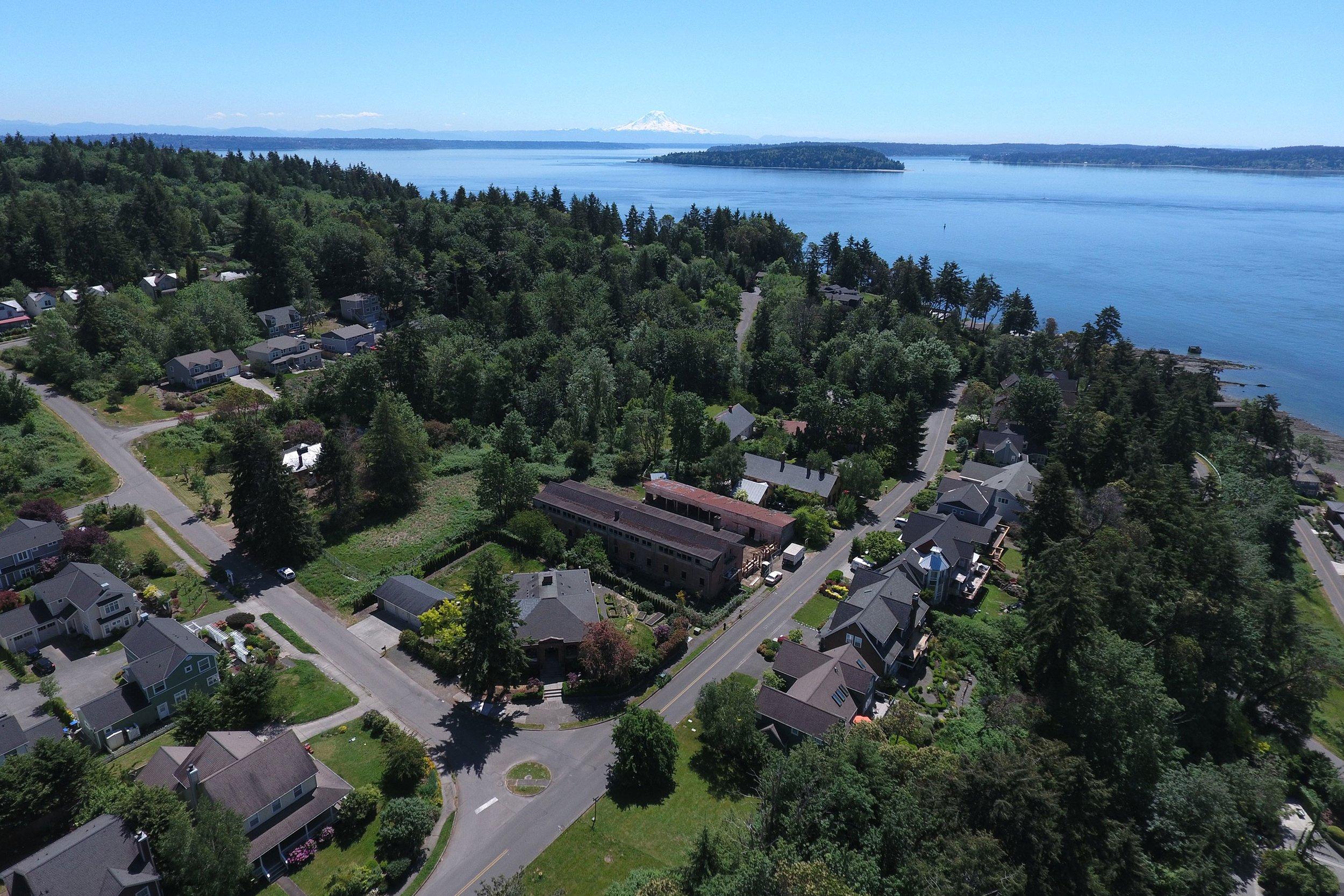 Fort Ward Park (Blakeley Formation) Fossil Hunting GuideMarine mollusks, Crab concretions